Morning with Monsters

Morning with Monsters

Fear is a funny thing. Run from it and it is always at your back, embrace it and its capacity to overwhelm you evaporates. Like darkness each morning, it can be pushed aside by the light. But as the sun rises in one place, darkness falls somewhere else. Face fear once, twice, a thousand times, and it inevitably crops up. We have a choice: keep facing our fears again and again forever, or try to run and hide from them for just as long.

This morning I got up before sunrise. My bag was already packed, tools strapped to the outside. I pulled on my Capilene, ate a small breakfast and jumped in the car. The road was coated in snow as I pulled onto Route 302.

About a month ago I soloed Standard Route at Frankenstein for the first time. It was an amazing experience, a moment where I embraced the fear of being ropeless and kept going. My brain screamed “NO” the whole way, and yet I continued upward, rejecting logic and letting trust and faith guide me.

Now, weeks later, the fear of being ropeless on Standard has dissipated. A week or two ago I ran up it again, this time before work. That time the tether anchoring me to the ground tugged but never grew taught. I was able to climb in control the entire time. The fear was gone, at least on Standard.

But there is always a bigger monster around the corner. As I drove to Frankenstein this morning I knew Standard was just the warm up. My fear, my test, was named Dracula.

The idea of soloing Dracula, the classic grade 4 at Frankenstein, first popped into my head on the descent from that first Standard solo. It wasn’t in yet, but as I walked past I knew in my heart it would go. This morning I went to Frankenstein determined to embrace that knowledge.

I got to the parking lot before the plows. It was still dark when I started walking down the railroad tracks. It was warm, above freezing, but I was dressed light enough I had to walk fast to stay warm. I followed deer prints in the fresh snow to the ice.

I got to the base of Standard and dropped my pack. The snow and ice above me glowed an eerie blue. I pulled on my harness, racked up and tethered into my tools in the pre-dawn light. I sighted the straightest, bluest line and started climbing. Standard flowed beneath my picks, an old friend accustomed to sitting together in silence. The first oranges and reds of morning sparked to the south. I snapped a few pictures as I climbed, but mostly I just cleared my head and concentrated on floating. “Breathe,” I thought time and time again. “Breathe.” In less than 10 minutes I reached the top and was walking back down.

The descent from Standard makes it easy to consider a second act. Most days I don’t have time to consider such things before work, but this morning I’d started early. Dracula looked soft, forgiving and beautiful. I walked to the base and stared up at it. I knew it would go. I took a sip of water, ate a snack, pulled on a dry pair of gloves from inside my jacket and swung a pick into the column. The ice was wet, pliable, perfect. I swung in the other tool. “This will go,” I thought, and I began climbing.
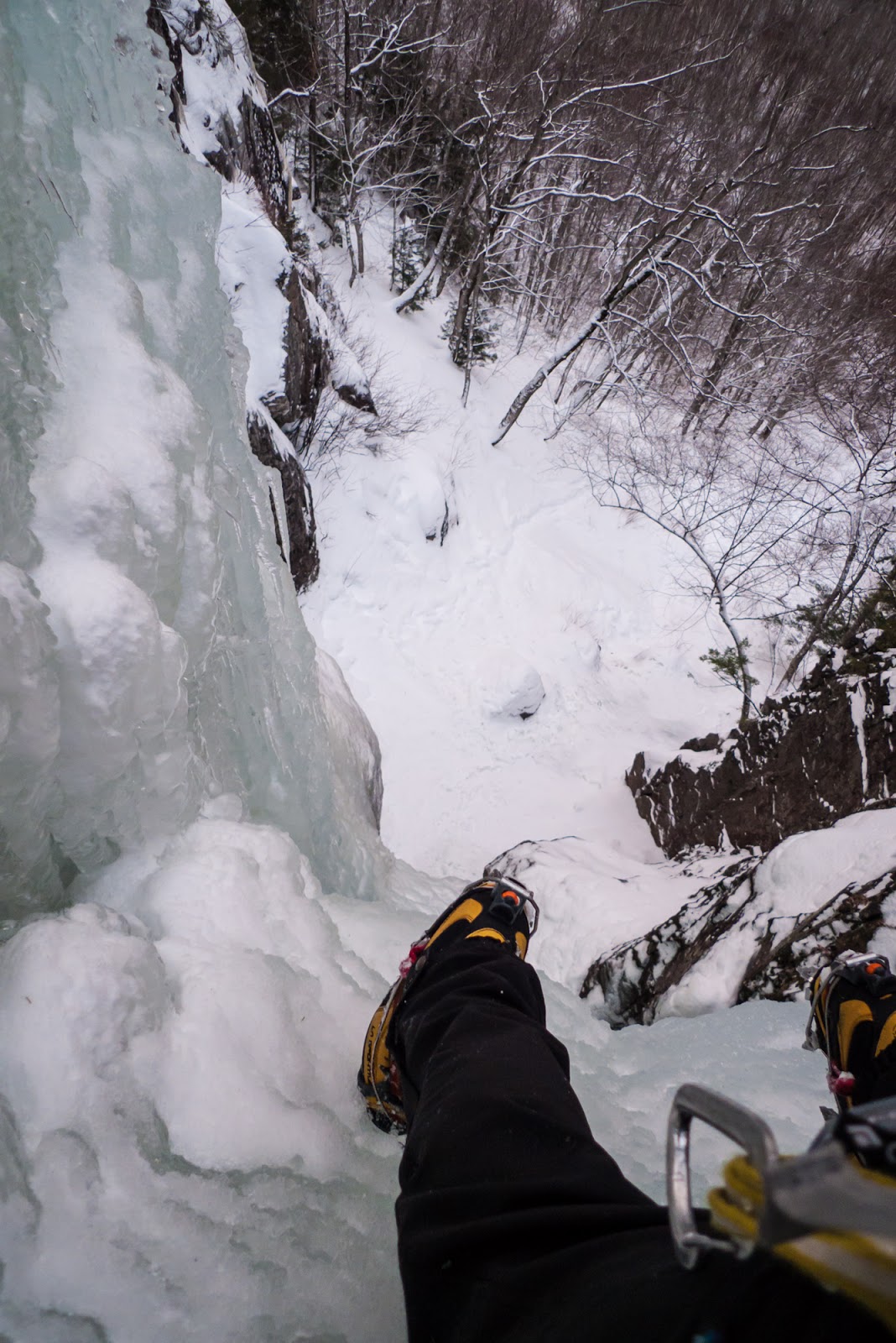
The first steep section went quick, a handful of moves up to a ramp. From there I kept going, swinging and kicking into dryer conditions. The ice was an open book as it flowed down a corner, so I stemmed my way skyward.

About halfway up, though, doubt crept in. My feet felt too wide. I was off balance, and the ice cracked more than I liked. I glanced down. A fall would break my legs and maybe my back. I’d bounce off the ramp, shoot out over the first column, hit the base and then tumble down the approach gully. I could see myself dying. “Shit,” I thought, “I don’t want that. Why am I here? This is stupid.” The terrestrial tether suddenly felt stretched to the limit. I prepared to climb down.

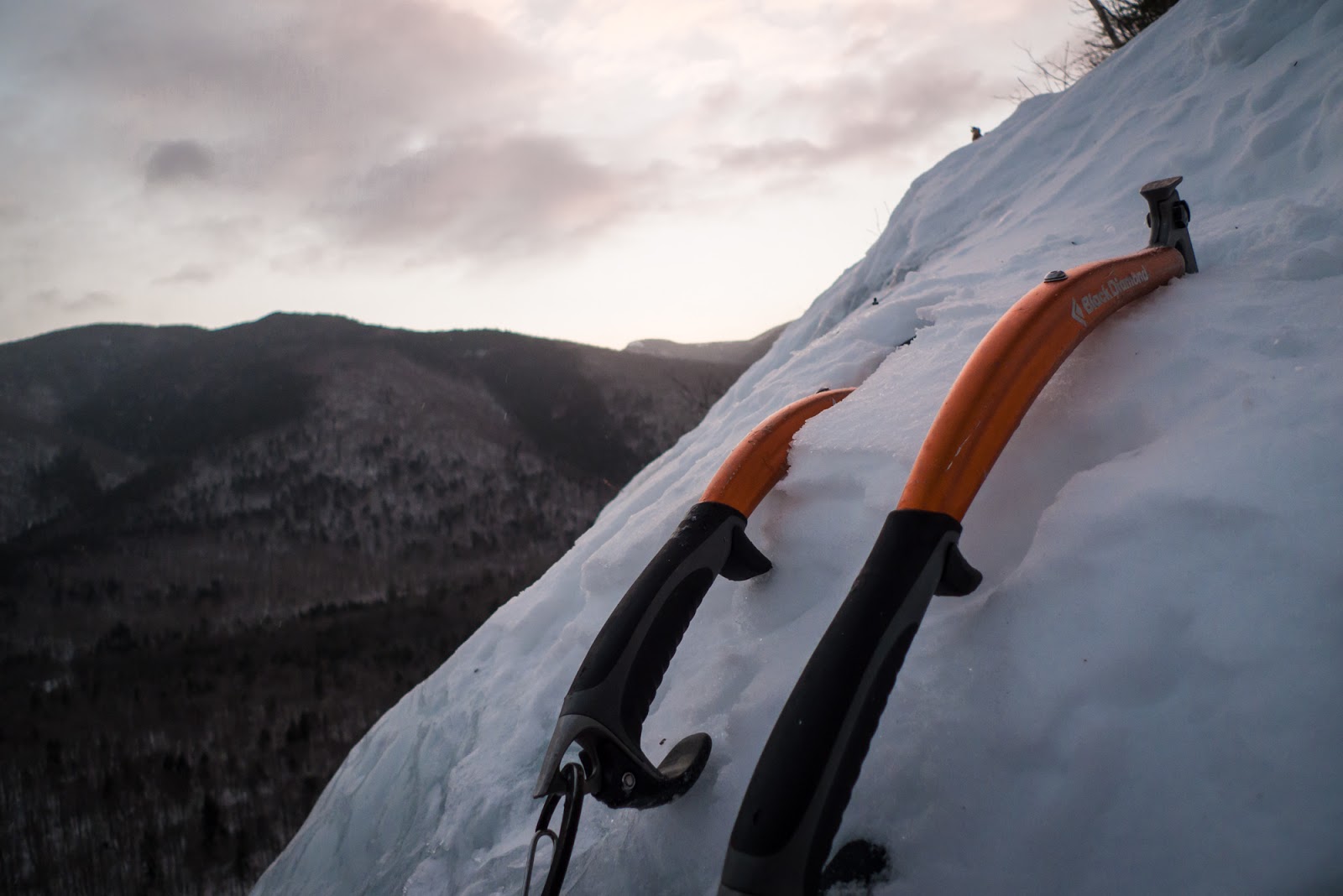
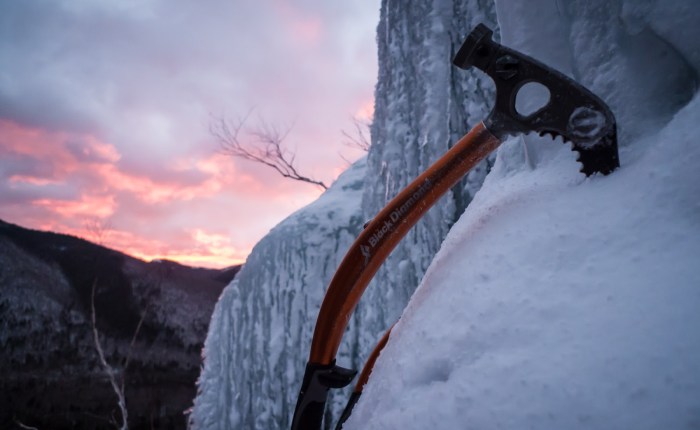
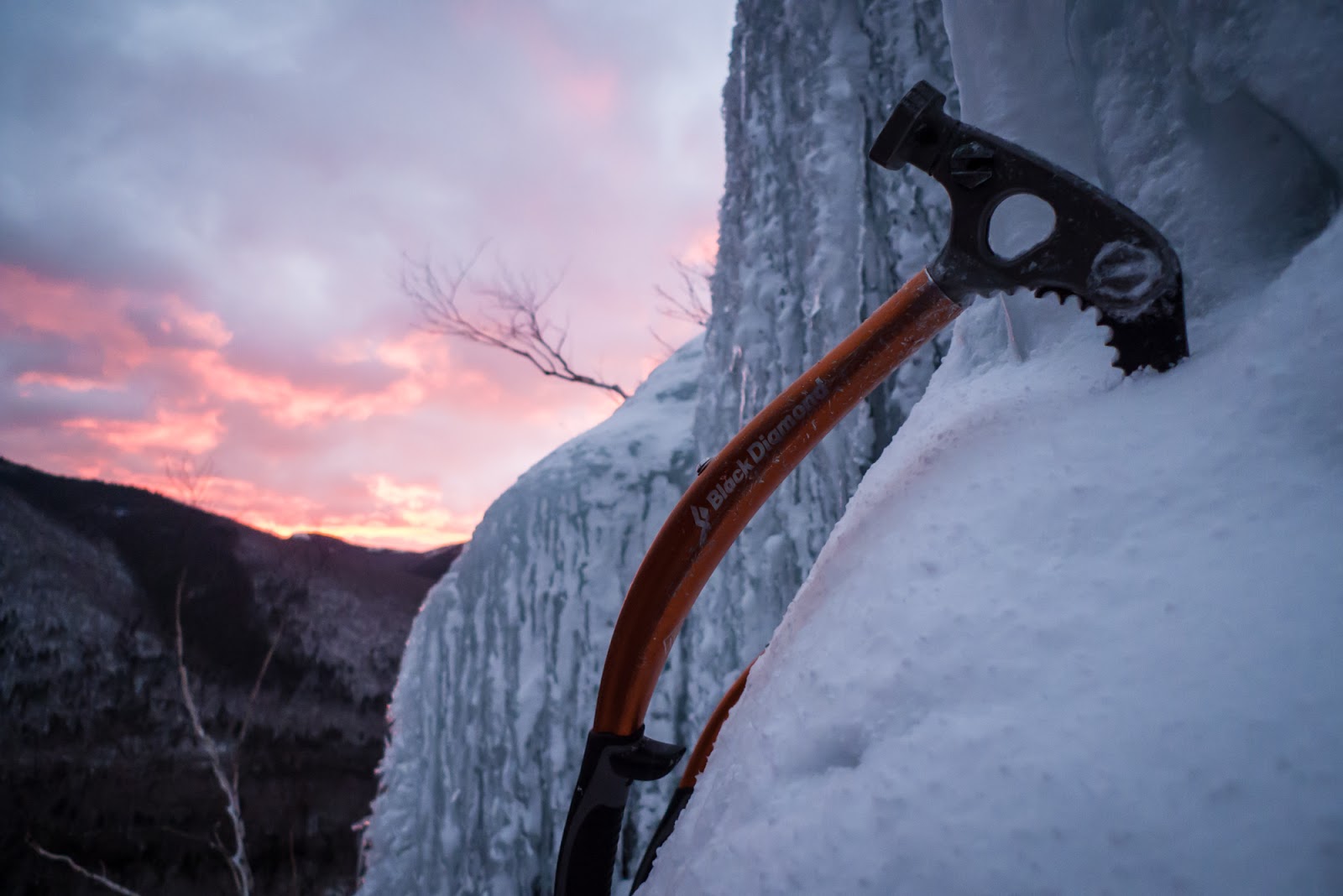
But I knew — KNEW — I could climb it. I’ve climbed Dracula countless times and never fallen. That doesn’t mean I never will, but I knew at that moment the thing holding me back wasn’t my strength or my skill, it was my head. The thing holding me back was me. I worked my way down, out of the corner and back to the ramp. I found a stance and buried my tools in the ice. I pulled off my gloves and tightened the laces on my right boot, took a deep breath, then another. “OK,” I thought, “you know the consequences. There is no logic to going upwards. None.” I switched feet and tightened the laces on the left boot. “Keep going and you could die.” I thought. “Just go down. The ground is safe.” I looked at my tools, drops of water glazing the orange paint, and then raised my eyes up. There were miles of steep ice above me. I looked at the sky, then down at the ground, and I felt a wall inside me crumble.

“That is wrong,” I thought, knowing in that instant I would continue climbing. “The ground isn’t safe. You think it is, but you may die there too. I might crash my car on the drive to work, or die of a heart attack at my desk, or get cancer. In fact, if I spend my entire life on the ground, it is inevitably where I’ll die. Going up isn’t about dying, going up is about living.” I swung my pick into the corner and started for the trees.
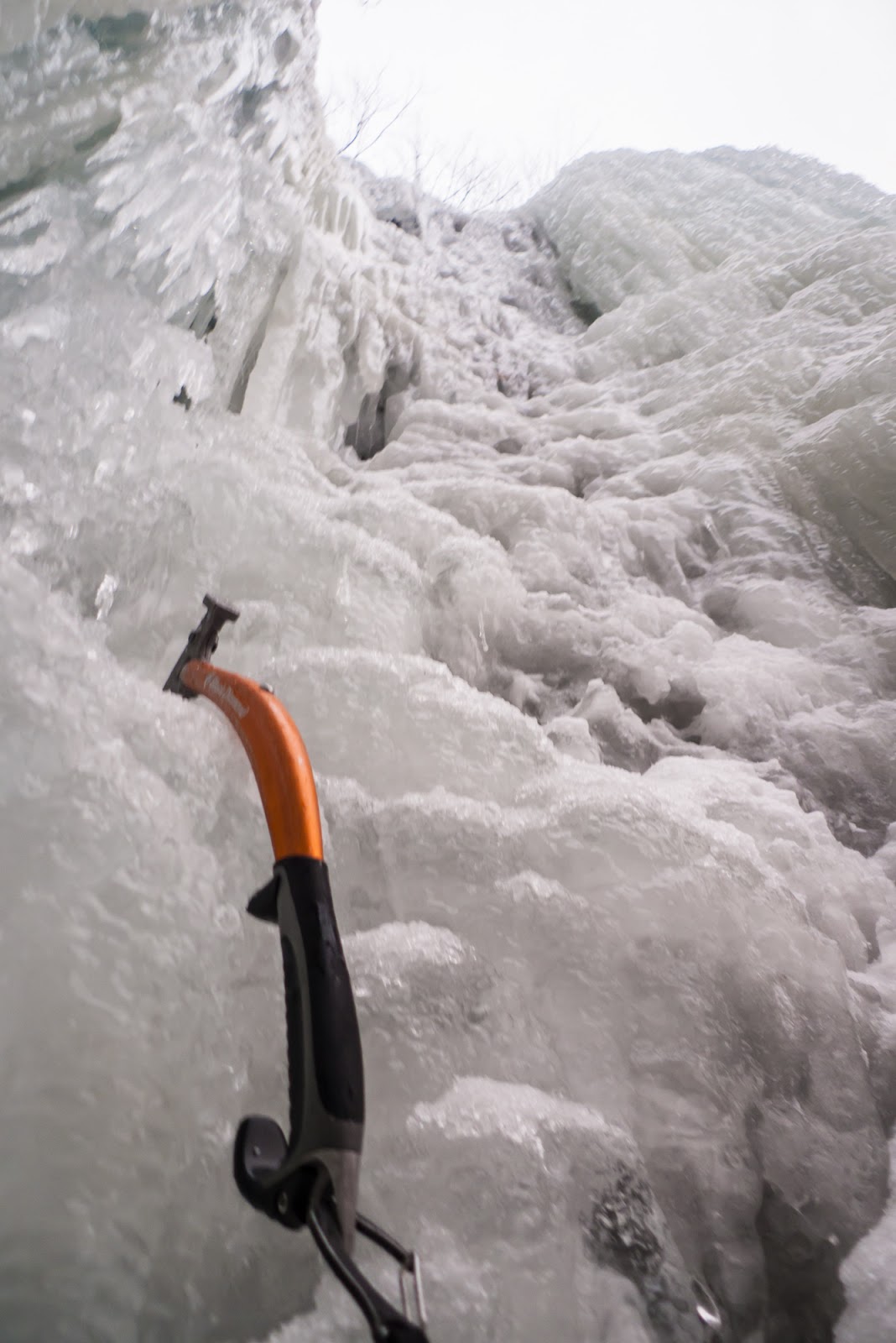
Every day we arrive at work on time, or make it to school, or meet a partner at the crag, we are fooling ourselves. We think because we made plans we were in control, that things worked out the way they did because we decided they would work that way. We’re wrong. We trick ourselves into believing we live in control, into believing that tomorrow will come just as today did, particularly if we avoid risk, never realizing the world can blow our plans off course at any moment. In a second we could die of a blood clot, or wind up shot dead in a movie theater. When it doesn’t happen each day we start thinking it won’t. We forget life is random, fleeting and final. We make plans for the future — a week, a month, a year, 30 years — thinking, KNOWING, we’ll be here to enjoy it. We walk through the world sure our lives will work out, wrapped in our own ignorance.

And we are wrong. I may die today. I may die as I write this, or tomorrow, or the next day. Life doesn’t wait and it isn’t guaranteed. It shows up wherever we make it, however we make it, whether on the ground or in the air. We will die someplace, that is the only guarantee. Darkness, fear may keep us from embracing LIFE, but it does nothing to stave off death. It rolls towards us nonetheless. The ground is not safety, and the route is not danger. They are simply the ground, and the route. There is risk in both, in all.

So I embraced the risk before me. “Breathe,” I thought as I moved up the final headwall. “Breathe.” It was the same thought I’d let fill my mind for the last 40 feet, the same thought I kept to the summit. It was my mantra, the thought that kept me in the moment, that pushed the fear of falling out, the fear of death out, the fear of failure and everything else out. I let the thought wash over me, let it carry me over the ice. It filled my mind, leaving my hands and feet to do the climbing they are so accustomed to. “Breathe,” I thought as I crested the ice and swung into turf. “Breathe,” I thought when I reached the trees.

I stood in the snow and let out a long, slow breath. “Today I lived,” I thought, rather than just survived. I smiled, clipped my tools to my harness and started the walk down.

Light is always looking for darkness. Allow it into one more place. And one more place. And one more place.

What is a Climber?

What is a Climber?

What is a climber? Am I a climber? Are you?

There is a thread on NEIce.com right now asking how many climbers people think there are. In that question there is an inherent assumption about what it means to be a climber, and in the first few responses the discussion takes a hard left turn into who is really a climber. The back and forth got me thinking.

Am I a climber? I moved to North Conway a decade ago with no job, no clue how I was going to survive. I had led a handful of 5.9 rock climbs, but none of the classics on Cathedral. Grade 4 ice was within grasp, but I didn’t have a clue how to survive steep ice or mixed climb. I didn’t know how to aid climb, haul, bivy, belay off the anchor, belay a leader with a Grigri, sport climb, handjam, place a pin or do half the things I now take for granted.

But somehow I fell into a job at IME, the heart of all things climbing in the Mount Washington Valley, and began my introduction to climbing as a lifestyle choice. Since then I’ve climbed across the U.S., in Central America, South America and Europe. I’ve put up new rock climbs, new ice lines, new mixed routes, climbed alpine peaks, guided clients, soloed thousands of feet of ice in a day, onsighted 5.12 sport routes, climbed multipitch Yosemite 5.11s, fallen all over 5.13 projects, suffered my way up grade 6 ice and tied into a rope with some of the best people on this planet. So am I a climber?

A few months ago I would have said yes. I would have pegged my identity to my sport. I would have said, “I am a climber,” and my chest would have puffed out when I said it. Now I realize no, I am not a climber. I am a man. And by embracing that simple definition I climb harder.

What came with defining myself as a climber? Expectation, and through expectation I set myself up for failure. If I define myself as a 5.11 trad leader, does that mean I can lead every 5.11 trad route? What happens if I fall off a 5.10? If I call myself a grade 5 ice leader, what happens on the day I back off a grade 4? Easy — I feel disappointed. I feel like a failure. I feel like I can’t live up to my own expectations, like I am a fraud. By defining myself I set myself up for failure if I ever don’t meet that self-imposed definition.

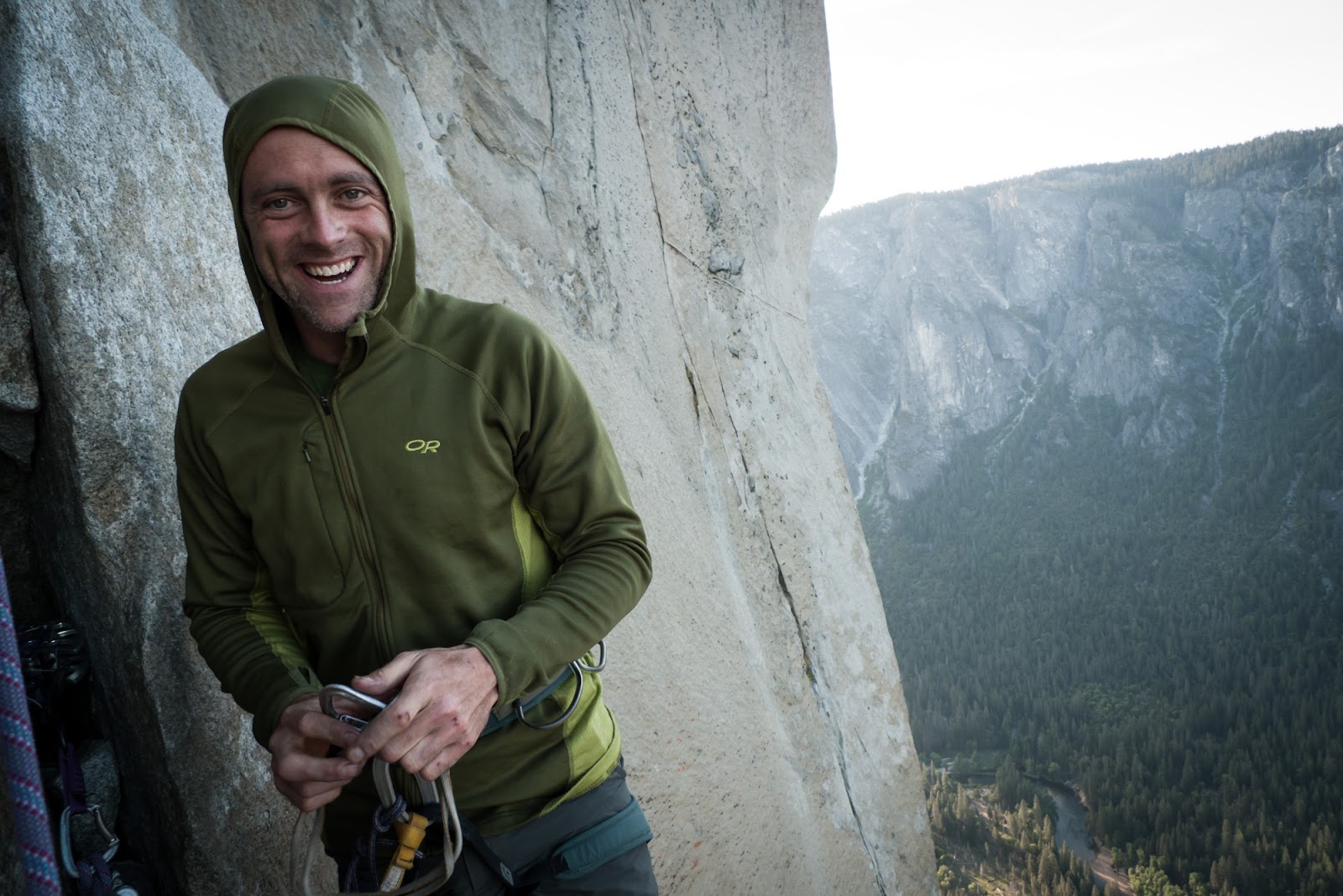
This past May I climbed El Cap via The Nose. It was a 30th birthday present to myself. “I am a climber,” I thought, “so I should have climbed El Cap.” I had a fantastic partner and a wonderful trip, but I suffered through the climbing. The weight in my stomach only increased as we moved upwards. With every pitch my desire to be back on the ground grew. I wanted to have climbed El Cap, not to be climbing El Cap. I was climbing El Cap because I felt it was something a climber should do, not because it was the thing in that moment I wanted to be doing. My decade of climbing experience and dedication (plus an amazing partner) allowed me to reach the summit, but it was not me at my best. Why did I suffer my way through a sea of granite? Because in my mind, “a climber should have climbed El Cap.”

What happens when a climber gets injured, loses fitness or gets old? They stop climbing. They start making excuses for why they can’t do what they expect they should be able to do, what they have told their friends they can do. They stop having fun, and they stop climbing.

I have my reasons for climbing, and the truth is they aren’t about grades. They aren’t about summits, they are about the experience. They are about movement, friendship, connection and personal challenge. They are about personal growth. If I get injured it doesn’t matter, I can still find all those things in climbing. If I lose fitness it doesn’t matter, I can still find all those things in climbing. And when I get old I’ll still be able to find all those same things in climbing if I choose to.

Last year I injured tendons in both hands. I couldn’t climb at my normal level, so my projects fell by the wayside. Did I quit climbing? No. I picked up my nuts and hexes and tried to lead everything I could on only passive protection. I never climbed harder than 5.9, but I was still moving, still climbing with my best friends, still connecting and embracing the personal challenge climbing offers.

These reasons are not grade dependent, not experience dependent. A brand new leader can embrace movement too. A client getting guided can face personal challenge, which leads to personal growth. Any two partners can see the rope as a connection that does more than just arrest falls.

This is what climbing offers — a chance at growth, a chance to step outside the ordinary and embrace life. But when I considered myself a climber I stopped seeing this. I started to see climbing as something plain, regular, routine, just part of life. But it isn’t. Every step into new territory, every move above a bolt is a fantastic journey into the unknown. Nothing about it is ordinary. We are humans, men and women. We were built for flat ground. Every journey into the vertical is a space mission. Every new exploration is a window into our own souls. What holds us back? Can we face that fear? Can we meet that challenge? Can we do the impossible?

I do not call myself a climber because defining myself as such would set up boundaries, build walls. I am a man, that is all. Climbing is something I do, something I love, and yesterday I went climbing, but it does not define me. And by releasing myself from the definitions, from the expectations, I learn to float. Free of expectation I continue upward in spite of gravity, in spite of fear. Released from myself, from my own self-erected barriers, embracing the emptiness within, I float to the chains of The Mercy, to the chains of Baghdad. Releasing myself from myself got me up Standard without a rope. Shedding expectations, shedding definitions, lets us see what we can really do. I might go mixed climbing, or alpine climbing, or bouldering, or sport climbing, or aid climbing, but I will fight letting any or all of those activities define me.

And, if I can help it, nothing else will define me either. I might choose to ski, surf, write, paint, sing or love, but none of those things will change the fact that I am simply a man, a man in search of fear, in search of a shift in perspective, in search of a window into myself. Anything that will push me is welcome, so long as it gets me outside my comfort zone, outside the known. I will search everywhere I can for ways to launch. I will look without boundaries, both within myself and in the world, in search of whatever I can learn. Embrace the unknown. Grow. Launch above that screw, that bolt, that piece of gear, but realize it is only one way to reach outer space. There are others. Go find them.

Reasons to Climb

Reasons to Climb

I’ve been writing bullshit about climbing for years.

I write about handjams, pick placements and descents, about hauling and bivying, rope recommendations and runouts. The truth is it’s all bullshit.

I don’t climb for the summit or the send. Those are just excuses. The reasons I climb are Scott, Ryan, Peter, Michael and Paul. Josh and Juliet, Paul and Sasha and Jim. Katie and Majka and Jay. Pat, Jack, Adam, Silas, Ray, Elliot, Bayard, Eric, Brent and Jay. Chuck, Michael, Chris and others. People I forgot, others I don’t even know, names I don’t recall. Those are the reasons I climb.

I have been swimming upstream for months now, struggling against something I’m not even sure I fully have my hands around. It catches me at home, at work and in the car and takes me down. It knocks me off my feet and leaves me screaming, crying. In a moment it can rip me ragged, but when I get to Shagg, Shell, Cathedral or Cannon with one of my reasons none of it matters.

Yesterday was that way. Friday night I didn’t sleep. I ate consistently last week for the first time in a month, but that ended Thursday night. I met Ryan and Michael in a parking lot in Jackson at 7 a.m. Saturday. Ryan left Western Massachusetts at 4 a.m. to join Michael and I without asking us to delay our start. I offered, but he said no.

The two of them piled into my car, and we rolled uphill to Pinkham Notch. On the way up we joked, but once we started up the Tuckerman Ravine Trail I began talking. As we hiked I unloaded my pain, frustration and exhaustion. They just listened. We hiked fast, passing party after party. At times I didn’t want to keep talking, but I couldn’t stop. I kept at it until we got to the ravine, at which point I had to sit down. I felt like I’d lost a quart of blood. The weather matched my mood.

When we got to the base of the route I asked if I could lead the first two pitches. I wanted to warm up on the first pitch and then be fresh for a shot at the crux. Neither Ryan or Michael hesitated: Of course, they said.

I never stopped to belay. I had enough rope at the top of the first section to launch into the crux, and I took it. I had an outlet, and I was blasting for the moon.

The rest of the day went smoothly. Michael took the next pitch, then Ryan got the third, and we topped out around 2 p.m. We packed our gear, stripped off our crampons and walked down. I walked silently, knowing with each step I was closer to re-entering orbit. Ryan and Michael carried the conversation, allowing me to drift inside my head.

When we drove back into Jackson they invited me to dinner, but I declined. I’d had enough for one day. I needed to get home and brace myself for whatever was coming next.

A few hours later I got a text from Michael: “Proud work today. Killed it.”

I didn’t feel like I killed it. I felt like I got up, stepped out of bed and start falling. I fell all day, and I was getting ready to crawl back under the covers when his text arrived, sleep serving as my only net. I’m not crushing, I thought, I’m getting crushed.

But every few days I meet one of my reasons for climbing, and I stop falling and start flying. With Scott and Peter as copilots I get to crush, if only for a few minutes on Wednesday morning in the Cathedral Cave. With Paul I get to launch off the bouldering pad into the stratosphere, even if I never make it past the rock gym rafters.

Climbing is not about summits or redpoints, it’s about partners. It’s about sharing a rope with someone who can save your life. And that isn’t limited to when you are in the mountains.

We are astronauts, Peter says, and we are going to the moon. Thank you Peter, Scott, Ryan, Michael and Paul, for shepherding me. Without you I’d have missed my target. Alone I’d be lost in space.

[Author’s note: Peter reminded me that his references to astronauts and the moon were originally coined by Colby Coombs, the founder of the Alaska Mountaineering School.]