Steep Bolts and Strong Partners

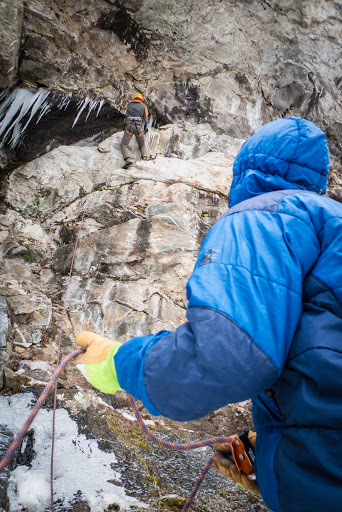
This week has been rough on the ice. Temperatures topped 50 degrees on Monday and Tuesday, detaching some routes and sending others to the ground. On an underwhelming Baghdad/Mercy session last Saturday I watched massive chunks tumble off the Modor Wall. Instead of a morning session Wednesday I hit the Maine Rock Gym in Portland Tuesday night — it seemed a better use of time and training. I had thoughts of climbing before work Thursday or Friday, but a meteoric swing in temperatures made going outside seem foolhardy. It wasn’t until today climbing plans actually came together, and they didn’t have much to do with ice. Michael, Bayard and I wandered over to Tohko Crag this morning for a handful burns drytooling through a horizontal roof. It was low key, with lots of clipping and whipping on bolts. The ice was out, so we just took (or fell) at (or before) the last bolt.

For a warm January day, today was just about perfect. It was low commitment climbing, both warm and relaxing. We didn’t even have to change out of our fruitboots for belays. There were dropped tools, a tumbling fall or two, and a classic moment where half of our six collective ice tools sat climber-less in the final moves of an M8+.

These are the days I strive for. They are, in a sense, the best kind of climbing days. They aren’t about the send — today no one sent anything at all — they are about hanging out, laughing, telling old stories and making new ones. They are about making plans for future trips and hearing about past adventures. They are about the climbing, but the climbing could as easily be gardening, poker or baking cookies.

Bayard put it well today: When he thinks of climbing, he said, he thinks of a handful of brief moments on the rock or ice that were truly spectacular, but for the most part it is the moments surrounding those moments he remembers. The “climbing” is really about the time spent hanging out, relaxing and joking with friends and partners that keeps drawing him back.

I think back to my ascent of The Nose this May with Ryan, where my head (and my hands) never felt up to the task. The climbing was terrible, but the trip was amazing. Ryan made it worth the suffering. Or six years ago when Scott and I climbed Liberty Ridge on Mount Rainier. We got caught in snowstorm halfway up the ridge at Thumb Rock. The next day the mountain was coated in more than a foot of fresh windslab, but we went up anyway. We started probably five or six avalanches, each crashing down the Willis Wall to the carbon glacier below. By the end of the climb my feet were hamburger and Scott’s toes were frostbit, but it was an awesome trip nonetheless. We spent the final days camped on the beach on Bainbridge Island across from Seattle trying to dry out and fatten up.
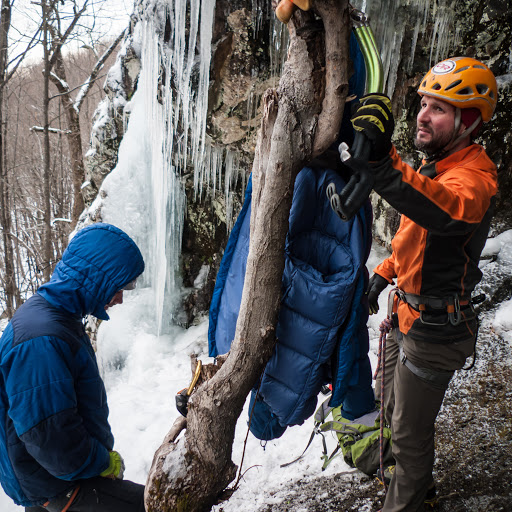
For the last month or so I’ve been focused on the climbing. The routes themselves have given me brief moments of respite as other parts of my life sputter and spin. My astronauts have been there to guide me, but it was embracing the chaos and holding close my fear that grounded me. I was at home on the sharp end launching for the stars, not smiling at the base telling jokes. The change in weather, however, coincided with a shift inside me. My lead head is taking a break alongside the ice conditions. I was more interested in clipping bolts at a warm, sunny crag than climbing hard above gear today, and luckily the weather cooperated. I’ve even found myself hatching sport climbing plans for Kentucky, Mexico or Spain. Somehow the season for mixed climbing on Cannon has woven itself into overhanging sandstone. Maybe it’s all the sunshine and warm weather…

The beauty of climbing is it isn’t either/or. Today there was talk of Alaska, Zion and the Red River Gorge. Climbing is all three and more. And most of my partners would be game for any of them. They’re all about falling upwards among friends, about accepting and embracing the challenges in front of you. They are all about living, the verb, not the adjective.

It’s funny, however, how easily we lose grip of “living,” the verb. It quickly just becomes part of “life,” a noun. The other day my wife and I went out for an afternoon ice session at one of her favorite spots. We got there at about 1 p.m., and I ran up the grade 3+ flow. As I started up I looked at her. I swung in a tool. “This is absurd,” I said.

“What?” she said, looking up at me.

“This,” I said. “Climbing frozen water with ice tools and sharp objects strapped to our feet. It’s ridiculous.”

“Yeah,” she said, smiling. “It is.”

After more than 100 climbing days this year, the vertical at times seems unremarkable to me. It had, for a time, become ordinary. But people weren’t built for this. We weren’t meant to live in a vertical world. Every day out, whether alone or with friends, is spectacular. Every moment in climbing is special, and “climbing” is just another way of spelling “living.” Time cannot be saved, the clock is always running. Time can only be spent, so spend it wisely. Spend it smiling, laughing, joking with friends and partners, at the crag, around the poker table or anywhere else friends can gather. When your head checks in, LAUNCH. When it checks out, stick to the bolts or stay home and find a more precious use of your time. Don’t fight where you’re at, embrace it. If it’s warm, don’t just blindly head for the ice. Look at your options and move with conditions. Flow. Find what works TODAY, and do that. Because tomorrow is a day that never gets here.
Another View

Soloing is stupid, illogical and a good way to kill yourself. Period. Don’t let anyone tell you otherwise. I’ve been wrestling with it lately as a path to embracing life too, but that doesn’t change the truth of my first statement. Soloing is a new thing for me, something that has some of my friends and partners concerned. I’m tempted not even to write about it out of concern such efforts will glorify it, but since I am trying to be excruciatingly honest on SOG I have opted to talk about it.

I know worry, the feeling of concern, others feel about me. One of my favorite climbing partners and best friends, Michael Wejchert, has been soloing since before I thought it might have redeeming value. He soloed The Black Dike the day after I made the first ascent of the season, at a time when it was so thin I was scared climbing roped. And last year he soloed Fafnir days after I did it with a partner in conditions that constantly kept me guessing. I don’t want to lose a friend, and I’ve often wondered if his decision to climb without a rope is a good one.

But in recent weeks I’ve begun to understand the value in it. I’ve stopped second guessing so much. I still will always worry about him when he’s out there, but I’ve begun to get it a little bit.

And today he let me in a little more. He wrote a blog post on his blog, Far North Climbing, that I think every SOG fan should read. My reasons for soloing are my own, and here is another set, told with honesty. Excruciating honesty, from the heart. The only kind there is.

A Decade Past

One of the coolest things about writing this blog is the responses. I get a few comments, but more and more I’m getting emails, texts and Facebook messages from people who connect with the stories. This is a platform where I can get my thoughts out, but it is also an avenue for people to reach out. From the first day I’ve heard from people, some I’ve never met, some I know and have never been close to, some I’ve been close to but never that close. Most gratifying, however, have been the notes from friends and climbing partners I haven’t kept up with as well as I should — Matt, Jay, Griffin, Rachel, Pat and others.

Last night one of those partners reached out. She said she was enjoying my writing as well as following my climbing. It was a nice note, it made me smile. At the bottom was a link to something — an essay I’d written more than a decade ago as 19-year-old kid. It was 2001, and I yearned to be a climber. I’d thruhiked the Appalachian Trial the year before, and a few months later I bailed on my first attempt at college. That winter I led my first ice climb, Elephant Head Gully. I’m not sure I placed a decent piece. I was hanging my way up 5.9, and my rack was more nuts than cams. I was arrogant and driven (far more so than now), determined to become an alpinist and disappointed I wasn’t one yet.  I was in the midst of my second stab at college (also destined to fail) in Colorado when I wrote the essay for a class. I sent it to her on April 23.

Far above my last piece of protection I reached for a hold. My hand landed on a flake, square and sharp. The day was cool, and the wind worked to push me across the rock face. I made several more moves, feeling confident, advancing higher. Looking above I saw a large roof; if I continued on my present course I would have to climb through it. I reached forward, grabbing another handhold. There was a grinding sound, and the rock shifted. I felt the blood drain from my face as a knot of fear grew in my stomach. I was going to fall.

I awoke with a start. It was dark; the blinds blocked out the streetlight I knew was outside the window. My girlfriend put her hand on my shoulder and asked if I was all right. “My god, I was scared,” I said.

She knew what I was talking about. We had been climbing earlier in the day. It had been cool, cold enough to snow. The wind had whipped the ropes. This was not good climbing weather, not a time to be outside. It was a time for movies and hot cocoa. It was a time for sitting next to the woodstove and playing poker. But we only had a week to climb. A week before she would be going home to Boston. So we climbed.

We had spent thirty minutes driving washed out dirt roads to the 400-foot face, and 20 minutes lugging our climbing gear straight up hill to the base of the cliff. Tied in, doubled back, locked, helmets on, and ready to go. I began climbing, and shot up the first 40 feet to a right-facing dihedral. I placed a piece of protection and continued upward. Following the dihedral for the next 60 feet, situating myself directly below a large roof. I looked up, trying to remember the route description: “Take crack to right of large roof.” Or was it left? Either way, I would have to get to the roof before making any decisions. I reached up, grabbing a handhold. I felt the individual grains digging into my hand. I moved past it, onto a small ledge. I began the upward traverse across to the bottom of the roof and reached out, grabbing a flake. I heard the grinding of two rough surfaces, the sound of a car bottoming on a speed bump. I felt my center of gravity shift, and my head swung back. I shot my other hand forward, groping for a piece of granite to hold onto, a desperate attempt to stabilize myself. Thoughts flashed through my head: from my protection, to my belayer, to the rope, to the zipper effect, to the rock quality, to the strength ratings of gear, to the value of a single human life. I prepared to die.

I may have screamed, I may have cried; this moment, I have discovered, I will never remember. But I will never forget. 

The moment passed. I did not fall. I found my other handhold and stabilized myself. I cringed, then I told a joke to my girlfriend 100 feet below. The climbing continued, until halfway up snow and high winds forced us to retreat. The day was over, it was time to head home.

The story could have ended there. I could have gone home and never thought about that aborted ascent again. But fear is too deeply rooted in the human mind, the survival instinct too powerful a force. I relived the climb, the day, as I fell asleep. Everything was a little better in the dream than it had been in real life: the sun warmer, the wind calm, the climbing easier. My mind was setting me up. My subconscious was going to teach me something about climbing, something I was never consciously going to accept. If I was not going to quit climbing after the events of the day, my brain decided, I would get more convincing that night. I climbed. I reached for the handhold. It moved. And I fell. 

“Remember this,” my mind said.

Almost 12 years have passed since I wrote that piece. It was just a paper for a class, at the time I never would have guessed I’d make a living in words. I didn’t remember that day, but as I read the essay it came flooding back. I remember the cliff — Davis Face outside Buena Vista. We were climbing on the right side. I found an old slung hex buried in the crack. We had a borrowed Honda CRV. It was red. I remember the sound of the rock grinding, the feeling of losing my balance, the thought that I was going to die. And I remember shaking awake that night, airborne in the darkness.

I don’t have much more to add, other than, “What a decade.” And thanks to everyone who has (or is going to) reached out.

[Author’s Note: I did do some editing on the original piece. I figure I’m entitled, it is my essay…]

Morning with Monsters

Morning with Monsters

Fear is a funny thing. Run from it and it is always at your back, embrace it and its capacity to overwhelm you evaporates. Like darkness each morning, it can be pushed aside by the light. But as the sun rises in one place, darkness falls somewhere else. Face fear once, twice, a thousand times, and it inevitably crops up. We have a choice: keep facing our fears again and again forever, or try to run and hide from them for just as long.

This morning I got up before sunrise. My bag was already packed, tools strapped to the outside. I pulled on my Capilene, ate a small breakfast and jumped in the car. The road was coated in snow as I pulled onto Route 302.

About a month ago I soloed Standard Route at Frankenstein for the first time. It was an amazing experience, a moment where I embraced the fear of being ropeless and kept going. My brain screamed “NO” the whole way, and yet I continued upward, rejecting logic and letting trust and faith guide me.

Now, weeks later, the fear of being ropeless on Standard has dissipated. A week or two ago I ran up it again, this time before work. That time the tether anchoring me to the ground tugged but never grew taught. I was able to climb in control the entire time. The fear was gone, at least on Standard.

But there is always a bigger monster around the corner. As I drove to Frankenstein this morning I knew Standard was just the warm up. My fear, my test, was named Dracula.

The idea of soloing Dracula, the classic grade 4 at Frankenstein, first popped into my head on the descent from that first Standard solo. It wasn’t in yet, but as I walked past I knew in my heart it would go. This morning I went to Frankenstein determined to embrace that knowledge.

I got to the parking lot before the plows. It was still dark when I started walking down the railroad tracks. It was warm, above freezing, but I was dressed light enough I had to walk fast to stay warm. I followed deer prints in the fresh snow to the ice.

I got to the base of Standard and dropped my pack. The snow and ice above me glowed an eerie blue. I pulled on my harness, racked up and tethered into my tools in the pre-dawn light. I sighted the straightest, bluest line and started climbing. Standard flowed beneath my picks, an old friend accustomed to sitting together in silence. The first oranges and reds of morning sparked to the south. I snapped a few pictures as I climbed, but mostly I just cleared my head and concentrated on floating. “Breathe,” I thought time and time again. “Breathe.” In less than 10 minutes I reached the top and was walking back down.

The descent from Standard makes it easy to consider a second act. Most days I don’t have time to consider such things before work, but this morning I’d started early. Dracula looked soft, forgiving and beautiful. I walked to the base and stared up at it. I knew it would go. I took a sip of water, ate a snack, pulled on a dry pair of gloves from inside my jacket and swung a pick into the column. The ice was wet, pliable, perfect. I swung in the other tool. “This will go,” I thought, and I began climbing.

The first steep section went quick, a handful of moves up to a ramp. From there I kept going, swinging and kicking into dryer conditions. The ice was an open book as it flowed down a corner, so I stemmed my way skyward.

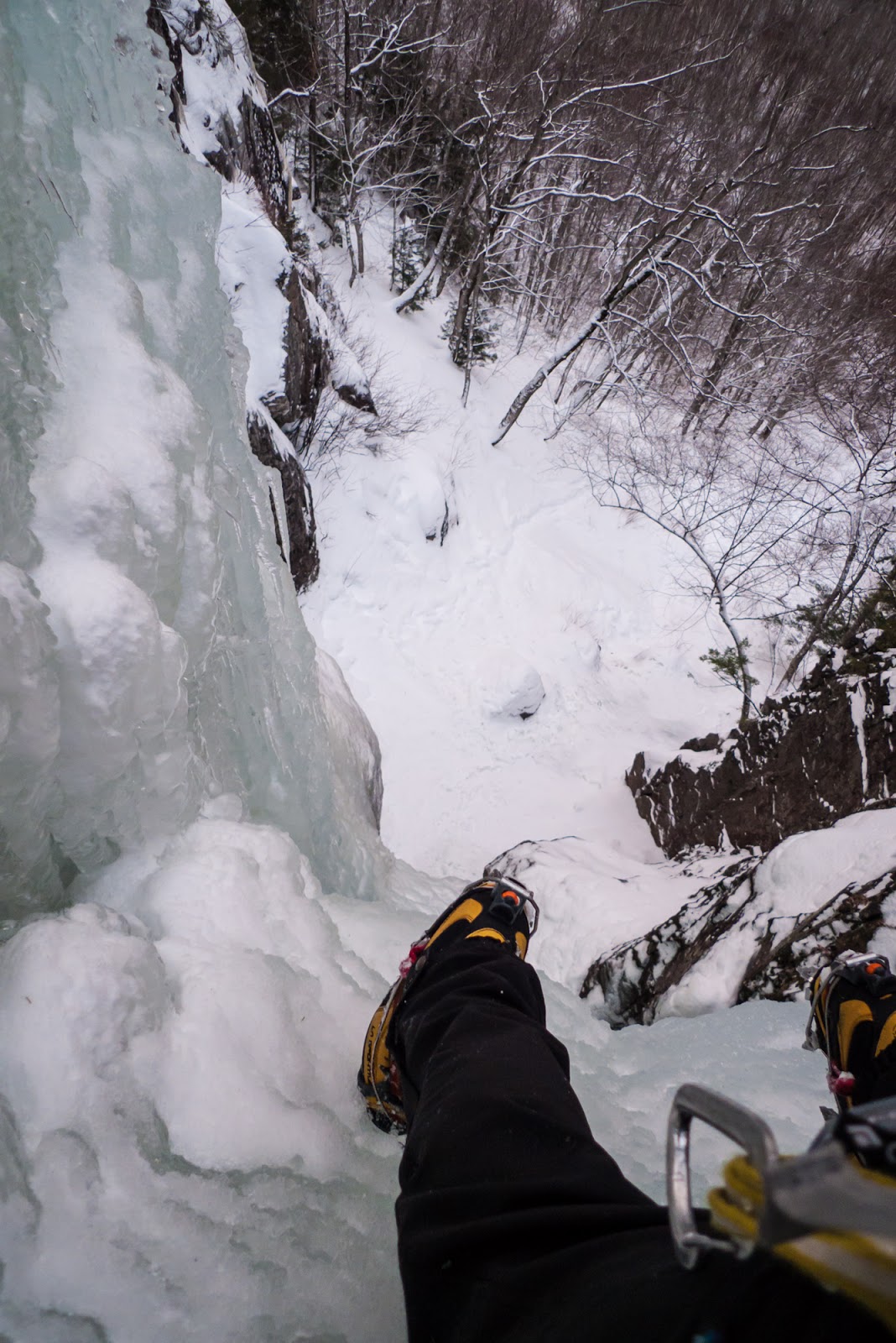
About halfway up, though, doubt crept in. My feet felt too wide. I was off balance, and the ice cracked more than I liked. I glanced down. A fall would break my legs and maybe my back. I’d bounce off the ramp, shoot out over the first column, hit the base and then tumble down the approach gully. I could see myself dying. “Shit,” I thought, “I don’t want that. Why am I here? This is stupid.” The terrestrial tether suddenly felt stretched to the limit. I prepared to climb down.

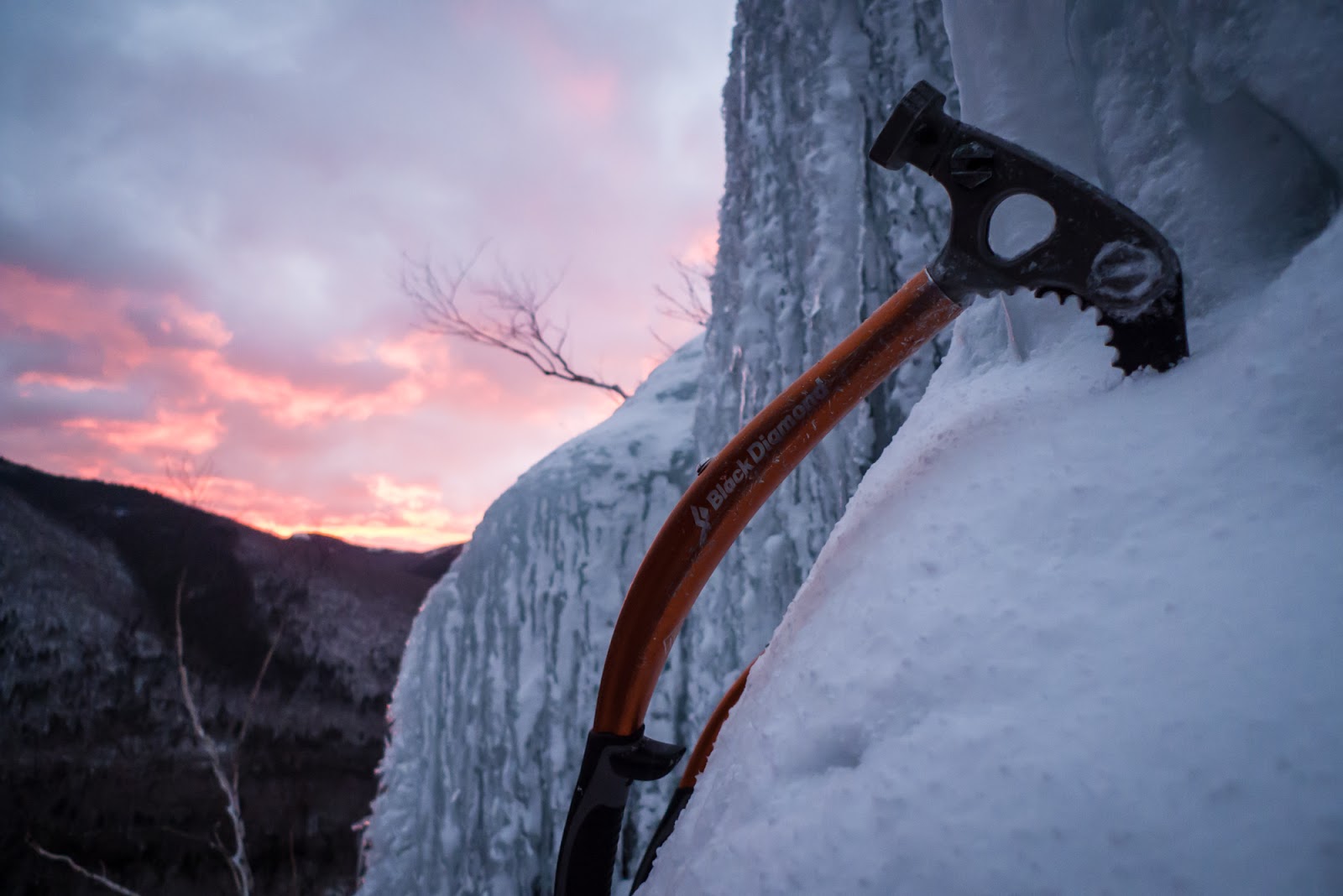
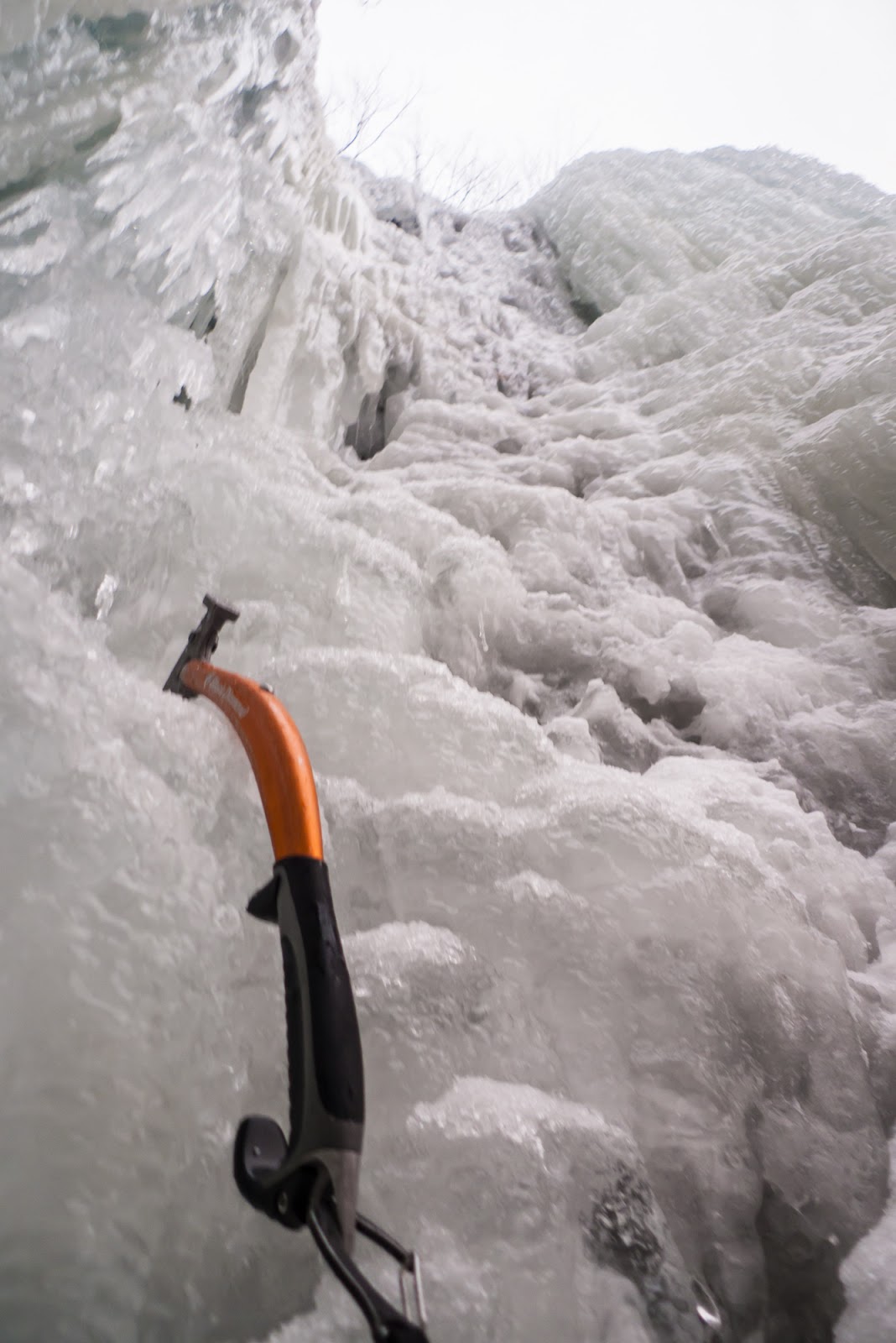
But I knew — KNEW — I could climb it. I’ve climbed Dracula countless times and never fallen. That doesn’t mean I never will, but I knew at that moment the thing holding me back wasn’t my strength or my skill, it was my head. The thing holding me back was me. I worked my way down, out of the corner and back to the ramp. I found a stance and buried my tools in the ice. I pulled off my gloves and tightened the laces on my right boot, took a deep breath, then another. “OK,” I thought, “you know the consequences. There is no logic to going upwards. None.” I switched feet and tightened the laces on the left boot. “Keep going and you could die.” I thought. “Just go down. The ground is safe.” I looked at my tools, drops of water glazing the orange paint, and then raised my eyes up. There were miles of steep ice above me. I looked at the sky, then down at the ground, and I felt a wall inside me crumble.

“That is wrong,” I thought, knowing in that instant I would continue climbing. “The ground isn’t safe. You think it is, but you may die there too. I might crash my car on the drive to work, or die of a heart attack at my desk, or get cancer. In fact, if I spend my entire life on the ground, it is inevitably where I’ll die. Going up isn’t about dying, going up is about living.” I swung my pick into the corner and started for the trees.

Every day we arrive at work on time, or make it to school, or meet a partner at the crag, we are fooling ourselves. We think because we made plans we were in control, that things worked out the way they did because we decided they would work that way. We’re wrong. We trick ourselves into believing we live in control, into believing that tomorrow will come just as today did, particularly if we avoid risk, never realizing the world can blow our plans off course at any moment. In a second we could die of a blood clot, or wind up shot dead in a movie theater. When it doesn’t happen each day we start thinking it won’t. We forget life is random, fleeting and final. We make plans for the future — a week, a month, a year, 30 years — thinking, KNOWING, we’ll be here to enjoy it. We walk through the world sure our lives will work out, wrapped in our own ignorance.

And we are wrong. I may die today. I may die as I write this, or tomorrow, or the next day. Life doesn’t wait and it isn’t guaranteed. It shows up wherever we make it, however we make it, whether on the ground or in the air. We will die someplace, that is the only guarantee. Darkness, fear may keep us from embracing LIFE, but it does nothing to stave off death. It rolls towards us nonetheless. The ground is not safety, and the route is not danger. They are simply the ground, and the route. There is risk in both, in all.

So I embraced the risk before me. “Breathe,” I thought as I moved up the final headwall. “Breathe.” It was the same thought I’d let fill my mind for the last 40 feet, the same thought I kept to the summit. It was my mantra, the thought that kept me in the moment, that pushed the fear of falling out, the fear of death out, the fear of failure and everything else out. I let the thought wash over me, let it carry me over the ice. It filled my mind, leaving my hands and feet to do the climbing they are so accustomed to. “Breathe,” I thought as I crested the ice and swung into turf. “Breathe,” I thought when I reached the trees.

I stood in the snow and let out a long, slow breath. “Today I lived,” I thought, rather than just survived. I smiled, clipped my tools to my harness and started the walk down.

Light is always looking for darkness. Allow it into one more place. And one more place. And one more place.

20,000

Ice climbing season is officially in full swing. Exactly one month ago today Michael, Ryan and I trekked into Huntington Ravine for an early season mission. It was a rough day for me, but revelatory also. The three of us launched up SKYWALKER, the ascent that became the catalyst for this blog. I started Shades of Granite that night, and today, one month later, it is poised to crest 20,000 views. The initial post that connected with a range of readers, Reasons to Climb, was basically a journal entry. I posted it to Facebook so Ryan, Michael, Peter, Scott and Paul would see it, never intending for it to spread. By the next day it had more than 1,000 views. Since then I’ve written several more posts that seem to have connected. There appears to be a hunger for a raw, honest discussion of fear, emotion and personal struggle. The fact is the climbing is just a metaphor, an easy topic for the conversation to revolve around.

I didn’t imagine a month ago the blog would strike the chord it has. Multiple people, most of whom I do not have a long history with, have called, emailed and texted to tell me something I wrote expressed something they have been unable to put into words. Partners and friends I haven’t spoken to in years have also contacted me. They say they are reading. They say they understand. And then they thank me. Such responses are humbling. I’ve had stories in the Boston Globe, on public radio and in many other magazines and newspapers, but never has my writing found such resonance. I feel like a translator — my fears and frustrations are the same as the fears and frustrations of others, and it is my charge to transform those feelings into words.

Shades of Granite is ostensibly about climbing, but in writing it I have faced a fear that has nothing to do with gravity — one about cracking open my emotions, leaving myself vulnerable to critique and judgement. In this way I have jumped off a cliff, but instead of falling I am finding I can fly. Instead of ridicule I’ve found a community offering compassion and connection, yearning to express it even. It’s been exhilarating, another adventure, one at least as rewarding as my climbing.

So in honor of Shades of Granite surviving its first month, and in celebration of 20,000 views, here is a short video Dustin Marshall shot of Scott and I climbing the second and third pitches of Diagonal on Saturday.

Now go find your fear and face it. Launch into it.

Falling

Falling is inevitable. It’s part of life, part of being surrounded by the unknown. For a while now I’ve been falling, in climbing, but particularly in life, a medium far less stable than even ice.

Am I falling today? I’m not sure. It’s hard to differentiate between crashing and soaring when you can’t tell which direction is up. Truth be told, every day feels like 50 percent tailspin and 50 percent off-axis tumbling. Perhaps life has been like this forever and I just never noticed. I’m not sure, but I think that’s why climbing has been so therapeutic lately — for a few hours I get a clear indication of which direction is down.

It is possible, however, to overdo the vertical therapy. Yesterday I climbed Diagonal, a route that pushed me both mentally and physically. Probably a dozen times on pitch two I launched out on slopey holds above marginal gear, and yet somehow I stayed afloat. When I got home last night I basked in the warm caress of contentment. The challenge matched what I had to give. I couldn’t have asked for a better day.

Today I tried to recreate that feeling, to find that moment of bliss again, but instead of soaring I crashed. Only the grace (and belay skills) of a good friend kept me from adding the word burn to that sentence.

The route was The Lowe Down, a mixed line I’ve climbed before. I’d already run up Doubting Thomas, and though tired I figured The Lowe Down was worth a shot. It’s bolted through the hard parts, I figured, so what’s the harm?

I was climbing sloppy from the beginning, my feet skating, my tools popping, but I was too worked to realize it. Or maybe just I let my need for that content feeling supersede my apprehension. Either way, it didn’t start pretty. I got to a stance and slammed in a screw, and then at another stance a short distance away I put in another. I kept trying to shake out, but my hands weren’t coming back. “Come on,” I kept saying to myself, “you’ve got this.”

But I didn’t. I moved up a bit more to clip a rusty pin with a screamer and found a decent hook. I shifted sideways and pulled my feet up, drapping a tool over over an icicle, leaving it to hang. I leaned back on the tool in the crack to try to find a bit of rest.

I’m not sure if I heard the scraping as the pick exploded out of the crack, but I remember watching it happen. I also remember the RRRRRRRRRRRIP as the screamer activated. I yelled “TAKE!” reflexively as I sailed backwards. “Please hold, pin, please hold,” I thought as I fell.

It did hold. I came to a stop three feet above the ground, cradled by the rope as it ran dutifully through Paul’s belay device. I let out a laugh and swung my remaining ice tool into a shelf. “The pin’s good,” I said with a smile.

How do you know when it’s time to back off, when the fight you’re in isn’t the one you’re supposed to be in? How do you know when to stop, when to turn around, when to strike off in a new direction? When is it time to find a different route? In climbing I can usually tell. I’d like to think today was an anomaly. Unlike Mean Streak, where I fell because a hold broke, today I fell because of sloppy technique, fatigue, and because I didn’t bring what I needed to bring to the climb. In retrospect it’s clear why I fell, but in the moment I pushed upwards, blindly ignoring the obvious.

Am I doing the same thing in life, where even down is an unrecognizable direction? Am I heading blindly, sloppily towards an inevitable fall? Am I supposed to fight? Am I supposed to walk away? How will I know? Do I know already? Am I ignoring the answer sitting in front of me? I truly don’t know which direction is down. Which way would a fall take me? Which way does “pushing upward” lead? How many other directions are there? What does direction even mean?

I’m tumbling, and any movement risks the scraping of picks, the ripping of threads.

In life, however, there are no pins. There also is no ground. Soaring is a matter of perspective, falling a state of mind. Right now I am soaring one minute, falling the next. I am tumbling through agony and ecstasy. For now, I can keep tumbling without making a move. The falling is outpacing the soaring, and I can feel it slowly draining me, but for now I can hold on. I can keep tumbling and ignore the urge to yell, “TAKE!” For how long? I don’t know. The thought of yelling “TAKE,” the very opposite of the contentment I was searching for, pushed into my head today, but I was able to ignore the thought, to push it out. I was able to breathe and find my feet.

You can’t soar by striving to soar. You soar by paying attention, by practicing mindfulness and LAUNCHING when the timing is right. Yesterday I found that balance, and it blessed me. Today I tried to force it, but instead I learned a lesson: gravity is a rule that doesn’t bend.

But in climbing, like in life, a fall isn’t the end, it’s another chance to test yourself. It’s another chance to decide whether your direction is up or down, whether you fight or walk away. Today I opted for up. I climbed back to the pin and made a few moves, reaching the next piece, a bolt. Another few swings got me to a second bolt. From there I began working the crux. I fell again, but this time I didn’t yell, I didn’t think, “Please hold.” I didn’t think at all. I was committed, in the moment, going to the top no matter what. I yarded back up to the bolt, looked around, and fired the ice to the trees. I was worked and wasted, but I wasn’t beat. So long as I could hold my tools, I’ll never be beat.

How does that translate to life? The fact is, I’m not beat. I can still hold my tools. And I intend to keep holding them, to keep throwing myself at whatever comes, to continue climbing despite the consequences. I will find a way to soar. I’m falling too, but just like today, Paul (and Katie, and Brian, and many others) is there to catch me too. I will smile, shift my perspective, practice mindfulness and LAUNCH. I will risk the fall. There is no other way to climb. Or to live.

[Author’s Note: Special thanks to photographer Brian Threlkeld for his photos. He came out for today’s session and pulled out his camera just before I launched into flight. Thanks to him I can enjoy this lesson in perpetuity.]

Diagonal

Diagonal — the column in the middle of the photo.

Well shit. Today I climbed Diagonal, a route I have been lusting after for years, a line that has intimidated me since I learned its name. Damn it feels good. Not every SOG post can be profound. Tonight I’m just psyched, or perhaps content is a better word.

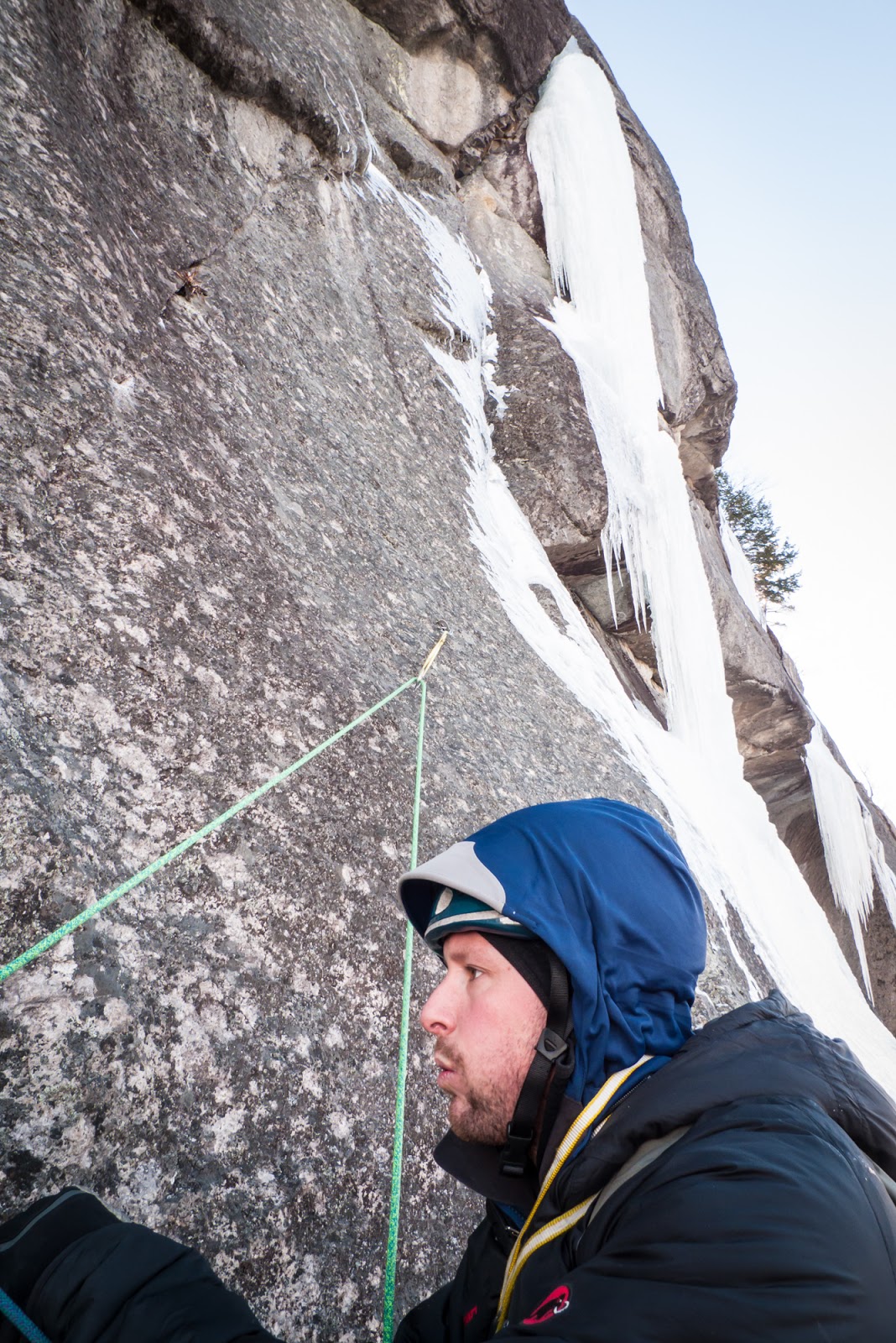
My partner Scott and I met in the Cathedral parking lot at 9 a.m. We figured there wasn’t likely going to be a line for a route like Diagonal, so we made it a leisurely morning. I brought the full kit, he brought a few extra screws, and we tromped our way into the base. Scott led the first section to the base of Toe Crack, but he stopped there, relinquishing the sharp end after the climbing turned to slab. I led a short pitch to the top of the block that access the Mordor Wall, and then I launched out onto the face.
Diagonal earned its name because it follows a right-trending dike through the blank slab. The dike is full of square features, but it’s basically devoid of cracks. In summer the climbing is exposed 5.4, but in winter when it’s snow-covered and the leader is wearing boots and crampons it feels more like M6. It is runout, insecure, exposed and terrifying. And it’s fantastic. I don’t want to venture a guess as to how long it took me to lead, but it was uphill rowing the whole way. Many of the holds are rounded. Getting your crampons to stick takes dedication. Plus the snow made finding the little gear there is extra-difficult.
But the hooks, however small, kept showing up. The little edges and pockets for my frontpoints kept appearing. I kept getting just enough gear not to turn around, and I kept moving higher.
Except, of course, for a couple places where there wasn’t enough gear. There I just had to punch it and watch the expanse below me grow. “Breathe,” I thought as I moved, remembering a blog post I’d read the night before. “Breathe, and find your feet.” Somehow when the gear stopped showing up the feet arrived. At one point I just went, forgetting about gear, laying back against the left side of the dike, pushing upward for a ledge in the distance without a thought of the fall. Those are the greatest moments.
The pitch ends right next to the column, and I couldn’t stop staring at it as I belayed Scott up. Compared to the terrain I’d just moved through the ice looked mellow, easy even. The sun baked the left side of the column all morning, and although we were now in the shade I was sure the ice would still be pliable.
Scott made it up to the anchor, caught his breath, took a swig of water and then put me on belay. I set out sideways across rotten ice bound for the steep, excited to be moving again. I clipped a quarter-inch bolt at the start of the real climbing and started up.
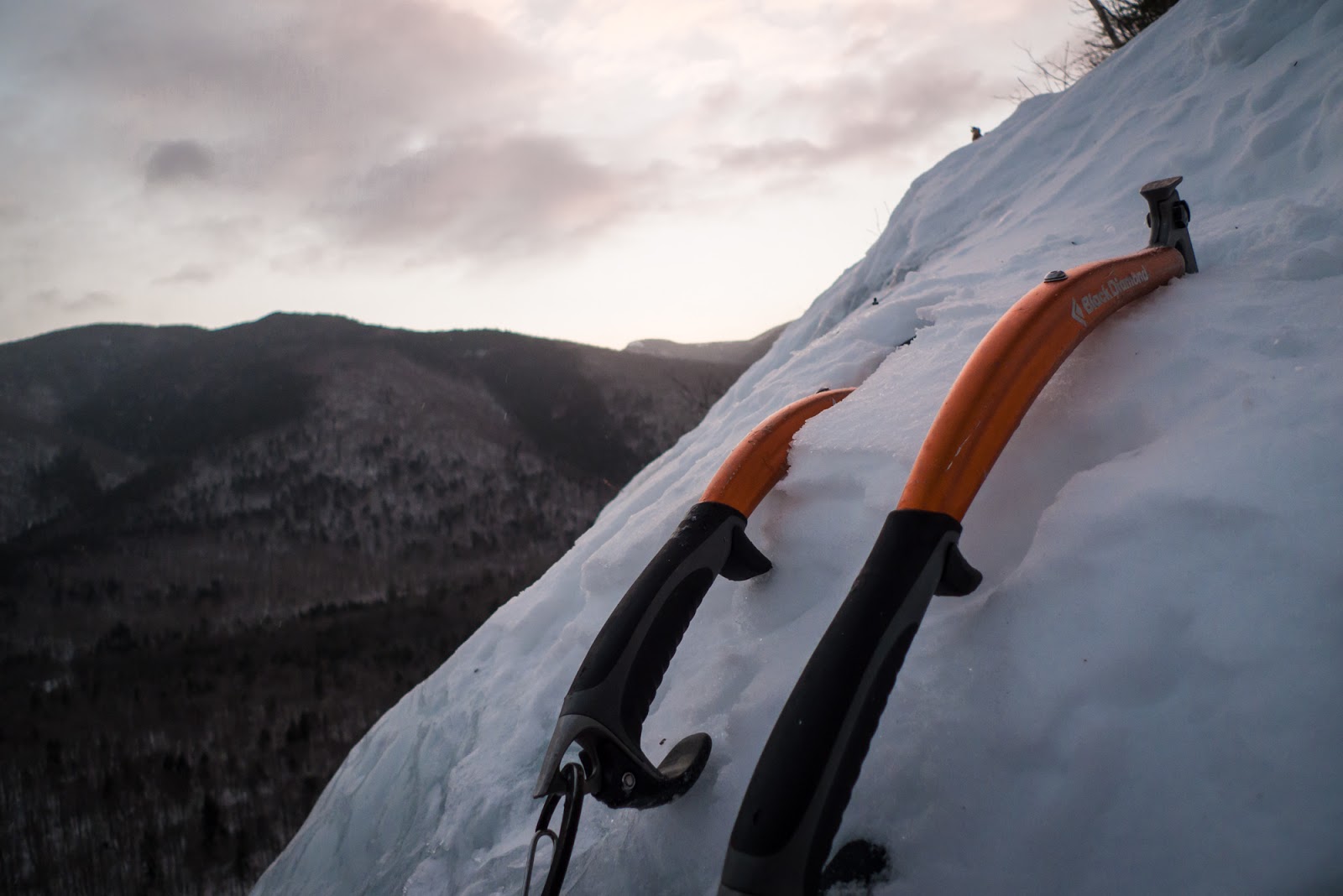
I have not been on much ice thus far this season, particularly vertical ice, so it took a bit to center myself once I sunk my picks. The ice, however, was just as I suspected — forgiving. I moved upwards a swing at a time, placing more screws than necessary but enough to stay comfortable. At the break I grabbed a no-hands rest, sunk another screw or two and launched for the apex. Every swing sunk with minimal effort, and I couldn’t keep the smile off my face. This too was what I was here for.
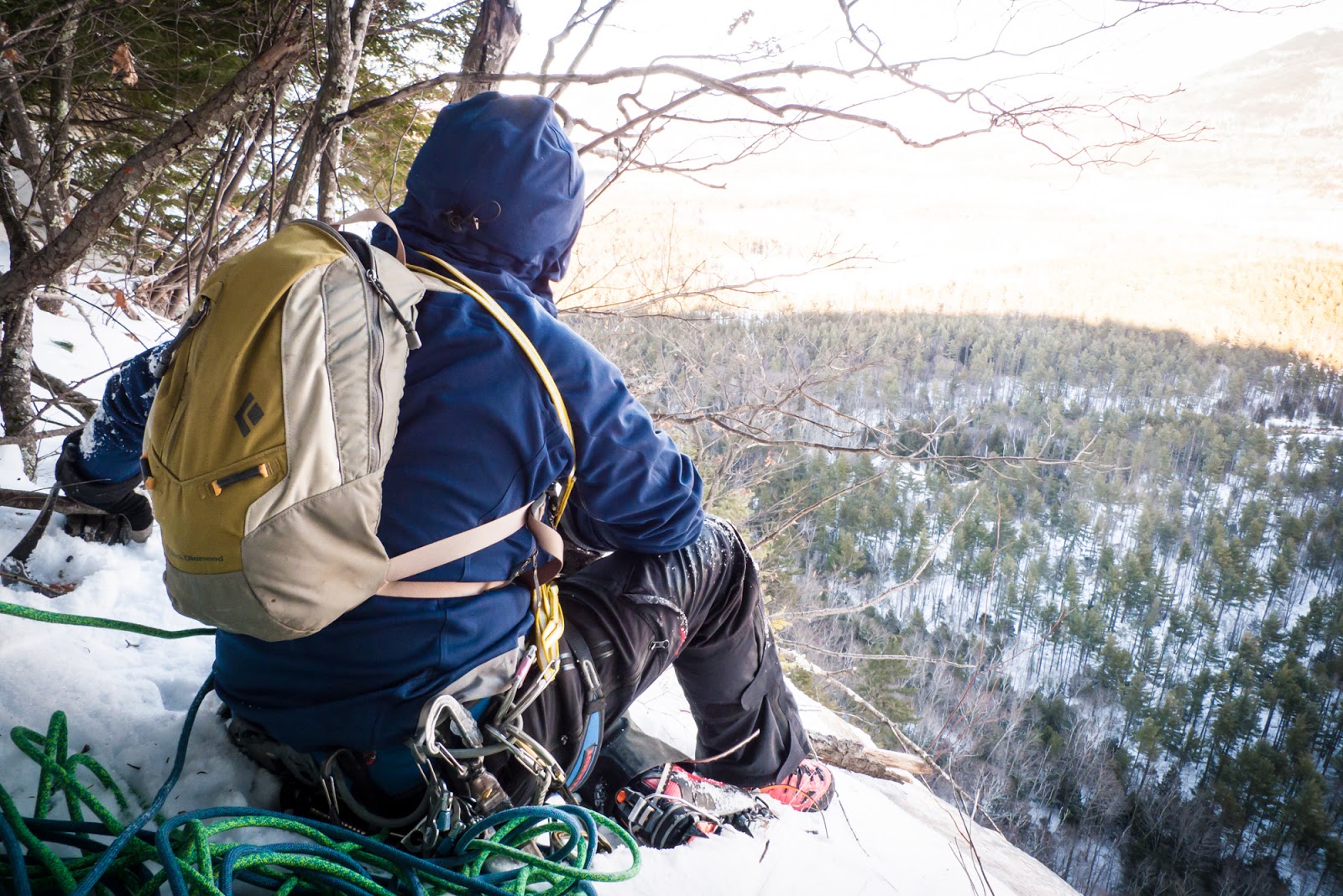
Above the vertical ice the flow sinks into the chimney, which makes for awkward but fun climbing. After a while the ice runs out, and the climbing turns into wrestling with small plants. That’s the sort of groveling I’m good at, so I went wild. I slung a little tree and kept pushing upward. I could taste the top. I was both elated and sad it was ending.
I got to the trees and put Scott on. It didn’t take him long to scurry up in my tracks. He reached the summit and flopped down onto the ground exhausted. I knew how he felt — we’d just finished one hell of a climb.
Not every day out is awesome. Sometimes (like on Mean Streak) everything does not go as planned. Today I didn’t have a plan, I just had an objective, and it kept coming at me until I stood atop it. Maybe that was the plan, but it certainly wasn’t mine. And it certainly made me smile.
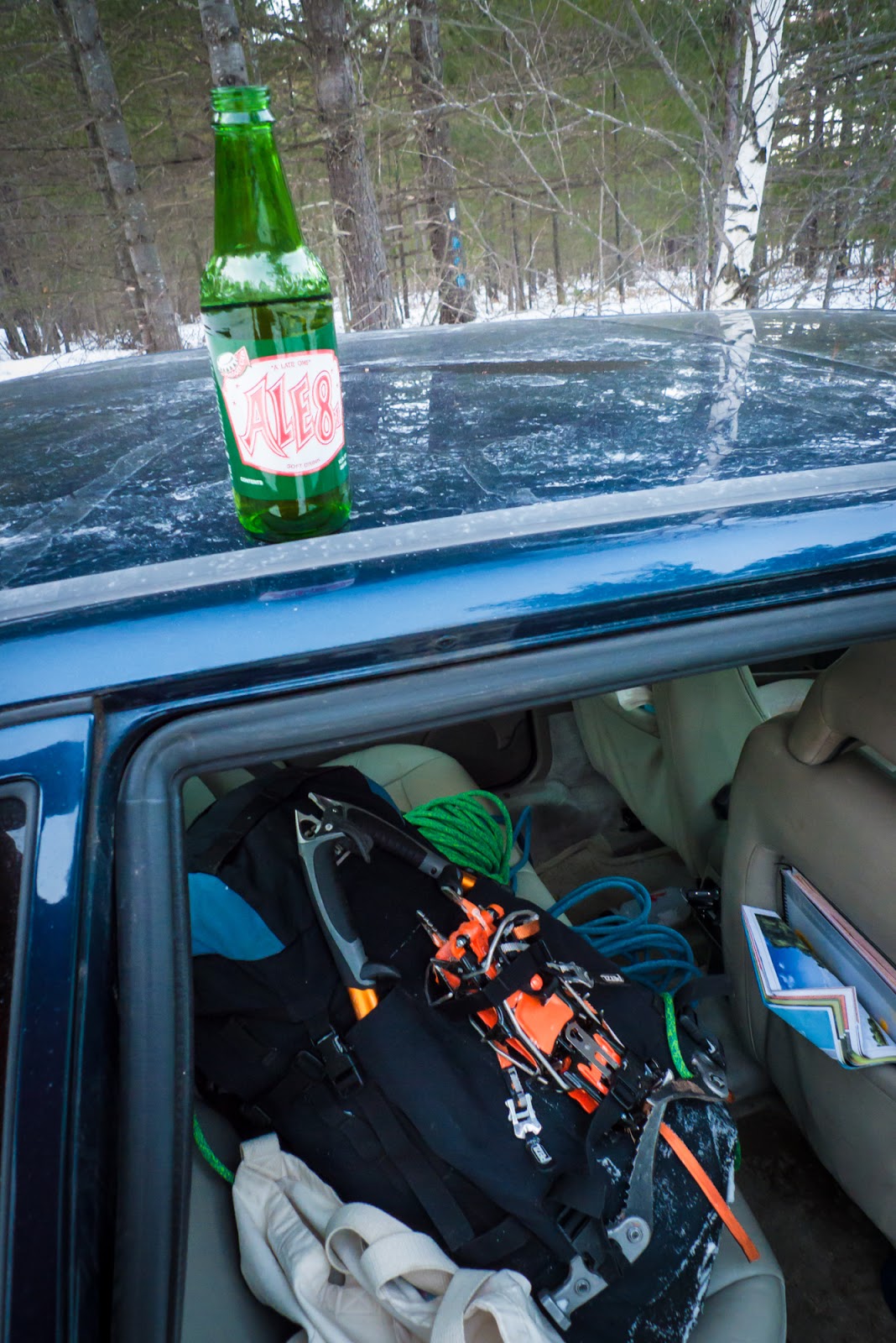
Back at the car I had a victory dance waiting — a pair of Ale-8-One’s my wife brought back from Kentucky after her last Red River Gorge trip. We got to the car at 3:45 p.m., the light of the sun was starting to warm. I dropped my pack and pulled out the bottles. “Good send,” I said as I handed one to Scott.
“You too,” he said.
Fin.

What is a Climber?

What is a Climber?

What is a climber? Am I a climber? Are you?

There is a thread on NEIce.com right now asking how many climbers people think there are. In that question there is an inherent assumption about what it means to be a climber, and in the first few responses the discussion takes a hard left turn into who is really a climber. The back and forth got me thinking.

Am I a climber? I moved to North Conway a decade ago with no job, no clue how I was going to survive. I had led a handful of 5.9 rock climbs, but none of the classics on Cathedral. Grade 4 ice was within grasp, but I didn’t have a clue how to survive steep ice or mixed climb. I didn’t know how to aid climb, haul, bivy, belay off the anchor, belay a leader with a Grigri, sport climb, handjam, place a pin or do half the things I now take for granted.

But somehow I fell into a job at IME, the heart of all things climbing in the Mount Washington Valley, and began my introduction to climbing as a lifestyle choice. Since then I’ve climbed across the U.S., in Central America, South America and Europe. I’ve put up new rock climbs, new ice lines, new mixed routes, climbed alpine peaks, guided clients, soloed thousands of feet of ice in a day, onsighted 5.12 sport routes, climbed multipitch Yosemite 5.11s, fallen all over 5.13 projects, suffered my way up grade 6 ice and tied into a rope with some of the best people on this planet. So am I a climber?

A few months ago I would have said yes. I would have pegged my identity to my sport. I would have said, “I am a climber,” and my chest would have puffed out when I said it. Now I realize no, I am not a climber. I am a man. And by embracing that simple definition I climb harder.

What came with defining myself as a climber? Expectation, and through expectation I set myself up for failure. If I define myself as a 5.11 trad leader, does that mean I can lead every 5.11 trad route? What happens if I fall off a 5.10? If I call myself a grade 5 ice leader, what happens on the day I back off a grade 4? Easy — I feel disappointed. I feel like a failure. I feel like I can’t live up to my own expectations, like I am a fraud. By defining myself I set myself up for failure if I ever don’t meet that self-imposed definition.

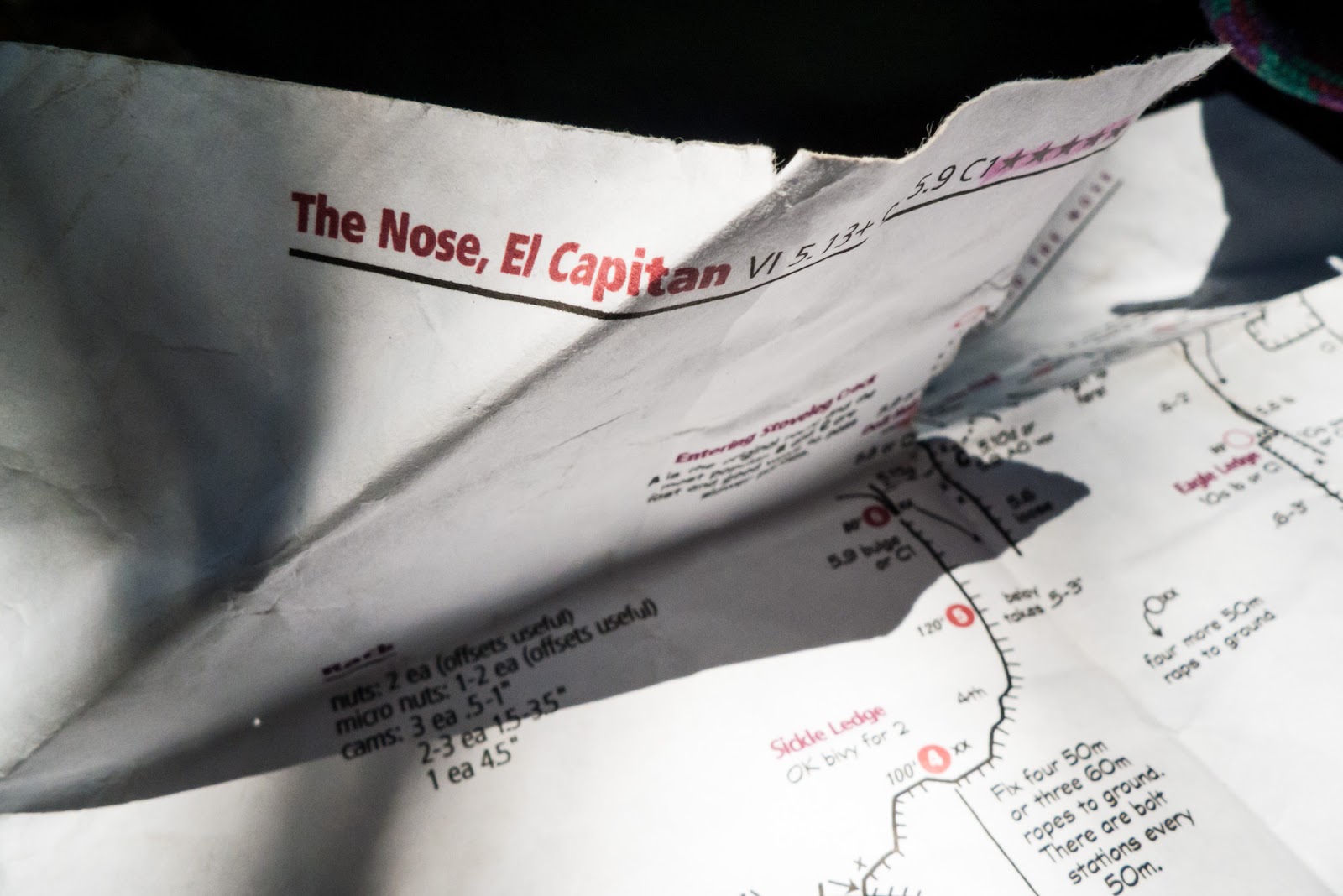
This past May I climbed El Cap via The Nose. It was a 30th birthday present to myself. “I am a climber,” I thought, “so I should have climbed El Cap.” I had a fantastic partner and a wonderful trip, but I suffered through the climbing. The weight in my stomach only increased as we moved upwards. With every pitch my desire to be back on the ground grew. I wanted to have climbed El Cap, not to be climbing El Cap. I was climbing El Cap because I felt it was something a climber should do, not because it was the thing in that moment I wanted to be doing. My decade of climbing experience and dedication (plus an amazing partner) allowed me to reach the summit, but it was not me at my best. Why did I suffer my way through a sea of granite? Because in my mind, “a climber should have climbed El Cap.”

What happens when a climber gets injured, loses fitness or gets old? They stop climbing. They start making excuses for why they can’t do what they expect they should be able to do, what they have told their friends they can do. They stop having fun, and they stop climbing.

I have my reasons for climbing, and the truth is they aren’t about grades. They aren’t about summits, they are about the experience. They are about movement, friendship, connection and personal challenge. They are about personal growth. If I get injured it doesn’t matter, I can still find all those things in climbing. If I lose fitness it doesn’t matter, I can still find all those things in climbing. And when I get old I’ll still be able to find all those same things in climbing if I choose to.

Last year I injured tendons in both hands. I couldn’t climb at my normal level, so my projects fell by the wayside. Did I quit climbing? No. I picked up my nuts and hexes and tried to lead everything I could on only passive protection. I never climbed harder than 5.9, but I was still moving, still climbing with my best friends, still connecting and embracing the personal challenge climbing offers.

These reasons are not grade dependent, not experience dependent. A brand new leader can embrace movement too. A client getting guided can face personal challenge, which leads to personal growth. Any two partners can see the rope as a connection that does more than just arrest falls.

This is what climbing offers — a chance at growth, a chance to step outside the ordinary and embrace life. But when I considered myself a climber I stopped seeing this. I started to see climbing as something plain, regular, routine, just part of life. But it isn’t. Every step into new territory, every move above a bolt is a fantastic journey into the unknown. Nothing about it is ordinary. We are humans, men and women. We were built for flat ground. Every journey into the vertical is a space mission. Every new exploration is a window into our own souls. What holds us back? Can we face that fear? Can we meet that challenge? Can we do the impossible?

I do not call myself a climber because defining myself as such would set up boundaries, build walls. I am a man, that is all. Climbing is something I do, something I love, and yesterday I went climbing, but it does not define me. And by releasing myself from the definitions, from the expectations, I learn to float. Free of expectation I continue upward in spite of gravity, in spite of fear. Released from myself, from my own self-erected barriers, embracing the emptiness within, I float to the chains of The Mercy, to the chains of Baghdad. Releasing myself from myself got me up Standard without a rope. Shedding expectations, shedding definitions, lets us see what we can really do. I might go mixed climbing, or alpine climbing, or bouldering, or sport climbing, or aid climbing, but I will fight letting any or all of those activities define me.

And, if I can help it, nothing else will define me either. I might choose to ski, surf, write, paint, sing or love, but none of those things will change the fact that I am simply a man, a man in search of fear, in search of a shift in perspective, in search of a window into myself. Anything that will push me is welcome, so long as it gets me outside my comfort zone, outside the known. I will search everywhere I can for ways to launch. I will look without boundaries, both within myself and in the world, in search of whatever I can learn. Embrace the unknown. Grow. Launch above that screw, that bolt, that piece of gear, but realize it is only one way to reach outer space. There are others. Go find them.

SKYWALKER in Climberism

The new route Ryan, Michael and I put up in Huntington in early December is featured in the new issue of Climberism. Michael did the writeup.

I got out for another nice session alone at Frankenstein this morning. The wind was calm, the temperature was in the single digits, and the sun came up as I neared the top of Standard Route. A better start to a day (and a year) doesn’t exist. I made it to work just after 9 a.m. Perfect.
I’m working on a post about what it means “to be a climber,” based on a thread on NEIce.com, but that won’t be up until at least tonight. For now, if you want to read about climbing, check out Climberism.