
 Storms roll in each morning just after sunrise. The thunderclouds sweep the ocean and crawl up the beach, prolonging the night and laying soak rain across the sand, palm trees, patios and walkways. But it never lasts, the Caribbean sun quickly burns through and turns the air into steam. Placencia summers are sticky and dense.
The town juts out like a thumb, surrounded on three sides by water. It’s a town of sand and ocean breeze and falling coconuts, a Belizean paradise. Pink and yellow cabañas dot the beachfront. A quiet walkway parallels the sea. Shops selling conch shell jewelry abut seafood stands. Placencia is the real thing, the kind of sleepy backwater escape first-worlders dream of.
And so they’ve come. Tucked among the shops and stands and bungalows are restaurants advertising happy hour drink specials, pizzas and ocean views. ReMax realty signs dot empty lots proclaiming the ideal locations for vacation homes. Tour operators bark snorkel excursion and scuba trip information in the streets. Everywhere the signs of a bustling tourist economy call.
But if that bustle marks opportunity, it is growth that leaves Belizeans behind. The realtors are expatriates, as are most restaurant owners, tour operators and even many shop and stand owners. The face in the window may be Belizean, but usually the owner behind them is not.
“They want to own everything,” one Belizean food stand owner told me, “and to tell us what to do.”
Belizeans smile and don’t let on about the tension, but if you ask they’ll tell you: the best of their country feels taken from them. Expatriates are the new colonialism. They own the resorts and restaurants and tourist businesses. They buy the land for cheap, developed it in ways no local could afford and then hire on the former owner at sharecropper wages. They sell to tourists and export the profits, leaving Belizeans marginalized, pushed aside in their own country and unable to afford a home in the towns they grew up in.
But no one will tell you that. Everyone is too friendly, too polite. You have to ask.
It’s not a dissimilar story to thousands of other tourism destinations, the skyrocketing real estate prices and the foreign investors/developers. But in Belize for some reason it feels different. The expatriate-owned properties are billed as ecoresorts, a term that conjures images of local cooperatives, not exploitive practices. That such sustainability-focused businesses are environmentally conscious but socially bereft (or worse, intentionally abusive) seemingly runs counter to their mission. The idea of an expatriate-owned business helping elevate overall economic standards seems an empty one.
Without the infrastructure built by such investment, however, there wouldn’t be much in Placencia. The tourism economy was founded by those expatriates, even as they changed it. The economic prosperity of the peninsula is intricately tied to those foreign-owned shops, restaurants and hotels.
How do you balance growth with economic prosperity? How do you ensure locals have access to the kinds of jobs that feed a future? Is it a business owner’s responsibility? Government?
Owners, it appears, aren’t doing it, but at the suggestion of government Belizeans laugh. “They’re as bad as the foreigners,” they say. Politicians in Belize are notoriously corrupt, and everyday Belizeans know better than to look to them for relief. If a big house on the beach isn’t owned by an expatriate it’s owned by a government official. The path out of poverty, it seems, lies elsewhere.
Perhaps it is in education, notoriously underfunded in Belize but a possible path to something other than displacement and servitude. The cost of high school, however, is borne by families, to say nothing of college. In a country of 300,000 it’s hard to spread the cost of public necessities. College is not in everyone’s future.
These are the quandaries hidden beneath white sand and rum drinks. They are the veiled problems of paradise. Belizeans know that Caribbean destinations are only desirable if they are warm, inviting, happy, and so they remain beneath the surface—to do otherwise would threaten the few economic scraps available. So any tourist with $40 U.S. can land a cabaña on the beach and stare at the stretching blue Caribbean, sip rum drinks near the lap of waves on sand.
But that is the tourist economy today—one of displacement and denial, an economic scramble that leaves behind more people than it elevates.
Welcome to Belize. Welcome to the world.
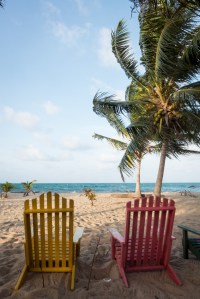

 OK. So I’ve been working in Belize for the last month, which has meant I’ve not been keeping up with my posting duties. Internet access was temperamental, time was limited, etc., etc. But I fly back to the U.S. in a few days (currently hanging out on one of the most beautiful beaches in the world), back to my car (parked just north of Seattle), and figure out whatever is next.
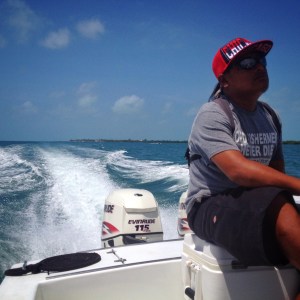
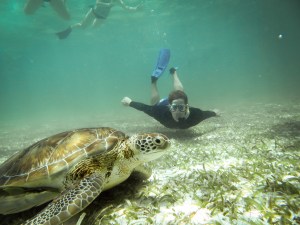 And it was an ecological exploration. Belize is home to the second longest barrier reef in the world, multiple ecosystem zones, caves, jungle, mountains and savannah. Iguanas crouch in the trees, tarantulas roam the forest floor, toucans haunt the air. I saw a manatee, two Harpy Eagles, a jaguar, held a boa constrictor, swam with sea turtles, pondered over leafcutter ants and got bitten by thousands of bugs. It was an awesome amazing trip, one I’ll be writing about more. But before that happens I wanted to share a video. My dance with sea turtles reminded me of it. At 2:25 is the job I think is probably most interesting in the world: sea turtle wrestler. Heck yeah! Lifetime aspirations! 🌊🐋
 The other day I came across a news release from my alma mater the University of Southern Maine: “USM hails turnaround,” was the headline, “Admissions numbers substantially up and budget balanced for first time in years.” Classes are full, and the university is in the black. Officials were upbeat; for the first time since the Great Recession the university is making money.
 But those opportunities are becoming harder and harder to afford. Over the past 50 years education has changed. The opportunities have changed. Even as the necessity of a college degree has increased, support for obtaining one has dwindled. Political pressure has forced entities built on public investment to operate more like businesses, to focus on growing income streams rather education opportunities. School budgets once covered by government have been cut while the portion left for students to bear has ballooned. The task of educating, a responsibility once felt by all of us, has been privatized, individualized and handed off to the kids. Education has transformed into something you buy, and it’s no longer affordable.
 The Washington state ferry from the San Juan Islands to the mainland was the end of the trip. It’d been a day of chasing whales—an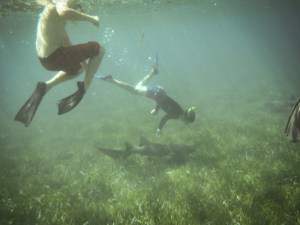


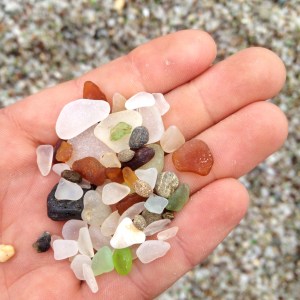 The idea sounded cool when I read about it a month ago: a beach made of sea glass, stones replaced with ground shards of white, green and brown. Rare specks of blue and rose radiating in the sun, waves lapping the shore, giving the glass below the waterline an even more powerful sense of iridescence. Glass Beach, Fort Bragg, California. I wanted to see it.
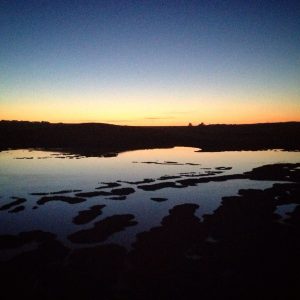 I drove to North Beach and watched waves pound the shore. It was a desolate place. I wanted to stay, to take in the starkness. The sun had warmth, but not enough to fight the wind. I pulled on my jacket, wandered down to the lighthouse at the point, then over the peninsula to a protected harbor. All of it wild, lonely and exposed.
 The morning was cloudy when I pulled into Fort Bragg, the ocean calm. I turned left of Highway 1 and parked, following signs to Glass Beach. “Please leave all cultural artifacts,” a note said. I descended cabled stairs to the shore.
 It’s happened: Antarctica has hit 400.
 It can be tough
  Then there is the work of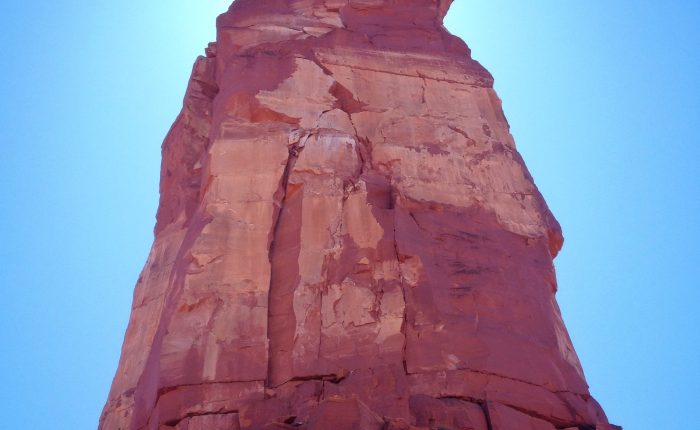

 A few weeks earlier I made it to one of the desert towers Brian and I talked about. The North Face of Castleton is a beautiful 5.11- up steep orange rock. My friend Jim just happened to be in Moab at the same time as me, and it was his birthday. He put a post on FB asking if anyone wanted to climb the next day. “Seriously?!” I said. “You’re in Moab?? Let’s climb Castleton!”
 Jimmy followed, pushing his way up the final exposed crux with a grunt, and we scampered up two more pitches, both excellent.

 So that’s one. The other Australia story is also from the Great Barrier Reef, but this time from land:
 It’s happened again: Another shooting. In Orlando this time, 49 victims plus wounded.
 ErikEisele.com