New Sheriff In Town

…well, mayor.
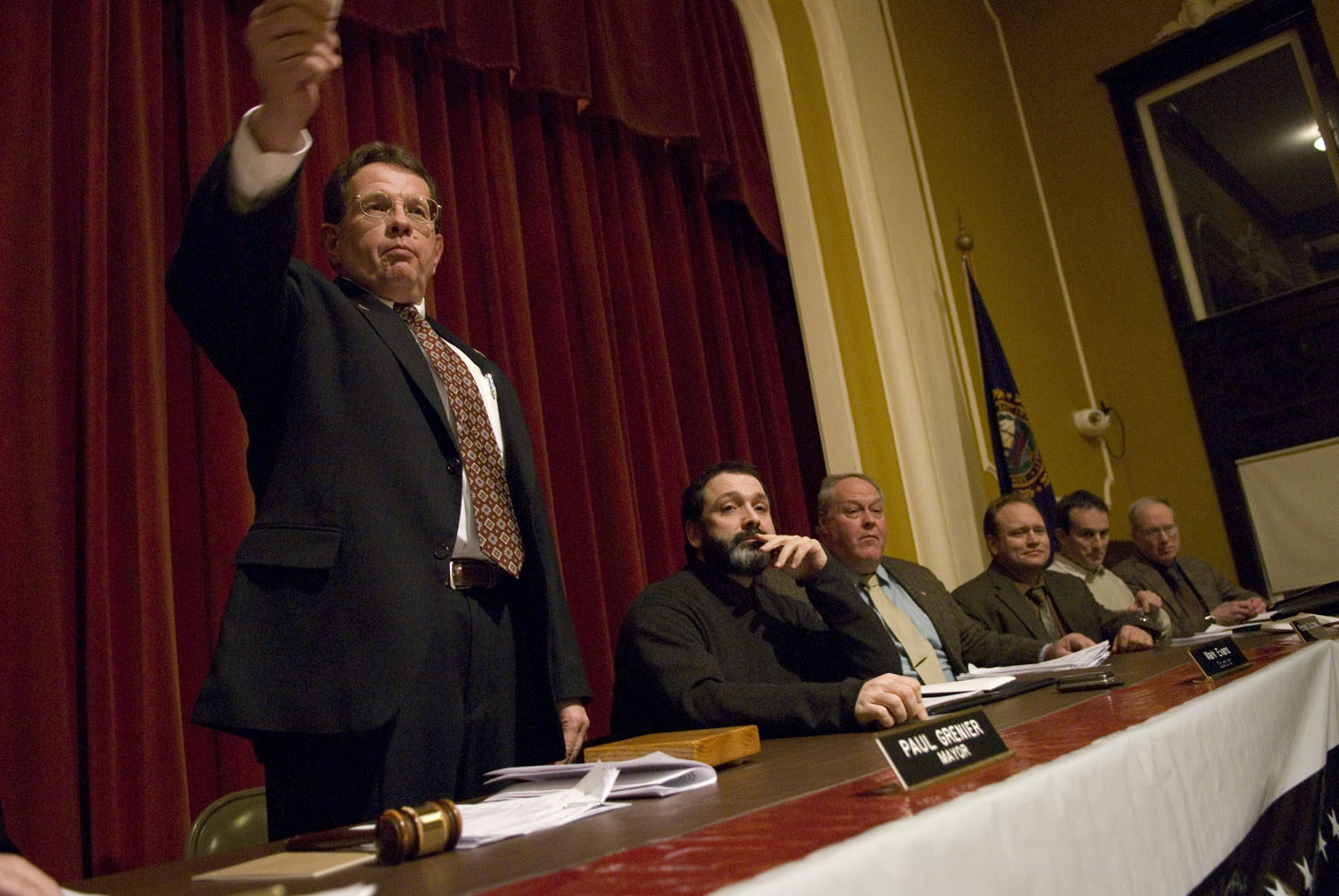
Mayor Grenier made good on his promise to create closer ties with Laidlaw—a number of representatives from the company were at the meeting tonight, as Mayor Grenier, Councilor Robert Danderson and Councilor Michael Rozak were sworn in. It will be an interesting new chapter in the book of Berlin.
I’m interested to see how the new council interacts. The staunch Laidlaw opponents ranks are pretty close to the staunch Laidlaw supporters, and it could result in some tough battles if the council does not resolve to put those differences aside.
Mayor Grenier did call for support of both the Laidlaw and the CPD project, and I noticed Robert Danderson’s name on one of the petitions requesting CPD be subject to SEC review. It will be interesting to see if these two recent allies butt heads on this issue and if Mayor Grenier is going to go to bat for CPD with the same vigor he has gone to bat for Laidlaw.

On Wednesday WREN comes to a BIDPA meeting, which should offer another conversation worth following. WREN could bring a creative spirit to Berlin many people say was extinguished by years of mill life, but it will require the city taking a chance on them, a chance they can barely afford. If they are able to foster a partnership, however, it could be a rich partnership for both parties.

I’m getting back into the swing of Berlin, and I’m realizing how much I missed it. Work is always nice to get away from for a while, but when work is in Berlin it’s even nice to get back to. I took a ride with the police chief and Commissioner Steve Griffin today, along with a reporter from the daily. Chief Morency and Commissioner Griffin were presenting a Berlin woman with a plaque commemorating her 38 years of service as a crossing guard. We arrived, and she, her daughter, and a close friends plied us with cupcakes, coffee, soda, crackers, cheese, mini-cupcakes, donuts and juice. I don’t even drink coffee but I took a cup just to make these wonderful women happy. I also grabbed some grapes at the insistence of my hostesses. I’m not part of the French culture that dominates Berlin, but when we left Chief Morency and Commissioner Griffin reminisced how the was exactly like every visit to their grandmothers’ house as a child. I couldn’t help but smile. I’ve been allowed into a community that has more heart than most people would know how to cope with. After a few weeks away, it is certainly nice to be back.
Stuck in the Snow

My job is weird and great. I was late to the police station today because I got caught behind a plow going over the notch, and now I’m kicking it outside White Mountain Community College poaching Internet, despite the fact they are closed for the holiday.
It’s guaranteed to be an interesting day in Berlin, with the council transition and all, but everything is closed, it’s 9 a.m., and the next real thing I’ve got to cover is at 6:30 p.m. Without an office it can be tough to figure out just what to do with myself, because I don’t even have a warm place to sip coffee.
Although I do sort of have an office—ask any WMCC student or employee and they can tell you where it is—it just is closed for the holiday.
So I guess my point is, get out and have some fun today while the weather and work allow it. I know a bunch of people out playing today, while I’m in a sweater and nice shirt typing against my steering wheel. Journalism is quirky and fantastic, but not for those easily riled.

And a quick update on Haiti: I have been trying to make connections, but it doesn’t look like I’m going right away. The ones I have made have not been sufficient for me to have confidence I could go safely. But I’m still working on it, and I may be able to make something happen in the coming weeks. Hopefully the scene there improves; it makes Somalia almost look like a vacation destination right now.

More Work Than Energy

Well, biomass undoubtedly going to stay a hot topic for while now, between the SEC rejecting Laidlaw’s initial application and the petition hearing on whether CPD should go through the same review process. It’s an interesting environment. I wonder if the fierce fighting could keep either project from coming to fruition. Seems possible.

I wanted to mention the massive turnout I saw last night at the city’s contractors meeting. Andre Caron, city housing coordinator, told me earlier in the day he was expecting between 20 and 25 contractors to attend a meeting about the Neighborhood Stabilization Program.
The city hall auditorium was packed when the meeting started at 6:30 p.m.; I counted around 150 people. More people came in late, so I don’t know how many were there in total, but Mr. Caron was running out of handouts.

The NSP is a stimulus program for Berlin: the $2.5 million, which has to be distributed by September 9, will be a massive influx into the local economy. Whether local contractors win the jobs (federal rules stipulate the city has to give the project to the low bidder) or out of town contractors do the work, they will spend money locally. It can bridge the gap until the federal prison opens, and hopefully until some other economic engine opens in the area (biomass, tourism, whatever). It will give people jobs, which is exactly what the area needs.

I do wonder about increasing the amount of low and moderate income housing for the city. Those types of properties seem well represented already. I know there has been talk of the “broken window effect” in many of the neighborhoods slated for renovation and rehabilitation. That’s the idea that when there are a few broken windows in a neighborhood it’s a clear indication that the rule of law is generally ignored there, and people tend to let everywhere nearby go. Malcolm Gladwell argues that’s what happened in NYC during the 1980s in The Tipping Point. I tend to agree more with the authors of Freakonomics, who don’t put much weight behind the theory, but I’m happy to see things get cleaned up. Will rehabbing the properties improve the neighborhoods if transients keep moving in for the cheap rent? Maybe. Increasing the number of units might lower the rents, increasing inflow of low income people. With good building management, however, it may not be unreasonable to new residents with open arms, regardless of their income level.
The condition of urban low income properties vary widely from city to city—some are ghettos and some are nice places to live. Berlin, though it is the woods of northern New Hampshire, has to treat its multi-units as if they were in Boston or New York. On the wall in the police station is a flyer on how to recognize gang colors and gang tattoos. It isn’t a joke, and it isn’t something simply rehabilitating buildings will solve.

Berlin does a poor job cleaning the on-street parking after a snowstorm, but does the job with very limited resources. The police commission was defending their budget to Councilor Mark Evans last week because they said they have to ensure the city stays safe. They too have very limited resources. Same with the fire department, and same with the schools. I spoke with a school official months ago who said the influx of low income students has been a real burden, but it isn’t something they can control. Anyone can move to Berlin that wants to, and the city is required to provide an adequate education. That can be a tough spot to be in, particularly around budget time.

What will the renovations and the demolitions do about these problems? It’s unclear, but it’s the best the city can hope for. It will improve property values, although that may just mean you pay more in property taxes. But if it can remove the air of blight from some of these neighborhoods, it might build more of a city people want to move to. It is hard, after spending any length of time in Berlin, not to recognize the positive side the city has to offer, but it takes only a drive through town to notice the negatives. This work will address many of those negatives, remove them and hopefully forever move past them. This is one more step in the right direction. Granted, I covered the shooting two months ago, and just last week someone was beat with a baseball bat, but these are not the cities defining characteristics. They stick out in Berlin, perhaps because of the broken windows. If the city were pretty it would be a little bit easier to ignore the ugliness. Deaths, thefts and assaults in Conway don’t keep people away, but in Berlin they fit the mold. If nothing else, maybe $2.5 million dollars can change the mold, so someone can see a positive Berlin on the first visit, instead of discovering it on the third.

Haiti Express

So I’ve barely been back a week, and I’m thinking about leaving again. My wife is encouraging me to go to Haiti, to help with the relief effort and to look for stories. I have a contact there who I sent a message, to see if I could help. And I found a $400 airplane ticket, which isn’t cheap but isn’t expensive. During 9/11 and Katrina I considered going to help, but I never got off my butt and went. This time, however, if I can work it out I’ll go. I was thinking a week, but I’ve got to see if I can get the time off.

These last few weeks have been hectic, and I admit I’ve been neglecting LPJ. It took days to resettle after Mexico (including a trip to New York to retrieve the dog from the father-in-law’s house). Honestly, I’d like to just kick into the old Berlin Reporter routine and feel like I’m back in the swing of things, but when a city is destroyed its hard not to notice. It’d be worth another week of minor stresses.

And just as so many interesting things are happening in Berlin. Laidlaw submits its proposal for EFSEC review; CPD gets pressure from residents to do the same. The CPD/PSNH matter should have a next step soon. Fraser is looking for a buyer for the Gorham mill, and a city council transition is about to take place. It’s an exciting time, and I’m glad to be in the middle of it.
I’ve got interesting things going on as well. I’m trying to find out more about that U.K. hero who saved a Berlin resident, so I can put that in the paper. I’m hoping to turn that story into a radio piece as well. I may also do some work for the Maine Center for Public Interest Reporting, which was recently launched to provide investigative reporting for Maine. It a non-profit, and I would get valuable experience digging for stories. That’s experience I hope to transfer to the Reporter. Berlin undoubtedly has a wealth stories that require more expertise than I’ve got, but hopefully not for long.

So my next few weeks are up in the air, but my next few days are not. I’ve got a couple of stories I’m digging into tomorrow, though at this time I’m still looking for more. I have to admit, I still feel out of the loop. The running around all over the place has kept me from sensing Berlin’s pulse. If I wind up in Haiti, it’ll probably be a few more weeks; otherwise it’ll be a few more days. I’ll let you know how things develop and if I’m going. In the meantime, if you hear anything, let me know!

Update: I’ve got the OK from work to go to Haiti. I’m still waiting to hear about some leads there to make it feasible.

Update: I’ve contacted a prominent Haitian from the Manchester area who is going back to Haiti with a small group. He’s agreed to let me come along. I’m still looking for some more contacts to ensure my safety and sufficient material to keep me occupied for a week. Most of the humanitarian groups I’ve heard on the air and on the media are saying they need money at this time, not volunteers, but I’m trying to reach several that are looking for people to go.

Back From Mexico, Rescue From the U.K.

I mentioned it on here, that I was going to Mexico. I did, it was nice, hot and sunny. Now I’m back, happy to see white snowy mountains instead of white sandy beaches.

A lot happened while I was gone, I’m sure, but I have yet to catch up on all of it. I’m still getting caught up on Rite Aid closing and the latest Laidlaw/CPD stuff. But I’ve got something cool to tell you.

At 5:32 p.m. on Saturday the Berlin police department received a fax from a police department outside Liverpool, U.K. The fax said they had received a tip that someone in Berlin had slit their wrists. Someone in the U.K. town called the police after they read something in a chat room that concerned them. The Brit knew that the person was in Berlin somehow, so when he called his police department they got in touch with Berlin PD. Somehow the Berlin PD determined they had better check on a residence on Main Street, and there they found an unresponsive man with cuts on his wrists. He wasn’t bleeding badly, but police were concerned he’d overdosed on some type of drug. They called an ambulance, which rushed him to the hospital. It’s likely he survived because of the police intervention.

Isn’t that great? Twenty-first century life saving from across the Atlantic. I found out about it this morning, and I have several other things going on, so I didn’t pursue it, but it seems like a great feature. Maybe for a tech journal or something.
I also thought it was funny that the police departments connected via fax machine. I didn’t know those still existed.
OK, back to work, just a quick note. Happy to be back in the frozen north. Just fax me if you have a problem.

Logic Gap?

I tried something today I thought worked pretty well. It’s something new for LPJ, and I think it will be a great addition to the site. I spend a bunch of time in the car heading back and forth from Glen to Berlin, and now I’ve got a way to put it to better use. Check it out:

I’m putting in two versions to see which people like better as well. One is YouTube and the other is Vimeo.

This is the first installment, I think, but it seems worth continuing. Again, as always, this is my blog, not the Berlin Reporter’s, just for clarity sake, so don’t expect breaking news or a newspaper’s objectivity. I try to be open to both sides, but I’m doing this for fun without an editor looking over my shoulder. Read it for pleasure and feel free to contribute.

I’m looking for a name for the the video segment; if you have any good ideas let me know. I was thinking Logic Gap, because down south notches are called gaps, and I plan to do it over that drive. I am not always logical, but I thought it worked. Let me know your thoughts on the video, which one you like, and your thoughts on the Logic Gap name.

Thanks.

Next Step—NYC

I’m trying to improve and expand my reporting skills and repertoire, so I’ve applied to the John Jay College Center for Media, Crime and Justice Guggenheim Fellowship. I’d go to NYC for a weekend, learn a bunch, then come back and do a big story on something related to police and crime. Here’s my pitch, we’ll see if I get it.

Police departments in post-industrial communities

Berlin, N.H., was devastated by the decline of the paper industry, with economic consequences akin to industrial cities in the Midwest. The streets are lined with boarded up storefronts and burned out buildings, and there were 20 suspicious fires last year. Two weeks ago two men were shot during a home invasion; one died. Officers face challenges usually not associated with a community of 10,000 people in rural New Hampshire; challenges they didn’t face 30 years ago, though the city had double the current population.
I will examine how police departments in cities reeling from industrial collapse react to and combat the rise of violent crime as their cities hollow to shells of their former selves.
This phenomenon isn’t limited to Berlin—Lewiston, Maine, two hours east, is on the same river that supported the same industry. It is going through a similar transition, but the transition phase has become everyday life.
Despite efforts to kick-start their economies, the downward spiral continues. Low property values and an abundance of multi-unit properties have made it profitable for landlords to purchase buildings and turn them into slums. The low cost of living entices poor people to migrate to Berlin, or in Lewiston, African refugees to settle. The cities have been changing rapidly, and longtime residents watched from their porches as the transformation unfolded. The police have watched as well.
They are caught in the middle: remembering the old city, policing the new one. They face problems and situations they are ill equipped to handle, with shrinking budgets, changing demographics and limited support. I will report on what those departments do to make up for the shortcomings, and where and how those efforts are lacking.

Rising Star

Some people think watching city council week after week would be dull; I laugh when I hear that. So much to discussion goes on at those meetings and all the others like them it’s hard to keep up. Tedium simply doesn’t apply. The last meeting in particular there was an impressive level of public input, with probably almost 10 people standing up to speak, and then there were a plethora of topics that I could have written about—unfortunately I only had 750 words.

In the last few weeks one councilor has kept things even more interesting than normal. He has distinguished himself with his willingness to directly confront critics, often with uncommon eloquence and confidence, and to repeatedly hammer on issues important to him. The councilor is David Poulin.

It started at the mayoral debate, when councilors had five minutes open time to address the audience. Councilor Poulin unleashed more talking points in that five minutes than the rest of the room mentioned combined. He may have even conveyed more than the two mayoral candidates, and they had an hour. It was the most fired up I’d seen him in six months of covering council, and it caught me completely unprepared.

Next was the meeting after Councilor Dick Lafleur was to serve as chair but not enough councilors showed up. Councilor Lafleur scolded councilors for missing it, to which Councilor Poulin responded. Clearly perturbed, he maintained his composure and gave it back hard, with a hint of disdain in his voice. It was a strong second performance for a councilor that had before this been pretty uncontroversial. Before this the thing I would have remembered him for was requesting a memorial plaque.

Most recently it was the city seal. Councilor Poulin was the driving force behind removing the stack from the seal, and he continues to point out when the old seal pops up still. The city clerk wrote a memo for Monday’s meeting listing the cost of replacing all iterations of the seal, which came to “$10,000 at a minimum.” Some councilors balked at the price tag, but not Councilor Poulin, who responded with another noteworthy rebuke:
“Why is it such a point of contention to remove the stack? Nobody wants to live in ‘Stinktown.’ I can’t see where pollution should be a poster-boy. There’s going to be expense associated with transforming an image. You’re undermining the actual vote. I can’t support anything but getting rid of this stuff.”
Again, like the first two, no number of quotes do it justice. I’m glad I was there to watch.

Three times now since the end of October I’ve wished I had a video camera while in city hall, and every instance has been to tape Councilor Poulin. He has been an aggressive champion for his views, which he shares freely, even when they go completely against the rest of the group. And unlike many local politicians, he is bullish enough to wield his inclination effectively.

I understand he ran because issues involving the sign at his business on Glen Avenue, but now he’s become an effective spokesperson for progressive change in Berlin. What’s more, unlike other champions of those policies on the council, Councilor Poulin is a Berlin native, which is important to many voters. He mixes laissez-faire economics with a flair for marketing and then speaks when just as the room pauses. Most politicians are better at avoiding questions and employing doublespeak, but he’s comfortable putting his positions on his business card. It makes me look forward to next Monday night.

New York and Beyond

It is getting close to the holidays, which, for my wife and I, means a trip. We get out of town for Christmas instead of try to choose between our five families (two sets of divorced parents and my sister with the only niece and nephew). It works well, but it means I spend the weeks leading up to when we leave frantically trying to get everything done.
That was the story this last weekend: we went to New York to see my wife’s family. That will be the story next weekend, when we take my niece for the weekend to give my sister a break. And then we are headed to Mexico for a few weeks of thermal restoration.
So my LPJ work is likely to be spotty until I get back. Or, if I wind up taking my computer, it might just have a different flavor.

I wanted to get this out there, however, before I get busy again. (Lots going on today. There were several drug related arrests this weekend, and the third person allegedly involved in the home invasion was arrested. Busy day.)
I was in New York, at a birthday party for one of my step-in-laws, when someone asked me what I do. I described working for the paper, and they were interested in Berlin. I described the city as best I could, including its challenges, and several people sat in rapt attention. My description of a pace of life and a world where everyone knows one another obviously uncovered a nostalgia many of the urbanites had worked to bury. I described many of the things I describe on here, and they were amazed such a place still exists.
Berlin has problems: landlords, jobs, drugs, poverty. But it also is so special. I really do think many people in Berlin don’t realize it is because they don’t leave often enough. They don’t spend enough time in the high speed world, where it’s more important to avoid eye contact with a stranger than it is to avoid bumping into them.
I like leaving Berlin, because every time I come back. I drive into a town that feels like it is perpetually waking up, never moving at the full speed of the day. It is a treasure, and when I tell people about it they act I’m talking about Narnia or Atlantis. That pace, which Berlin takes for granted, is what so many people are yearning for. I can’t help but enjoy the fact that I get paid to come up and slow down every day.

Dirty to Clean (or Reborn)

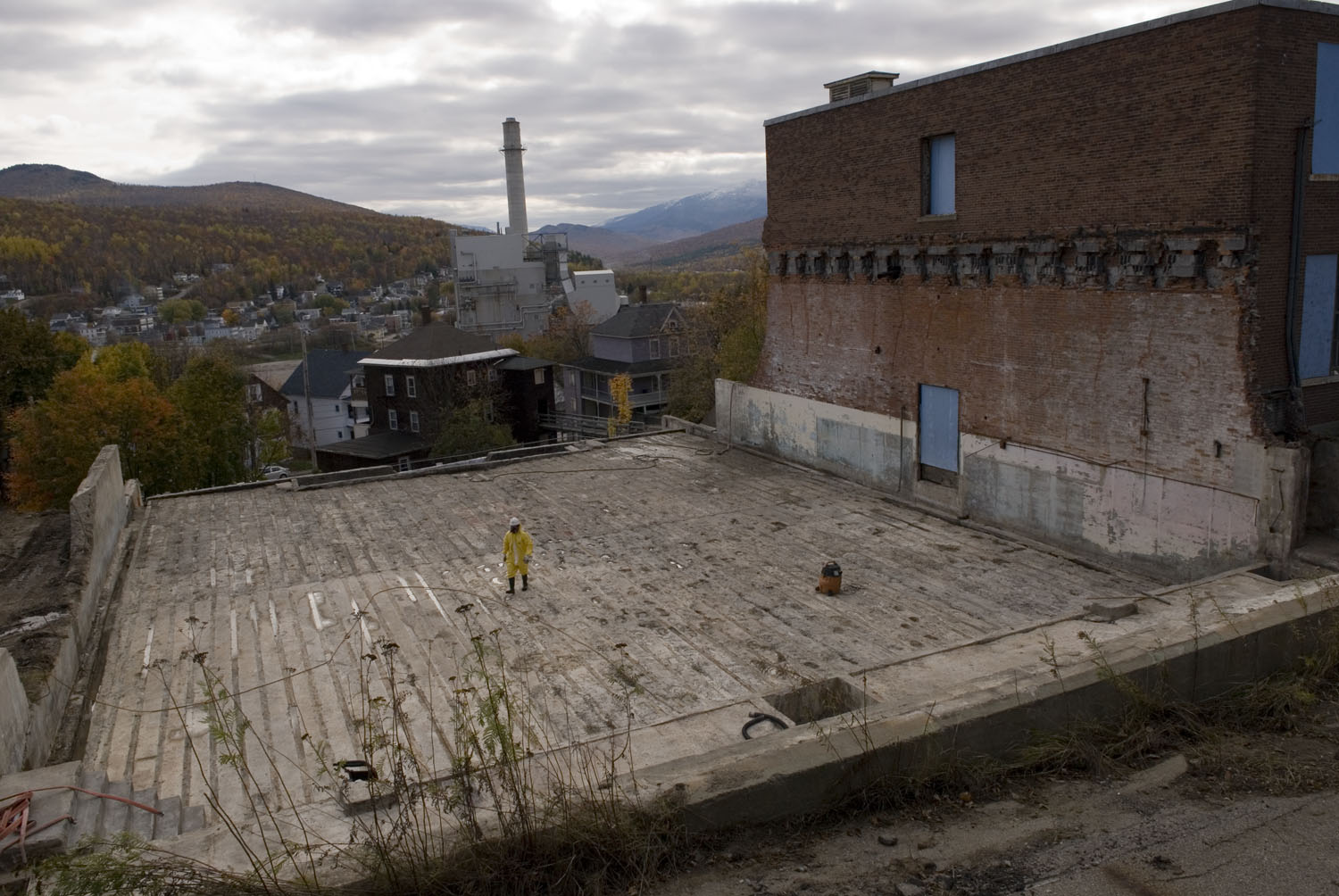
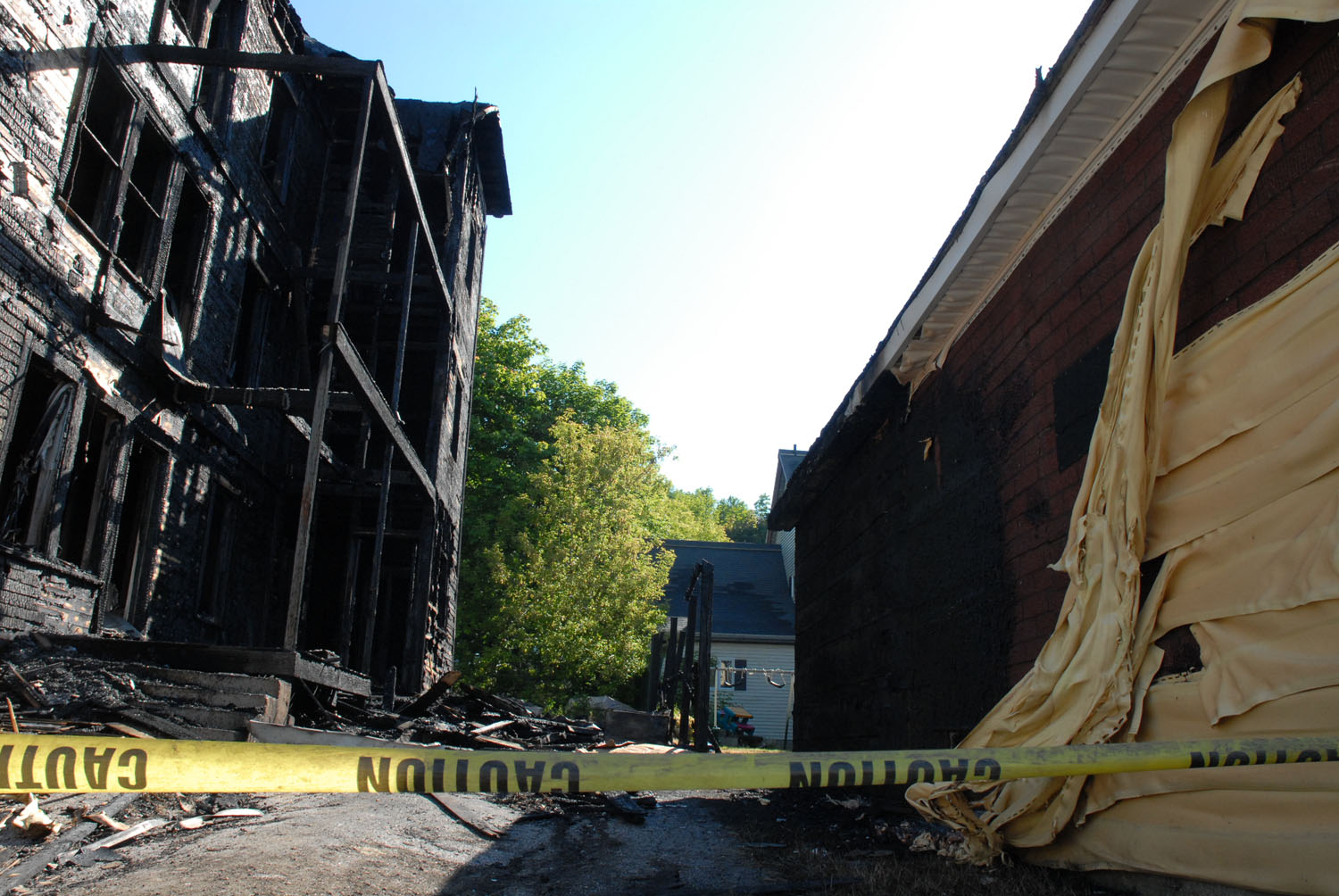
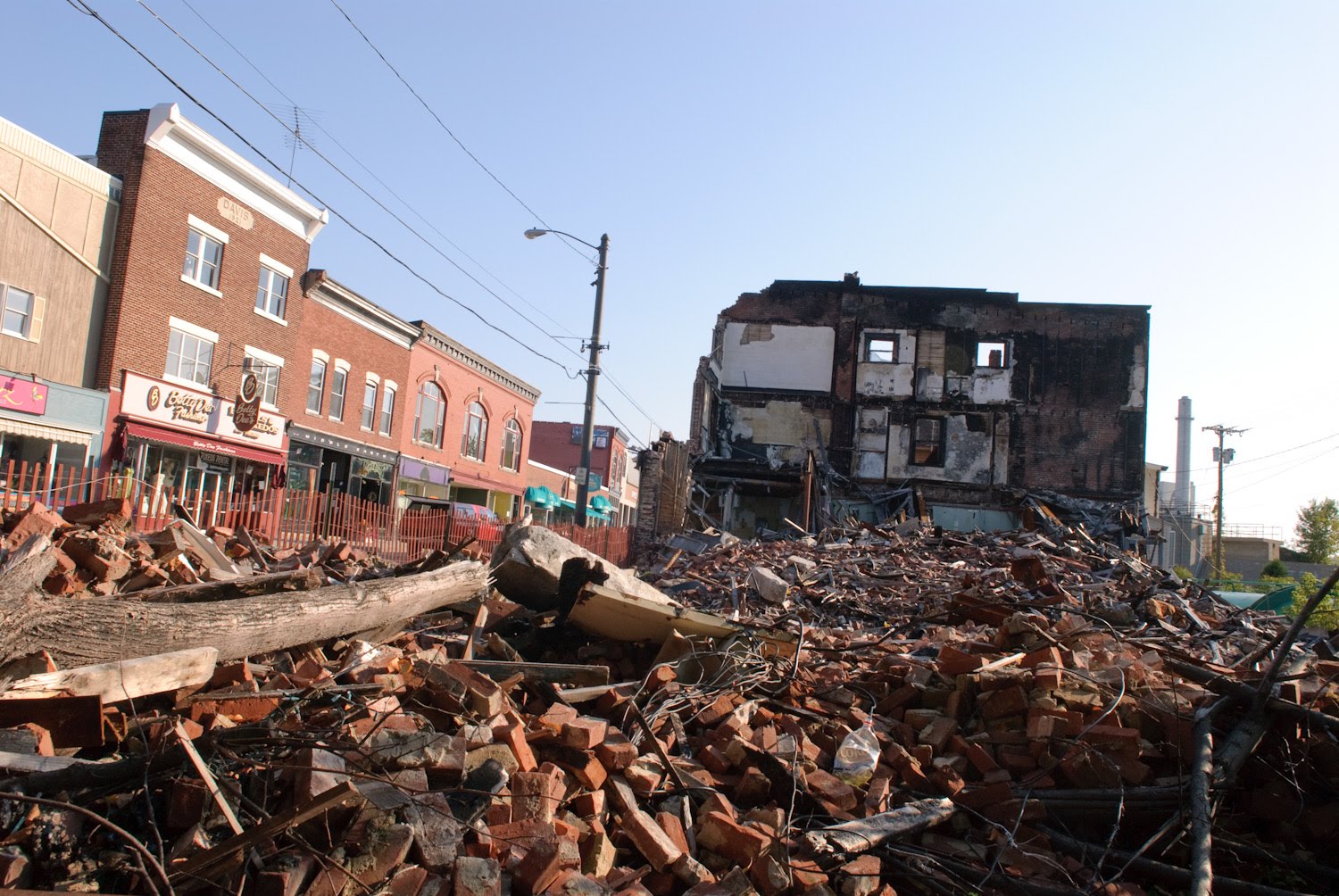
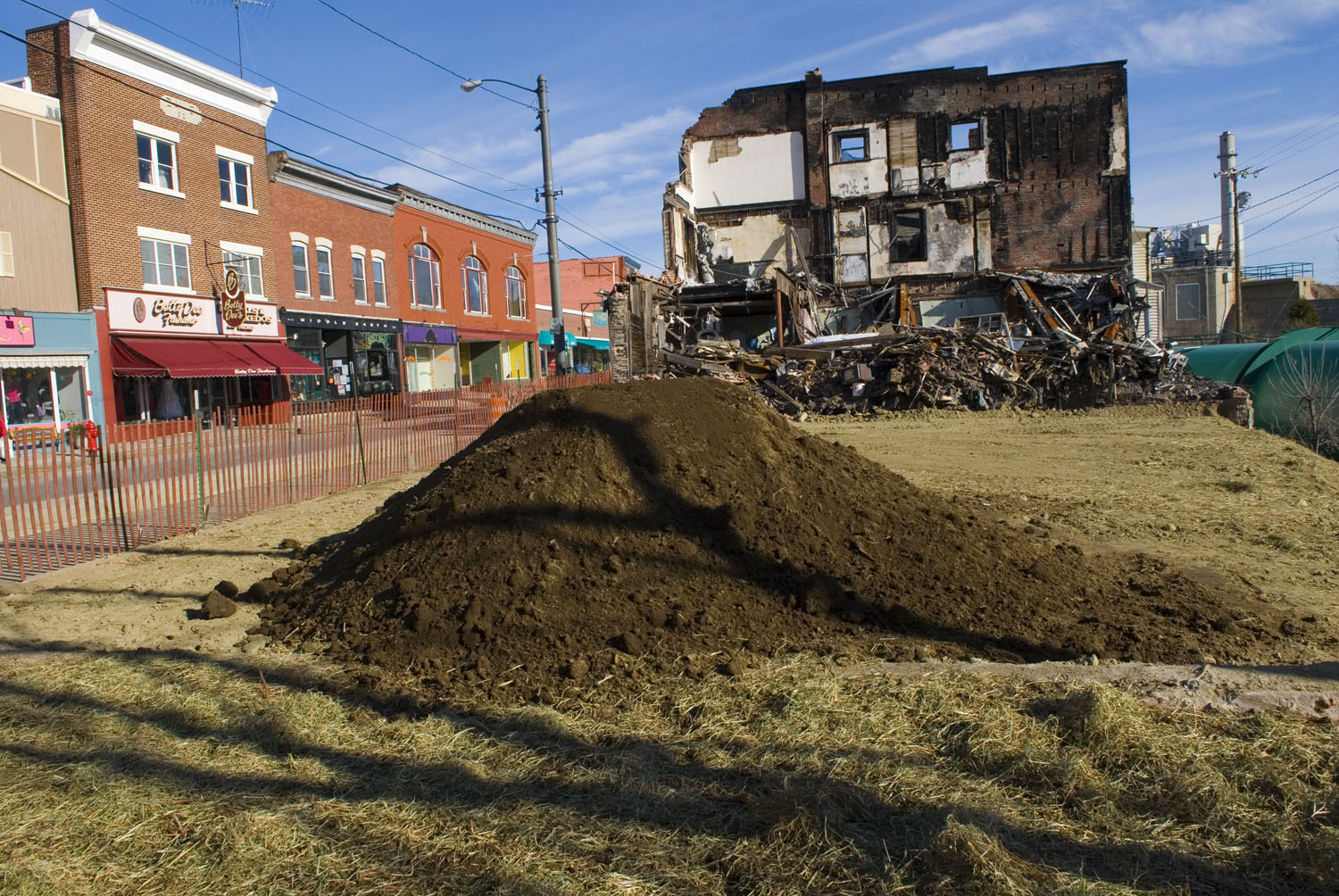
Good signs are spreading through Berlin. The properties at 90 and 92 Main St. were cleaned up with Neighborhood Stabilization Program money. Notre Dame was cleaned up with an EPA Brownfields grant. The property on High Street was cleaned up by the land owner. Berlin has things to smile about. These aren’t the most recent photos by any means, but it’s clear the work has been progressing. Under storm clouds and winter skies it might be hard to recognize, but slowly the city is riding itself of its most decrepit eyesores. Sometimes it just takes someone pointing it out before you notice it.