Local, Local, Local

On the ride to Berlin this morning I was listening to NHPR, and I heard an story on the success of local newspapers. It gave me hope that the Berlin Reporter, and even the local daily, can survive and thrive. I have received a fair bit of positive feedback (and a little negative as well) about the Reporter’s coverage of the area. Like Berlin, the paper has to provide a quality product to attract people. In our case it’s advertisers, the basis of the newspaper business model. The stories I’ve been covering hopefully are the kind of local coverage people are looking for, the kind the NPR story was talking about communities celebrating. Is the Reporter thriving financially? I have no idea. There is supposed to be a firewall between the editorial side of the paper and the advertising side of the paper; at the Reporter, it’s more of an ocean than a firewall. Because I basically work out on my own, with direction from my editor, I hear less than nothing from that side of the business. But I feel like the coverage has been well received and maybe a breath of fresh air in the city.
As far as I can tell, people are reading the paper. Some don’t like it, but more hopefully do. I trust all those who are reading it are buying it (come on, it’s only 50 cents!) and/or advertising in it. The local paper is invaluable to the development of a community, and its was good to hear they are at community papers are surviving. I feel I’m doing good work for Berlin, and I’d hate to see that work disappear.
So go down to the corner store and buy a Berlin Reporter. If you live out of town get a subscription. If you like this blog buy a paper, because if the Reporter were to close I’d have a lot less to write about. (I’d probably make it up to Berlin a lot less to, which would be a shame.) The paper fills a different niche than the daily, and both are valuable to the community. The NY Times wrote about how some major cities may soon lose all their daily papers. Berlin is lucky to have the strong newspapers it does.
Maybe there is a future for both the Reporter and Berlin in the 21st century. I hope so.

Disclaimer: I have probably screwed up a bunch as the Reporter’s reporter, misquoting and misrepresenting people in all sorts of ways. I said valuable, not infallible.

Berlin, the Brand

In the last week I’ve talked to the mayor, two councilors and and both local economic development directors about what Berlin needs to do in terms of marketing. And I’ve heard comments from other people, most whom see the same problem I do. I must admit I don’t spend much time with people who denigrate Berlin, though I know they’re out there, but still it seems much of the mood is decidedly upbeat.
Mayor David Bertrand said he recognizes the city needs to market itself better, but he isn’t sure where to start. The mayor really has no more power than any other councilor, except in terms of the bully pulpit. His ability to lead the conversation is not significant enough to carry the day. However it seems other councilors understand the need for change, but thus far there have been few ideas.
Council David Poulin suggested changing the city’s seal. A perfect start. What other ideas are out there? Some have suggested the city needs one marketing person instead of two economic development directors. The mayor said there is some merit to that idea; private industry will find its way to the city on its own, if people around the region know about what Berlin has to offer.
Where should the city goes next? What type of marketing should it be doing? The mayor said previous councils relied on the state to do the bulk of their marketing. Clearly that tactic didn’t work. The rest of the state doesn’t have positive words for Berlin, so the city can’t rely on those people to improve its image.
How then? What tools can the city use to improve itself? Would the $25,000 the city pays for a contract development director be better spent on a marketing person? Printed, online, YouTube or Twitter: do any of them offer real promise to the city? How can Berlin get the word out there and change some minds about the future of the city?

Long Conversations

One of the advantages of working for a weekly paper is that I can have long conversations. Like on Monday, when I arrived at a house on Western Avenue that had a fire over the weekend. The owner showed up, then the tenants, and I spent probably an hour talking to them about what had happened.
Or the car dealership general manager, who I showed me the clunkers stored in the back lot.
Or the police detective, who explained the difference between a class A felony and a class B felony.
I enjoy my job, and I’m grateful I found it.
The only hard part is where many of these conversations go.
Berlin residents have a dim view of the city. There is a pessimism in many of the people I talk to, which spills out whenever they discuss the city.
I’ve talked a lot about “interesting conversations,” and they are probably the best part of my day. But they are also the hardest part. I used to work on an ambulance, picking up ill and injured people and trying to diagnose their problem on the way to the hospital. I would sit and ask questions and try to whittle away the extraneous information to discover the cause of the problem. It was challenging but engaging work.
I do the same thing in Berlin. “What is wrong with this city?” I ask, trying to diagnose the issue. And I get a range of answers, from “It’s the out-of-towners,” to “It’s the mill mentality,” to “It’s the city council,” to “It’s the city manager.”
It’s no secret, the patient is ill. Some people would prefer no one said the word “depressed,” but most cancer patients would rather they never heard the word “cancer.” Denial doesn’t solve the problem; acknowledging the situation and finding a solution solves it.
So what is it? Poor marketing? Poor infrastructure? A lack of community investment? What? Why do so many of the conversations go so sour?
Berlin simply hasn’t tipped, and it’s a matter of when.
Malcolm Gladwell wrote a book about the tipping point, where a fad reaches a critical mass and goes global. Once that happens, it becomes an overwhelming force, a tidal wave people can’t resist. It is only a matter of time until Berlin is that wave.
Why? Because the federal prison. Because the ATV park. Because the rafting company. Because Clean Power. Because the Gill Building. Because the Main Street Program. Because Tex Mex, IRS Sports, Morin’s Shoes, Rumorz Boutique, Wang’s Restaurant, the blue line and 1,000 other reasons.
When it comes, I’ll be out of a job, but there will plenty more of them in Berlin.
Why am I so confident? Because I’m not from Berlin. Because I don’t live in Berlin. Berlin residents have been living in Berlin so long they’ve forgotten how to recognize a good thing. The city is beautiful, with a perfect location and an infrastructure that maintains the aesthetic cities nationwide are working to recreate. It is a community, not a city, and that is a valuable asset.
I wasn’t in Portsmouth when it was transformed from a blue collar shipbuilding town into an upscale commercial center, but I imagine it was a rough time. Most people there probably felt similar to how Berlin residents feel. Maybe there were a few who still had hope, like a few do in Berlin, but most probably rode their city, hard.
My perspective is that of an outsider. I’m 27, married, and familiar with what upper class people want in a destination. Berlin has it, and it will get out. True, the city may not be as effective at marketing those traits as well as it should, and there may be more press about fires than there is about tourists, but the fact remains: Berlin will draw.
Go to Conway and see what it has to offer. To many, not much. It’s overdeveloped, and on weekends its overwhelmed with out of state plates. Berlin isn’t, which is exactly why it will be.
Out-of-staters are buying properties further and further up the Maine coast. Why? To leave the other out-of-staters behind. They do the same thing in New Hampshire. What was Conway like 20 years ago? And what happened?
When will it tip? I don’t know. As Max Makaitis said, Berlin has the product people want, people just don’t know about it yet. All it takes, in the language of Gladwell, are some connectors. Berlin needs people out there spreading the word.
And the residents of Berlin need to take part in this. They need to change the tone of their conversations and their view of the city to recognize the reality around them. The city isn’t a dump, so get over calling it one. No matter your poor experiences there, the world is going to recognise it for what it is: a beautiful place with a low cost of living. People will see it after taking another look, and then they’ll tell their friends. All of the sudden, before anyone knows it, everything is going to change. Right about then, the world, as far as Berlin is concerned, will tip.

Other Projects

So I’ve got a few other projects on my plate for the next couple weeks, which will probably end up on here. The first one I start tomorrow and ought to be pretty interesting. The second one I’m still in the process of figuring out. But I thought I’d give a little preview:

  • Food For Thought — Steve Dupuis is a stone mason who lives in Evan’s Notch on the border of Maine and New Hampshire. This past Spring, as he geared up to start a $50,000 job, the client called up and canceled. The job that was supposed to last Mr. Dupuis the summer didn’t last a day. Not one to get pinned down by circumstances, Mr. Dupuis cleared some land, expanded his garden, bought some chickens and some pigs and started raising his own food. He was looking for high yield on small money as an alternative method to feed his family. He said he’s not some back to the Earth hippy; this is just what he had to do. And, he said, it’s been a wonderful experience.

I’m trying to pitch it to NHPR for their Working It Out series, but because Steve actually lives on the Maine side of the border I’m not sure they’ll go for it. I might try MPBN, or for This American Life, but that’s aiming high. I’m going to mix the audio, and I’m also going to shoot a bunch of photos to create a multimedia presentation. I’m hoping it comes out well; I meet with Steve tomorrow morning for the first interview.

  • Beyond Brown Paper — The photograph archives of the Brown Paper Company are at Plymouth State University. I want to partner with them to interview people from around Berlin about the mill and life in the city before it closed. I want to take the photos and lay them over the audio, again creating a multimedia project that will tell the history of the city.

I’m not really pitching that to anyone; I just think it could be a pretty amazing compilation. I’ve talked with dozens of Berliners about the city’s past. That is a record that shouldn’t be lost forever. StoryCorps captured some of this history, but there is so much more waiting up there.
Those are my latest ideas for side projects. I’d love to hear any ideas people have for interesting stories and interviews in Northern New Hampshire, and I promise to post them here when (if?) I finish them.

Craigslist? An Enemy?

Posting on New Hampshire Craigslist Rants & Raves section, July 5 (unedited):

  • I am thinking about buying a multiunit property in berlin and wondered about the town and the people there? Would this be a mistake?

Responses, same day:

  • Berlin NH is the Black Hole of NH…………..it consumes money, lives, and souls…..it’s appetite is insatiable, Great deals on multi multis, usually means evil surrounds them.
  • You will never find a more wretched hive of scum and villainy. You must be cautious.”
  • Was a nice town long ago.Now the prison is being built every scumb,welfare,loser is moving in here to live off the state.Unless you are already loaded w/ $$ it’s a bad idea there is NO jobs here no $$ .Every day we see more & more freaks ,scumb,etc here this is why we are moving out .This town turned into a hang out for low income people w/ 10 kids no job losers & once the prison is in all the Rif Raf from the prisoners will be moving in to be closer to them losers in jail.DON’T DO IT.Drive around every other house is for sale NO ONE wants to live here any more !!!!
  • Berlin WAS a nice place once, but with the paper mill that failed, it was the was the begining of the end for that one companey town, now its looking more like west hollis st in nashua, sad.

And the response, again, the same day:

  • thank you for the info, i will not invest in berlin

This is Berlin’s biggest challenge. In one day the possibility of investment in the city evaporates because of a few online posts. If the only word about the city of Berlin comes from the people denigrating it, the city’s future is lost. Councilor Tim Cayer said today he isn’t sure who is concentrating on change Berlin’s image down south. Shouldn’t someone be? Beautify Main Street, complete the ATV park, develop hiking and rafting; all of it is pointless if people aren’t willing to come up here.
How beautiful is Berlin? Yet it is the mill that dominates the city’s self-image. Councilor David Poulin suggested the city seal should lose the smoking stacks, two years after they came down. The city needs a makeover, bad. Not in substance, because what the city has is valuable. As Councilor Dick Lafleur said, the city should be proud of its history. But the pride, at this time, doesn’t extend to the web, and the city has no voice out there to counter detractors.
Who’s job is it to convince the world Berlin doesn’t stink? Who’s going to blog, and tweet, and post on Craigslist constantly, to change the perception of Berlin, New Hampshire?
A federal prison is moving into town. It will bring 300 jobs, starting pay around $37,000. The city’s fortune will improve, there is no doubt. Real estate investment right now would probably be brilliant, a year before the prison opens and people start coming. A five minute conversation should be able to point this out. But what does the investor hear?
“NO ONE wants to live here anymore!”
And what’s the argument from the city?
Silence.

I’m trying to contact the original poster to see what other interactions they had besides the posts listed above. Hopefully they’ll talk to me and I’ll be able to make a story out of it. But the story is already clear: Berlin lost the battle because it didn’t show up. What’s the plan for the rest of the war?

Update: The woman who posted the original question on Craigslist got back to me and her story will be in next week’s Berlin Reporter.

I Take It Back!

Ok, it’s time for me to backpedal.
I thought, less than a week ago, that capitalizing on ATVing and snowmobiling was pointless, because it was focusing on something citizens of the city were more interested in than people from around the state and further abroad. After several days discussion, however, my perspective has changed.
I don’t think ATVs are the silver bullet for Berlin, but I don’t see another industry that will allow the city to build needed infrastructure faster.
Maybe a casino would have, but New Hampshire doesn’t allow gambling. What the state does allow is off-roading, and people are flocking to Berlin to do it.
I spoke to a man from Deerfield who was up with his son to take advantage of Jericho Mountain State Park. He spent $500 for a two day trip, all of it in Gorham. That is the market Berlin has to tap into.
Berlin got $60 of his money because he broke his clutch lever twice, but otherwise he didn’t spend a penny in the city. But he brought his money up, and so do other people.
I was at Jericho Motorsports, across U.S. Route 110 from the park, and I met a couple from Massachusetts who came up for the day to ride. They rented ATVs and spent the day in the park. That was another $150.
With this money is coming to town, how can Berlin get its cut? The ATV businesses are actually doing a good job of it, but there is so little other infrastructure in town it doesn’t spread to Main Street.
But it will. The park has been there for three years, and Councilor Tim Cayer said the Blue Line, that will provide access between the park and Success, is almost complete. This will significantly increase the number of trails available without reloading the trailer. When all this is complete even more riders will come.
And then the hotels will come, and more restaurants, and more stores. Right about the same time as the new prison. Everything, in fact, is looking up.
I don’t ride ATVs or snowmobiles, but I can’t argue with the transformative potential of motorsports. Don’t believe me? Go to Jericho Mountain and ask where people are from; they are from Massachusetts, southern New Hampshire, Maine and Connecticut. People come to Berlin for this, and it’s time to capitalize.
Again, I’d like to see rock climbing and paddling take over as the draw, but there isn’t the traffic yet to build a hotel for those people. The ATVs, however, are there in enough numbers to do it. Someone with an entrepreneurial spirit would be smart to do it now. And Berlin would be smart to embrace it.

21/21

No, I didn’t make up the title.
That’s the name of the initiative put forth by Norman Charest, Berlin’s economic development director. It is a proposal to replace Berlin’s failing manufacturing sector with infrastructure to make the city an ATV recreation destination.
“This is not strictly a tourism initiative,” he said in tonight’s city council meeting. “The old Berlin is dead and gone. We need to reinvent ourselves, and this is the low hanging fruit.”
Mr. Charest said the city has already felt positive economic impact from the ATV park at Jericho Mountain, with businesses relocating to the area specifically for the proximity to trails. The city needs to capitalize on this, he said, and then push the capitalization into high gear.
This hits close to one of my posts last week where I said the opposite — that Berlin needs to diversify its recreation opportunities, not focus them, as part of a complete package for tourism. I listened to Mr. Charest speak tonight, and I heard the echo of a hole in his thesis. Two actually.

  1. Mr. Charest said if Berlin creates the infrastructure for ATVing, manufacturing jobs will follow. That was shortly after he said manufacturing jobs are migrating overseas, fast becoming only a memory in the United States. ATV park or no, it isn’t cost effective to manufacture goods in the U.S., and there is nothing Berlin can do to change that. Mr. Charest is working to bring recreation to the area in hopes that new jobs will bring the old jobs back. But he said the old jobs aren’t coming back. Where that leaves Berlin is a mystery, but certainly without a strong manufacturing sector. The city still has to find the jobs somewhere else.
  2. Enough with the power sports. Mr. Charest mentioned outdoor recreation, hiking, skiing, rock climbing and kayaking in his presentation. I could add to those: ice climbing, mountain biking, road biking, cycle touring, trail running, rafting, canoeing, bird watching, caving and geocaching. There are literally dozens of outdoor activities that could take place around Berlin; there is land enough for all of them. Unfortunately, there is only one in the 21/21 initiative: ATVing.

Mr. Charest is right; Berlin needs to figure out the next step in its evolution to a sustainable economy. And he’s doing more than most people: he’s working on a solution. The problem is residents of Berlin, Mr. Charest included, know how to do what they know how to do and don’t know how to move beyond those activities.
Can Berlin build an ATV park? Sure. As Mr. Charest said, “What we did for fun we now have to do for business.” But how does Berlin develop those outdoor recreation draws that Berlin residents don’t do for fun? How does Berlin develop Mount Forist for rock climbers, and plant caches in the woods for geocaching, and set up good trails for hiking and trail running, when these aren’t the recreation activities the city is familiar with? Where is the plan for that?
Mr. Charest’s plan addresses a need, but it unlikely ATVs, snow mobiles, hiking trails or anything else is ever going to bring back enough manufacturing jobs to return Berlin to its former glory. The 21/21 initiative, however, will undoubtedly bring jobs into the city and be an important part of moving the city towards the twenty-first century. It is only a sliver, however; as Mr. Charest said, “It is the low hanging fruit.” It is time for the city in general, and Mr. Charest in particular, to look for the things the city doesn’t know so well, to see what they can do to revitalize the local economy. The city needs to look beyond what its residents like to do on weekends, to what it has to offer to people from other backgrounds. It needs to start peering around the tops of the trees.

I’m interested in what people have to say about this. I’ve made it clear I think Berlin needs to do more to shed its blue collar image if it wants to thrive instead of just get by, and I don’t think more ATV entertainment will work toward that end. But I don’t have any answers, just questions. I’m going to pose those questions to local business people to see what they think the 21/21 initiative will do for them. The results will be in next week’s Berlin Reporter.

I also pose those question to you. What activities should Berlin be encouraging? Where will the city see the most benefit? Does outdoor recreation sans gasoline fit with the city? Is the current plan comprehensive enough? Who’s duty is it to see the plans come to fruition? Is there a blue collar mindset? What does that mean for the city’s future? What will have to change for the city to thrive, not just get by?

I’d like to hear what people think. Where should Berlin go next? What does 21 really mean for the city? Will the city need a 22/22 initiative, or can it find its way in the dark?

Entrepreurial Spirit in Hard Times

Berlin usually lives in a different time than the rest of the county. In the last year the country has caught up to Berlin, but for a long time the two were speaking different languages.
Money flowed freely around the U.S. for the last decade, but not in Berlin. The mill has been gone for years, and crowded streets, secure jobs and a thriving city went with it.
The first drive through the city it looks dead, but that cursory view is incomplete. Go to city council meetings, and walk around town, and it feels like everyone 18 to 40 has left, but that impression isn’t right either.
There are businesses, started and run by 20 and 30-somethings, that are trying to pull Berlin out of its malaise. They are struggling yet surviving in this city that has brought down so many. They are the shoots of grass after the forest fire.
I’m working on profiling these success stories in the Berlin Reporter. The first installment will be next week. It will be a conversation with Stacia Roberge of Rumorz Boutique. In the coming weeks there’ll be profiles of the TexMex Cafe, across from city hall, Seventh Street Graphics, the owners of the movie theater and more. There are failures in Berlin, but there are success stories as well. It is important to notice them, to see what the city and its residents can do to support the young entrepreneurs trying to lift the city up. So stay tuned, and check out the Berlin Reporter.

Images of Disaster

This weekend saw more traffic in Berlin than the city has seen in a long time, including out of state license plates. But did into translate into more money for local businesses? Not as much as might be hoped.
Thunder in the Mountains and the New England Forest Rally certainly brought crowds, but it takes more than crowds to support a city. It takes money. And it’s unclear how much money came into town.
Richard Tessier of the Great Northern Moose Lodge said he didn’t see a real impact from the rally race. The fans watched the race and then followed the racers north without ever really opening their wallets. Not the best outcome for the city.
Thunder in the Mountains was bound to be a little more successful because it lasted two days, but because the city lacks the necessary infrastructure for tourism it still missed the largest portion of attendees’ dollars.
Where are people coming in for these events supposed to spend money? Where should they stay? Where should they eat? Berlin doesn’t have what it needs to make these events successful; it needs to figure out how to get them.

The city council is hoping the state will make the Budget Inn remove its rusty old sign. It is the only sign to the only hotel in town. Councilors Ryan Landry and Tom McCue made a point that they aren’t against business, but every councilor agreed the eyesore at the southern entrance to the city had to be addressed.
But what needs to be addressed more immediately is that the Budget Inn is that it is the only place to stay in Berlin. If someone chose to come up for both days of Thunder in the Mountains they have to head to Gorham to sleep. And on the way they probably bought dinner at J’s or Libby’s.
Berlin has worthwhile restaurants. TexMex, across from City Hall, has good food for cheap, and the Northland Dairy Bar is a North Country legend. But no one stops on the way to Gorham because there are so many more options once they get there.
Gorham, however, has done some things wrong. Burger King, MacDonalds, Subway, and Pizza Hut dominate the strip. Libby’s and the White Mountain Cafe own the high end market, but otherwise the food options are disappointing.
Berlin, in contrast, doesn’t have chain restaurants. Aside from Dunkin Donuts and Quizno’s, every eatery is a local establishment. Many people don’t understand how important this is to tourists, particularly to the ones with excess money to spend.
There was a discussion at city council several weeks ago about convincing the 99 or the Olive Garden to move into the Rite-Aid building the is being donated to BIDPA.
NO! Maintain the aesthetic of the city and lure an independent restaurant owner to town, as Mayor David Bertrand suggested. The image of a Berlin downtown overrun with chain stores is less appealing than a downtown with a biomass plant. Neither is a good vision for the future, but Wendy’s is a bigger turnoff than renewable energy.

The city doesn’t have much ability to recruit businesses, but the city could work harder to invigorate its tourist industry.
First, the city needs less rally, more Thunder. Host events that draw people to the area for more time. It may be more work, but events that have people come in and leave the same day don’t sustain hotels and restaurants, which in turn bring in people who support other businesses. The change to a two day motorcycle rally was a great step. Bravo.
The city should also eliminate transient events. Motorsports are great, but what is the best thing about being on a motorcycle? The open road. Berlin knows motorcycles, snow machines and ATVs, but that doesn’t mean they are the best attractions to Berlin. The city needs to encourage events that bring people to Berlin and then keeps them there, instead of events based on motion.
What about a music festival at Northern Forest Heritage Park? A three day bluegrass, jazz or blues festival would encourage people to come to town and stay, not to circle the area for two days then go home. People would need a place to stay and food to eat, which local vendors could supply. Growing an event like this could put Berlin on the map, and at the same time involve local businesses.
Berlin needs to change its image. Not the look of the city, but its image around the state. What is Berlin known for? Defunct mills, a logging park, an ATV park, a motorcycle rally, a rally race, an antique car show and snowmobiling. Does that strike anyone else as one dimensional?
I know there is art in Berlin. St. Kieran’s Community Center for the Arts had a wonderful retrospective on Robert Hughes, a local artist. Why is there no artist festival in the summer? Berlin is on the Androscoggin, with whitewater to the north and flatwater to the south. Where is the big push to draw kayakers and canoe paddlers?
Don’t forsake internal combustion recreation, but Berlin can’t cling to it alone. The city is at the foot of the mountains, along a river, only a few miles from the Appalachian Trail, with a huge cliff in the center of town. Is anyone trying to draw people in for outdoor recreation?
Berlin is a mill town, maybe to its core. But in figuring out what it will be next requires the city diversify. It has to offer entertainment even to people who do not share its residents’ vision of fun. Berliners love motorsports, but motorsports are not enough to sustain the entire tourist industry. The city is not in short supply of culture or character. It does not lack creative people with new ideas. It just needs to start implementing them.
The biggest challenge is the city’s marketing. Councilor David Poulin said he wanted to see the stacks removed from the city seal. That’s a start to revamping the city’s image, but how aggressive is the city working to that end? Most of the messages the city sends out are, “Send us your prisoners (state and federal). Send your trash to our landfill. There’s cheap rent for welfare families. Oh, and we have redneck powersports too.”
That’s the city’s image in the south. There are a few people challenging that perspective, but they’re losing. It isn’t an accurate reflection of the city, but it’s the most vivid picture out there. Until that changes it’ll take more than a restaurant or a new motel to get people to spend money up here. It’ll take a miracle.
Up, Then Down

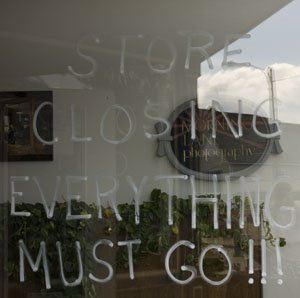
Unfortunately, about the time it seems Berlin is scoring a hit, it gets hit instead. Main Street is the heart of the downtown, and residents have been working hard to improve it. The last thing it needs is one more empty building. But Morning Lane Photography, owned and operated by Paul Charest, is shutting its doors. Mr. Charest said one of the hardest things to do was to write “Going out of business” on the windows. He said he apologized to the surrounding business owners before he wrote it. He is trying to sell the building too.
Mr. Charest said he thinks photography isn’t going to be viable in the long term. Too many changes with digital, now everyone is a photographer.
As I stood talking to him I felt the weight of my Nikon D200 on my shoulder. It, and the newer versions of it, are exactly what he was talking about. It is smarter than me when it comes to taking pictures and makes most of them come out well.
Of course it and I are not immune to the forces he talked about. My D200 three years old and already is obsolete. And I am writing for a newspaper, another medium that might soon fall by the wayside. I understand his frustration and his exasperation. I live it just as he does.
And just as Berlin does. This is exactly what this blog is about: Change. Berlin in changing. What will the city do about it? Journalism is changing. What will reporters, the public and society do about it? And photography is changing. What will Paul Charest do about it?
Paul is doing something about it. He admitted that it was hard to close a business after 21 years, a business he’d put countless hours into, but he’s training to become an X-Ray tech. He is moving forward, looking to what he can do to keep himself afloat. He said he’s excited to be able to spend time with his family, to take advantage of not being a photographer.

Has Berlin taken advantage of not being a mill town? Has journalism taken advantage of not being confined to print? Berlin and journalism: to entities rooted in trees. What will it take to move beyond them?
For Berlin at least, salvation lies in technology. City councilors are always complaining about not having a highway to Berlin. Why? So Berlin can wind up like Gorham on U.S. Route 16 just south of the city line, a corridor of low-rise big box stores with low wage jobs? If Wal-Mart and Tractor Supply Co. are the best of Berlin’s future the city is aiming too low. There are better opportunities out there for the city and its residents.
New highways are made of fiber optic cable, not pavement. If credit card companies can reroute telephone calls to Bangalore on cable laid across the Pacific, it shouldn’t be hard to run cable to Berlin. More and more people in Berlin are using the Internet. More and more people are creating careers for themselves while living in beautiful rural settings like Northern New Hampshire. The city has to facilitate that process and work to get city wide wireless, not pave over its historic buildings.
What else does the city need to do? The same thing Mr. Charest did — get an education. The job landscape isn’t changing in Berlin, it has changed. For a city with a blue collar mindset, there aren’t many blue collar jobs left. Even positions at the prison are easier to get if you have a college degree. Residents have a wonderful resource in the White Mountain Community Center; it would behoove them to use it.
Everyone could use more education, but Berlin is used to the work harder model, not the work smarter model. Residents have to get over that and learn all the things they don’t know. It is possible to do some jobs from anywhere, but it means knowing how to do those jobs. Berlin residents need to get an education in 21st century careers, because the ones that sustained them in the 20th century are gone forever. They are living in change, and they must decide if it will be a good change or a bad one.