Where is everybody?

I went to the public information meeting about ATVs last night. Where there were no more than 20 people, and most of them were AVATV club members who already are familiar with the rules. It reminded me about the fire information meeting earlier this year, where again almost no one showed up. At city council often it’s just the daily paper’s reporter and me, and everyone else is at home.
Was it always this way, or did more people come out to these things at one time? I looked at the turnout statistics for municipal elections, and in 2005 it was about 15 percent. That isn’t a lot of involvement in community government.
Some people are obviously frustrated by that level of investment, though I wonder if that is significantly lower than other cities around the state.
City government allows people to vote in representatives, essentially so they don’t have to show up to meetings. Granted that might work if everyone read the newspaper or if the meetings were televised, but currently there are lots of people that are uninformed. I’m not sure what anyone can do about that.

I’ve covered the burned out buildings on Main Street pretty extensively, with several in depth stories. I saw the Vote Jobs ad in the daily that caused such a stir, and I’m not sure exactly what to get out of it. The process is one dictated by state law, and there isn’t anything any councilor could have done different about it. But if people aren’t informed and didn’t read my other articles about RSA 155B than its unlikely they’ll read the next one.
There will be lots of unanswered questions in this election. Councilor Landry pointed out a great question about Mr. Grenier’s stance on Clean Power. Mr. Grenier pointed out a great question on municipal finance, whether the budget should be balanced with a bond. Both of these issues came up to me Monday night, when the paper is essentially done and headed to the printer for Wednesday, and the next paper comes out the day after the election. Would I like to see these questions answered? Yes. Will I be able to do it before the election? No.

I’d like to say the Reporter has the tools to filter through all the election rhetoric to provide a clear view to residents, but it doesn’t. Four editions of my paper come out after the closing period before the election, and with the closing period being a Monday night that essentially rules out any good reporting for that Wednesday’s paper.
So I’ve got three papers to paint a clear picture, while not ignoring other news, like ATV trails and new businesses opening and PUC hearings. I do what I can, but it won’t ever be complete.

Couple that with low newspaper readership and it seems likely the paper has little influence in the discussion. I spend my days going around Berlin and talking to people, and what I find is many don’t understand the issues. People are mad about the buildings on Main Street, and they blame the council for taking them using immanent domain laws. Not possible, but they’re mad anyway. They blame the council for Laidlaw not moving into town. According to Councilor Mark Evans, who is not opposed to the project, the council hasn’t slowed Laidlaw down at all. But the council receives the criticism.
The same will be true of any future council, whether the incumbents stay in office or the challengers win. The council will get blamed for the city’s flaws, regardless of their ability to fix them. In many ways its remarkable people are ever reelected, considering how easy a target the council is.

If more people showed up I think they would have a different view. The council, the police department, the fire department, the city departments all work diligently to preserve, protect and improve the city. It’s not hard to realize that when you’re there every day. There are people who work primarily for their own interests in the community, but mostly its selfless sacrifice. If people showed up they’d see it. What I put in a paper only a small minority of the city reads doesn’t matter; how involved in the community people are does.

I get frustrated by this. I started this blog, and I’ve worked hard for the Reporter, because I want to see Berlin flourish. But these things don’t decline overnight, and it won’t return quickly either. There is hope for Berlin. The frustrating has been fading into the past, and it will continue to do so. The signs of new blood that I’ve been trying to point out in the Reporter haven’t disappeared just because it’s election season—they have increased. The ATV trail will be open in another week, and there are several new stores opening on Main Street. The pizza place that was closed for so long is opening again, and the southern burned out building is scheduled to be cleaned up in the next few weeks. In all, it’s a progressive, creative, revitalizing time for Berlin.

The fact is, no candidate is going to turn around Berlin’s job market in two years. That’s a hard truth campaign signs can’t fix. Because of that the next election is likely to be as fraught as this one.

I have had hold back flashes of despair for Berlin when the world seems aligned against it. I’m no more immune than anyone else to those feelings. It isn’t my city, but in covering it I’ve come to care about its future and its people. It deserves more than to be the butt of statewide jokes.
And I see dedicated people working to improve it, quite skillfully, without the support of residents. Many have lost the drive to pay attention to what goes on at city hall, but that can’t affect the people working there. The city needs those people, with passion and ideas and new ways at looking at things, to move projects forward and helping the city evolve. A few empty seats, I pray, won’t be enough to dissuade people who care.

Update: There was a good turnout tonight to the debate between candidates Mr. Grenier and Mr. Bertrand. It was a worthwhile exercise, and it did more to inform the public than a dozen newspaper articles. It speaks to the value of showing up. A fair portion of the city did tonight, and I hope many more do so again on Tuesday.

Is it over yet?

I know, election season is supposed to be fun, but I’m looking forward to it ending. In many ways it did for me tonight, though I know it hasn’t.
I live in a parallel world where anything that happens after Monday doesn’t matter. I won’t be reporting on the election next week because by the time my paper comes out the election will be over. Sure, I’m partial sponsor of a debate Wednesday night, but I won’t cover it in the paper. In reality I’m off the election ride, while Berlin has a week left to go.
The council meeting tonight was basically one stump speech after another, but the only people who heard it were Mel Liston, Bill Gabler, Barry Kelley and Jon Edwards. Sometimes I wonder if all the rhetoric is just for me and daily paper reporter, or does everyone like hearing their opinions supported by the group? The council is annoyed with the county commissioners. OK. They don’t like what PSNH is doing. Fine. They are more favorable to Clean Power than Laidlaw. Great. They go around and around saying the same thing over and over again, each backing the other one up. Honestly, it might be nice to have a strong pro-Laidlaw voice on the council—at least then there’d be someone to disagree.

I have been trying to visit entrepreneurs while reporting for the Reporter. I like pointing them out because they often get missed in this downtrodden city. As a result I am often surrounded by people who see Berlin’s future 30 years down the road, with creative ideas and amorphous plans. The city will be completely post-industrial, they say, without any of the squabbles now flying around city hall.

That leaves out what the heck people will do for work for the next 25 years, a time-frame city leaders will likely have a hard time making so blissful.
Mr. Grenier might win the election. His signs are crap, but his experience and dedication to the city is real. He disagrees with the current council, and his tactics have raised some eyebrows, but as I understand it this has been a clean fight by Berlin standards. He is advocating for the unemployed and the underemployed, by talking to them instead of by talking about them. In an election, being able to communicate with constituents is key, and Mr. Grenier does an excellent job of it.
I would think this council would get that. They hate the way Laidlaw does everything in the dark, and they love the way Clean Power holds their hand every step of the way. But the council is running city hall more like Laidlaw, and Mr. Grenier has taken the CPD approach.
I don’t have any idea what’s best for Berlin. What if CPD never comes to fruition? Or Laidlaw? Or neither makes Fraser viable, or no light industry follows suit? The Vote Jobs crew is right, the city needs jobs, but it needs more than that for a future. It needs an infrastructure that draws talent back to the city, and I have yet to hear anyone mention a good method for doing that.

I read Norm Charest’s economic report for BIDPA the other day. I’m tired of the doom and gloom. I’m not sure how many of these reports I’ve read that mention we’ve entered a post-industrial economy. So what? Berlin has to change? No kidding. I wonder just what these are reports are supposed to accomplish. They make a good downer; other than that I’d say they’re useless.

I like Norm. He has some great ideas. His challenge is the same as the rest of Berlin—he knows the city too well. It’s hard to come up with possibility in the place that for too long has suffocated your best ideas.

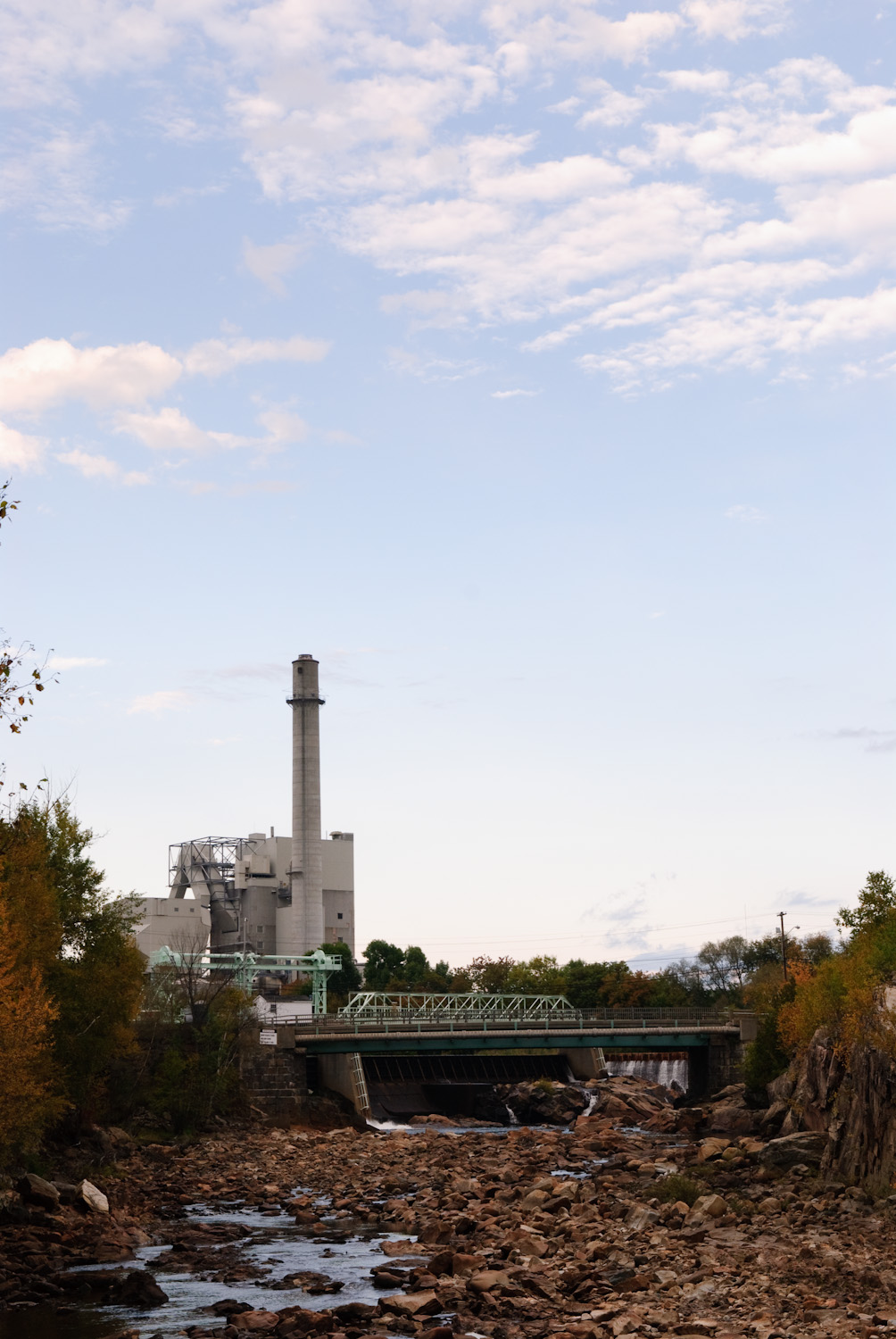
The seed is in Berlin to move forward. It has anything to do with who is elected to city hall. It has has nothing to do with Laidlaw or CPD either. These are symptoms, traits of a city that is still learning to walk without a smokestack for a cane. The creativity is draining from Berlin like blood on the pavement, and no one knows how to scoop it up. But it will pool regardless.

You know who’s cool in Berlin? Pam Laflamme. Andre Caron. Corinne Cascadden. They look to the future. They have unique perspectives and creative ideas and a capacity for problem solving. These are the bureaucrats, and they blow most Berlin’s “creative entrepreneurs” out of the water! What’s wrong with this picture?

Berlin has the people it needs to be great. Interesting things happen where different words meet, and worlds collide in Berlin. Creativity breeds there. It becomes infectious. The city has to harness that energy, but that won’t come from city hall. If the current council isn’t the next council I won’t complain, because tonight’s meeting was nothing but politics. The game the council accused Mr. Grenier of playing last week was in full swing tonight in the chambers. Luckily the real Berlin isn’t contained within city hall. It’s in the streets. It’s on the pavement. It pools where you’d least expect it.

Taxes, Improvements, Politicians and Papers

I am supposed to meet with Ron Goudreau and Paul Grenier (separately) to talk capital improvements and taxes. Mr. Grenier said the bond will result in at least a $1.67 increase in the tax rate, which currently is $29.82. Mr. Goudreau said the $29.82 includes the first year’s repayment on the bond. There won’t be a tax increase, he said, because the bond payments are already figured into the tax rate.
I minored in economics, so hopefully I have enough financial understanding to sort this out for the voters. I don’t think it’s enough for a reporter to write down what people are saying; they have to dig into the numbers and analyze what’s really there. There were sharp words at Monday’s meeting, and I reported them as well as I could. Now it’s time for me to look into the numbers behind the numbers.
So expect that in next week’s Berlin Reporter. I’m glad there are still people out there willing to pay the 50 cents. It keeps me in a job, doing what I love.

Side notes:

  • Mayoral debate at the Berlin city hall auditorium, Wednesday, October 28, at 6:30 p.m. Come see who you’re voting for and learn their positions.
  • It is constructive remarks like those LPJ has received recently that convince me to allow anonymous comments. Glad to see the discussion stay clean. I appreciate people posting, no matter the viewpoint, as long as their goal is to build a better Berlin. So thanks.
  • I bought the domain lastprintjournalist.com. I just put in a placeholder because I haven’t built the site yet, but I feel like I’ve got a fairly consistent thing going here, and I’d like to build it out. Journalists have to have websites these days, and I’m no exception. I’m not looking to move on from the Reporter, but I’m always looking for freelance opportunities, and if I’ve got a website to direct people to so they can see some of my work, it helps. Eventually I hope to have the the blog there, to house everything in one place, but for now I’m just saving my spot.
  • There’s a public hearing next Tuesday about the ATV trail.
  • It’s time to donate to NHPR. I freelance for them occasionally, and I’ll be reporting on Berlin’s ATV trail sometime in the next few weeks. They need money to pay me, so please, help me out by helping them.

I reread my story about Laidlaw investors saying they intend to send Mr. Grenier campaign contributions. It’s funny, but by the time stories come out I haven’t looked at them in a week. When I received calls and criticism about it, I hadn’t looked at it in a while. But after reading the story today I realize how off base those comments are. I thought maybe I’d screwed something up and been unfair to Mr. Grenier. But no, I was right on, and if I had to do it again I’d write the same story. I represented Mr. Borowski fairly, including his ties to the area and his good reasons for wanting to see Laidlaw succeed. I represented Mr. Grenier fairly as well, including his hesitation before he said he would reject any money from outside the city.
I thought maybe I’d left those things out. I thought maybe I’d been too worried about length and edited the story down. But no, I didn’t, I represented the various parties fairly and accurately. And in the end, no one in the story looks all that bad.

Sometimes accurate reporting makes people look like crap. That sucks, but that’s what I’m there for. Maybe there is some meeting going on in Berlin that, if made public, would make everyone look like jerks. I hope to be there. A few phone calls and complaints aren’t going to scare me off. My goal isn’t to make anyone look bad. In fact, no one has to answer to me. They are answering to the residents of Berlin. And of Gorham. And Milan, Dummer, Randolph and Shelburne. I’m asking questions for those people, because they don’t have the time to. It takes more than calling a fair story biased to make me stop. Or a page full of numbers.

P.S. Ryan — You don’t want to buy the paper if you stay in city government, because I won’t be able to curb my reporting for your sake. Sometime you’ll make an asinine comment that I’ll put in the paper, and you’ll want to fire me, and I’ll only have been doing my job, and it’ll be a great big mess. I agree, I’d like to see more people reading the Reporter. But the paper doesn’t come with the printing press. The daily owns their press. It’s in Conway and it prints three other daily papers; that makes their business viable. The Reporter is owned by Salmon Press, which owns 10 other weeklies around the state, which makes their business viable. Buy a press to print one paper and you’ll lose money at the speed of sound. Launching an online paper cuts that cost, but the advertising revenue online is negligible, not enough to pay for quality reporting. Berlin is struggling with the same challenges the rest of journalism is: how do you support quality reporting in the Internet age? Luckily community papers are successful enough to continue surviving. As far as I know, our market isn’t growing yet. I hope my reporting will change that, but in a world where people live more and more online that may not be realistic. There are blogs, yes, but few places online for high quality local news. Residents don’t need to read people’s opinions about what is going on in Berlin—they need the facts about what is going on in Berlin. There is not, at this time, a good model for how to provide that. I’m trying to resurrect a dinosaur here, singlehandedly. Berlin has a shot at rebirth, and it’s much greater than that of newspapers.
And Jon, thank you for the compliment on LPJ as a news destination. I’m glad people come here for news and to share their opinions, but there is 10 times as much news in every Reporter than goes on here and more in depth analysis. My story about shareholders didn’t break here, remember, it broke in the Reporter. We all come here talk about it, and people add value to my work by commenting here, but the fact is this is a side project that doesn’t pay for groceries or pay my rent. The real news is in the paper; this is just the 21st century water cooler.

I wish I had an answer for newspapers. They are so valuable. I love my work, and I think it is integral to maintaining democracy. I’m lucky to have a community and an employer that supports me. What the future holds I don’t know. Will Berlin support two papers when everyone gets high-speed Internet and starts posting their ads on Craigslist? I doubt it. Which paper will fold, or will both? I don’t know. But right now, at a time where Berlin needs quality reporting so residents can make important decisions about their future, the two papers are still there. Hopefully a new model will be created before the old one dies. Otherwise there won’t be anyone out there to find out who is giving money to what causes or who’s numbers about the tax rate are accurate.

So buy a paper. Maybe a subscription for your mom for her birthday? I don’t know, but I hope everyone reading this realizes the value of quality journalism. We need it, and the fact is, it isn’t free.

Gorham vs. Berlin vs. Randolph

I skipped the Berlin city council this evening to attend a public hearing in Gorham about expanding ATV trail usage to include some of the rails to trails land in Gorham, creating a corridor to Success. The conversation got heated at times as Randolph residents and several Gorham residents voiced their opposition to ATVs sharing the multi-use trails.
I couldn’t help but laugh watching the two camps, with divisions that go far beyond their preferred method of motorized or non-motorized recreation. It was a civics lesson but also an economics lesson. It was also a discussion Berlin should be watching.
Advocates for the plan want Jericho to connect to Success via Gorham, because they see potential for economic benefit in Gorham. They are betting a direct trail from Gorham will keep the ATVers sleeping and eating in Gorham, even if the Berlin allows ATVs on city streets.
If the infrastructure is already in Gorham and that trail opens, what will be the incentive to open a hotel or restaurant in Berlin? What will be the incentive to stay or eat in Berlin? Maybe there will be so many ATVers that the region will have to build excess capacity, but if not Gorham certainly has less to do to make itself the next ATV destination: it merely has to open a trail. Berlin has to build a tourist infrastructure, and that could take years instead of days.
But then there are the Randolph residents. I didn’t see one under 40, and they were not ATV riders. They talked about hiking and biking and snowshoeing and skiing, about how wonderful it is to hear the snow melt off trees on a winter’s day, and about how much they detest ATVs and snowmobiles noise. They were worried the trail might one day continue west from Gorham along the rail to trail property on U.S. Route 2, and they have been circulating emails for more than a week discussing how they can protect against such development. They have contacted representatives and senators and the executive council, and they have been amassing supporting organizations to their corner.
They were a different people talking a different language.
It goes back to the conversation I was having before, about seeing the other person’s perspective. The ATVers in the room didn’t have any appreciation for the fact that ATVs are annoying to people who don’t ride ATVs, and the non-ATVers didn’t have any appreciation for the fact that ATVers have a right to ride. Everyone just complained about the other side, while I tried not to laugh. (I feel comfortable laughing in Berlin council meetings—I know everyone there pretty well now—but this was Gorham, where I don’t know anyone.)

Berlin has something unique on this front: a lack of naysayers. In the months I’ve been covering the ATV issue I’ve heard one person speak out against it. In Gorham tonight there were 25 people that spoke against it, and 50 people came to the meeting. The room only had seats for 40, so people were standing against the walls and crammed in the doorway. It is a different issue in Gorham than it is in Berlin—the contingent of hikers and cyclists is larger there, and their perspective might make this a fight. One woman put it well, saying ATVing and other sports don’t go together well. They don’t have to be separated, she said, but it helps. In Berlin, it isn’t much work to separate the two, because there aren’t people doing other things. In Gorham, it’s much more an issue, and something that will likely inspire more debate. Randolph is like Berlin, but only the other side of the issue, so again there isn’t really a fight.

Berlin and Gorham may soon be competing for the ATV dollars, and Gorham has a head start. The ATV park may be in Berlin, but there aren’t lots of places there to spend your money if you come up for the weekend, and that will take time to change. In the meantime Gorham might take the thunder out of Berlin’s efforts to become the ATV capital of the state, simply by opening a trail.

One final thought: some people (including Chris Gamache from the Bureau of Trails) spoke of regionalization. I’ve heard that term a lot lately, from talking about schools to local government to economic development. But then, back at each town hall and city council chambers, I hear councilors and selectmen talking about how they want the businesses in their town to benefit, that they don’t care about the community down the road. The Grand Hotels, Grand Adventures initiative argues the region doesn’t have a critical mass to draw people in any one town, but as a region they do. But the region isn’t a region; it’s like Afghanistan or Africa—carved out of a map by people disconnected from its past, its future, its economy and its people. Gorham doesn’t like to be associated with Berlin, and Berlin resents Gorham’s success. No one there talks to Lancaster or Errol, and Colebrook is off by itself. Grand Hotels, Grand Adventures is an effort to make this appear a cohesive unit outside Coös County, but there is no effort to make it a cohesive unit within Coös County. It would be a shame if Gorham scoops the ATVers away from Berlin, if for no other reason than it will heighten the animosity between the two. The two communities will continue fighting each other, instead of cooperating to make each other stronger.
Mayor David Bertrand said in an interview today the current council thinks outside the box, something past Berlin city councils haven’t done. But when it comes to regionalism, this council is in step with past councils. Provincialism runs deep, and it seems to be a box the region can’t find its way out of. In a city and a region searching for useful answers to complex questions, it’s a shame to see so much animosity directed at people stuck in the same boat.

Quebec

I went for a short visit to Quebec City this weekend. My wife and I stayed at the Chateau Frontenac (we had coupons left over from our honeymoon), took in the sights and bought a lot of wine. While there we had a number of discussions about why rural Canada seems to be doing better than rural America. On Canadian television some Canadian politician was talking about how the Canadian economy is no longer in decline. All around Quebec factories were chugging away. It was strange to drive north from northern New Hampshire to find a thriving economy, because I’ve always looked at the region’s northern location as the big hurdle to success.

What are ingredients for a robust economy? We drove through Sherbrooke and Coaticook yesterday, one with its thriving industry and a bustling economy, the other with its pastoral surroundings and cute downtown. What have they got that Berlin is missing? I know the traditional answer of a highway appeals to some people, but that doesn’t strike me as enough. Berlin was an export town for a century—the roads didn’t all the sudden disappear.

And Coaticook, with its one hotel, made me worried for Berlin. I’d been there before on a bicycle tour, so I knew it was a cute little town next to a beautiful gorge. We could break up the drive between Quebec City and home, I thought, and visit another side of Quebec. But pastoral countryside and a stunning gorge haven’t resulted in tourist infrastructure. The only hotel was a run-down place next to a grocery store; instead of paying $75 for the night, we opted to drive home.
If that place hasn’t built the infrastructure to accommodate tourism, I have to question whether Berlin can. Again, like the Sherbrooke example, the mix of factors that led to the current state of the town aren’t clear to me, but it throws up big flags as to what the viability is for this model.

But I do have to say we drove through Berlin at about 8:30 last night, and the Budget Inn was packed. I was amazed, and my wife asked if maybe some of the people lived there. I didn’t know, but it seemed a good sign that people might look at Berlin as a place to spend their vacation. Again, I don’t know the truth there, but the mix looks like its getting better, which hopefully means good things for Berlin.

Jobs, But For Who?

Berlin wants jobs. The city is sagging because there are few viable opportunities, and everyone wants to see that change.
The question is, what kind of jobs? Jobs for whom?
If the city puts an emphasis on creating 21st century jobs, then all the residents who got laid off by the mill will be left out. The skills needed for service sector high-tech jobs are different than the skills needed to fell trees or run a boiler. Replacing those jobs with jobs relevant in the post-industrial economy does nothing for the people laid off there. The jobs will go to outsiders and a select few resident, while doing little for the people who need them most.
Think of the federal prison—37 or younger rules out much of Berlin, leaving residents frustrated and angry.
However, if the city concentrates on revitalizing the wood products industry and puts people who were laid off back to work there will be no reason for the youth of Berlin to return. High school students who go away to college don’t want to come back to log the forest; they want to come back to a place with the infrastructure to support their professional aspirations. And new people don’t want to move to the area either, because there aren’t the opportunities they’re looking for.
Right now, Berlin has a great mix of neither: Blue collar workers are out of a job, young people are leaving, and few new people are moving in. The city has to do something; it has to put its energy somewhere.
Can it do both? Maybe. If one or both of the biomass plants are built they will bring back some of those blue collar jobs, and the city could still concentrate on the new economy. That seems like no one’s ideal solution, but for Berlin compromises are more important than reoccurring inaction.
Can candidates for council really afford to be against any part of either version of new jobs for Berlin?
Mr. Grenier looks at the past nostalgically, but he didn’t mention anything about jobs that would bring people in to Berlin. He is looking to help those that are already there.
Mr. Bertrand wants to move the city forward, but at what cost to the people living there (and voting there) now? Is maintaining steadfast opposition to the controversial Laidlaw project really viable, when it could help so many people and there is no foreseeable viable alternative use for the property?

Berlin needs to create a place for people to come, while not abandoning those who are already there. That’s a tough tightrope to balance, which requires a nuanced policy view. Nuance is not the first word that comes to mind when I look at the candidates running in Berlin’s municipal election. Maybe it will become part of the conversation.

Also, I’m glad to see several people who frequent LPJ are running for council. Tim Cayer, Jon Edwards, Ryan Landry and anyone else running for city government, if you would like to write up a short (500 words or less) statement saying why you are running I’d be happy to post it on here. I will be interviewing everyone running in the coming months, but this will provide you with a little more open forum if you would like it. I know Mr. Cayer, Mr. Edwards and Mr. Landry have my contact information, but for anyone else, shoot me an email at erik dot eisele at gmail dot com.

And please, I’ll cut them off at 500 words so don’t go over, and you can only send me one statement. I will not edit them, so check for typos. I look like an idiot when I have them, you don’t want to be mistaken for the press.

Do you miss the mill?

Do you miss the mill? Please, everyone who lived in Berlin when it was there, answer yes or no. I just talked to Paul Grenier, candidate for mayor, and this was his response:

“Nothing positive happened with the closing of the mill. I think it’s a lot worse, look around.”
I didn’t live there then, so I don’t know. I lived near Livermore Falls and Jay during high school, and a girlfriend’s parents lived in Rumford years later, but there is a big difference between being connected to a mill town and living in one.
Mr. Grenier misses the jobs, I’m assuming, and he didn’t mention anything about enjoying the clean air today. That doesn’t match with my sensibilities, but I was never laid off from the mill. I am comfortable telecommuting from my laptop to anywhere in the world. Not everyone can do that. Not everyone shares my perspective, and I fear too many of the people on LPJ share a worldview closely aligned with mine. It’s time to make more room.

So tell me, please, do you miss the mill? Was the smell worth it?

The sad part is the people who lost blue collar mill jobs aren’t the ones cruising the web checking out blogs. They didn’t leave the mill to work on computers; they left to find another working class job to pay the bills. And just because they don’t have time to post 100 comments doesn’t mean their views aren’t valuable.
While my perspective prefers the clean air, my job isn’t to preach my perspective. It is very likely Mr. Grenier isn’t alone in preferring a prosperous, dirty city, where everyone made a good wage and Main Street thrived. To discount that perspective is to do a disservice to the residents of the city, even those who aren’t working class.

Middle class versus working class—the difference is clear in Berlin. There are middle class opportunities, but few working class jobs left. Look at the story I did a few weeks ago about the parts supplier running a business out of his house—how do you take that opportunity if you don’t know computers? How does working class escape the rut in Berlin?
I wonder what infrastructure the city really needs to survive. How can industry survive today in the U.S. in general ? Could it survive in Berlin? Are working class people who aren’t comfortable with computers doomed in the new economy, both locally and nationally? Or is my job going to be shipped to India, and the tradespeople will have the last laugh?

I don’t really have any answers, but I think it’s important to recognize when your worldview is restricting your understanding of the facts. My background is middle class, with a college education and lots of open doors. I value clean air, mountain views, organic food and art galleries. Not everyone does. Some people would prefer 200 jobs to a dozen more restaurants like Libby’s. Who’s right? Who’s wrong? The jobs seem more practical…

So please, in the name of science, tell me if you miss the mill. And maybe list off your education and some socioeconomic background, to see if those are indicative of anything.

I’ll start—

Mill—Don’t miss it (How could I?).
Private boarding school for high school
Two bachelor’s degrees from a state university (I paid for it all, not my parents)
Don’t drink beer, but I do enjoy wine
5 years as a commercial fisherman; hated it because my hands smelled all the time
Favorite sports: rock climbing, ice climbing and skiing (read: rich kid sports; ever looked at the price of ice tools?)

My bias is obvious. Do other people notice theirs?

Definition of Post-Industrial

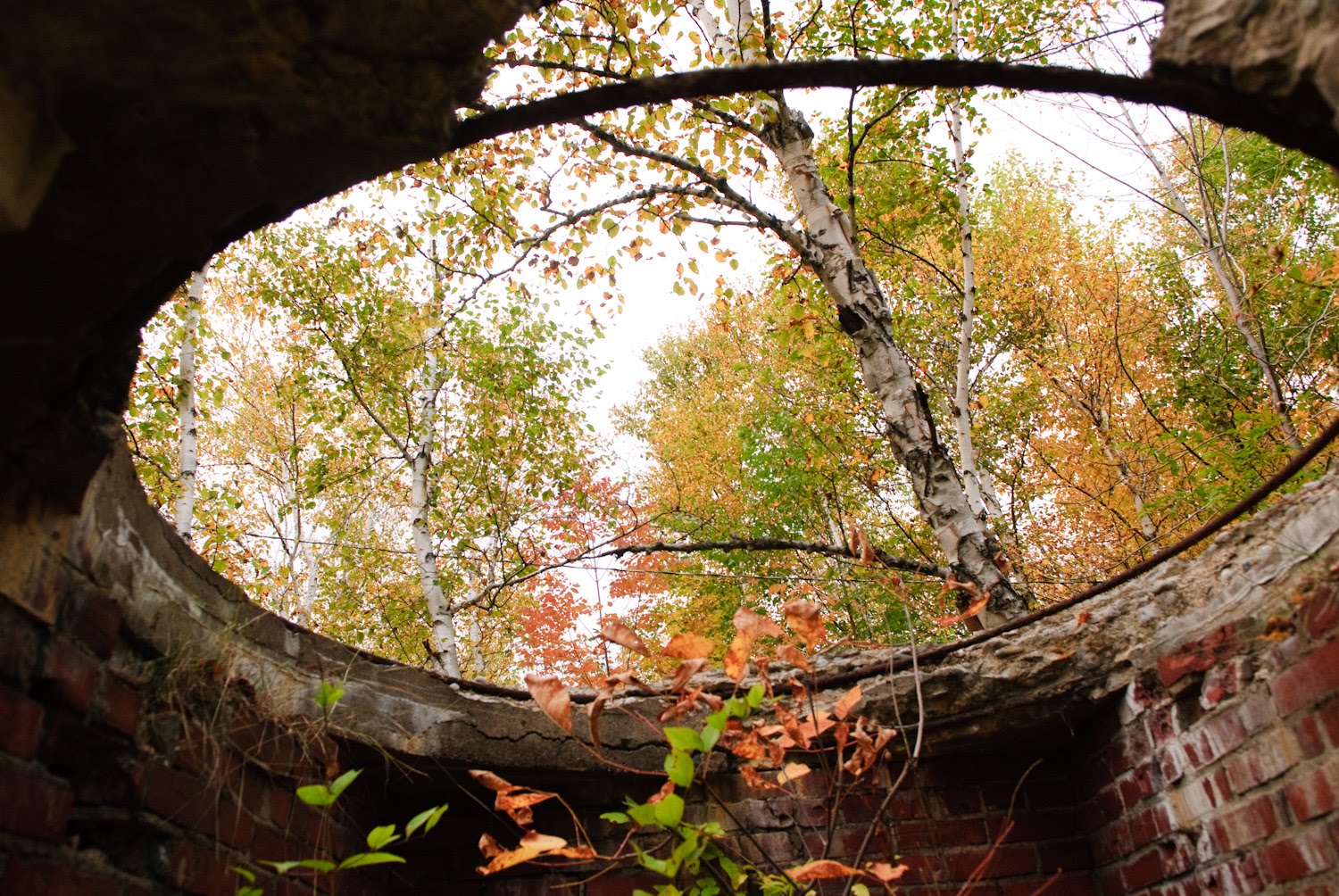
What does it mean to be post-industrial? I was walking around one of the Berlin parks this evening, and I was able to wander through the relics of the bygone era—the remnants of industrialization. It was like walking through Stonehenge, with echos of history that don’t make sense in the modern era. While I enjoy the traces of the past, the city itself is still trying to figure out just how to move forward.

Do people miss the mill and that industrial era? I never saw it, but I’ve heard about the heyday of Berlin. It sounds wonderful, and at the same time terrible. How do people feel about the transition that has occurred over the last half-century? Is it better to live in a city with clean air and empty storefronts, or was it better to itch for the weekend to go to camp but have money in your pocket? I’ve heard a lot of nostalgia for the old days; is it real? Given the choice, would residents go back to that?

I wonder if people see the circumstances Berlin faces as a blessing or a curse. True, there are lots of empty houses that occasionally catch on fire, and there are poor people moving in because of the low rents, but there is also a grand history and an infrastructure the city can now leverage in new ways, ways surrounding communities don’t have. The assets of today are the remnants of yesterday. Which era would you rather be in?

Rehab It, Make It Free and They Will Come

I was reading one of the articles I posted about yesterday, and had an idea that could completely change Berlin.

Offer a free apartment to any four year college graduate under 30 (or 35, or 28) who will settle in Berlin.

Berlin suffers from a brain drain. Too few young, creative people stay or return to Berlin. As in other places, “the best kids go while the ones with the biggest problems stay, and then we have to deal with their kids in the schools in the next generation.” Those that do stay or that come back are expected to shoulder more than their share of the burden within the community. Berlin needs more creative, educated young people to serve as the foundation for the city.
So how do you get them there? Berlin has an overabundance of housing, some of which will be demolished in the next few years using Neighborhood Stabilization Program funds. What about renovating some of those properties, but instead of turning them into low income houses turn them into free apartments for the people the city needs most.
This plan could work. Use NSP money to buy apartment buildings in need of rehabilitation, and then use BIDPA funds to restore them. Or, if you have to, use all BIDPA money so it avoids the rules associated with government money. Then advertise free places to live for driven people with four year degrees around the southern part of the state, Massachusetts and Maine.
New York City, which has astronomical rents, has a similar program for office space. They have few entrepreneurs compared to Silicon Valley or Boston because the brightest minds are often hired by big firms; the barriers new firms face are too high. The city has started to subsidize office space for start-ups in an effort to build the entrepreneurial culture.
Berlin could do the same thing. The city doesn’t have money, but it does have housing. Offer free rent—residents pay utilities—in a city-owned apartment building. The city would own the property, which, if the city grew, would increase in value. The building would become a solid investment. The city would get new blood and new money, and the people there would build ties within the community. Maybe some of them would move out, but many of them would stay. They would start businesses, get married and buy houses of their own. They would become the city’s next generation, mixing with the few entrepreneurs who stayed.
There would be no reason not to offer this to people from Berlin as well as those from away. The city could stop sending its smartest and best educated kids to Manchester and Boston and reap some of the investment it makes in its youth. It would be a cheap incentive to bring some of them back, and at the same time it would clean up more of the blight.

This is an example of the type of non-traditional thinking Berlin should be employing to figure out how it will move into the next century. Would it work? I don’t know. Go ahead and shoot holes in it, but then propose your own idea of how Berlin can reinvent itself.
Need inspiration? Check out this study from the Chronicle of Higher Education. That’s where I got my idea, maybe it’ll help with yours.

PUC, PSNH, CPD, AWOL, IOU

I’ve seen a convergence of random incidents that make me think it’s time to start asking some questions of the Public Utilities Commission and Public Service of New Hampshire.
In a story I wrote last week, Clean Power Development said they are ready to break ground on their project if they can get a purchase power agreement. CPD has a complaint before the PUC that says PSNH’s refuses to discuss buying power from them. PSNH argued CPD is trying to force PSNH to buy CPD’s electricity against their will.
Mayor David Bertrand wrote a letter to the PUC on Monday requesting they address the issue as soon as possible, as the CPD project would be a huge help to the city. And PSNH started following me on Twitter the same day. That’s enough gentle reminders to make me think I really need to get after this issue.

I understand PSNH’s feeling that it shouldn’t be forced to be an unwilling partner, but it seems like a dodge to the real question. Is PSNH required by law to consider all viable proposals to figure out what will result in the lowest electricity cost to rate payers? I think that’s the question I’d like to see answered with a simple yes or no. If CPD is in the best interest of rate payers, PSNH, a regulated utility, should accept their offer. If the CPD offer isn’t in the best interest of rate payers, PSNH should reject their offer. But PSNH can’t make that determination if it is unwilling to hear the offer in the first place, it seems.

I have read the docket, and it seems like CPD is asking one question and PSNH is answering a different one. I’d like to get the answer to the question CPD is asking, as that is the question the city of Berlin is asking. I suppose the PUC will ask it too, but I’m impatient.

So, PSNH, can you refuse to hear an offer? Is that a violation of your responsibility as a regulated utility?

Update: PSNH contacted me through Twitter and said they will address the question.

Update: Martin Murray of PSNH left a comment reiterating PSNH’s position that the law does not not require them to enter contracts with local generators. I wasn’t satisfied with that answer, so I called Mr. Murray to ask if PSNH is allowed to dismiss a proposal without considering it. He said due to the current complaint he was unwilling to comment. I tried several different approaches, including asking how PSNH decides who they enter into contracts with. I thought if I made the question more general, not about CPD, he might be able to answer, but he was still unwilling to comment. He said the issue is before the PUC, and it is for the PUC to address. He said PSNH will issue a response to the PUC docket in about a week.

I’m not satisfied with that response, but that’s what I got. Their response to the PUC hopefully will clear the mystery up. Either way, I intend to keep after it.