Not Enough Space

The entire city of Berlin should have come to the council meeting tonight. It didn’t clear up as much as it should have, but it posed so many interesting discussions I could write an entire paper out of it.

George Sansoucy, the utility appraiser that assesses the city’s big, hard to assess properties, gave an hour and a half presentation. That alone could have been four stories (I had 400 to 500 words, and I had to squeeze everything else in too). It’s too bad there weren’t more people there to hear it.

He recommended the city get a payment in lieu of taxes, or a PILT, from the utility companies proposing projects in the city. His rational was that it provides a consistent revenue, and that the city could get good revenues for years, even after the assets have sunk in value. The city may start out getting a little less, but in thirty years the city winds up getting more than they would from the assessed value of a worn out biomass plant. Long term planning; that sounds exactly like what Berlin ought to be doing.

He also said there is no hope for district heating unless oil goes up three fold, but some of his comments about plant efficiency didn’t make much sense. Bill Gabler, from Clean Power, was there, and they were geeking out on technical specks (in addition to being an assessor, Mr. Sansoucy is a professional engineer) but their figures weren’t lining up. There was talk of efficiency, and how some plants are efficient at 60 percent, and others at 20 percent, but the engineers in the room couldn’t agree. So while that conversation was interesting it certainly wasn’t helpful in determining the possibility of such development.

And then there was the race, which isn’t even going to make it into the paper. After the fire department troubles hiring an assistant fire chief and Mr. Sansoucy, I didn’t have room to spare, but it appears a reality show is coming to Berlin to run a road rally, thanks to the efforts of representative Paul Ingersol. You can check out the organization here. The council had a few questions, but they seemed enthusiastic, because the event would get people into the city.

I was just having a discussion about how the city and the county need events, both on LPJ and recently in Berlin. This is perfect, but it needs more. Berlin has multiple petro-fueled events, from an ATV rally to a motorcycle rally to a rally race to an old car show. Sometimes I wonder if the North Country is trying to prop up some Emir in Kuwait. The events are key, but somebody has to start proposing something different. Or, to put it better, let’s have all these events, but let’s also try branching out. What about a film festival? Or multi-stage bicycle race? These aren’t things Berlin is familiar with, but maybe the city needs to look beyond the low-hanging fruit.

But I digress. The police department also stopped by to talk about replacing a telephone line to a radio tower that connects their dispatch center with their patrol cars. They pay $500 a month for the connection, which has gone out three times since December. It is antiquated, the police chief said, and the department needs council approval to shift funds around their capital improvement budget to pay for an upgrade. Again, that won’t make it in the paper because of space issues.

I look at the agenda each Monday and tell my editor how long I think my story will be for the council meeting. I am invariably wrong. There is always more going on at council than I can cover, and I often only get small parts and pieces. It’s a shame, but luckily residents have multiple sources from with to get their news.

But recently I’ve begun to doubt the ability of any paper, mine or otherwise, to truly do justice to these meetings. There is just too much going on for me to cover in 500, or even 5,000 words. I try my best, but there is no substitute for being there.

The turnout, however, is always low. I spoke to one man this weekend who is often there, and he said he doesn’t think the council values resident input. I disagree. I’ve seen councilors change their minds after hearing strong words during the public comments. What Berlin needs is engaged citizens, particularly those willing to share their views with their representatives.

It becomes like a soap opera, or maybe like “Desperate Housewives,” when you go week to week, and I don’t mean that pejoratively. I have grown to know and like the characters, to enjoy their personal quirks and to watch their interactions. They are nine people struggling together and against one another to right the listing ship that is Berlin. To pop in on one episode might seem boring, and some days things never pick up, but overall Monday nights are entertaining as well as informative at city hall. It surprises me that people would prefer to watch television, when real drama that affects them is going on so nearby.

So this is my impassioned plea: give it a few shots. Make it out to council, and not just for one episode. I know people who read LPJ care about politics, the city, and raising the bar on the debate, but most Monday nights no one is there. If even just for a few weeks the auditorium was packed, what a difference it would make.

Incidentally, that makes for the best sunshine. The press’ first obligation is to the people, but here is an opportunity for the people to bypass the media. Even if I could always get it right I don’t have room for it all. Instead, just show up. If you miss a week, grab the paper, and I’ll fill you in on what you missed. But unless you know the characters, the plot twists and the progression, my explanation will never be enough. It takes more investment than that. So come on out and enjoy your public officials. You are their bosses, come make sure they’re doing what you require.
Positivity Projects and Researching Stories

I’ve been deep in Northern New Hampshire lately. Deep enough I almost got lost.

I love covering Berlin and the surrounding communities. It is such a switch from working in other communities, where people barely recognize you the third time you meet them and pedestrians walk down the street with a thousand mile stare.

Coös County deserves better—that’s what a candidate for Gorham selectman told me the other day. I agree, but I’m not sure there is someone to blame for its failings. The industry that supported the community went into decline 40 years ago, and what’s left is the shell that is there now.

But it isn’t just a shell. Berlin and Coös are down, but they aren’t out. My reporting has worked to do two things: inform residents about critical issues and highlight the positive. But there are so many critical issues sometimes it overwhelms my reporting. As I’ve said before, there ought to be a dozen reporters covering just Berlin/Gorham, and then maybe all the news that’s fit to print would get out there.

I’m looking into a side project that might get a bit more of that positive coverage out there. It sounds great to me if I can get it together, and it would create a bit more of the type of stories people always say are missing from the paper. (Honestly, they aren’t missing, but people notice the negative stories and glance over the positive ones. Oh well.)

The future of Berlin, and maybe the region in its entirety, are at a crossroads. What happens if the Fraser mill shuts down? If Groveton doesn’t find something to subsist on? If the economy continues to decline throughout the region? What happens then?

I don’t see that as Coös’ future, however. There are more good developments around the region than bad ones, and the attitude is changing to one of progress. I will admit there are divides in how to move forward, but there is no one who doesn’t look at the current situation and see it as untenable. So what’s next? How can the region stop talking and start moving.

I first thought Roger Brooks was selling a monorail in Springfield (check your Simpson’s trivia if you missed the reference). After listening to him, however, it is clear he knows what he’s talking about. He said the business community needs to take its future into its own hands instead of relying on politicians to do something. After watching the pitched battle that was Berlin’s municipal election, and as I prepare for town meeting day, I couldn’t agree more. Coös residents have to create their own solutions, not just complain about their problems.

And they are. Steve Binette and his family are buying the former Bartlett School to turn into student housing. Talk about members of the community pitching in to resurrect the city. This is exactly the effort the city needs.

I’m working on a project of a similar scale. It will lock me into the region for quite a while, if it happens, and point my energy more directly at changing people’s minds about the county. It would be aimed outside the region, however, rather than in.

If you’re concerned that means I might be leaving the Reporter don’t worry; I have no intention of giving up my fabulous job. I have yet to figure out how this will all work (if it can), but I love the reporting I am currently doing. Think of the project as an expanded, targeted LPJ blog, but with only the good and none of the bad. Normally I would call such a thing Public Relations (shutter), but when the goal is community revitalization and development I can relax the rhetoric. It would basically be finding all the stories I can that are the gems of Coös County, and pooling them in one place. I’m not sure how it will work, but it’s an interesting idea.

In the meantime, there is a lot of political maneuvering and such going on, particularly in reference to energy. There are stories there that aren’t positive or negative but certainly need to be told. I don’t intend to slack off my reporting of those issues. The PSNH/FERC story was a great find, one for which I got several compliments, but that type of reporting is HARD TO SUPPORT. There aren’t the resources around the North Country to consistently do it. Heck, there aren’t the resources around the state or even country to consistently do it. I like that type of research, but I also have to cover every other thing going on in the community, and it takes time. The daily paper runs into the same problems. When it comes to the failures in reporting around the region it isn’t the fault of the reporters; it has more to do with the economic model newspapers are predicated on. Paper just isn’t made in the U.S. anymore, and newspapers just can’t sustain a real staff anymore. Luckily the reporters around Berlin care as much as they do, and they have the support they do from their editors, because otherwise the outlook would be incredibly bleak. Until there is a new model discovered/created/invented it isn’t going to get much better. For now, however, I know the people doing the work up there are doing the best they can with inadequate resources. Sounds like the rest of the region, huh? But like everything else up there, what people get for the money spent is pretty remarkable. Berlin and Coös County aren’t broken; they have a future yet. The papers, both the daily and the Reporter, are going to be more than part of that future—they will be critical drivers of it.

More PSNH, PUC, CPD

and now… FERC!

So I’ve got an exciting piece on PSNH and their efforts at the federal level that CPD claims are intended to circumvent their responsibilities in purchasing power from small independent producers.

It’s all gray area and well worth the read. It gets pretty deep into the nuances of electricity regulation in the US, but it could wind up being rather important to Berlin.

How can a 29 megawatt plant be less than a 20 megawatt plant? When it only generates 17 megawatts. Does that make it a 17 megawatt plant? CPD says yes (sort of), PSNH says no—now let’s see what the Federal Energy Regulatory Committee says.

This was a tough piece, and just the kind I like. It took some digging, and as far as I’ve seen it hasn’t been out anywhere. Both CPD and PSNH were surprised to be talking to me about it and weren’t exactly prepared. It isn’t enough to shake any big apples loose, but it’s the sort of thing the region needs to follow. Informed voters might care about this one.

So what news matters most to you? What is there not enough coverage of? I was talking with some friends about reporting in the region, and we were trying to decide what was lacking most. I said in depth coverage of energy issues would be ideal, from a group with the skill and the knowledge to do it. From transmission issues to taxation, wind farms to biomass—all these issues are going to grow over the coming decades. The two local papers work hard, but they are also covering ice golf stories and the latest Tri-County CAP generous donation drive, with only three reporters between the two of them. What falls through the cracks?

Lots, I’d say, and I imagine most LPJ readers would agree with me. But what is the most important?

I’ve been sick for the entire week, and I’m still trying to pull out of it. I did a fair bit of my work last week, but I’ve still got a story or two to finish before I can go to bed, but I wanted to get the word out that there was something cool worth reading in this week’s paper.

I wish these stories were here every week. I don’t think they aren’t in Berlin; I think the skill to tease them out takes time to develop. I’ve been able to pull together a few of them, but it isn’t a weekly thing. Berlin needs more of this, but to get more of it it needs more reporters. That means a staff that hasn’t been with either paper for years. If there were some other way to get reporters up there to spend time digging around it’d be a gift.

Think about this—imagine you run a 24 hour convenience store, and it’s only you and a partner. Now remember, you need to be there all the time to cover anything that should happen. How do you think that would work?

Doesn’t sound like it’d work great, but that’s what the daily is working with—two reporters. My paper has one, so I’ve got all shifts. Inevitably things fall through the cracks.

With a city as dynamic as Berlin, really it needs more. It isn’t LL Bean, with tons of area to cover, but even a 7-11 requires more than two or three people to ensure the counter is covered all the time.

But the newspaper business isn’t growing, it’s shrinking, and the counter is empty more and more. It’s too bad, because when someones steals a soda, a candy bar, or even the register, it’s hard to stop when you’re alone. In fact sometimes no one even realizes it happened.

I’m ranting. Time to get back to writing for money, not pleasure. Support quality journalism—it makes you pay for your candy bar. And happy Valentine’s Day.

More than just a meeting

So I’m assuming everyone has seen that the public hearing for Laidlaw’s proposal is scheduled for mid-March. I’m getting geared up for lots of driving to Concord and back over the next several months. As I understand it there is a 240 day time-frame for this hearing, but at any time the SEC can hit pause to get all the information they want. That has resulted in some drawn out hearings in the past. I’m hoping things go a little quicker in this one; it’s a long way from Glen to Concord. Either way I guess I’m going to rack up the mileage reimbursements.

I’ve been sick for much of the last week with whatever has been going around. It’s basically taken away my voice, which makes it hard to do my job. I’m supposed to talk to people to find out what’s going on, but I can’t really say anything. And now I’ve got a black eye too from catching a chunk of ice in the face. I’m up in town today, going around talking to people, and I’ve already received a number of looks and had to explain myself several times. It’s not the most flattering look, believe me.

I’m going to something really exciting today: a meeting with a number of people from around the region working to create a new voice in the North Country. Normally when I go to meetings I’m not there to share my opinion; I just go to cover them, not to chime in. This one is different, and it could have a great benefit for the region. I’m really psyched to be taking part and maybe make something happen in the region.

I’ll keep you posted on it as things develop. In the meantime, if you see me, don’t be alarmed—I look a little worse for wear and my voice is raspy, but it’s a work day and I’ve got to get things done.

Not Alone

Berlin isn’t the only community trying to figure out how to move forward from an industrial past; check out this report from NPR‘s Morning Edition. There is some discussion about what other towns have done with former industrial sites, but they are all considerably larger than Berlin. The problem of mill sites occurrings nationwide, as does the split in residents’ opinions on the best way to deal with it.

At least the stack in Berlin isn’t 800 feet tall. The mayor’s perspective in El Paso reminds me of the city seal argument in Berlin.

Let me know of your thoughts on El Paso’s challenge. Maybe Berlin can learn from their struggles.

NH SEC

Mayor Grenier made a point last night I thought was intriguing. He went to the SEC hearing about the CPD plan, and he said he wouldn’t want to be a developer going in front of that process. He’s right about that.

I went down to cover the hearing, and the story will appear in this week’s Reporter. I used 1,000 words to describe the hearing, but it went on for more than six hours so I easily could have written more. The petitioners made a poor case about the deficiencies in the CPD plan, at least from the point of view of residents. They were harping on the road and the traffic, which were dealt with by the planning board, while they ignored financial questions about the project.

The SEC dove in anyway, though. They looked beyond the questions of petitioners, delving into issues of transmission, financials and more. CPD had answers, with documentation and diagrams, but the questions certainly weren’t softballs.

The SEC has jurisdiction beyond the controls of the planning and zoning board. The major issue such boards don’t address is financing. The legislature put the cut off for review at 30 megawatts, and they didn’t set up any alternative method for communities to verify finances of projects less than 30 megawatts, other than petitioning the SEC to review it. That makes it seem the legislature didn’t put a high value on ensuring smaller projects are financially viable. CPD’s attorney made that point several times. What the difference is between 25 and 35 megawatts I don’t know, but it is apparently big enough for the legislature to exempt some from financial review and not others.

But watching the SEC in action was impressive, and I have to agree with Mr. Grenier that it was tough. If Laidlaw’s experience is anything like CPD’s, the project will undergo considerable scrutiny as it moves through review. The members on the committee didn’t seem to pull their punches, and sitting in the hot seat at times looked uncomfortable.

Councilor Cayer said at last night’s meeting that the state often misses when it comes to living up to its responsibilities concerning municipalities. Just a few minutes earlier the council was discussing some upcoming legislation that proved his point—the state was offering a tax break that would come out of the municipalities revenues. But unless the SEC has a reason to treat Laidlaw differently than CPD they will get a lot of scrutiny—instead of one day they get 240.

I intend to be in Concord for those hearings as well, and I will see first hand whether they act softer. If they do it will indeed indicate a bias within the committee, but I don’t expect such things. It will be easy to tell: if the committee is asking questions I wouldn’t want to have to answer you will know they are still doing their job.

The committee has greater authority than the local boards, and therefore is the right place for a controversial 70 megawatt project. Any question about the project will have to be answered, and its viability will certainly be determined. The SEC is a far better entity that the planning and zoning to address concerns about Laidlaw, its investors and its plans, and there is no mechanism for the city to look into its finances. If the idea of a plant in the center of the city is your problem, SEC review provides no solution, but if it’s in Laidlaw the company that your concerns lie, they won’t move an inch if they can’t prove they are legitimate.

I admit, I came into this halfway, and I don’t live in Berlin, but it seems to me if you were looking for a hard look at Laidlaw from an unbiased source the SEC is the place. It should allay some fears that the company will stomp on Berlin, or that local politicians are going to shoe them in the door. This process, if its like what I saw last Friday, is going to hurt, particularly if they aren’t for real. Honestly, it looks like it will hurt no matter what—nobody wants to be under the magnifying glass that long. But the state seems to have done a good job setting up a knowledgeable committee to ensure the project is good for the community.

The caveat being that if your big issue with the project is its location such a reassuring process doesn’t help. The process will, however, address concerns about Laidlaw. Residents will likely raise the issues that are often brought up LPJ before the SEC, which will undoubtedly conduct a thorough review. Skeptics should go watch—if they grill Laidlaw the way they grilled CPD all the answers will come out.

And if they don’t I’ll be sure to tell you; I’ll be sitting in the front row.

Updates All Around

I did a quick update to the header over the weekend, for two reasons: one, people who didn’t know what it was said the mill looked phallic, and two, the argument continues in city hall over the implications of the mill on the city seal, and I’d rather not get in the middle of it with my header. Some people in Berlin don’t want to be known for the mill, and some do. I can go either way, so I’ll opt for the less controversial option.

The header still needs work, but I like it. I’d appreciate any feedback you’ve got, on the site or the header, or, as always, on the goings on in Berlin.

Speaking of the goings on, I spent a good chunk of Friday at the PUC building in Concord listening to petitioners and CPD argue about CPD’s proposal. A bit of Berlin was down that way for the hearing too, and there were some interesting discussion. CPD said it would be fully bonded, so that once construction started they would have the money to finish it, even though the city hadn’t insisted on it. Mayor Grenier asked the SEC to respect the local process, which he said did a good job vetting this project. He also raised some interesting points about the Fraser mill, and who could support its longterm viability. Neither CPD or Laidlaw could, he said, because their fate is approaching rapidly. They have weeks, not years, to find a path forward, he said.

That seems right on. It appeared a bit of a dig to the arguments CPD was making about how review would delay them coming to rescue Fraser, but it’s unclear what anyone can do to make the plant viable. I don’t know about wood, paper or the industry, but paper companies don’t seem long for the Northeast. I hope someone can change that, but I’m not holding my breath.

My wife and I were discussing what the future for the county could become last night, and what methods could resurrect the region. Can that growth happen locally, I asked, or does it have to be imported?

I grew up in a small town in a small state, and I would not be happy to move “home.” But I moved to a small town in a small state, and I work in another small community. There is something in youth that wants to free itself from what it knows, even if it winds up somewhere almost exactly like where it knows.

I’ve argued before on here that Berlin needs to retain its youth, but after the discussion last night I think that’s wrong. Berlin needs to recruit youth, not retain youth. The best and brightest should leave the area. That’s what any parent wants their child to do. And as long as there are an equal number of people of a similar age migrating to the area it doesn’t matter. The essence is to keep the population demographics the same.

I can list several young people who went away, got educated and came home to Coös County. Samantha Kenney Maltais, for one, keeps coming back to educate people about Grand branding. The city planner, Pam Laflamme, invested in herself and brought that investment home.

But the vast majority of young people with creativity and vision come from somewhere else. They are running away from small towns in Maine, Connecticut, New York in the same way that kids are running away from Berlin, Groveton and Stark. The problem, thus far, is that Coös County is a net exporting region.

But it answers a fundamental question about how to solve the problem: do you try to convince the kids of Berlin they want to come back, or do you put your efforts elsewhere?

If I were a parent I wouldn’t want my kids to stay, but that isn’t a function of being in Berlin. Even in Conway, where I live, my friends who have lived there all their lives consider it a dump, while people who moved there think it’s great. There is a lack of perspective when one place is all you know, and whether they are my kids or not I would encourage them to explore.

But for people from away, this place holds something different. Perhaps that’s why some of the most ardent supporters of change in Berlin, from Katie Paine to Councilors McCue and Cayer, are from somewhere else, even if that place is very much like here.

The kids in the area need support, and programs that open them up to other experiences are invaluable, but the goal should be on how to get them to explore, not on how they will become the next North Country. The next North Country, like it or not, will be built of people relocating from away. When the federal prison arrives there will be a wave of changes and new faces, representing the start of what’s next. Berlin is going to have to fight to preserve its heritage, but at the same time it will likely be swept upward by the effects.

I went to a fire scene today up in Dummer, and spoke to a man who just lost the house he’d lived in since 1941. He cried as he told me how kind people have been. I was struck then, as I often am north of the notch, at his willingness to speak to me, a stranger, and at the amount of support that was gathered in his son’s kitchen. Those characteristics are hard to maintain in the 21st century as communities become more and more, and it is an asset Coös County doesn’t yet know how to capitalize on. Unlike many other places around the state and the country, that community has a long way to go before it is diluted.

Berlin still attracts people to come home. No one likes the poor people Berlin has attracted, but the city has also attracted civic-minded people. Think about Councilor Landry, who moved to Berlin with his wife and two kids. People of all types move here for what Berlin offers, and it is likely that trend will continue.

But be prepared; the changes might be rough. With revitalization comes destruction, if of nothing else than of the ways that were the standard before. I don’t see much change of Berlin remaining the quiet, insulated community it is no matter what. The prison will bring new people, the NSP program will create new houses, and the ATV trail will bring new business. Unless Berlin never turns around it will likely sacrifice some of the characteristics that make it so special.

I imagine Conway was once that way—a sleepy town where everyone knew everyone. What progress means depends on your definition, and in Berlin whether you want it depends on your connections to the past. I am looking forward to seeing the city grow, but my history here doesn’t run deep. As each new resident moves in and each grown child decides to leave, little by little Berlin rises up and changes forever. I love watching it. Do you?

A day of it

Today was a bit of a strange day as a result of the crazy weather. Instead of my normal Monday routine in Berlin I got rained out, only to go to council and put in almost a full day there. Councilors were discussing the rules and policies, which wound up taking nearly three hours. I got home at 11 p.m. and spent another hour writing up the story so it can show up in Wednesday’s paper.

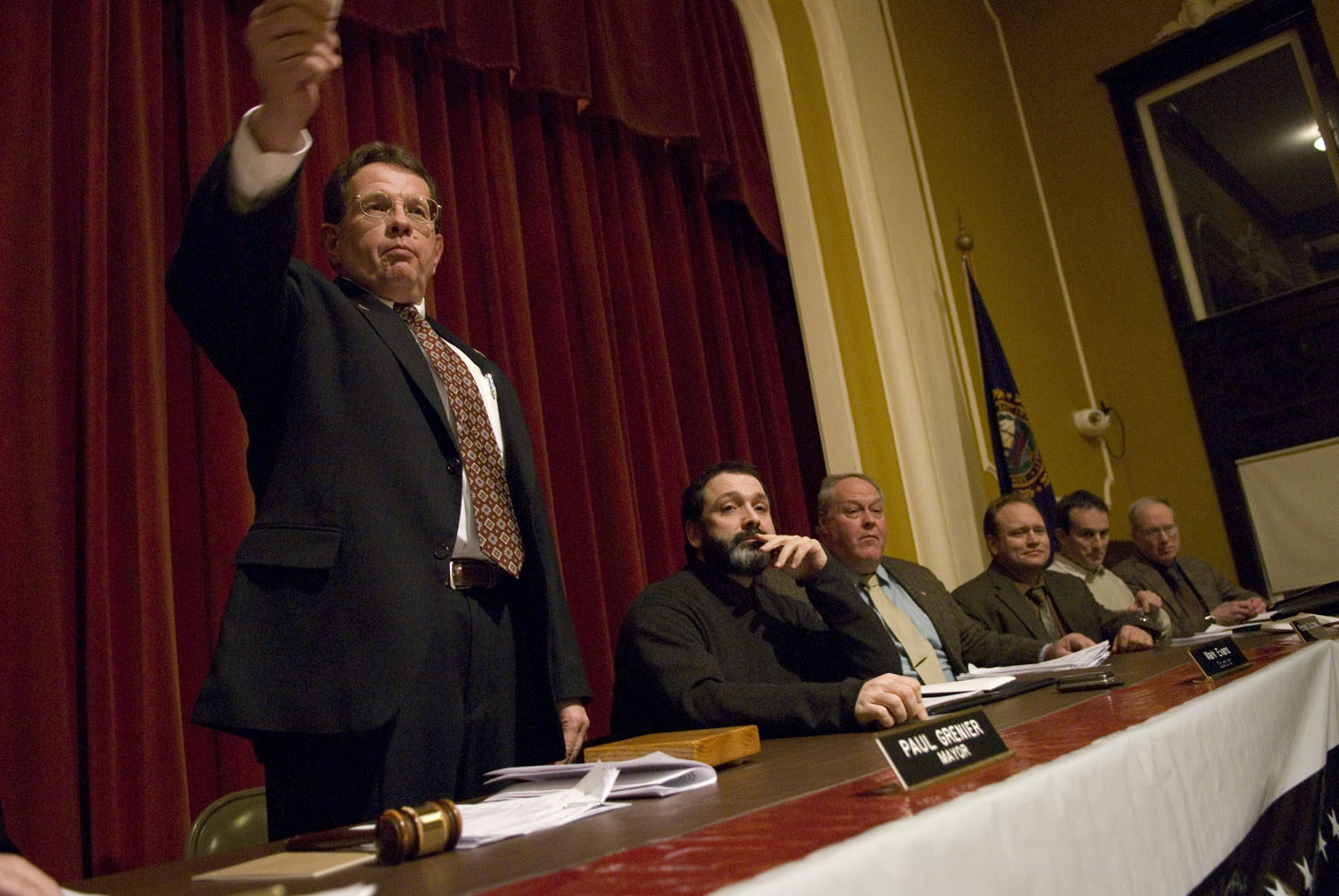
It was quite a show to watch the remnants of the old council and the new members work together. Councilors Robert Danderson, Micheal Rozak and Mayor Paul Grenier dominated much of the conversation early in the night, which pertained to bridge maintenance and sewer construction. Councilor Mark Evans made his mark during the policies discussion, which lasted for several hours.

But then at the end, when Councilor Danderson said he’d like to have one of the councilors who supported writing a letter to the Site Evaluation Committee regarding Clean Power Development rescind their support, the councilors spoke largely in unison. Councilor Lucie Remillard, who I have not noticed to be particularly attached to either the CPD or the Laidlaw camp, said she didn’t want to do anything that might disrupt CPD’s efforts, though the council shouldn’t fight their battles for them. Councilor Evans and Poulin didn’t speak up in favor of supporting CPD’s efforts to move forward without SEC review, but Councilors McCue, Landry, Cayer and Remillard did.

In the end, so did Mayor Grenier. He said he had concerns about the project, but to try to stop it at this point would send an anti-business message around the state.

This is an interesting time for the council—significant transitions all over the place. Mayor Grenier seems intent on running a tight ship, which appealed to several councilors from the last administration. He also made what seemed like deliberate attempts to extend the olive branch. I’m not sure if his comments about CPD count as the latter, or if, as he said, he reached some agreement with Mel Liston of CPD when the two men met on Sunday.

Regardless, I’m interested to see how this plays out. As Councilor Evans said, the clarification of the new rules may be useful when the council gets down to business because there may be a number of close decisions. Keeping to the rules will be key to ensuring residents get the governance they voted for.

LPJ is also on its next step, and I’m hoping it’s a step upwards. I started the blog because I knew I’d need to have one if I ever want a job somewhere else. I don’t want a job somewhere else, but someday I will and now is the time to prepare. Well, the next step after a blog (and a Twitter account) is a website. Check. Granted, I’ve still got more work to do, but it’s passable. I particularly like the header—it reminds me of this great place I go from time to time.

Politics As Usual?

So I’ve kind of been out of the loop with the whole vacation and everything, but I’m starting to get back into things. In case you only stop in to read LPJ from time to time, there has been a vigorous debate going on in the comments pertaining to Laidlaw and Mayor Paul Grenier.
Laidlaw’s application was rejected by the SEC last week. They have indicated the issues should be sorted out quickly. The Sierra Club has also joined Clean Power Development and several private citizens in asking the SEC to reject the application, although at this point I’m not sure what that means as it already has been rejected.
Mayor Grenier thanked representatives from Laidlaw at the at his inaugural address, and he sounded rather authoritarian in his speech when he warned people not to try to derail the project.
Mayor Grenier does not have veto power or the ability to ram policy past opponents, some of with are resolute as in their beliefs as he is. The Laidlaw application was found wanting in several areas, and my understanding of the law is they have 10 days to rectify the issues before they have to reapply (anyone with a better understanding feel free to chime in). This may mean pitched battles in council and another substantial waiting period before SEC review.
Discussion about the merits of the project, its future and its developer, or the policies, rhetoric and outlook of the new mayor, are worthwhile discussions for a city to have. Honestly, I’d love to have every resident of Berlin chime in on how they feel about these issues. I wish there were some polling organization capable of truly gauging the feelings of residents. There isn’t, however, and the discussions are often behind the faceless veil of the Internet, which isn’t always conducive to honest discourse.

I have to say, however, I am happy to see people engaged. I wish all of Berlin cared the way people on LPJ seem to. I do not, by any means, have the answers for Berlin. My perspective is only one, and it is of limited experience and without deep roots in the city’s past. I recognize that at times that is a hindrance, but it is also an asset. I don’t know what former Mayor Robert Danderson was like when he chaired the council. I don’t know what Mayor Grenier was like before I met him several months ago. I don’t know what Councilor Michael Rozak was like when he was on the school board. I wasn’t around when Laidlaw first came to town, or when CPD first came to town, or when former Mayor David Bertrand was elected two years ago.
I know Berlin since I started working there in May 2009. What I see is a city with problems, but with a core of dedicated people willing to work and sacrifice to find solutions. They don’t agree on what solution works best, but they all agree that Berlin is a wonderful place worth fighting for. And I’m right there with them.

There is more to every story than I have reported. There is more to every political deal than has made it into any paper, or onto any website. I would love to find verifiable sources for all of this information and get it out there so the community can make more informed decisions, but it isn’t all sitting on my desk. I do what I can, and I’ve been able to break several stories involving biomass and politics. Do I get them all? No. But as one reporter covering the entire city I figure I do OK.
I take tips, and not the waitstaff kind, but I take them with a grain of salt. What are the motivations behind any information I get? Can I verify it independently? Will someone go on record and talk to me about it? That’s the guidelines I work with in the paper. Here, on LPJ, I am a little looser because this is my personal blog, but I still work to maintain a level of professionalism the citizens of northern New Hampshire deserve. I report leads I get, and I work to get more information up quickly as it comes in. I hope people find this valuable and worth reading.

In the end, what I hope LPJ does is foster discussion. I don’t have any answers, but I enjoy sharing my opinion. I invite anyone to do the same. I have had a sharp commentary from time to time (usually due to a late council meeting) but I refrain from personal attacks. Whether you dislike Jon Edwards’ rhetoric or that of the new mayor, I’d appreciate it if people focused on the substance of the commentary and not the person. It is hard to compromise with someone who just insulted you, or who you just insulted.
I do respect people’s right to disagree with me, or even to make points on my blog about why my opinion may be obtuse. It may be—I am not immune to illogical thinking (my wife can attest to that). But sign your name, do it respectfully, and further the overall conversation. Berlin is an amazing community. The debates about biomass and about politics will likely last for the next decade, as these projects and others move through the world. Residents need to be informed. I have no desire to proselytize. I would even entertain thoughtful commentaries from anyone who wished to submit one. But please maintain civility, it makes the conversation go much smoother.

And also, if you know anyone in the area who doesn’t care one way or the other about these important issues, try to engage them. The future of Berlin is at stake, and it should be the residents who decide where it goes. One argument is people were asleep at the wheel and elected Mayor Grenier against their best interests. The other is they diligently steered the car that is Berlin Mayor Grenier’s way. I am not about to guess which it is, and I don’t know that it does any good for anyone else in Berlin to do it either. The registered voters of Berlin made their decision, and now it will play out for the next two years. Keep struggling for what you feel is important, and hopefully in the end all of Berlin will come out on top.

Off to a BIDPA meeting. Hopefully I’ll see you in Berlin.

New Sheriff In Town

…well, mayor.
Mayor Grenier made good on his promise to create closer ties with Laidlaw—a number of representatives from the company were at the meeting tonight, as Mayor Grenier, Councilor Robert Danderson and Councilor Michael Rozak were sworn in. It will be an interesting new chapter in the book of Berlin.
I’m interested to see how the new council interacts. The staunch Laidlaw opponents ranks are pretty close to the staunch Laidlaw supporters, and it could result in some tough battles if the council does not resolve to put those differences aside.
Mayor Grenier did call for support of both the Laidlaw and the CPD project, and I noticed Robert Danderson’s name on one of the petitions requesting CPD be subject to SEC review. It will be interesting to see if these two recent allies butt heads on this issue and if Mayor Grenier is going to go to bat for CPD with the same vigor he has gone to bat for Laidlaw.

On Wednesday WREN comes to a BIDPA meeting, which should offer another conversation worth following. WREN could bring a creative spirit to Berlin many people say was extinguished by years of mill life, but it will require the city taking a chance on them, a chance they can barely afford. If they are able to foster a partnership, however, it could be a rich partnership for both parties.

I’m getting back into the swing of Berlin, and I’m realizing how much I missed it. Work is always nice to get away from for a while, but when work is in Berlin it’s even nice to get back to. I took a ride with the police chief and Commissioner Steve Griffin today, along with a reporter from the daily. Chief Morency and Commissioner Griffin were presenting a Berlin woman with a plaque commemorating her 38 years of service as a crossing guard. We arrived, and she, her daughter, and a close friends plied us with cupcakes, coffee, soda, crackers, cheese, mini-cupcakes, donuts and juice. I don’t even drink coffee but I took a cup just to make these wonderful women happy. I also grabbed some grapes at the insistence of my hostesses. I’m not part of the French culture that dominates Berlin, but when we left Chief Morency and Commissioner Griffin reminisced how the was exactly like every visit to their grandmothers’ house as a child. I couldn’t help but smile. I’ve been allowed into a community that has more heart than most people would know how to cope with. After a few weeks away, it is certainly nice to be back.