For B, in Gratitude

For B, in Gratitude

10491231_958451607514258_8227570007696309004_n“Life and love are confusing things, and too many nights are spent sleepless.”

A friend sent a note the other day, and those were my words typed in solidarity with someone trying to figure it out. It had a certain ring to it, flowed in a writerly way I strive for all in all my work.

And it’s true: whether in life or in love I have no idea what I’m doing, and many nights are spent tossing. If the world overwhelms you, if it seems too bright or too fast or too complicated, I get it. I too am doing my best to hold on.

I read a book the other day by Oliver Sacks, now-deceased professor, writer and neurologist. The book was called Gratitude. It’s small, took barely an hour, four essays Sacks wrote in his final years. It chronicles turning 80, the revelation he has cancer, and his final thoughts before his death at 82. It’s short enough to read in an hour. And like any book addressing death directly, it’s powerful. A Washington Post reviewer called it Sacks’ posthumous gift.

Perhaps anything that grows so directly from death is bound to be moving, bound to contain poignant reminders our days are few, that life will not continue forever. A year ago my step-grandmother died, and the piece I wrote about her was similarly affecting.

But death is not only sad; it also a doorway, a secret entrance, the key to god and the universe and life and love and everything. It is both. It is everything. It is all of it at the same time.

How? Simple: You are already dead, so there is nothing to fear. Ever. Nothing.

How easily we forget. How easily we get distracted by work and bills and advertisements and immediate needs. But we will die. We will not escape. We are there already. Time has bent and death is upon us and every thought we have from now until it arrives is but a dream, the briefest hallucination.

Death will come, and when it does it will come fast, fully, completely. And in that moment it will feel like your life was a blink, a sneeze, a flurry of activity ended premature. There is no way to sidestep, no way to avoid that which everyone before has succumbed, which everyone we know will succumb, that which we ourselves will eventually also submit.

But there is something comforting in that. You will die, and I will die, and no matter how many people surround us in the end it will inevitably be alone. But it is a doorway everyone passes through. We all walk together to that aloneness, united in something we cannot but do by ourselves.

So we know it is coming. There is no stopping it. And we know it will happen alone. But in that truth we are united and no one is ever alone. So let go of the fear. To fear death is to expend energy that makes no change. Instead we can welcome it, look with openness and wonder as it approaches, greet its coming with a willingness to see what adventure it holds, the final and most brilliant version following a life of mini-adventures.

That switch, that walk through death’s doorway with openness and grace, makes all the difference. It transforms everything. Death is coming, but exorcised from fear it loses control of us. It becomes just another step, another dance we are lucky enough to experience. And in becoming that it allows us to let go of ourselves. Death’s inevitability becomes just one more step, one more mystery to uncover, one we can do with grace.

Because mysteries are the most amazing parts of life. Falling in love is the mystery of meeting someone new, watching the story of them unfold before you. Life is but the unfolding of your own mystery. Death is just another version, a new step in a dance we are privileged to practice. Like life, like love, it is an experience to cherish, something to be lived fully, felt fully.

And stripped of fear, stripped of the need to control every step, those moments before death arrives become brighter, richer. There is no reason for fear, no reason for regret, no reason to look back and say “I wish.” Because stripped of fear, stripped of angst and worry, we live fully. Love falls deeply, wildly, uncontrollably. Life runs reckless, perfect and free. Every moment becomes a chance to fill the space we are offered with beauty, grace, wild blasts of perfection, moments that breathe and then die just like we do. We do not look to hold onto them after they are over, because they, just like us, are temporary. And in the briefest spark burns the full essence of life.

Life, love, sleepless nights and the promise of an adventure far greater than anything our memories hold—it is all before us, within us, surrounding us completely. We cannot get away from it, the raw beauty of a world stripped clear of pretense and fear. It whispers in the wind, hides the air we breathe, courses alongside the blood in our veins. It is all that we are.

But we forget. We wander and stray. We fall into ourselves, trapped in a conversation so easily distracted.

But not to worry, Death will greet us all someday. You will be reminded. And when that time comes, I will be next to you. As will everyone.
 

On Science

On Science

IMG_7944-1Yesterday I woke up to a bear in the yard.
He wasn’t doing anything really, just milling about. I watched him through the window, basked in orange sunlight as he snooped. Then I packed my things to go swimming.

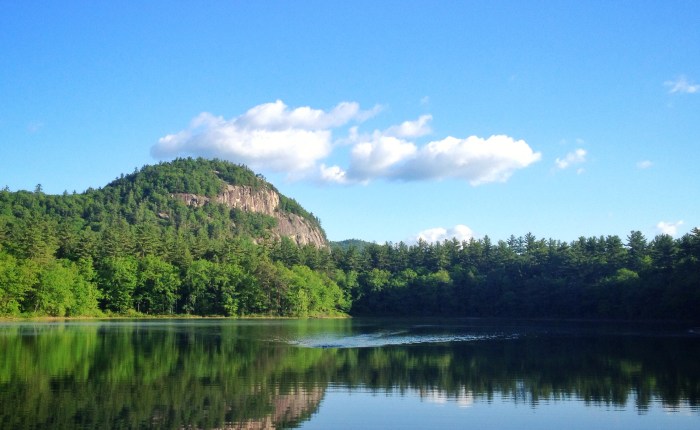
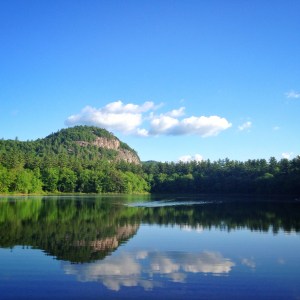
I’m not much of a swimmer. I did a lap across the lake, pausing in the middle to lie on my back, float and stare upwards. I could feel my heartbeat in my ears as I let my wetsuit suspend me, limbs dangling in the water. When I exhaled I sunk. When I inhaled I rose. I watched clouds track overhead, felt the ripples as they brushed my face, then closed my eyes, floating. I stayed like that, motionless, just breathing, for what felt like hours. It may have only been a minute; I lost track of time. Then I turned into the water and aimed for the near shore.

Driving home my phone rang. I didn’t recognize the number, but I answered anyway. “Hi, this is Erik.”

On the other end was Gene Likens, the scientist who 50 years ago discovered acid rain. An ecologist and former Dartmouth College professor, his most recognized work took place at the Hubbard Brook Experimental Forest, a site an hour drive from where I spent my swim. Likens co-wrote a book on the forest, and I thought it might be worthy of a story. We spent 20 minutes talking. He described the surprise of discovering acid rain.

“Nobody knew there was a problem,” he said, but “the very first sample of rain we collected was very acidic,” up to 100 times the normal levels.

What got them to look at rainwater? Curiosity.

“It was purely serendipity,” he said. “So much of science is this way.”

“We didn’t set out to discover acid rain,” he said. “It was there and we ran with it.”

A quote has sat on my desktop for several years:

The beauty of science is not in the answers it provides, but in the act of questioning. And each question leads to more questions. There are no answers, only infinite questions.”

It’s not a quote from some book or from anybody famous. It’s mine, just some musings I scribbled. I jotted it down one day when it popped into my head, something I didn’t want to forget, even though I’ve now forgotten the context it came from.

But yesterday I heard echoes of it in Likens. He was not studying stream water to prove some point. He was there to learn, driven by curiosity. It was a search of wonder, devoid of ego, even though it eventually made a name for Likens.

Science is built on such wonder. It is the act of questioning, of exploration and answers so tenuous they are subject to constant revision. But through the soft passage of time, through the constant brushstrokes of curiosity, a truth emerges. What emerges is the heart, the soul of our world, something foundational. But no part is so sacred it cannot be discarded, slain. Everything is open to more questions. There is something beautiful in that.

I can’t help but wonder if religion is born from the same roots, if at one point humans looked at the majesty of the universe and couldn’t help but exclaim, “Who could have made such a beautiful thing?!” and the answer they came up with was God.

That question is a perfect one. Who could have made such a beautiful thing? What could have led to this, to this world and this life? They echo the question scientists ask today. Look into the heart of the world. Whether your launch point is science or religion it is impossible not to be overcome by wonder, by beauty and grace and the perfect harmony of things larger than ourselves. How does the Earth spin around the Sun? How did life come into being? How did so much order grow out of seemingly infinite chaos?

Those questions were with me too. They were in the bear sitting outside the window yesterday morning, in the beat of my heart in my head, in the caress of the water and the color of the sky. They are questions I asked the lake lying on prone in the water, buoyed up by a force I will never fully understand, asked the sky gazing at clouds dotting a blue so striking it felt like more water. Neither revealed their secrets, but they shared gifts just the same.

Wonder. Beauty. Grace. These are both the heart of science and the heart of religion. Indeed, they are perhaps the heart of everything. The magic of creation is captured in a piece of music, a Van Gogh painting, in Shakespeare and Hemingway. In the movie that speaks to our hearts, in the play that touches our souls, in the book that we come back to and back to. Science, religion, music, art—it is all the same. It is all one thing, different versions of the same dance.

And that dance can take place in the world, with the Earth as your partner: the perfect wave to the surfer, the long winding trail to the runner, the sweep of immaculate stone to the climber. The friend that stands opposite you in dark times. The lover who shares your bed. Creations all. Art, science, religion, beauty all. Questions, infinite questions, too big to ever contain in something so small as an answer, all.

I wrote the piece on Likens today. It will never do justice to his story. But his answers are not the point. He is a scientist; the point is always the questions.

Failing and Making It Worth It

Failing and Making It Worth It

IMG_7931.JPGI fail a lot.

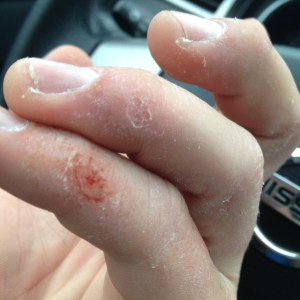
Yesterday, for example, I climbed Heather, 12b trad. Or more accurately I fell off Heather. A lot. After the initial crack things get thin, the protection gets small, and I started flying. I jammed so hard I took chunks out of my pinky and ring finger, left blood in the crack. I eventually pulled through the first crux on gear after repeated whippers on a slotted microstopper. The jams were so painful they left my knuckles aching. Onto the second crux, a series of sport climbing-esque slaps up an overhanging wall above a fixed pin—I backed up the pin with another microstopper, but on my first whip the rock around it blew. The stopper and quickdraw scurried down the rope to my hanging waste. The pin held, so I yarded back up and placed something else nearby. I took a few more whips and then lowered.

It wasn’t that I didn’t have the finish in me. It was that I was finished. I’d hung enough, my head was spent. I was just tired of being scared. I wanted to stand on flat ground. I was over it. I’d failed.

FullSizeRender-1That was yesterday. Two days before I lowered off Confederacy of Dunces, a crimpy “sport climb” that requires as much gear as quickdraws. Earlier in the day I’d fallen off Promise Land, a route I’ve climbed a bunch before.
Before that it was Astroman, the classic Yosemite 11c. I’ve been up there four times with two different partners, and everytime I’ve retreated. Even the Steck Salathe, a long Yosemite 10b, I had to hang on this trip.

Coyne Crack. Sanctuary. Mean Streak. Fat Lady. Flesh for Lulu. Tight Rope. The Prow. Women in Love. White Eye. The last pitch of The Underground. There are more routes out there I’ve fallen on or backed off of than routes I’ve sent. A lot more.

I fail a lot. A lot a lot.

The last few years this has been particularly acute—my drive to push has ebbed and surged in waves. One day I’ll be fixated on a route, and the next I won’t care about climbing at all. Until I’m standing at the base, until the route is towering overhead, I have ZERO gauge on where my head will be.

Yosemite, for example, three weeks ago: I was feeling lukewarm about the huge projects I’d set out for myself, Astroman and a one-day ascent of the Nose. But then we came through the tunnel and I saw the towering bulk of El Cap. We pulled over, parked with the rest of the tourists, and snapped a few photos. I could feel the excitement rising from somewhere deep inside me. Suddenly I was jumping up and down, eyes wide, my hands on my partner Andre’s shoulders. “Let’s do this!” I shouted, energized, alive. “LET’S CLIMB THAT BEAST!”

We didn’t. We failed. We tried Astroman three times but never reached the top. Even climbing the Sentinel was a close one. We never even got on the Nose.

I remember as a beginning climber backing off everything. I could practically downclimb as well as I could ascend; almost every route wound up including a retreat. The first time I tried the Whitney-Gilman Ridge I backed off three pitches up; I had no idea where to go, and I was too afraid to get stranded. I didn’t have the confidence in myself, the sense of adventure required, to continue. It was the same feeling that came flooding back yesterday.

I also remember when I stopped failing, stopped always backing off stuff and started getting to the top. It felt like a victory, a gaining momentum, like I’d crested some hill and the battle that had ragged for years was finally turning in my favor. Call it confidence, call it whatever, but there was a tipping point and it allowed me to start sending. The foundation was built and it was now time to climb.

There is a power in possibility, power in believing in yourself, believing you are successful, can succeed, power in believing the next hold WILL show up, the next piece of gear WILL be bomber. There is Truth in that. And yes, you might get stranded, there may not be any gear, but most times it will work out. Climbing has the power to get you killed, but when you climb with openness and possibility, when you ask the question “How do I use the holds before me?” rather than “When will the holds get good?” the best of us shows. We meet the challenge with our all. And suddenly you find yourself at the top.

But that doesn’t happen every day. Not in climbing, or elsewhere.

I fail a lot. And not just in climbing. I tried writing a book once, a guidebook to Western Maine rock. I never got past collecting topos and building a website. My “career” is a handful of fits and starts, nothing to write home about, a small town writing gig that keeps going with some adventure on the side. And I was married once. That didn’t work out either. Life has a way of handing us failure, adversity, reminders we are imperfect, routes we can’t seem to get to the top of. Our best efforts of the moment aren’t enough to crest the hill. The summit might just be out of reach. Life has a way of reminding us of that.

I failed yesterday. A lot. It came at the end of a week marked by failure, and a trip marked by failure. At the end of a few years marked by failure.

And in the midst of those lessons on failure the failures can compound. They can transform from a single moment to a storyline, from one climb to climbing, from event or sequence of events to a life narrative.

Blah.

But each of those moments are single moments, blips on the screen, instantaneous and individually inconsequential. “Failures” in name only.

As I bailed off Heather yesterday my friend Pat walked past on his way to Airation, a Cathedral finger crack. I’d seen him working the route a year ago, but he’d fallen at the crux.

“I’m getting back on it,” he said. “I’ve still got to send it.”

Not a failure, an ongoing challenge.

Life does a lot of smacking around. It is about mistakes and missteps, confusion and corrections. Climbing is a stupid, pointless way to spend the weekend. And I love it. It has a tendency to mimic the rest of existence, remind us of the challenges we face every day.

Today my fingers hurt. And my abs. I’m thinking a bike ride, or a trail run, fits more than climbing; I’m thinking I need a mental break from falling, fear, and visions of failure.

But yesterday as I walked down the descent trail after retrieving my gear I turned to Nick, my climbing partner. “Thanks man,” I said, “today couldn’t have been more fun.”

He smiled. “Yeah,” he said, “that was awesome.”

Failure can still be worth it.

And I’ll be back. I’ll be up there again, fingers jammed to the bleeding-point, gear smaller than I want disappearing below me. No matter how many tries it takes me it won’t truly be a failure, just an ongoing challenge, just one more route I have yet to send. And there are lots of those. I’ll never send them all.


10,000 Seafloor Clicks

10,000 Seafloor Clicks

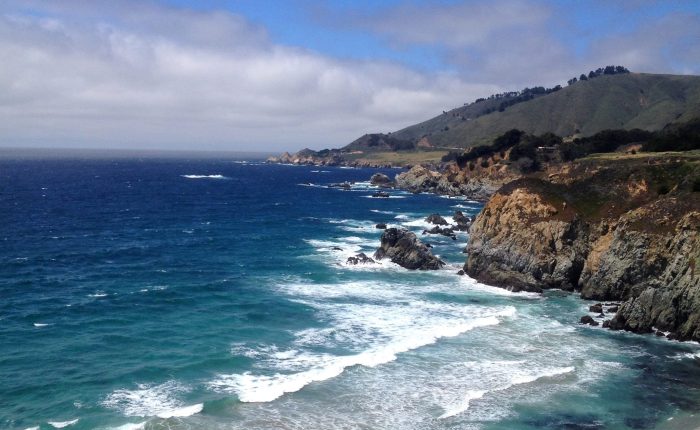
13235224_1490935110932569_1854608173923259447_oIt’s a long drive from Monterey Bay to San Diego, punctuated by towering seacliffs and emptiness. It’s the kind of drive were you find yourself pulling over every five minutes, where the landscape looks sculpted by god. Big Sur. Kerouac’s coast. Every photo looks magnificent, but none are able to capture the spirit of the place.
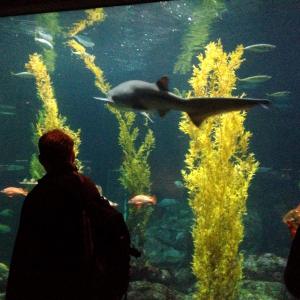
I spent the morning at the Monterey Bay Aquarium, where you can pet a stingray, watch bluefin tuna and hammerhead sharks grow frantic around shimmering clouds of sardines, see hoards of jellyfish from inches away and marvel at octopus species so different one looks like graffiti and another like camouflage. It took hours to wander through the exhibits, past giant bass and sharks and sea anemones.

One small crustacean I barely took notice of was a shrimp. He was a few inches long, with a pair of lobster-like claws, one substantially bigger than the other. His name? The snapping shrimp. I definitely saw one stowed underwater and behind glass, but I barely took notice. It was just another weird little ocean creature, nothing as majestic as the large pelagic predators or as striking as the brightly colored fish. It was just a shrimp.

13235634_1490935080932572_338291320125641097_oThen I started driving. I skirted my way out of Monterey, past Carmel and onto the Pacific Coast Highway. Hours clocked past. The landscape grew into lofty hills above an azure sea. First cell phone coverage faded, then the radio stations. “Next gas 62 miles,” the sign said.

But I come prepared for such terrain: I plugged my iPhone into the auxiliary jack and scrolled through my podcasts. Suddenly one of my favorites caught my eye—Radiolab.

The episode was called “Bigger than Bacon,” and it was about this strange sound emanating out of the ocean: a crackling, like the popping of bubblewrap. What was the culprit? Snapping shrimp!

But more amazing is the power of that sound, as well as the phenomena that accompany it. The snapping is masked by water, muffled, but in reality each snap is roughly 220 decibels, or about as loud as a jet engine. The claw closes at 60 miles an hour, but it occurs in a space so small something amazing happens: at the base of the ocean where no air sits, the snapping shrimp’s claw closes so quickly it forces away all the water, literally vaporizing it, creating a vacuum, an air bubble. Suddenly a void exists where previously there was none, a brief spot of emptiness created by a couple-inch-long organism.

And when the water rushes to fill that space it does it with a vengeance. Molecules slam into one another at such a pace that the space that was once a bubble heats up to 5,000 degrees, the temperature of the surface of the sun. On the seafloor. In the claws of a shrimp.

Seriously. This is no joke. This is real. Scientists even captured it on video:


But here’s the best part: as I listened I drove. And I drove. I drove past the pristine shores of central California, past Santa Barbara and Ventura and the megapolis of Los Angeles, to San Diego, to friends and surf and southern California beaches. I spent a week there, surfing, eating tacos and diving; swimming through Pacific waters in a mask, fins and snorkel, chasing sea lions and Garibaldi fish and leopard sharks.

And the whole time I heard snapping. Every time my ears broke the surface I heard it. I’d never noticed it before, never paid enough attention, but now whenever my head went underwater it was an orchestra. The shrimp were everywhere. I could hear the snapping of their claws at the surface, and when I dove it only got louder. I never saw them, but I could picture the little crustaceans scampering across the seafloor, smashing their claws together like Marvel Comic heroes generating plasma-like heat rays in their palms. The floor of the ocean was on fire, but only the shrimp could see it. And me.

(The full Radiolab is definitely worth a listen. Maybe on a drive?)

https://www.wnyc.org/widgets/ondemand_player/radiolab/#file=%2Faudio%2Fxspf%2F603688%2F

CDS Column: Socialized Soldiers on Quieter Battlefields

CDS Column: Socialized Soldiers on Quieter Battlefields

Iraq-1020772The ceilings hung squat and low, traced by fluorescent lights dotted among recessed tiles. The hallway was dingy, scraped paint along bare walls and floors that wouldn’t shine no matter the scrubbing applied. Worn signs hung on the bathroom doors, faded now after too many handprints, only half the words now visible. Someone redrew the head on the men’s bathroom symbol, but they’d drawn it square. Inside, a black Magic Markered smiley face stared out.
It didn’t look like a hospital. Or it didn’t look like an American hospital, particularly not one in a major city. American hospitals are shiny and well-lit, with glass walls and artwork lining the corridors. They are regal, siblings to university buildings and museums and federal government offices.

But this wasn’t. What came to mind was Cuba — the dark hallways and simple plastic-upholstered seats lining the waiting room walls in the public clinics, the cement stairwells and overcrowding.

But even in Cuba the lines of patients move. People get seen promptly. Not here.

The emergency department was full. Some people stood along the walls. The woman behind the desk said it was a five-hour wait, maybe more.

“Busy day?” my friend asked.

“No,” the woman said looking apologetic. “This isn’t bad.”

We sat down beneath an overhead television. It was 1 p.m. The afternoon soaps were on.

Seven hours later, the evening news was coming to a close. Our wait also was ending.

Welcome to the VA system.

I’ve heard not every Veterans Affairs hospital is the same. Some, I’m told, don’t feel caught in the Soviet era. I don’t know; I’m not a veteran, and I’ve only ever been to one VA hospital. But that one visit was disturbing enough.

My friend and I were in San Diego. Our visits to California overlapped by a few days, so we decided to team up for some surfing, snorkeling and exploring the city.

But on day two she began complaining of lower back pain. An Air Force vet, she Googled the local VA services. There was a hospital on the outskirts of the city, just outside La Jolla Cove where we’d been snorkeling the day before.

She looked at me. “This should be fun,” she said.

Being a veteran, she knew. I did not. But within a few steps of walking in the door I understood viscerally. All the news stories I’d heard in recent years came flooding back, about long wait times and how the head of the VA had resigned and the system was again due an overhaul. It was akin to walking into an inner-city school — one look was enough to know the facility was under-resourced, that the job it was expected to do far exceeded its capacity. Long waits, substandard care, lost files and missed diagnoses seemed to ooze from every exam room. This was less a hospital than a holding pen. Prisons are better equipped.

And sitting there I had ample time to consider the string of ironies I was witnessing. Here I was in a VA hospital, and I kept having flashbacks to Cuba, a country where the population lives on a fraction of the American standard. But despite appearances, Cuban hospitals get better results. Their version of socialized medicine competes favorably with the profit-driven system employed by the United States, and it blows the VA system out of the water. I was looking at America’s finest — the soldiers, airmen, seamen and Marines of the U.S. military — as they were served up the worst of American health care. Some of them may have even served on Cuban shores, may have stood guard on Guantanamo Bay, Cold War warriors who fought the spread of communism.

What did they earn in return for their service? Socialized medicine.

It almost made me laugh: Fight in honor of American values and you earn guaranteed free government-run health care. “Oppose communism to secure your place in socialism.” I doubt that made it onto many recruiting posters.

But there is a tragedy hidden within the comedy: The modern American application of socialized medicine offers veterans few gifts. They give us their best, and we give them our worst. The VA system is known for wait times that sometimes outlast patients, for diagnoses that come too late. “Support our troops” seems to only hold until the fighting is over. After that we leave them to die on quieter battlefields.

The problem, of course, is not socialized medicine. Plenty of countries pull that off at a high standard — most of Europe, Canada, Costa Rica. But the United States has proven incapable at setting up its own system, even for soldiers. That U.S. soldier who was stationed at Guantanamo Bay may have done better to wander off base to see a doctor than visit the hospitals provided by their own government.

So, every day we rob veterans of what they have earned. We underfund and understaff and under-resource to the point of no return, to the point that servicemen and women die as a result.

It’s easy to blame the bureaucracy, to rest at the myth government can’t run anything well and move on. But that is a farce. Government-run health care works worldwide, just not here.

But the VA has to work. Not marginally, not sluggishly, but well. Efficiently. Smoothly, with dynamism and grace. We owe it to every American willing to pledge more than taxes and a vote every four years for his or her country. It may not have been on the recruiting poster, but it is the promise we made.

And we’ve failed. For a generation now we’ve failed. We’ve accepted the myth that government can’t work, that socialized medicine is doomed to fail, and our soldiers have paid the price for it. Sagging buildings and five-hour wait times are not the best we can do. Our veterans are worth more than that.

This piece appeared in today’s edition of the Conway Daily Sun.

Rhinos, Horns, and Compounding Complications

Rhinos, Horns, and Compounding Complications

Moz-1020958I was working this morning when a story about the legalization of the rhino horn trade in South Africa drifted across my computer screen. The South African Supreme Court yesterday struck down a ban on domestic sales of rhinoceros horns. International trade is still illegal, but the verdict makes it possible to now sell horns inside the country.

Harvesting horns can be done without killing the rhinoceros. If the horn is cut off above the root it will grow back. One rhino rancher in the story said he had stockpiled five tons of horns since the domestic ban was implemented in 2009.

But the lifting of the ban opens the door for the sale of illegally harvested horns too. And considering the value of rhino horn, the market demand in Asia and the corruption prevalent in South Africa, it seems destined to bolster the illicit trade.

Two years ago I was in South Africa. I was there for work, but I had time to tour Kruger National Park, one of the largest game reserves in Africa and home to many rhinos. I drove through after a week in Mozambique alongside Majka Burhardt working on a development project in the newly-born Limpopo National Park. The project was short-lived, but it gave me a chance to see Kruger, and Limpopo.

It also gave me a chance to see just how complicated effective conservation can be, even when what is at stake is something as endangered and iconic as rhinoceros.

Limpopo abuts Kruger National Park, sitting just over the Mozambican border. It’s about half the size of Kruger, running roughly half its length. On paper the two are similar—massive game reserves that together form a transnational park—but where Kruger has a 100+ year tradition of conservation Limpopo is brand new. The roads are rough, the facilities primitive, the infrastructure nonexistent. Mozambique is nowhere close to South Africa in its development or its ability to provide effective governance. One South African telling us, “This is real Africa,” like his country was Africa-light.

And it seemed true: South Africa is far more developed than its neighbors. The Mozambican government had hired a team of white South Africans to help implement the new national park and teach Mozambique the techniques that had made Kruger successful. And those South Africans collectively shook their heads at the challenges in Limpopo.

The largest challenge? Poaching. Specifically, rhino poaching. But not in Limpopo; in Kruger. Poachers were using Limpopo as a launching point for excursions into Kruger, where stocks of rhinos were plentiful, and as a refuge for once they had possession of a horn.

Limpopo is a new park, new enough that it still contains villages. As we passed over its rough dirt roads small outposts of huts sprang up. Inhabitants numbering in the dozens, perhaps up to 50. Those villages, according to park officials, are where the poachers live.

But Limpopo lacks animals. In two days there we saw one Cape buffalo. In Kruger we saw whole herds. We saw zero lions, zero elephants, zero hippopotamus. Compared to Kruger Limpopo was desolate, empty of the game that make African parks famous. A hunting concession in its former life, Limpopo was barren. So while the 20th century offered Kruger’s animal populations protection, Limpopo’s fauna faced getting shot. Today anything within its borders is protected, but in reality there isn’t much left to protect.

And according to park officials, the villagers in Limpopo include teams of poachers who sneak across the border to shoot rhinos, hack off the horns with axes and then return home.

As we drove through the villages an official pointed to one of the huts. A pickup truck sat parked out front. “That’s a poacher,” he said. They don’t hide it. They don’t have to.

On the Kruger side, however, they do. In the field it’s often the sound of the ax that gives them away. The chopping—you can hear it for miles. But still, it’s hard to catch them in the act. Often times patrols find the bloody carcass with a snout in tatters.

It would be tempting to just move the villagers, to declare Limpopo a park and demand they find somewhere else to live, but this isn’t 1898. Native people have rights, and like the rhino, they also are in need of protection. Limpopo officials would love to pick up the villages and relocate the inhabitants outside the park, instantly cutting the poachers’ easy access to the rhinos, but in the modern era relocating native people is no simple task. What is the government to do, put them on “reservations” somewhere nearby? The world has a long history of such maneuvers, of taking people pulled from their native soil and forcibly settled on some new plot of land. Few of these tales have happy outcomes.

So in Limpopo the rights of villagers to clash with those of the rhinoceros. Protect the rights of one or the other, but not both. Who should officials prioritize? In hindsight either choice will likely wind up seeming crass and misguided.

But perhaps that is modern conservation: the easy problems have been solved. What’s left are difficult, intractable ones. It might be that way everywhere, not just in Limpopo.

And now South Africa has cracked the door to the rhino horn market. The problem doesn’t grow any simpler.

Sea Lions and Blown Eardrums

Sea Lions and Blown Eardrums

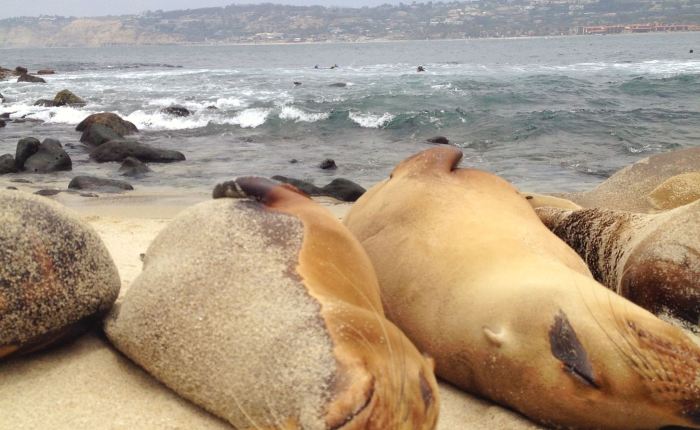
13221217_1494289507263796_1857274098760016918_oIn freediving they teach you to protect your ears. Don’t go down if you feel any pressure, they tell you. Equalize constantly using the Frenzel Maneuver as opposed to the more air-intensive Valsalva Method. If your wetsuit is hooded poke holes at the ears to ensure no unintended barriers disrupt clearing.
But you can’t plan for everything. Like sea lions—nobody warned me about those.

La Jolla is on the north side of San Diego. It’s a marine sanctuary on the edge of the city, the kind of place tourists and locals alike flock. The water is cool but clear, and it’s lined by beaches, caves and one well-known cove: La Jolla Cove, where the sea lions are.

We’d already seen one sea lion two days before snorkeling from the beach to the caves. It was evening, growing dark soon, but Reza suggested we could get to the caves, which offer exploration opportunities. Along the way we’d pass troves of leopard sharks. So we suited up, waded into the breakers and swam.

The waves were bigger than we expected. They slammed the nearby seawall, throwing spray into the sky. The sand floor churned. There were no leopard sharks. “It must be too rough for them,” Reza said, “but not for stingrays. Watch out for them.”

One slid past, its wings beating in unison, its body gliding over the sand. I swam after it, watching its path arc and bend. But it didn’t take long to lose me. Soon I was aimed for the caves.

The swell that scattered the leopard sharks was disturbing the caves too—each wave flooded the hollows, pounding the insides. I went in briefly, flushed by the surge, but it wasn’t a place to stay. We swam out a safe distance and watched the pounding, opting for a perch among the seagrass as it streamed back and forth in the depths. A few leopard sharks poked around, and fleets of striking orange Garibaldi fish, the state fish of California. But dark approached, and soon we were heading back towards the beach.

That’s when it happened: A seal popped up. Or a sea lion. He was just a few feet away, his nose pushed up out of the breakers. He was playing in the waves, snaking between us. He knew we were there, and he didn’t care.

“That was SO COOL!” Katelyn shouted, shivering. She was right.

Two days later we were back, but instead of the beach we went to the cove, the hangout for sea lions. It’s a public park, but it’s unclear who it’s intended for, humans or wildlife. The left side of the small beach is covered with 400-pound sea lions and their pups, joined by people snapping selfies. It’s chaotic, with the occasional sea lion charge. But on land they waddle more than run, and the crowds were able to get out of the way. Sometimes, though, there was lots of shrieking. (There was a This American Life story about this sea lion/human dynamic. It’s worth a listen.)

The right side of the beach, meanwhile, is the domain of swimmers and snorkelers, humans looking to explore the wetter part of the cove. That’s were we set up, pulling on wetsuits, donning masks and fins. I wadded in, trading the noise of the beach for lapping waves.

In the water the sea lions were everywhere: snaking through the depths, turning and barrel-rolling in the waves. They were dancing, playing in teams of two and four. I dove with them, trying to hold my breath and keep up as they rocketed past rocks and reed beds. The were so fast, underwater torpedo-shaped bears. We dove and dove and dove together; they weren’t scared of me. They swam around and investigated me, peered at my wetsuit, fins and snorkel, but never too close. They were like underwater mirrors mimicking my dives, always partway across the room. I’d come up breathless, but then another would swim by and I’d follow. They never ran away; they swam unconcerned.

“That was AMAZING!” I said when I came out for a break, panting. “I could do that forever.”

And soon I was back in the water, again surrounded by sea lions. Four of them sliced through the swells around me, sleek as sharks. I watched them spin as they rocketed below the surface. I dove and joined them, imitating their twisting and corkscrewing.

That’s when I felt it—as I spun a little pocket of air in my ear canal bubbled out and danced toward the surface. Seawater rushed into the void. I felt it slam cold against my eardrum. There was a brief, sharp pain, and then I felt woozy. I was less than two feet below the surface, but I needed air. I pulled up my head and tore off my mask, tried to catch my breath, but the ocean, the waves around me, even the beach seemed to be swaying. I cleared my ears, but something wasn’t right. I tried again, but no. My four copilots were gone, swum off. I was bobbing alone in the waves, barely able to hold upright.

I cleared my snorkel, pulled my mask back on and slowly turned towards shore. I paddled gently, without thinking or pushing, sure I’d blown my eardrum. Not great. I reached the sand and pulled my fins off, letting the water hold me up. Walking out felt like climbing into a tunnel—the noise of the crowds and the sea lions faded to the periphery. There was blackness at the edges. I sat on a rock and again tried to clear my ears, but nope. I’d definitely done something real.

They don’t teach “Never barrel-roll with sea lions in the Pacific” in freedive class. Maybe that would be too specific a lesson. But now I know. And a little Googling has taught me a perforated eardrum needs six to eight weeks to heal. I’m headed to the Florida Keys in three—I’m hoping for the accelerated program.

And it was only afterward, after more Googling, that I understood the difference between seals and sea lions. Sea lions are much bigger, and they have a habit of being occasionally aggressive around humans. The explanation I read was seals are aquatic weasels and sea lions descended from bears. I’m glad I didn’t know that as I stared face-to-face with them. They were bigger than me, much better swimmers. But they were also amazing. I’d do it again in a second. Eardrum and all.

Morning Run

Morning Run

10393822_922846194408133_2350935378690804178_nI woke up this morning and felt the call of the woods. After six weeks of climbing, of slowly working my way westward from the beaches of North Carolina to the Southern California Pacific, I wanted to run. I wanted to watch trees dance past in a blur, feel the spring of soft earth beneath, splash through streams and feel the sweat trail down my forehead. After weeks of ropes and harnesses the occasional wetsuit I wanted unencumbered movement, raw movement. Something animalistic, tribal.

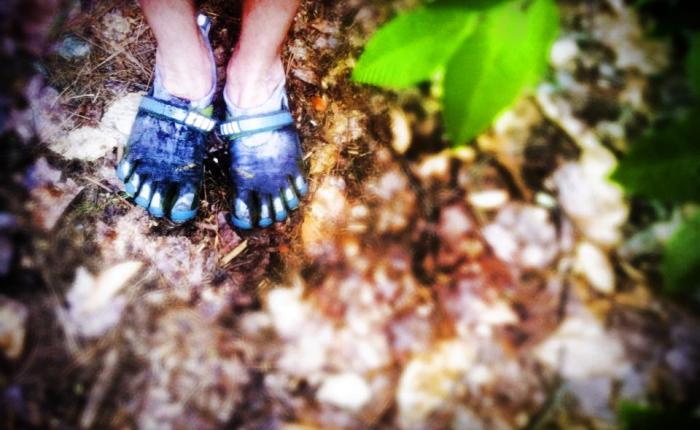
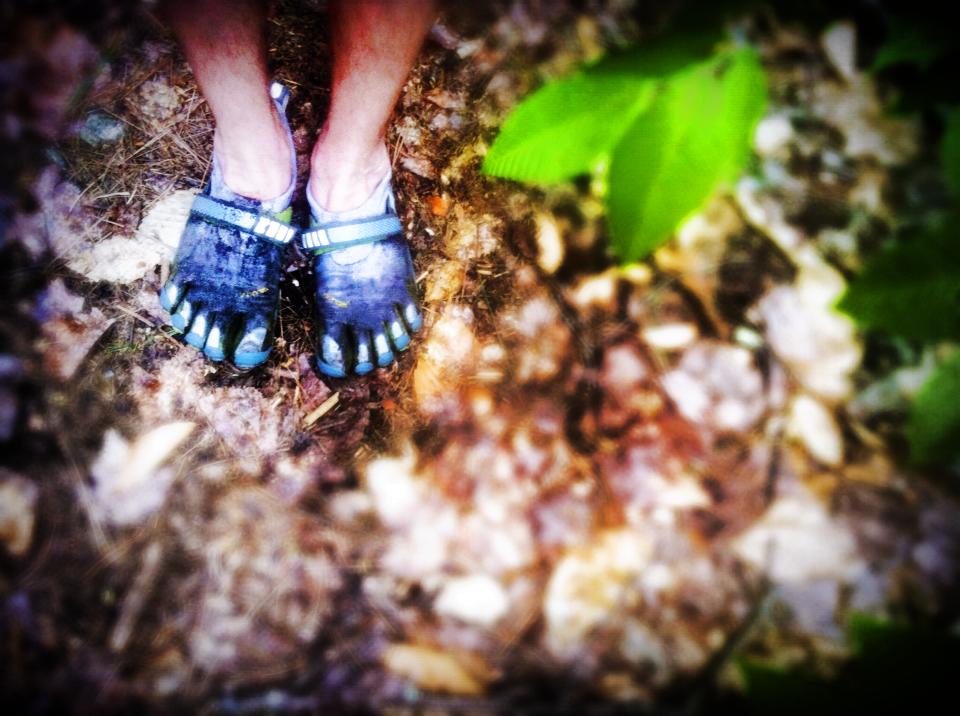
That’s running. It’s pair of shorts, Vibram Five Fingers and a four-legged trail partner tearing down the steeps of the White Mountains. After six weeks of wandering I was home again, and running called.

But while running pulls at me, lures me in, I’m easily distracted, and climbing owns my soul. Sometimes I just can’t get out of the way.

I drove to the cliff, the air still cool with morningness, my run on my mind. The trail begins at Cathedral, then winds its way over to Diana’s Bath, up the back side of Whitehorse and then down the south slopes before climbing to the summit of Cathedral and back to the car. It’d been a while since I’d run that loop, my regular loop. In fact, it’d been a while since I’d stood below Cathedral Ledge at all and just arched my neck to look up at it. If there is a center to the universe, a place the world might have been born from, it is Cathedral. The earth spilled out of her cave. From the Central Wall in winter to the Prow buttress in summer to the trails surrounding it, it calls. Rain, wind, snow, sun, it doesn’t matter, it is always whispering to me. Sometimes I forget, wander away for a week, a month, a year, but when I see the towering granite it pulls me back in. I can’t get around it. And If I could I’m not sure I’d want to.

I drove slow. If I were running I’d drive to the winter gate and park, the very end of the road before it starts climbing. But I was barely to the kiosk when I pulled over. The cliff was calling, louder than the run. A different kind of run.

1014830_684146251611463_497985571_oI parked, pulled out rock shoes and dug around in my trunk for a chalk bag. I changed into shorts—not the lightweight running kind, but durable canvas, the kind built for scraping over granite. I slipped into my flip flops and started up the trail.

There is no such thing as smart soloing. Or maybe there is and I just haven’t happened onto it. It’d been nine days since I’d touched rock, nine days since I’d climbed 16 pitches of immaculate Yosemite stone to the summit of the Sentinel, the outstreached palm of Yosemite Valley, but the Funhouse to Upper Refuse circuit is one I know well. It would be like falling into conversation with an old friend again—I would know when to hang back, when to push. Right?

The cliff towered above. In the sun the morning coolness was burning away. I laced my shoes at the base of the first corner, taking deliberate breaths to slow my heart rate. I could feel my nervousness blending with excitement, all blending with an elevated pulse from hiking in too fast: Solo climbing is not about speed. It is about slowness, about deliberate movement. It seems fast by virtue of its simplicity, but if you’re rushing, breathing hard, scared, you’re in danger. I closed my eyes and exhaled, working my way back to that.

Then I started climbing. The sun pushed hard from above. The rock felt slick but familiar. I wrapped my fingers into cracks they’d brushed countless times. The trees danced in the wind behind me. I began to sweat. I patted my hand in my chalk bag, grabbed the rock holds, looked at the polished feet and moved upward. My body recognized the process, the unencumbered movement. It was running only slower, with a chance to fall, to die. I stuck my hand in a crack, jammed, focused on my feet and moved again. Hand. Hand. Foot. Foot. Hand. Foot. I flowed over the rock, a deer in the forest, a brook down a mountainside. The movement: There it was.

But if the movement was there, my head wasn’t with it. It was full of noise, choked with errands and assignments and things to do now that I was back in town. My hands wrapped holds, my feet pressed edges, but my head was caught in its own dance.

But I kept climbing. And as I moved upward the rhythm took over. Gravity pushed the thoughts aside, and I kept jamming, grabbing holds, moving my feet up, one more twist of the body, one more offset movement to regain balance. The noise of life bled away. I began to notice the grain of the rock, the sound of the trees in the breeze, the subtle shifts in temperature as the air moved. I came back to myself, the climbing pulling me along.

By the top rock was flowing effortlessly beneath me. I crested Cathedral and wrapped my hand around the cool metal fence. I exhaled, safe on horizontal ground, pulled off my rock shoes and slipped back into my flip flops. My tee shirt was damp with sweat, but the sweat of movement, of deliberation and concentration and presence, not the sweat of fear. I trotted to the descent trail, the rest of the day before me.

I was home. And there was still time for a run.

On the Road

On the Road

13071776_1474279299264817_5955152375711111058_oI stood by the side of U.S. 191 waving my arms. Another car slid past. Then another. And another.
“Damn it!” I shouted after the fifth went by without slowing. “Stupid!”

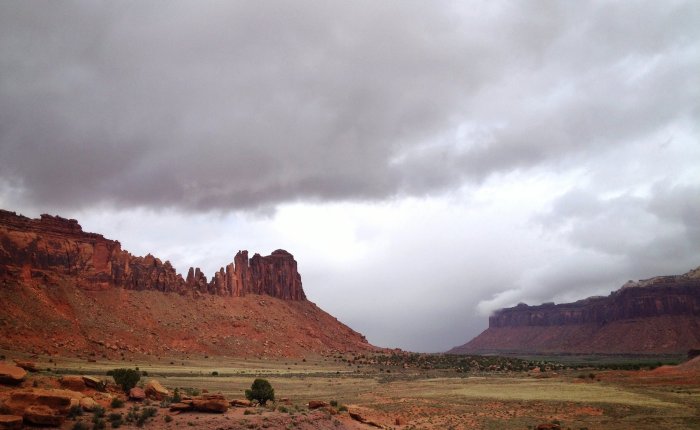
Rain was beginning to fall, and the wind had picked up. The clouds hung low over the mesa. The La Sals were covered in snow.

I was 25 miles from Indian Creek, 40 from Moab, and the battery in my Honda Element was down to Empty.

I’m such an idiot sometimes.

The plan was for a rest day. After three days of sandstone splitters my fingers were shot, my hands were raw and my arms were spent. I needed a shower, a refill on water, some internet and a grocery store. But instead I was on the side of the road miles from anywhere hoping against reason to flag down a pair of jumper cables.

Sometimes the adventure on climbing trips has nothing to do with the climbing.

Everything began in April. First stop: Washington D.C., the climbing Mecca. Andre, my scheduled Red Rocks and Yosemite partner, offered a session at Earth Treks and to let me crash in his spare room. After a New England winter of ice and snow it felt great to pull plastic. Humbling, but fun.

12961430_1458805094145571_3194725830949882464_oFrom there I drove on to Wilmington, North Carolina, for a weekend of freediving, descending like a SCUBA diver but without a tank, holding my breath as the light faded through the meters of oceanwater. Stealth-camping in my Element, eating meals out of Wholefoods, it felt like any climbing weekend, except that the worst advice you can give is “BREATHE!”

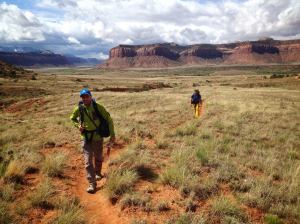
From there I drove west, the favored direction for the next six weeks. The first real climbing stop was Eastern Tennessee and two days at a secret cliff a friend was developing. “It’s a mix of the Red and the New,” he told me, “more technical than the Red but fewer stopper cruxes than the New.” An oath of secrecy later I found myself below a 40-meter high cliffband stretching from hollow to hollow, perfect orange rock towering above.

13002451_1459754597383954_5867903751223971741_o“This route is five stars,” my friend told me again and again. He was right. Beautiful sandstone, and to ourselves. We put up a new 5.12 with a fun bouldery crux near the ground and bolt after bolt of devious climbing above, 16 bolts of perfection. The Southeast is still full of hidden gems.
But I had friends to meet in the Red, as well as a project to attend to.

For Northeasterners the RRG is a transition ground, the place to switch from pulling on ice tools to grabbing rock holds. It’s a spring pilgrimage, one seldom observed fit for rock climbing.

A few years ago I caught a glimpse of Cell Block Six, a soaring line on the Midnight Surf wall. It called to me, a perfect transition route—big holds, big moves, lots of airtime—it seemed to shout “Welcome to sport climbing season!” I wanted on.

So day one: Warm up slow on 5.10, then head to where the cliff arches at angles that block the sun. Get on the project. Fall all over the project.

Day two: Recover from Day one.

It took two days of gravity testing, pizza dinners and sandstone buckets to clip the chains, but a pair of handjams after the crux unlocked the route. Desperate through the crux, I recovered enough in those jams to feel like the chains came too soon. The transition to rock season was on!

With the project in my pocket I turned west again, to Indian Creek. It’d been 13 years since I’d climbed in the Creek, I was due a visit. And after a few years mostly sport climbing the idea of splitters beckoned. Last fall I was part of an AAC exchange to the Caucus Mountains, climbing rock routes and alpine peaks in Armenia and Georgia. Our host was a strong and energetic Armenian named Mkhitar, and after the trip our group wanted to return the hosting favor. Mkhitar accepted an invitation from exchange member and famous alpinist Jim Donini to take a month-long tour of American rock, from the Creek to Red Rocks to Yosemite to the Black Canyon. Anyone who wanted to join was welcome to tag along.

13123396_1475909295768484_6295289621947350976_oThat’s how I landed on the side of the U.S. 191 waving in vain at passing cars.
The Creek is buried in technological darkness. Indeed, that is part of its appeal—no services, no cell coverage, just coyotes and varnished sandstone. The camping is primitive, the climbing superb. After the noise of Miguel’s and 1,000 miles of highway I sunk into that darkness with relish.

Jim, Mkhitar and a small crew had already staked out a camp and were on the rocks when I arrived. I spilled out of my Element and roped up, barely 7 hours out of Denver. Mkhitar’s face was stretched thin in a smile as he looked at the walls surrounding him. It was going to be a good trip.

But two days later after pitch after pitch of steep sandstone I needed a break. I tumbled back into my car and headed north. Rain spat as I climbed out of the canyon to the plateau, occasionally unleashing in waves, then quiet. I turned on my wipers, then my headlights. Red mud rinsed the land around me.

The first cell signal popped up a short distance from where the road to Indian Creek intersects the highway. My phone buzzed to life; emails downloading, text messages vibrating. I pulled over and switched off the car, leaving the key turned one click to listen to the radio. Three days away and a lot had happened; I started sorting through the layers.

Half-an-hour later, still sitting by the side of the road replying to a Facebook messages, the radio went silent. My phone battery indicator went from green to white.

“NO!” I shouted, suddenly realizing I’d left my headlights on. “NO! You idiot! What are you doing?!”

Half-an-hour—roughly the time it would have taken to get to Moab, where I could have done all of this internetting in the library, surrounded by central air, electric outlets and comfy seats. Instead I was now the proud owner of a dead Honda, parked in a patch of mud along the highway, rain moving in.

I tried the key: Nothing but clicks. I tried waiting a few minutes, hoping maybe the battery would recover enough residual charge, but I was too panicked to let it sit more than 90 seconds. More clicks. Finally I accepted what I had done, what I would have to do. I pulled on a fleece and stepped out into the spitting drops.

The first dozen cars didn’t even slow. Then came the fleet of rentals. “No,” the driver’s would say, one after another, “I don’t have cables. This is a rental car.” One guy offered to send help when he got to Monticello, but that sounded complex and expensive. “At least let me call you when I get there,” he said. “If you are still here I can send someone.”

I relented and gave him my phone number.

Drivers would see other cars pulled over and would pull over themselves, but they too had nothing to jump a battery with. (I, of course, was in no position to throw stones—where were my jumper cables?) I started to grow worried this could get expensive. I had cell coverage. I could call a towing service for a jump. But that felt like expedition tactics, resorting to aid climbing when I had set out for a free ascent.

I have learned that sometimes you can tell a car that has jumper cables. Sometimes the giveaway is the vehicle, other times it’s the driver. This time it was both. Truck. White. Extracab. With a diamond plate toolbox in the bed. A Utahn in his 40s with sandy hair, a mustache and well-worn Levi’s.

He was coming from the other direction. He slowed down and made a u-turn, pulled over all the way to the dirt embankment, letting his truck handle the terrain. He drove towards me, standing small against the desert, but stopped a few yards away. He was on his phone, and he just kept talking. He held up a finger. “One minute,” he seemed to be saying, “I’ll take care of this in one minute.”

Other cars were streaming past. I could be out there flagging them down, I thought. But I had a feeling.

He hung up the phone and rolled down his window.

“Do you have jumper cables?” I asked. The feeling was growing.

He paused, answered slow.

“Yep.”

The feeling was hope. “Can you give me a jump?”

Another pause.

“Yep.”

Another handjam rest. Maybe this crux would go too.


This piece originally appeared on the Trango website.

Stories, All

Stories, All

The PointIn families there are always stories. Some become legend, told and retold until every cousin knows them by heart. Others become myth so intertwined with hyperbole they only shadow the truth. And many become lost altogether, victims of time.

But some are held close, private, only whispered until poised to disappear. Their details seem so outlandish they hint of fiction, unlikely tales spun under the veil of the past. But they’re not.

Louise Royall died on a Monday. It was the first of June. She was 89, a mother and grandmother. She had lived in East Boothbay for five-and-a-half decades, died in the house where she raised two sons, the house where countless friends and relatives convened for birthdays, holidays and celebratory dinners. She volunteered her time and donated to charities, hosted card games and observed weddings, births and graduations. She was the matriarch of a sprawling family, the last monarch on a street literally named for her clan: Royall Road.

But that is one story, and there is always another.

In July 1956 Louise Royall was none of these things—mother, matriarch, monarch. She wasn’t even Louise Royall: her name was Mrs. Louise Townsend Booth. From Long Island, N.Y., she lived in Paoli, Penn., with her husband Samuel Babcock Booth Jr., an engineer. The couple was newly married, wed the November before. Louise was 31, and she was eight-months pregnant.

It’s a story told in news clippings, yellowed and torn, stored in a photo album from her youth.

Her children and relatives knew snippets, but nothing complete. There was no full account of what happened on July 7, 1956.

But the clippings’ headlines are stark:

“Man dies, wife hurt in Long Island plane crash.”

“Son is born to plane widow.”

“Gives birth to son, learns Dad’s dead.”

And the newspaper accounts themselves are grim: “The baby was born just a day after Samuel Booth, 28, plunged to his death in his light cabin plane in the water off Sea Cliff, Long Island. Knocked unconscious in the crash, Booth drowned while rescuers pulled Mrs. Booth from the plane.”

“Heroic action by a quick-thinking young lifeguard who picked up a shovel, swam to the wreckage, and beat a hole through the roof of the cabin saved the life of the woman,” another news story says. “The 22-year-old lifeguard, with the help of others who had arrived, dragged the woman from the submerged cabin by her hair.”

But even stories told in black and white can be part myth.

“I’m not a lifeguard,” said Donald Mortimer, 81, the man who 59 years ago pulled then-Louise Booth from the cockpit. “That’s why I grabbed a boat.”

Mortimer lives in Mattituck, N.Y., just 65 miles from Sea Cliff, where Samuel Booth crashed. He, like Louise, has lived a lifetime since that day. “I tried to run it through my own mind,” he said. “I had a few blank spots.” But the story is still there.

“I heard the airplane overhead, and it was sputtering,” he said. Mortimer’s father ran a beachfront swimming pool in Sea Crest. The single-engine Piper Cub Booth had rented for the day from a local radio announcer was running out of gas. The Booths, on Long Island visiting Louise’s mother in nearby Plandome Manor, were onboard.

Mortimer watched the plane fall. It buzzed the beach then went out to sea, where it nosedived, “maybe 1,000 feet from shore,” Mortimer said. “I said, ‘Call the Sea Cliff Fire Department!’ I ran down to the beach, and for some reason I grabbed a shovel. I have no idea why.”

The news reports say Mortimer swam to the plane, but he wasn’t that strong a swimmer. He grabbed a nearby lifeguard boat, threw in the shovel, and rowed. When he got to the plane he climbed aboard and started bashing at the metal topwing with the shovel. “We broke the roof, and a little dog jumped out,” he said.

The terrier is mentioned in several of the news accounts. Mortimer said the dog swam ashore as they worked to get Louise and Sam out.

The newspapers said Samuel Booth drowned as Mortimer worked to extricate Louise. Mortimer said others came to help, and once the hole was open it didn’t take long to get both of them out and to shore. Rescuers looked at Louise in her pregnant state, he said, and assumed she’d swallowed water. So they gave her abdominal thrusts. His guess was that’s what pushed her into labor.

27 hours later in Glen Cove Community Hospital, Samuel Babcock Booth III was born. He weighed 6-pounds 11-ounces, and he had suffered irreparable brain damage. He would survive to his teenage years, but Sam Booth III would not reach adulthood.

The newspaper reports say Louise was not told Sam Booth Jr. was dead until after she had given birth. She “cradled her newborn son in her arms today as she wept for her husband,” one story reported.

Louise had saved them all. She didn’t talk about the accident, didn’t share much of her story, but she had lived it. The faded clippings were her reminders, a story she kept for herself.

And Mortimer too was her reminder: every year for the next 59 years he would get a Christmas card. He would look to the mail each December, he said, and in return he would send a card to her.

Among the news clippings are several about Mortimer: stories about commendations he received for his actions, reports calling him a hero. But he is put off by such talk.

“It was all instinctive,” Mortimer said. No one told him to go out and be a hero. It’s like if you see someone stumble and fall on the street, he said: you go out and help them back up.

“As far as I was concerned it was nothing,” he said, “It’s a thing you do.”

But to Louise’s sprawling family, to those who mourned her passing on June 1, the story of Louise seemly begins with the crash: it was in the wake of the Booth’s death that Louise moved to Maine. She came to start over, to let go of the tears and find something new, and in a sense Mortimer’s shovel lit the way: without it Louise would have drowned too. She would never have met her second husband, Robert Royall, the man who would father her two children, the man who introduced her into the clan that would eventually swarm around her. She would not have moved to Royall Road, where she lived and held court in her kitchen for more than 50 years. She would not have become all that she was—mother, grandmother, matriarch, friend and host. That vision of the future clung to the lifeboat as Mortimer paddled. It stood in silence as he breached the metal hull.

Or at least that’s one way to tell the story.