I visited my niece at school last week. She’s nine and in the fourth grade. It was a holiday open house, and family was invited. Every student in the class had put together a diorama on holiday traditions, and families were welcome to come walk around the room to see how different households celebrate holidays. There were Christmas trees, Christmas cookies, strings of Christmas lights, elves on shelves, and more. Each diorama included a short history of the tradition highlighted, a smattering of interesting facts about it, and a personal narrative about how it looked in that student’s particular home.
And it wasn’t just Christmas — one little boy’s tradition was tacos on Easter. Another boy wrote about snowball fights. Another wrote about his birthday, which falls the day after Christmas. A little girl wrote about raking leaves in Autumn and jumping in the leaf pile. This was a celebration of all kinds of holidays and all kinds of traditions.
Several students chose to highlight their favorite holiday food, Eid cookies and Eid cake, sweet treats to celebrate Eid al-Fitr, the Muslim religious holiday that marks the end of Ramadan.
I was familiar with Ramadan, the Muslim holy month of fasting, but I’d never heard of Eid al-Fitr. And I’d certainly never heard of purpose-built cookies or cake to accompany it. But for several students, it was their chosen tradition. One family brought in two Eid cakes for people to sample. The student, a little girl, sat smiling as her dad offered everyone a second and third slice. Her mom stood on the other side, also smiling, her head wrapped in a hijab.
I remember my own versions of these elementary school dioramas. It wasn’t that long ago, in a school much like my niece’s. But in 1990s Maine there were far fewer brown and black faces, and even fewer Muslims. Almost every featured tradition showcased a Christmas theme — wreaths, mistletoe, Christmas trees, etc. Maybe someone would stretch so far as to highlight the Fourth of July or share a New Year’s tradition, but in all the years no one shared anything about Eid al-Fitr, Ramadan, or the Hajj. Before last week I’d never heard about or seen, much less tasted, an Eid cake. A teacher might bring up Hanukkah, but the only Jewish student was a grade below so even those traditions remained a mystery. The worlds of Islam, Hinduism, Buddhism, and other non-European religions never made an appearance — my first introduction to Islam didn’t come until I read The Autobiography of Malcolm X in high school. Buddhism came around the same time, through Herman Hesse’s Siddhartha. Other religions like these were always embodied by books, not people. It took until adulthood for them to become as real as the people I would meet throughout my life.
My niece, however, will be spared such ignorance. Her world is more diverse than mine. Her best friend, whose diorama was set up right next door to hers, is black. A number of her classmates are Muslim. Several of the girls wore headscarves, as did parents and family members who came in to visit. To her, these differences in culture and religious belief have faces. They are people, not just ideas. She interacts with them every day, plays with them at recess, collaborates with them on assignments. They are her friends. It is a level of diversity I would not have imagined existed inside a Maine classroom, the sort of cultural education Mainers a generation ago could not access. It gives me hope. I walked into my niece’s classroom and saw the promise of mutual appreciation, the possibility of a shared interest in the diverse cultures.
Because what is school for but to learn? To learn about the world around us. Few books are as interesting as learning from life. And that is the gift my nine-year-old niece gets — a global education, right here in Maine.
That might be my new favorite tradition.
This column appeared in the Portland Phoenix.
 Maine is a modern political allegory. In a lot of ways it can serve as a stand-in for the entire United States—liberal coast hemming a vast but sparsely populated conservative heartland, with bustle and trade, vibrancy and a smattering of diversity along the shore but both tempo and complexion changing once you leave the ocean. Isolated pockets clustered around centers of higher education (rather than midwestern cities) retain the progressive flavor of coastal life, but otherwise inland culture is very different, as is the economic outlook.
 It was a Thursday, normally a workday but we were tucked in the downstairs of the Portland Museum of Art, around 100 of us taking pause to listen to Maine, live.
 I’ve always loved the Porteous Building. The home of the Maine College of Art sits regal and square, a hub spinning eddies of creative energy into surrounding streets. Behind its department store facade hides an economic engine, a piston of Portland’s arts economy, sweeping windows and cascading stairways that breathe life to center Congress.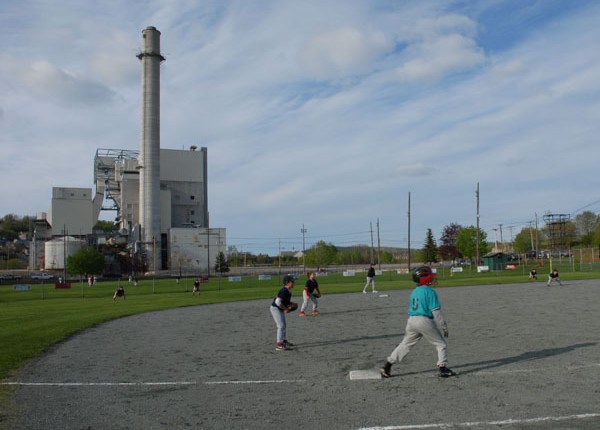
 My first real job in journalism was in Berlin, New Hampshire. I was working for the weekly newspaper, tasked with covering a community in sharp decline from its former glory. At one time, Berlin was the third-largest city in New Hampshire. Today, it is saddled with aging infrastructure intended for 25,000 residents, with 10,000 residents footing the bills. Even the paper itself was in decline — there was no office, and I spent most of my time working from the local community college.
 The ocean hides amazing things.
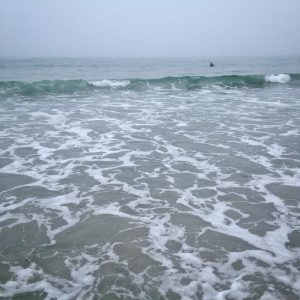 5 a.m. The wind and rain from the night before had died. Low tide would hit in an hour and a half, the same amount of time it would take to drive to Higgins Beach.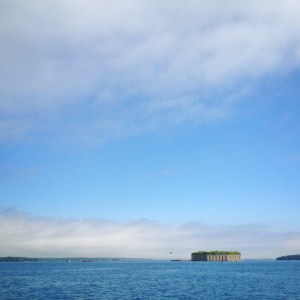
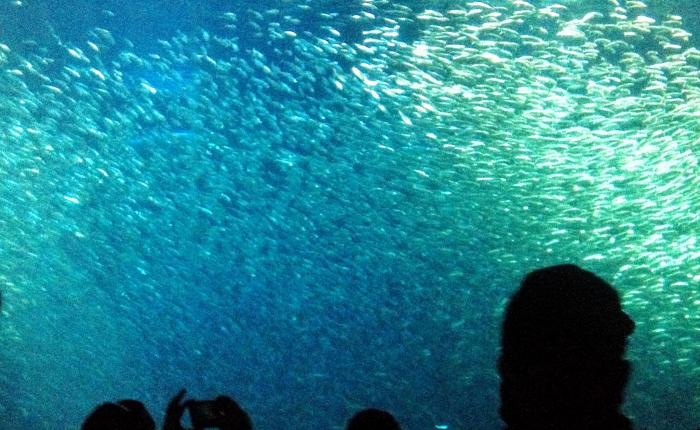
 Water. In Fryeburg, Maine, it’s a big deal: 603,000 gallons a day, a multinational company, a legal battle, a state Supreme Court ruling. Water is a very big deal.
 ErikEisele.com