Last week I wrote a post about chasing snapping shrimp down the Pacific Coast and sent it off into the internet-sphere. The whole piece/story/adventure revolved around a Radiolab podcast on the little crustaceans with the fire of the sun in their palm, so after I wrote it I shot a copy Radiolab’s way just for fun.
AND THEN THEY SHARED IT!!
I love Radiolab. In a world where most science reporting is more about the controversy and who said what about something than on the basic facts and merits of the matter Radiolab brings a sense of wonder to the genre. They tell their stories with nuance and complexity, allowing the pieces of this world that are amazing to stand on their own. (If you want one of the best examples, check out their story The Rhino Hunter, one of the most stunning pieces on the complexity of modern conservation I’ve ever heard.) I wait each week for the next episode to download; their success at telling longform stories in the Twitter Age is remarkable.
So it was nice to see their name tagged next to mine. YEAH!
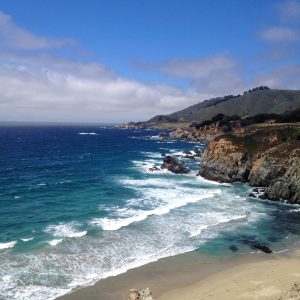
It’s a long drive from Monterey Bay to San Diego, punctuated by towering seacliffs and emptiness. It’s the kind of drive were you find yourself pulling over every five minutes, where the landscape looks sculpted by god. Big Sur. Kerouac’s coast. Every photo looks magnificent, but none are able to capture the spirit of the place.
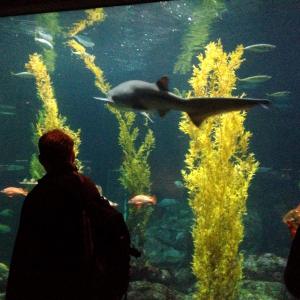
I spent the morning at the Monterey Bay Aquarium, where you can pet a stingray, watch bluefin tuna and hammerhead sharks grow frantic around shimmering clouds of sardines, see hoards of jellyfish from inches away and marvel at octopus species so different one looks like graffiti and another like camouflage. It took hours to wander through the exhibits, past giant bass and sharks and sea anemones.
One small crustacean I barely took notice of was a shrimp. He was a few inches long, with a pair of lobster-like claws, one substantially bigger than the other. His name? The snapping shrimp. I definitely saw one stowed underwater and behind glass, but I barely took notice. It was just another weird little ocean creature, nothing as majestic as the large pelagic predators or as striking as the brightly colored fish. It was just a shrimp.
Then I started driving. I skirted my way out of Monterey, past Carmel and onto the Pacific Coast Highway. Hours clocked past. The landscape grew into lofty hills above an azure sea. First cell phone coverage faded, then the radio stations. “Next gas 62 miles,” the sign said.
But I come prepared for such terrain: I plugged my iPhone into the auxiliary jack and scrolled through my podcasts. Suddenly one of my favorites caught my eye—Radiolab.
The episode was called “Bigger than Bacon,” and it was about this strange sound emanating out of the ocean: a crackling, like the popping of bubblewrap. What was the culprit? Snapping shrimp!
But more amazing is the power of that sound, as well as the phenomena that accompany it. The snapping is masked by water, muffled, but in reality each snap is roughly 220 decibels, or about as loud as a jet engine. The claw closes at 60 miles an hour, but it occurs in a space so small something amazing happens: at the base of the ocean where no air sits, the snapping shrimp’s claw closes so quickly it forces away all the water, literally vaporizing it, creating a vacuum, an air bubble. Suddenly a void exists where previously there was none, a brief spot of emptiness created by a couple-inch-long organism.
And when the water rushes to fill that space it does it with a vengeance. Molecules slam into one another at such a pace that the space that was once a bubble heats up to 5,000 degrees, the temperature of the surface of the sun. On the seafloor. In the claws of a shrimp.
Seriously. This is no joke. This is real. Scientists even captured it on video:
But here’s the best part: as I listened I drove. And I drove. I drove past the pristine shores of central California, past Santa Barbara and Ventura and the megapolis of Los Angeles, to San Diego, to friends and surf and southern California beaches. I spent a week there, surfing, eating tacos and diving; swimming through Pacific waters in a mask, fins and snorkel, chasing sea lions and Garibaldi fish and leopard sharks.
And the whole time I heard snapping. Every time my ears broke the surface I heard it. I’d never noticed it before, never paid enough attention, but now whenever my head went underwater it was an orchestra. The shrimp were everywhere. I could hear the snapping of their claws at the surface, and when I dove it only got louder. I never saw them, but I could picture the little crustaceans scampering across the seafloor, smashing their claws together like Marvel Comic heroes generating plasma-like heat rays in their palms. The floor of the ocean was on fire, but only the shrimp could see it. And me.
(The full Radiolab is definitely worth a listen. Maybe on a drive?)
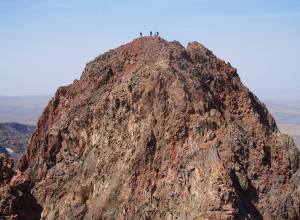
Part of our team on the north summit of Aragats. Tim Terpstra photo
Last September I took a flight from Boston to Yerevan, the capital of Armenia, a country I had barely heard of and knew even less about. Tucked in between Turkey, Iran and a handful of former Soviet republics, it is an arid plain with a history of invasion and cross-invasion.
It is also home to the Lesser Caucus Mountains, part of the mountain range that divides Europe from Asia. I was there on an American Alpine Club climber exchange, teamed up with Americans, Armenians and Iranians climbing our way across Armenia and Georgia, everything from single-pitch sport and trad routes to alpine snow and ice up 5,000 meter peaks. It was a tremendous three weeks, one full of new friends and meaningful connections.
One of the mountains we climbed along the way was Mount Aragats, the tallest peak in Armenia. (Historically Mount Ararat was the tallest peak in Armenia, but it’s now part of Turkey, and the border is closed. This is a painful fact for Armenians.) Aragats has four distinct summits, the north being the tallest at 13,420 feet. Climbing it means clambering over loose shale and boulders to windswept ridges. Most of the mountain feels unstable, like stacked blocks barely held together. There was one small patch of snow tucked beneath the southern and western summits, but otherwise it was dusty, dry and hot.
Historically, however, the snows of Aragats have held through the summers. They have kept creeks flowing in hotter months. Prior to escalating global temperatures, Aragatan snowfields would last through the year and provide a stable source of water through dry times.
Today, however, high temperatures melt things quickly, leaving the valleys flooded in the spring and parched by fall.
This short documentary by Armenian filmmaker Vardan Hovhannisyan lays out what is happening, and what local scientists are trying to do about it:
Yep. Thermal blankets. Several of us noticed them on our descent—white mounds squirreled away beneath the south summit. We didn’t realize what they were, that they were an attempt to save Aragats’ last few patches of snow. I remember discussing them when we got back to camp, but no one could tell exactly what they were. Now we know.
Blankets. Is that the solution to global warming? For now, the answer in Armenia seems to be yes. But it’s a lot of pressure for a few swath of fabric. What if the blankets insulate too well? Or not well enough? How many do they need to makes sure there is enough water? Do they have to cover the mountain? What happens if things don’t last through the summer?
These are complex questions, ones previously left to nature to ponder. But lately her answers have left Armenians parched. Now it’s up to Armenian scientists to see if they can do better.
When we were there in September our team didn’t know the difference. We didn’t realize we were walking over fields usually covered with snow. We scrambled the bare rocks unaware they normally would be entombed by snow.

 Last week I wrote a post about chasing snapping shrimp down the Pacific Coast and sent it off into the internet-sphere. The whole piece/story/adventure revolved around a Radiolab podcast on the little crustaceans with the fire of the sun in their palm, so after I wrote it I shot a copy Radiolab’s way just for fun.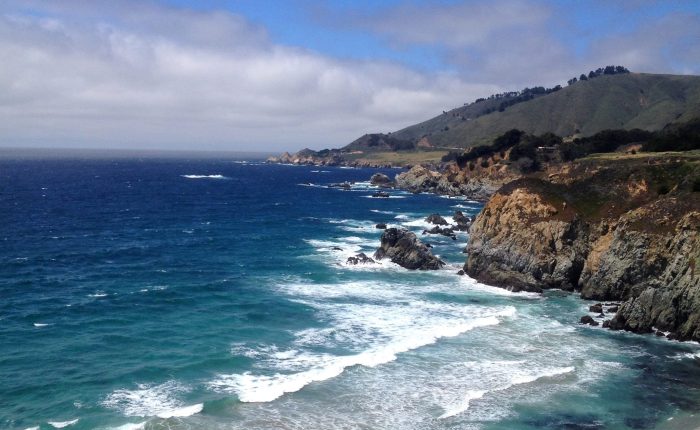
 It’s a long drive from Monterey Bay to San Diego, punctuated by towering seacliffs and emptiness. It’s the kind of drive were you find yourself pulling over every five minutes, where the landscape looks sculpted by god. Big Sur. Kerouac’s coast. Every photo looks magnificent, but none are able to capture the spirit of the place.
 Then I started driving. I skirted my way out of Monterey, past Carmel and onto the Pacific Coast Highway. Hours clocked past. The landscape grew into lofty hills above an azure sea. First cell phone coverage faded, then the radio stations. “Next gas 62 miles,” the sign said.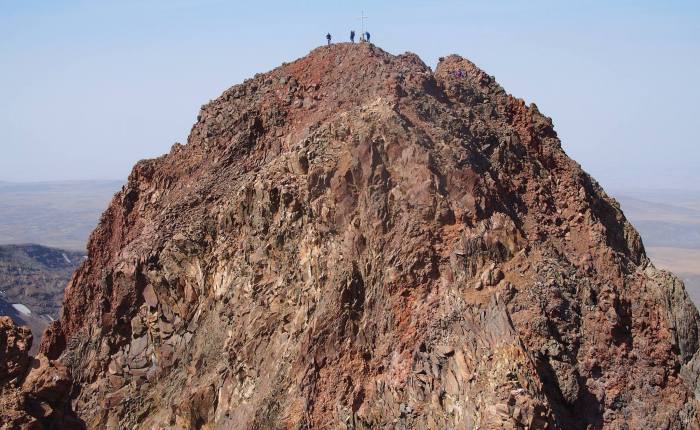
 ErikEisele.com