Wednesday After

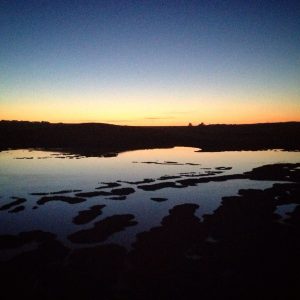
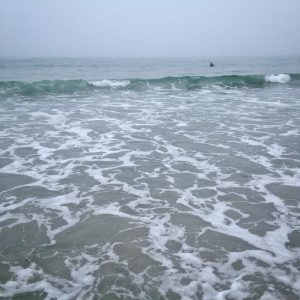
13403970_1509050489121031_6107610005133950721_oI caught the most amazing wave today.

My arms and shoulders were still tired from handstand class, but the waves were peeling long. My friend Mike sent me a note that he was going to Higgins Beach, and in the aftermath I decided to join. I entered the water in full neoprene—hood, gloves and booties even—and hopped my way out as far as I could against the surge. At the last break of whitewater I started paddling. A few waves crested over me, crashed and pushed me under, but after a few surf sessions in recent weeks I’ve developed enough fitness that I got out.

But barely. These were big waves, and by the time I pulled beyond them my shoulders were spent, my arms slapping the water. I sat up, let the ocean roll beneath me. I’d done the hard part, made it past the breakers, and now was recovery. I sat for 7 or 8 minutes, bobbing.

Then I started chasing waves. They were big and loose, I kept missing their pull. They came with enough force, but I was far out and they lacked shape. I kept sitting up and looking for something to carry me.

Then it came. I’m not nearly the surfer as I am a climber, but this wave wanted to teach me. I felt it buck underneath me, steep and rowdy. I paddled to match, pulled with everything left in the marrow of my shoulders. And it took me. Suddenly I was sliding down its face. I hopped up, shooting forward in the gathering maelstrom, turned and grabbed the wave’s shoulder, its crest roaring and tumbling white at my back. I felt it catching up, saw churning in my periphery, but I augured deep, carved into her flesh as the wave rolled forward. I was on the brink, just a step ahead of the tumbling, in the pocket, my board carving a dividing line between blue face and crashing white. I’d landed here before, but never on anything nearly so big—it was taller than me, snarling like a wolf at my feet. But my fingers were in its mane, and I held fast.

I don’t know how long it lasted—like those infrequent moments where I hold a handstand it felt like forever, but it was seconds, 20 or 25 maybe, or maybe only 10. I rode the flashing teeth, danced in their spray, felt the board rock and toss, dragged my fingers against the ocean’s lips. She seemed to rise to meet me, to push me with an angry kiss. I shot forward, ahead of the white and onto a less turbulent elbow. I bounced down these final tendrils to the foam of the beach, where I jumped, leaving the beast to the rodeo clowns.

It was incredible, perfect. It still feels like someone else’s memory.

From the Backseat: Oceans Apart

14188296_1606188992740513_8342364284182226130_oI used to think the North Atlantic was mean. All the stories of shipwrecks and European sailors tossed around in icy waters. Growing up I watched winter waves pommel the shore, saw fog swallow roads, houses and fields, watched hurricane swells grab a 40-foot lobster boat and toss it like a seashell. The sea was raw power, the North Atlantic menacing.

Then last fall I visited the Pacific. I wanted to see the Olympic Mountains, to soak in hot springs, wander rainforests and paddle the Strait of Juan de Fuca. Out West, cities face inward. They sit on water but don’t risk open ocean: San Francisco has the Bay, Seattle the Sound, Portland the Columbia River but north of sunny Southern California few outposts brave the sea. And so the Pacific is forgotten. Those placid and welcoming bays and bodies come to represent western water. The ocean lies eclipsed.

But four hours west of Seattle it sits guarding America’s edge: water dark as arterial blood rolling and falling onto itself like a wounded animal, roiled, frantic, ferocious. Unpredictable. Great trees tumble among a constant roar. Seafoam stretches for miles. Wind dashes the shore with tendrils of saltwater, everything glistening and cold. Drizzle falls from a sky only a shade lighter than the water. More trees sit half-buried in sand, ripped from the shore by past assaults, now imprisoned.

This is no Puget Sound, no tranquil shoreline. Here the full force of 5,000 unbroken miles slams unceasingly without stories or reputation to precede it, just a quiet pounding of the American West. Uprooted trees the size of small buildings swing like toys in a perpetual grey of clouds, drizzle and churning. The Pacific marks an endpoint, and there is no mistaking its edges. America closes and it takes over. No abbreviations.

New England is different. The East Coast is warmer, more gentle, dotted by islands and inlets that break up a full assault. Any water runs only a short distance before intersecting land. Only hurricanes carry the intensity of the everyday Pacific.

But home carries its own mysteries.

I arrived in early evening. The ocean stood calm, a mirror of lobster buoys and boat masts. Fog sat heavy, the coastline waning in either direction, an easy day to get lost. I parked at the boat ramp and pulled a paddleboard from the roof. An oversized surfboard mostly meant for lakes and ponds, on the ocean it feels like a thimble. But there is magic in braving something so vast atop something so small. A seagull screeched from the rocks. Cormorants dotted the nearby mooring balls, their wings outstretched like goblins. Everything stood suffocating white. I buckled my life jacket, slid the board into the water and cast off.

Under my feet the mirror shook. Strands of seaweed buoyed by air sacs stretched towards the surface. A loon called inside the mist. The blanket muffled a bell buoy and held shorelines distant. I coursed around a small island at the periphery of the bay, a line of rock mostly buried by the tide. Huddled pines climbed above a highwater mark so low winter storms must sweep the whole of it. But the only moisture touching the pines today was fog.

I paddled to the island’s beach—sand and stone dotted by shells and seaglass—and pulled ashore. White-grey peeled its way across the water, but for a moment the sun broke through. Trees opposite peeked green. From my perch I watched the Atlantic’s shifting mood, an ocean in utter calm.

Our constant neighbor, moody but not malicious. Our porch and guest space for welcoming in the wild. Angry? Mean? Barely. So much more gentle than the Pacific, she allows us to sit on her islands, lets us look into her reflection.

The clouds descended with resurgent fog. I looked back to the mainland’s faint outline, only silhouette now, and walked back to the sea. I slid my board into the mirror, the only ripples ours.


This piece appeared in this week’s Portland Phoenix.

Ten Years

Ten Years

I woke with a start and flipped a calendar: 10 years ago tonight we met. We climbed together at the indoor rock gym and then went to the Front Room, an intimate setting a short distance from the ocean. You wore a wool skirt and a smile. I was still in my climbing clothes. It was a Tuesday. I said I wouldn’t have time to see you again that week.

On Thursday we met at the Top of the East, Portland’s rooftop bar. You introduced me to your work friends and we got takeout. You spent the night.

On Friday we slept together. I asked you, “Are you for real? Is this really you.” You said yes. I knew then I would marry you.

A year later I asked. It was my birthday. Again climbing, I knelt down halfway up a cliff in New Hampshire. You started crying even before I finished. Your legs wouldn’t hold, couldn’t carry a body so overwhelmed by laughter and tears. We were 600 feet up. You didn’t trust yourself to hold the ring. You put it on, cried out with joy, and then asked me to keep it until we got to the top. I put it in my backpack and went. When you reached the top you kissed me, crying.

I don’t remember if that last part is true, but it has to be.

A year later I waited on a bridge. It was autumn, rain falling. It was getting dark. Japanese lanterns hung from the roof supports. Candles marked our walkway. The Swift River ran beneath. I remember when I saw you: You stood in white, your hair twisted in a knot of curls, hints of purple brushed over your eyes. Rain spit against the umbrella your father held but could never touch you. Nothing could touch you. You looked so beautiful, soft as snow. I don’t remember music, or sound, or the other people. Or anything. I remember you walking towards me, smiling again, your eyes searching for mine.

The rain and the river closed out the world. Your footsteps and breathing were all I heard. I don’t remember “I do,” but I can still feel your hand sliding the gold band up my finger, solid and heavy and light at the same time.

But that was after. Before and after. Before it fell apart, before court documents and divided possessions, before life seemed too fast and too slow, too ordinary and too silent. Before we moved into separate houses. Before it was over.

And after. After that first night I saw you walking towards me. After wondering if this was the same girl or if in the short drive from the rock gym to the restaurant she’d somehow gotten lost. We’d just spent two hours climbing, sweating and playing, but here walking towards me was a stunning woman, beauty in a skirt, her hips clicking in time to her heels. Her smile lit up the night.

That was you. Your smile grew as you reached me. I remember that too.


CDS Column: Entertainment? Debatable.

This week included the first debate of the 2016 presidential election. Did you watch?

You could sense the excitement Monday evening, the closing of doors as people rushed home to make sure not to miss anything. It had the feel of the Super Bowl: blue lights of the TV screen flooding living room after living room, the proud rooting for a chosen team, a clawing desire to win.

But it also held the feel of a car accident, a train wreck that people wanted to glimpse. What would go wrong? What outlandish things would Trump say? Would Clinton be able to hem him in and fend him off, or would he eviscerate her as easily as he did the Republican field?

I met three friends for dinner Monday night. In town for an afternoon of rock climbing, they were on a mission to make it home in time for the debate. “I want to see what happens,” one of them said. “It won’t change who I’m voting for, but I know it’ll be good.”

He was not the only one to say so — another friend stopped by to ask if I was watching. He too wanted to see the drama unfold onstage. The unpredictability of 2016 has transformed the race for the White House into top-rated reality TV.

That is our election today: entertainment. A sideshow. We are ostensibly choosing America’s next commander in chief, but it feels more like a trip to the Colosseum.

What has happened? This isn’t the first time a presidential election has taken on the carnival feel — the selection of Sarah Palin to be a heartbeat away from the Oval Office was another step in that direction.

She brought folksy appeal to the ticket but neither experience nor a global perspective. After the 2008 election loss, the former governor moved on to reality TV, hosting a 2010 show called “Sarah Palin’s Alaska.” According to People Magazine (always a trusted source) she is currently developing a Judge Judy-type courtroom program.

Reality is no longer real enough. We now select candidates more focused on Hollywood than Washington. Is this what voters consider “meaningful change”?

But two policy wonks standing behind podiums arguing the merits of Social Security reform makes for terrible television. No one is going to tune in for that show. Analysts projected the Clinton-Trump debate will be one of the landmark viewing events of 2016, with 17 percent more television viewers than Romney-Obama in 2012. And in the intervening four years much watching has migrated to online streaming media, which those numbers don’t account for. If we are upset with our choices for president, we sure give them our undivided attention. Perhaps our interest is really to be entertained.

A Palin presidency, however, would not have been entertaining, and neither would a Trump presidency. While it may be hilarious to watch the Republican nominee resurrect his signature tagline “You’re fired” in political form, he is without experience, temperament or the necessary judgment to lead. He is a conman stoking divisions and discontent. More of it won’t be entertaining to watch, and a Trump presidency wouldn’t be entertaining to live under.

So, what were viewers looking for? How many of the millions of them were trying to decide which one of these two candidates had the makings of a president? Or is that not what debates are for anymore?

Television companies appreciate them. If discord as entertaining as Trump versus Clinton could face off every year, it’d sprout a cottage industry with as many advertisers as the Super Bowl. And who wouldn’t want to see creative, funny depictions of red state versus blue, candidate versus candidate, issue versus issue. Perhaps Planned Parenthood could deploy croaking frogs and Focus on the Family a new World’s Most Interesting Man.

Maybe this is how we make America great again. Maybe we can sell ourselves back to viability. Maybe taking a page from our reality TV nominee’s book and stenciling our last names across the top floor of all of our houses from the North Country to the coast, from Cleveland to inner city Chicago, we pull us up by our bootstraps.

Really? That seems like a con. Rural America is struggling, and meanwhile Congress fails to meet to make basic compromises. America finds itself in a multipolar world amid powers not necessarily our friends. These are not joking times, not the moment for a clown, a conman. It will take vision, solid policy and hard choices to navigate the times we find ourselves in.

And yet, we as a country elect to tune in, to be entertained. We are trained to watch. We gripe about Washington and then refuse to engage in the boring meaningful work required to change it. We rush home in anticipation of getting to watch grownups act like toddlers onstage and then curse our lack of better choices. Is that true, we are without choices? Or are our politics a reflection of us? Do we have anything to offer, an attention span to listen on policy rather than vote for entertainment value?

There will always be conwomen and conmen. There will always be someone selling something we don’t need at a price we can’t afford, a shill looking to entertain.

And so, we have been left with one choice in this election. The cynical view has always been presidential elections are a choice between two evils, but not this year. This year we have a consummate politician, someone who in normal circumstances would be the very definition of bum in a call to “throw the bums out.” But the conman has transformed Hillary Clinton from sleaze into white knight. There is no other choice, the alternative is absurd, unthinkable.

So we have the election we built for ourselves. But at least we are entertained.


This column ran in the Conway Daily Sun.

From the Backseat: MECA, Me and Swirling Eddies

From the Backseat: MECA, Me and Swirling Eddies

14444663_1636164186409660_5623119052921151833_oI’ve always loved the Porteous Building. The home of the Maine College of Art sits regal and square, a hub spinning eddies of creative energy into surrounding streets. Behind its department store facade hides an economic engine, a piston of Portland’s arts economy, sweeping windows and cascading stairways that breathe life to center Congress.

I first noticed it in 2001, the first time I moved to Portland. I was 20, dropped out of college a second time, working a warehouse shift at L.L. Bean. I lived diagonal from MECA crashing on the couch of my sister’s third floor apartment for token rent, woke each morning before dawn to catch a carpool to Freeport, home by early afternoon. Life was rote, routine, boring.

But just down the street MECA was a cauldron of creation, pluck and juice. There was an energy in the punk-style of the art kids who poured through her doors each day. A fire draped the work that hung in her windows. From my perch I could watch it stream past like artistic magma, stirred and prolific but too far to touch. I left Portland having never walked through her doors.

Four years later I was back, my second try at Portland aimed to finish college; this time as a double-major in political science and media studies. MECA’s creative curriculum wasn’t my syllabus. But I needed money and MECA needed models.

The first time I took my clothes off in a roomful of students was for an evening class. Painting. We were on the third floor in a room with the floor-to-ceiling windows that make Porteous so beautiful. I sat naked on a couch holding a 45-minute pose.

At first I thought I was comfortable. But after 10 minutes my neck grew tight. Soon my shoulder ached, my legs trembled with fatigue and my back cramped. By 25 minutes I was in agony, resigned to stillness among shuffling palettes. Sitting there naked I wondered if anyone outside could see in; if the glow lured peering eyes perhaps from some third floor apartment across the way.

When the teacher called a break I collapsed, wrapped myself in a second-hand bathrobe I’d brought for modesty and walked to the window. I looked out at the street dreading the next pose’s 45 minutes of pain.
Then I turned around. In front of me ran canvas after canvas of bold readings of my body, interpretations like twisted mirrors of paint and light and skin tone. I wandered from easel to easel mesmerized by translations striking and alive, bound by darkness, light and mystery. And I was a part of all of them.

I walked back to the podium transfixed. Suddenly the next 45 minutes became a different dance: I now knew the creative fires being lit around me, and that knowledge steadied my pose. I sat engaged, part of the process, a willing actor, no longer concerned with who might look in. I wasn’t there for the money anymore but a witness to the creation unfolding around me, a central ingredient to its birth. I would not miss it for the world.
Two days later I was back for a drawing class. Then for comic class. Then another, and another. I had a front row seat to unselfconscious expression and every class was opening night. Porteous was hemmed by reckless creation and inspiration. And I sat in its center.

But all good things die. It lasted a year, then my modeling career came to an end.

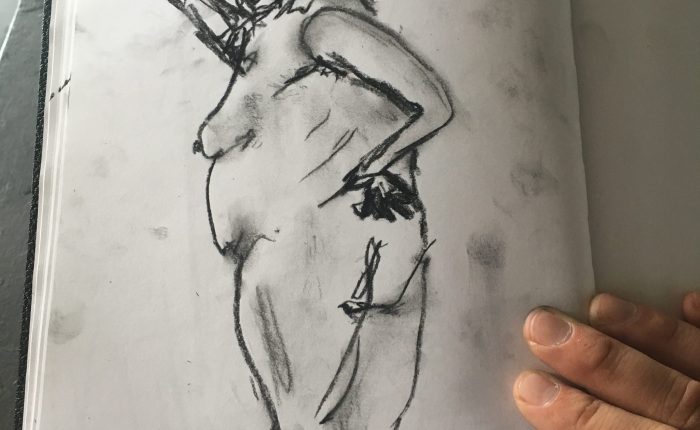
This past Sunday I walked into Porteous once more, this time a student. I carried my drawing pad to a room where I once stood naked. Our model, a woman of perhaps 60, sat casually in the corner. When it was time she stripped her dress and took to the podium like a prizefighter, she the captain, the room her ship. I did my best to anchor her poise and certainty in charcoal, but untrained fingers tripped and fumbled. My renditions were colorless. Only she could do her body justice.

Porteous’ windows and stairwells, however, knew better: Mine was one more act of creation born within her walls. One more mesmerizing eddy.


This column appeared in this week’s Portland Phoenix.

CDS Column: Tourism Tales

CDS Column: Tourism Tales

e5a29-dsc_0019My first real job in journalism was in Berlin, New Hampshire. I was working for the weekly newspaper, tasked with covering a community in sharp decline from its former glory. At one time, Berlin was the third-largest city in New Hampshire. Today, it is saddled with aging infrastructure intended for 25,000 residents, with 10,000 residents footing the bills. Even the paper itself was in decline — there was no office, and I spent most of my time working from the local community college.

But hard times bring their own kind of renaissance. Berlin was stripped bare by the changing economics of the paper industry, but the winnowing distilled the city to its core, discarding those lacking a deep connection to the community and leaving residents with a deep sense of themselves. It was a process that made Berlin both weak and strong, an unlikely place to choose to live yet still a community in the richest sense of the word. I would drive north over the notch each day from the Mount Washington Valley, where nearly everyone hails from away, to a place where few chose to move unless out of options. But those who stayed did so with pride.

At the time, Berlin and the rest of the North Country were searching for whatever was going to support them next. The mills were shuttered and something had to take their place, but what? Prisons and biomass electricity were floated as options but lacked the economic steam to restart the engine.
But what about tourism? No individual North Country town had the assets to constitute a tourist haven, a hired consultant told them, but if the region as a whole banded together, it could be a market. The idea was to link the North Country’s three stately hotels — the Mount Washington, the Mountain View Grand and the Balsams Resort — in a campaign that sold the “Grand Hotels, Grand Adventure” alongside the region’s untrodden natural wonders like lakes, mountains, rivers and forests.

Berlin, however, was always skeptical. Tucked along the Androscoggin, it sits in a pocket removed from the namesake hotels. And, more important, as a blue-collar industrial city, Berlin has always looked at the tourism with suspicion. The stink of the former pulp mill was once the smell of good jobs, and any transition to the low-wage service jobs tourism brings would be a hard one. Mill work offered a middle-class living. The promise of a restaurant job or a gig as a whitewater raft guide is hardly analogous.

But in today’s economy, what other options are there? As rural towns decline, many are looking at their last remaining asset: their picturesque surroundings. North Country tourism moved forward, and Berlin grudgingly went along, never full-bore but willing to play the game.

Then the Balsams shuttered, and with that the trifecta that gave the “Grand Hotels, Grand Adventure” plans resonance came to a halt. How tenuous plans for selling yourself as a destination can be.

But as economic changes sweep across New England, tourism is repeatedly raised as the fallback plan. The mills close? Turn to tourism. The furniture factory goes quiet? Tourism. The industrial sector struggles (in Conway Village, for example)? Tourism.

But does tourism have the strength to take up the slack? As the modern economy recedes from rural areas, can visitors from away fill the void? It’s a question a small town on the Maine coast has been wrestling with, and the answers it has come up with look much like ours.

Boothbay is three hours to the east of us, a coastal community watching its working waterfront empty and its population dwindle. The town is hollowing, so what are they considering? Tourism. Specifically, a proposal to build a retail development complex distinct from the village district, installed around a redesigned traffic pattern that includes a roundabout.

Sound familiar?

Tourism North Conway-style is the new black, a solution for rural economic malaise, a unique intertwining that combines natural beauty with shopping centers in hopes of lifting all boats.

But is the economic mix that keeps the Mount Washington Valley afloat a prosperous one, something worthy of exportation? Is our brand of tourism the one to aspire to? And will it even work? Can the pull of shopping repeal stagnation?

Boothbay is already a tourist town, but it is a one-season destination, packed for July and August and otherwise quiet. It’s a far cry from North Conway, where skiing, foliage, mountains and rivers combine to create four seasons of visitors.

In looking at the attempted copycats, the uniqueness of the Mount Washington Valley stands out: Not every tourist destination can claim a year-round status. Our retail district is an important part of the draw, but its strength is that it exists as an accessory, a complement, the place to drop uninterested family members while everyone else goes skiing, paddling or hiking. It is not the focal point to which crowds flock. It is part of a whole package that makes us a destination. In isolation our retail district is but a shopping mall, and tax-free though it is, it would hardly qualify as a unique draw.

The same is true of any individual ski area, any single mountain. But pair each asset with the river, with the leaves ablaze in October, with sap running in springtime, the Scenic Railroad and the shopping, and suddenly a destination emerges. Suddenly North Conway has its the trifecta of grand hotels.

Not everyone has that. Not every place contains the mix that makes a destination. But as rural economies change, more will be looking toward tourism. The Mount Washington Valley model might find itself played on repeat.


This column appeared in the Conway Daily Sun.

Traveling.

Traveling.

I have lots of thoughts. They begin with this:

If that is where your heart is, go.
Be prepared to be lonely, hurt, scared, lost, overwhelmed. And go.
If you wander you are accepting instability. It will overwhelm you at times, and it will show you tremendous beauty.
It will remind you of the impermanence of things.
It will give you the space and the emptiness to recall all of your failures, all of your imperfections.
And in facing those you’ll find courage, remember your heart. And you’ll also drown.

It is worth it.
But the things you are seeking to escape will still be there when you return home.
Life is a balance of movement and stillness, and it is in the stillness that we recover our hearts.
But the movement is necessary. It uproots what is otherwise hidden.
So that in stillness you can consider how to move through it.

Your heart is amazing. You are looking for it, trying to learn how to remember yourself. I get that. My heart is the same. All hearts are the same. The base ingredient of this world is love. Beauty and love. But we forget. Sometimes we need to shake things up to remember.
But in truth they are there all along.
You are those things.
In movement and in stillness.
Yet it is so hard to remember.
If you need to go to remember, go.
If you feel going may offer something, go.
And when it is time for stillness again, you’ll know.

It’s already there in you. Perfect, beautiful, amazing. But sometimes we need to remind ourselves.
And sometimes we need to wander.
But there are 1,000 ways to wander.
Some mental, some physical, some emotional.
If you have been in one place for too long, perhaps geography is what needs to change.
But.
A shift in place will not fill that space.
It will distract you for a time, an elongated moment, and then the emptiness will come screaming back.
But wandering will give you fresh eyes to see the connections you already have, the community you left behind.
It will remind you of its richness.
That is its gift.
That is why I say “Be prepared to be lonely, hurt, scared, lost, overwhelmed.”
Leaving will allow you to see what you have with fresh eyes.
But what you feel is missing is not missing.
Nothing is missing. Nothing is ever missing.

You are in this moment now because you need to be. Nothing is missing, nothing is broken. Your heart is reminding you it is up to you to create the world you love, the one that feeds you. Your seeking is about something else, something more elemental.
Movement may be part of recognizing what that thing is.
It may be an important part.
But the struggles inside you are your heart, not your place in the world. The place you are in is exactly the place you are meant to be. It is in recognizing how to move from that place that we get lost.
And in thinking there is a right way to do it.
Go or stay, you are doing what you need to do.
And stripping your heart bare—that is the key. To everything. No matter what.

Do not seek to be happy.
Seek to experience life.
Seek moments like now, where you are wondering what to do.
Those are life’s experience.
They are worth holding onto, moving within, breathing in, swallowing until they drown you, sharing.
You are worthy of sharing. Of being reckless with your heart and your choices. In whatever way fits for you, feeds you.
Love cannot hurt you. It cannot bleed, maim or kill you. It only seems to when we look to bend it to our own purpose, when we seek to control it, to force it to feed only us.
Instead, let your love feed the world. Offer service and kindness to others. That is the key. It is what feeds our hearts.

I cannot do this, what I aspire to do.
So I keep practicing.
You understand. I know you do.
The world wants us to see love as a gift, not a cage, not a binding contract. And yet we fight against the world. So it keeps reminding us.

If I sleep with you I’m going to want to keep you.
And that is OK.
It is the place I am at.
This life is about learning to let go.
So I keep learning.
But I do not start from a place of fear.
I start from a place of recognizing and accepting myself.
And gently leaning into the struggle.
Without judgement for myself.
That is love: a practice ever evolving.
You will slip and fall.
Yet that is not failure.
That is THE POINT.
It is you, you being perfectly you. It is beautiful.

We are all searching for a place to be ourselves, fully ourselves.
Most love is a box.
You are worthy of more than a box. You are worthy of everything.
Can I offer that?
Can you?
No.
But that is what we are yearning to become, where we yearn to be, not some other place but in a space where both we and the world can be ourselves.
So we practice.
Practice however you have to.
Nothing is missing.
We are just confused about love, the world and everything in it.
When someone else hurts you, remember they are confused.
When you fuck up, remember you are confused.
Never understand anything.
Just wonder.
I wonder about you.
It feels good to be wondered about. Amazing.
That is love.

Love everything.
Everyone.
Understand nothing.
Love the world. All of it.
Then you’ll see nothing is missing.
Your job is not to be perfect. Your job is to be a mess. To be confused. Lost. Drowning. Overwhelmed.
To let go of judgement. Of yourself and others.
When someone hurts you, you still love them. Love them fully. Openly. With everything. With your all.
Accept them as perfect, even when they are a mess.
The point isn’t to be happy. The point is to feel: sadness, hurt, loneliness, these are what you are searching for.

Confusing, but worth it.


13497627_1521654587860621_4683670894975756410_o

CDS Column: Reflections Abroad

CDS Column: Reflections Abroad

Belize-1050964“Where are you from?” He was wearing a collared shirt, long pants with suspenders and a wide-brimmed woven hat. I sat next to him, sweating through shorts and a tee shirt in the Belizean heat.

“The U.S.,” I said. “New Hampshire.”

“Where is that? Higher than Pennsylvania?”

“Yes, above Pennsylvania. Near Boston.”

“Does it touch Canada?”

“Yes.”

“Huh,” he said. “Is it cold there?”

He spoke with precision, like he was reading off a script. He addressed me directly, never breaking eye contact. His name was Elias. He was a Mennonite, a Christian sect similar to the Amish common to Belize. We were riding south out of Belmopan, the capital city, in a retired school bus with brown vinyl bench seats and windows that only slid halfway down. I was headed to the Caribbean coast. He was going home.

“It is cold,” I said. “It even snows. But not right now, only in winter.”

“I’ve never seen snow,” he said. “I couldn’t handle it.”

He smiled. He was 24, a farmer and one of 10 children. He lived with his family in central Belize, but he’d visited the United States a handful of times and had dual citizenship. His father left their church in Pennsylvania decades ago in a return to his core beliefs. His American community was using tractors and driving cars, Elias said, slipping towards modernity, so his father and a selection of others moved south, way south. They now farm tomatoes and peppers and corn, he said, in a community of 15 families.

“Did you go to Belizean school?” I asked.

“We have our own schools,” Mennonite academies separate from the national system, he said. “But we only study until eighth grade.” After that, Mennonite children become farmers.

“Do you ever feel like you are missing out? Ever think maybe technology and education and everything might be better?”

His answer was unhurried. “No,” he said. “I’d like to know more geography, to understand the layout of things better, but that’s about it. I don’t follow the world, really. And the pieces I hear about don’t make me want to take greater notice.”

“Explain that,” I said.

“You have an election coming up, right?” he said.

“Yes,” I said, suddenly sullen.

“I don’t know much about it,” he said, “but it seems a mess. I don’t think I want a bigger part of that world.”

The bus lurched. I sat quiet. He had a point.

That’s why I love travel: It’s a mirror, a necessary step back for reflection. Only from a distance can you get a full view of yourself.

As a country, it’s no different — without adequate space it can be impossible to formulate an accurate view of your policy, your politics. Only in leaving can you see more clearly.
Another glimpse came from Karina, a Belizean mother of three. Every morning she sat outside the school. Inside, American high school students ran a summer camp for Belizean middle and elementary kids. Karina’s daughter was in the youngest class, made up of kindergarten and first graders. She would bawl inconsolably if Karina wasn’t nearby, so each day Karina sat at the picnic table outside the classroom.

Karina was black. She had grown up in central Belize not far from the school, and for the last two years she’d attended college in America.

“What was it like,” I asked her, “going to the U.S.?”

“It was wonderful,” she said, “but hard.” She wasn’t ready for the racism, she said. As a Belizean she hadn’t developed the thick skin required of a black woman in America. Her culture is multiracial, but it lacks the divisions she encountered in the U.S. Encountering the stinging blows of prejudice as a young adult shocked her. She was unprepared for it. She would cry a lot, she said, and was hurt easily.

“I didn’t expect that,” she said. “I was happy to go to an American university, but it’s really nice to be back.”

These moments give pause. They are brief glimpses into the mirror of ourselves, of the country we have built: A Mennonite man with a middle school education who sees our politics clearly enough to know he wants no part in them. A young mother whose experience with American racism left her in tears. These versions of America grow fuzzy to those of us who live them every day. They seem impossibly entrenched and complex up close. But from abroad they look different. With the benefit of distance they seem both larger, more intertwined in the American fabric, and also smaller, more isolatable, more feasible to face head on.

At home, issues of race and politics seem too overwhelming to be changeable, too thickly American. But from 1,000-mile shores they become remote enough to appear moveable. They seem again to be in our hands, something within American control, within the control of the citizens who make up this country. They are ours to manipulate and eradicate if we chose. Racism is not part and parcel to this nation. The politics of money, fear and limited choice is not an inexorable American parasite that cannot be purged without risking the host. These are momentary glimpses of our country at this moment, they are not what define it.

But to change them, first we have to look in the mirror. First we have to decide if we like what we see.


This piece appeared in the Conway Daily Sun.
Ended Hiatus

Ended Hiatus

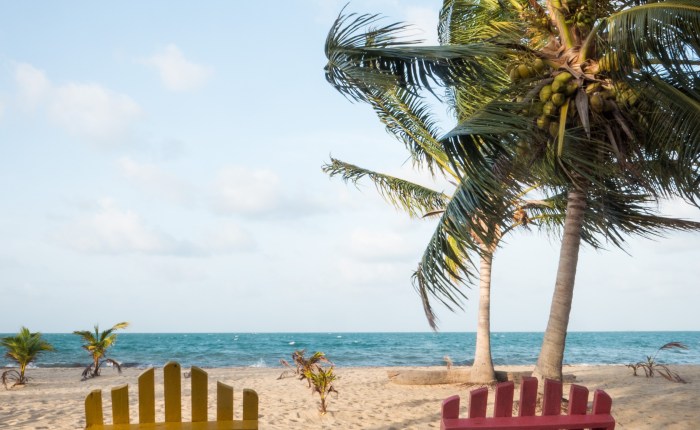
13730801_1553661621326584_6611188446585815400_oOK. So I’ve been working in Belize for the last month, which has meant I’ve not been keeping up with my posting duties. Internet access was temperamental, time was limited, etc., etc. But I fly back to the U.S. in a few days (currently hanging out on one of the most beautiful beaches in the world), back to my car (parked just north of Seattle), and figure out whatever is next.
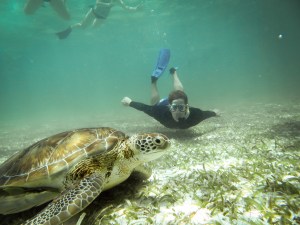
And honestly I don’t have any real idea what is next for me. I had thoughts of staying out west, but over the last month a number of things have been calling me back to New England. Not enough that I know I’m heading directly there, but I’m looking harder at a handful of opportunities near what has long been my home.

It feels good to have that pull. Belize has been amazing—working with American high school kids running a summer camp for Belizean middle and elementary students focused on improving their literacy skills. It was a time out, time off from the road, from climbing and adventure, time for human contact and connection and cultural exchange.

Belize-3503And it was an ecological exploration. Belize is home to the second longest barrier reef in the world, multiple ecosystem zones, caves, jungle, mountains and savannah. Iguanas crouch in the trees, tarantulas roam the forest floor, toucans haunt the air. I saw a manatee, two Harpy Eagles, a jaguar, held a boa constrictor, swam with sea turtles, pondered over leafcutter ants and got bitten by thousands of bugs. It was an awesome amazing trip, one I’ll be writing about more. But before that happens I wanted to share a video. My dance with sea turtles reminded me of it. At 2:25 is the job I think is probably most interesting in the world: sea turtle wrestler. Heck yeah! Lifetime aspirations! 🌊🐋
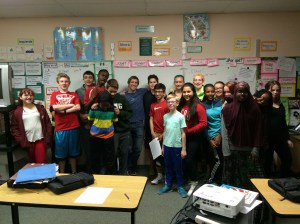
CDS Column: The Cost to Learn

CDS Column: The Cost to Learn

IMG_0400The other day I came across a news release from my alma mater the University of Southern Maine: “USM hails turnaround,” was the headline, “Admissions numbers substantially up and budget balanced for first time in years.” Classes are full, and the university is in the black. Officials were upbeat; for the first time since the Great Recession the university is making money.
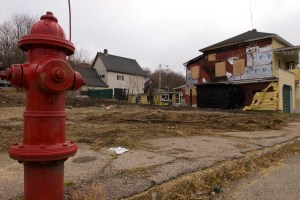
USM was hit hard back in 2008. There were cuts, layoffs, changes in leadership. Officials threw countless levers in search of something capable of putting things back on track, of making ends meet. Now they finally have good news: “The number of high achieving high school graduates attending USM this fall is soaring. ‘Last year at this time 16 admitted students who were awarded merit scholarships sent us a deposit,’” a school official said. “’This year that number is 216, and we expect the numbers to climb.’” Things are looking up.

I studied at USM a decade ago, graduated in December of 2007 in the calm before the financial firestorm. Those were flush days for the university, before a lot of tough decisions and belt-tightening.

Today in-state USM students pay $253 per undergraduate credit. That’s not much different than when I was there. Out-of-state tuition, meanwhile, costs $665 per credit. One year of classes and fees costs $8,920 per year for in-state students, while out-of-states pay $21,280.

An hour away, meanwhile, at University of New Hampshire, an in-state student pays $600 per credit hour. A year of tuition costs $14,410, plus an additional $1,607 in fees. Over four years those numbers add up, and the $60,000 price tag for UNH doesn’t include food or a place to sleep. College today is full of opportunity, including for students to saddle themselves with significant financial baggage barely into adulthood.

It wasn’t always this way. The prosperity of the American Century wasn’t financed by 18-year-olds; it was fueled by public investment. In the wake of World War Two former soldiers swarmed university campuses backed by G.I. Bill dollars. A generation later their children attended low-cost state universities, another gift of government dollars. These two generations—the Greatest and the Boomers—built success out of this community investment. They prospered, and America prospered. They grew in tandem, gains forged in the fires of collective investment in higher education. We were a nation of government-funded students and state-sponsored graduates, two parallel rails that fostered America’s transition from industrial nation to an economy interlaced with technology. Today forms of commerce unimaginable in the post-World War Two years are commonplace, built by this army of first financial aid recipients. Complex derivative industries now sustain us, and the grandchildren of people born before telephones reached a majority of households are finding jobs as ap developers for smartphone companies. Such is the growth in an educated society.

1140f-highBut those opportunities are becoming harder and harder to afford. Over the past 50 years education has changed. The opportunities have changed. Even as the necessity of a college degree has increased, support for obtaining one has dwindled. Political pressure has forced entities built on public investment to operate more like businesses, to focus on growing income streams rather education opportunities. School budgets once covered by government have been cut while the portion left for students to bear has ballooned. The task of educating, a responsibility once felt by all of us, has been privatized, individualized and handed off to the kids. Education has transformed into something you buy, and it’s no longer affordable.

How did this happen? How did investment in a strong workforce, with the stability and prosperity that it brings, become the responsibility of 19 and 20-year-olds? How did we so erode our public support of higher education that the costs now land on the shoulders of children?

Perhaps it is tied to the modern narrative around education. The story of school was once that of a tide that lifted all boats: No one lost by investing in education. Gains might be unevenly distributed, but society as a whole saw tremendous advancements as a result of rising standards. Better education meant better jobs, more wealth and general upward mobility. The trajectory was one of growth. Investment in education was a building block in creating middle class communities, an investment in a collective future, and a brighter one.

Today, however, that storyline is gone, replaced by a simpler tale. Today we are told education exists for the individual. It is a personal investment with personal rewards: the chance for more money and a better job. From a societal level there is little incentive to see others educated, as only the individual sees the benefits. Taxpayers, meanwhile, bear the expense. Society is saddled with the cost. For individuals college is an investment; for the rest of us it is an expense.

Such a shallow view of our society, history and economy. Education, like economics, is not a zero-sum game; with investment, the pie grows. There is no finite number of slices. Inventions like the internet and the iPhone revolutionize entire sectors, creating new opportunities and derivative markets that spill their way down the economic food chain. Exploding technologies may be built by engineers and computer programmers, but they create opportunities for accountants and janitors, lawyers and food service workers, CEOs and parking lot attendants. Everyone benefits. Education is no simple rising tide; it is a wave, a tsunami, a tremendous force for change.

We knew this, and for years we watched it work. For generations. The result was the American Century, a middle class revolution built on public investment in knowledge, creativity and growth. America led the world, leadership funded by all of us.

We could get back there, but not by ignoring the cost. We must spend wisely and choose which bills to make our own. Education is one that belongs to all of us.


This column appeared in today’s Conway Daily Sun.