Two Months

Two Months

13682554_606482239532046_749095496_oIt’s been two months since I left Belize.
Two months. Two full moons. Two cell phone bills. It seems like a decade ago.

Here in New England the leaves are changing. There is a bite in the air each morning. The ocean looks grey, no longer warm and inviting.

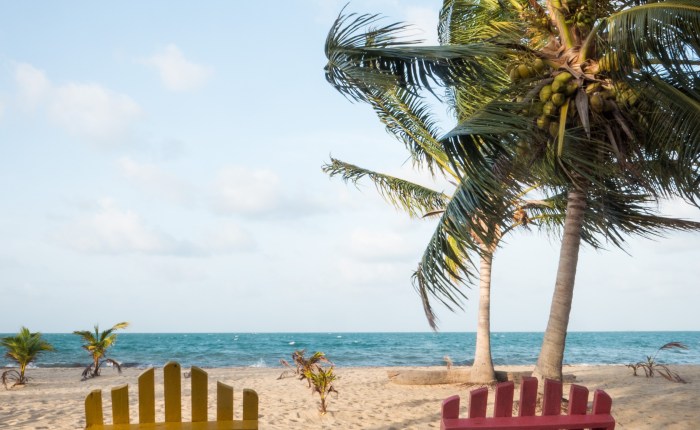
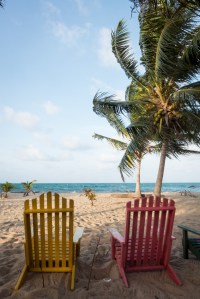
In Belize, however, it’s still summer, or at least some version of it. It’s that season where shoes and shirts are optional. The salt air along the coast hangs thick and fans are mandatory for sleeping. It’s always that season in Belize, a perpetual Caribbean waltz where “Go slow” is more than a suggestion. It’s a way of life.

In the Cayo District 100 students are cracking their books. They have names like Chris and Karen and Joshua. They are wearing uniforms, pouring over worksheets, sitting at attention while the teacher talks and then goofing behind her back each time she turns. They are laughing, smiling, passing notes, switching from English to Spanish to Creol as comfortable as dancers, a veritable language cacophony.

And if you listen close each time they switch to English you might notice something: their mastery has grown. They use the language with a slice more confidence than last year, something over the summer made it build, thicken. They are learning to wield it rather than be driven by it. They don’t just know English, they are becoming English speakers.

What happened?

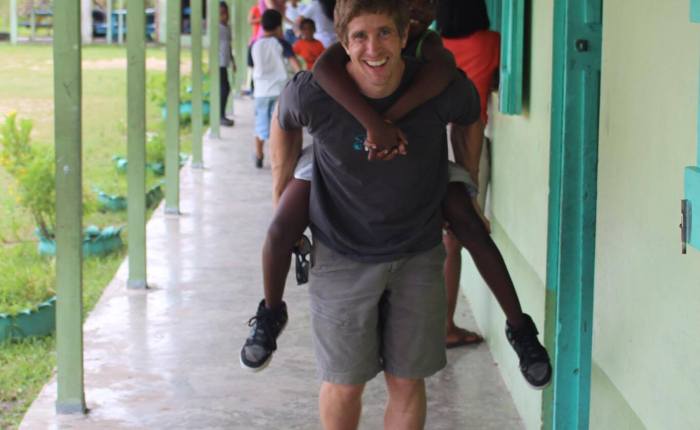
Us. We happened. Me and 30 other volunteers ages 14 to 40 spent two weeks sweating through the Belizean summer to get these 100 Belizean students talking that way. For that two weeks they were sitting at attention for us, and then of course goofing behind our backs. They learned our language and our names, played our games and sang our songs. They made us laugh, and when we left made us cry.

That was two months ago. Today sitting with my cup of hot apple cider in my kitchen watching the autumn wind pull leaves across the lawn it seems much further away than that. It seems like another lifetime, another world, a distant past.

But.

But there is always next summer. There is always another classroom, another 100 students. There is always a roomful of kids excited to sing songs and play. But next time they won’t be strangers. They won’t be students or kids. Next time I will call them friends.


This piece appeared on the blog of Global Service Partnerships, a Boise, Idaho-based nonprofit that runs English literacy programs in Belize.

CDS Column: Entertainment? Debatable.

This week included the first debate of the 2016 presidential election. Did you watch?

You could sense the excitement Monday evening, the closing of doors as people rushed home to make sure not to miss anything. It had the feel of the Super Bowl: blue lights of the TV screen flooding living room after living room, the proud rooting for a chosen team, a clawing desire to win.

But it also held the feel of a car accident, a train wreck that people wanted to glimpse. What would go wrong? What outlandish things would Trump say? Would Clinton be able to hem him in and fend him off, or would he eviscerate her as easily as he did the Republican field?

I met three friends for dinner Monday night. In town for an afternoon of rock climbing, they were on a mission to make it home in time for the debate. “I want to see what happens,” one of them said. “It won’t change who I’m voting for, but I know it’ll be good.”

He was not the only one to say so — another friend stopped by to ask if I was watching. He too wanted to see the drama unfold onstage. The unpredictability of 2016 has transformed the race for the White House into top-rated reality TV.

That is our election today: entertainment. A sideshow. We are ostensibly choosing America’s next commander in chief, but it feels more like a trip to the Colosseum.

What has happened? This isn’t the first time a presidential election has taken on the carnival feel — the selection of Sarah Palin to be a heartbeat away from the Oval Office was another step in that direction.

She brought folksy appeal to the ticket but neither experience nor a global perspective. After the 2008 election loss, the former governor moved on to reality TV, hosting a 2010 show called “Sarah Palin’s Alaska.” According to People Magazine (always a trusted source) she is currently developing a Judge Judy-type courtroom program.

Reality is no longer real enough. We now select candidates more focused on Hollywood than Washington. Is this what voters consider “meaningful change”?

But two policy wonks standing behind podiums arguing the merits of Social Security reform makes for terrible television. No one is going to tune in for that show. Analysts projected the Clinton-Trump debate will be one of the landmark viewing events of 2016, with 17 percent more television viewers than Romney-Obama in 2012. And in the intervening four years much watching has migrated to online streaming media, which those numbers don’t account for. If we are upset with our choices for president, we sure give them our undivided attention. Perhaps our interest is really to be entertained.

A Palin presidency, however, would not have been entertaining, and neither would a Trump presidency. While it may be hilarious to watch the Republican nominee resurrect his signature tagline “You’re fired” in political form, he is without experience, temperament or the necessary judgment to lead. He is a conman stoking divisions and discontent. More of it won’t be entertaining to watch, and a Trump presidency wouldn’t be entertaining to live under.

So, what were viewers looking for? How many of the millions of them were trying to decide which one of these two candidates had the makings of a president? Or is that not what debates are for anymore?

Television companies appreciate them. If discord as entertaining as Trump versus Clinton could face off every year, it’d sprout a cottage industry with as many advertisers as the Super Bowl. And who wouldn’t want to see creative, funny depictions of red state versus blue, candidate versus candidate, issue versus issue. Perhaps Planned Parenthood could deploy croaking frogs and Focus on the Family a new World’s Most Interesting Man.

Maybe this is how we make America great again. Maybe we can sell ourselves back to viability. Maybe taking a page from our reality TV nominee’s book and stenciling our last names across the top floor of all of our houses from the North Country to the coast, from Cleveland to inner city Chicago, we pull us up by our bootstraps.

Really? That seems like a con. Rural America is struggling, and meanwhile Congress fails to meet to make basic compromises. America finds itself in a multipolar world amid powers not necessarily our friends. These are not joking times, not the moment for a clown, a conman. It will take vision, solid policy and hard choices to navigate the times we find ourselves in.

And yet, we as a country elect to tune in, to be entertained. We are trained to watch. We gripe about Washington and then refuse to engage in the boring meaningful work required to change it. We rush home in anticipation of getting to watch grownups act like toddlers onstage and then curse our lack of better choices. Is that true, we are without choices? Or are our politics a reflection of us? Do we have anything to offer, an attention span to listen on policy rather than vote for entertainment value?

There will always be conwomen and conmen. There will always be someone selling something we don’t need at a price we can’t afford, a shill looking to entertain.

And so, we have been left with one choice in this election. The cynical view has always been presidential elections are a choice between two evils, but not this year. This year we have a consummate politician, someone who in normal circumstances would be the very definition of bum in a call to “throw the bums out.” But the conman has transformed Hillary Clinton from sleaze into white knight. There is no other choice, the alternative is absurd, unthinkable.

So we have the election we built for ourselves. But at least we are entertained.


This column ran in the Conway Daily Sun.

From the Backseat: MECA, Me and Swirling Eddies

From the Backseat: MECA, Me and Swirling Eddies

14444663_1636164186409660_5623119052921151833_oI’ve always loved the Porteous Building. The home of the Maine College of Art sits regal and square, a hub spinning eddies of creative energy into surrounding streets. Behind its department store facade hides an economic engine, a piston of Portland’s arts economy, sweeping windows and cascading stairways that breathe life to center Congress.
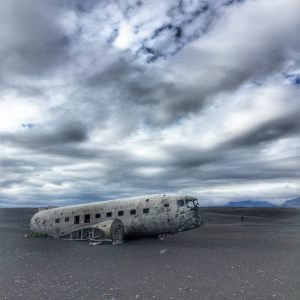
I first noticed it in 2001, the first time I moved to Portland. I was 20, dropped out of college a second time, working a warehouse shift at L.L. Bean. I lived diagonal from MECA crashing on the couch of my sister’s third floor apartment for token rent, woke each morning before dawn to catch a carpool to Freeport, home by early afternoon. Life was rote, routine, boring.

But just down the street MECA was a cauldron of creation, pluck and juice. There was an energy in the punk-style of the art kids who poured through her doors each day. A fire draped the work that hung in her windows. From my perch I could watch it stream past like artistic magma, stirred and prolific but too far to touch. I left Portland having never walked through her doors.

Four years later I was back, my second try at Portland aimed to finish college; this time as a double-major in political science and media studies. MECA’s creative curriculum wasn’t my syllabus. But I needed money and MECA needed models.

The first time I took my clothes off in a roomful of students was for an evening class. Painting. We were on the third floor in a room with the floor-to-ceiling windows that make Porteous so beautiful. I sat naked on a couch holding a 45-minute pose.

At first I thought I was comfortable. But after 10 minutes my neck grew tight. Soon my shoulder ached, my legs trembled with fatigue and my back cramped. By 25 minutes I was in agony, resigned to stillness among shuffling palettes. Sitting there naked I wondered if anyone outside could see in; if the glow lured peering eyes perhaps from some third floor apartment across the way.

When the teacher called a break I collapsed, wrapped myself in a second-hand bathrobe I’d brought for modesty and walked to the window. I looked out at the street dreading the next pose’s 45 minutes of pain.
Then I turned around. In front of me ran canvas after canvas of bold readings of my body, interpretations like twisted mirrors of paint and light and skin tone. I wandered from easel to easel mesmerized by translations striking and alive, bound by darkness, light and mystery. And I was a part of all of them.

I walked back to the podium transfixed. Suddenly the next 45 minutes became a different dance: I now knew the creative fires being lit around me, and that knowledge steadied my pose. I sat engaged, part of the process, a willing actor, no longer concerned with who might look in. I wasn’t there for the money anymore but a witness to the creation unfolding around me, a central ingredient to its birth. I would not miss it for the world.
Two days later I was back for a drawing class. Then for comic class. Then another, and another. I had a front row seat to unselfconscious expression and every class was opening night. Porteous was hemmed by reckless creation and inspiration. And I sat in its center.

But all good things die. It lasted a year, then my modeling career came to an end.

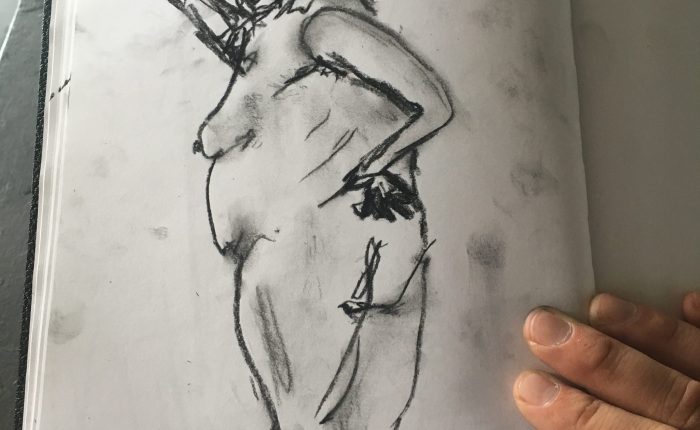
This past Sunday I walked into Porteous once more, this time a student. I carried my drawing pad to a room where I once stood naked. Our model, a woman of perhaps 60, sat casually in the corner. When it was time she stripped her dress and took to the podium like a prizefighter, she the captain, the room her ship. I did my best to anchor her poise and certainty in charcoal, but untrained fingers tripped and fumbled. My renditions were colorless. Only she could do her body justice.

Porteous’ windows and stairwells, however, knew better: Mine was one more act of creation born within her walls. One more mesmerizing eddy.


This column appeared in this week’s Portland Phoenix.

CDS Column: Freedom, Iceland and Campervans

14188326_1604753102884102_6073273407149284030_oIn Iceland it’s easy to rent a camper van.

They are everywhere, little Citroens, Peugeots and Ford Transit Connects rigged with curtains, beds, sinks and stoves. They zip up and down the two-lane highways like miniature delivery trucks pulling over wherever to offer overnight accommodation.

There are bigger Mercedes Sprinter vans and full campers, too, and even rigs that look like a cross between an RV and military transport, go-anywhere-campers equipped with huge tires and undercarriages that ride feet above the road, but it’s the little camper vans that buzz around the desolate isle like bees, their occupants in search of adventure.

And there are adventures to be had in Iceland — glaciers, mountains, geysers and waterfalls, hiking trails and hot springs, whale watches and black sand beaches. The country is crawling with visitors, mostly Europeans but Americans and Canadians, also, there to see volcanoes and ice caps, to ride horses and explore ice caves.

And when the day is over, they pile into their delivery vans, find an empty parking lot and go to sleep.

This isn’t like New Hampshire, where landscape and pine forests might conceal the little red cars with names like “Happy Camper” and “KuKu Camper” pasted on the side. Iceland is a barren place; lava flows coated in emerald moss stretch for miles. It would be easy to veer off the blacktop and just drive almost anywhere, no obstructions for miles. Far-off mountains, plateaus and camper vans dot the landscape, all in clear view. Scenic viewpoints and dirt pull-offs everywhere become impromptu campgrounds each night, three or four cars to a lot.

14124927_1603110626381683_7502455490426160407_oBut no one minds, and no one complains. The police — there are few in Iceland — aren’t about to break up the party. No one is asked to move along. It’s just not a problem, something part of the culture.
And it’s not just the cars: In Iceland you can go almost anywhere. There are trails crisscrossing private land, and tourist sites sit adjacent to homes. Iceland is just open. Anyone can go anywhere. Roads might be posted for vehicles, but walkers can go pretty much anywhere.

The rules are codified in the Icelandic Nature Conservation Act, which stipulates “everyone has the right to travel around the country and enjoy its nature,” according to the website of the Environment Agency of Iceland, “as long as the traveller is tidy and careful not to damage or otherwise spoil natural resources.”

It is “permissible to cross uncultivated private property without seeking any special permission” in Iceland. “Landowners may not hinder passage of walkers alongside rivers, lakes and ocean, or on tracks and paths.”

The result? A country where everyone is free to wander, welcome to roam. Backpackers pitch tents in any open field, walkers wander along exposed clifftops, and car-campers park for the night anywhere they please.

Another result is less concrete by no less real: a feeling of openness, of freedom, of unrestrictedness, a right to be where you are. It is a feeling unfamiliar in America. But in Iceland no one is ever going to ask you to move. They aren’t going to ask you to explain yourself, to demand you produce your ID. The default assumption is you have the right to be where you are, to stand where you are standing and walk where you are walking. Private property is not so private to exclude you access to it.

It is a different version of freedom, one that runs deep on the island of fire and ice. It even extends to the national parks: There are no entrance fees, no gates or rangers. The mountains, waterfalls, natural hot springs and glaciers are all open; there are no ticket sales. Iceland may be expensive — it is an island, after all, and imported goods cost accordingly — but to gain access to the land is free.

Contrast that with our version of freedom, the version so vehemently celebrated in the Live Free or Die state. Here the word means not universal access to the land but the right not to be bothered. “My home is my castle.” “Don’t tread on me.” Freedom is a celebration of a place where I do not have to fear interruption.

Here in New Hampshire — and in America — freedom is a form of protection, a cloak, a warm blanket to wrap ourselves in. It shields us from the darkness and the night, all the terrifying and unwanted things crowding outside our doors.

But freedom doesn’t have to mean that. Iceland lives a different version. Freedom there is not the protection of a closed door but the chance to throw open the windows. It is a chance to abandon home completely and explore the world, to wander and get lost without fear of persecution, to head for the horizon without risk of reprisal. It is the right to exist exactly where you are, to not apologize for standing in place no matter where that place is.

Maybe everyone grows accustomed to the version of freedom they are born into, the version they grow up with. But those camper vans dotting the highway, those hikers pitching tent in empty fields, they represent a different version of the word, some meaning long since forgotten at home. Somewhere between the White Mountain parking passes, the Do Not Enter signs and Echo Lake entrance fees, we got lost. Suddenly, our land wasn’t ours anymore. It was yours, and only yours, to keep free.

But that’s not everywhere. In Iceland, little red cars with beds in the back swarm the land, buzzing their way freely wherever they like. The wind carries them past the lava and snow, over rivers and next to oceans. It’s all free, and it’s theirs. Because “everyone has the right to travel around the country and enjoy its nature.”


This column appeared in the Conway Daily Sun.

CDS Column: A Shot in the Dark

CDS Column: A Shot in the Dark

IMG_7944-1I’m not much of a hunter.

Last year was my first season. I took the hunter safety course in the southern part of the state, a consequence of waiting until the last minute to sign up. But three days of spoon-feeding later — information distilled so simply failure wasn’t an option — I had state approval to walk the woods with a gun.

A hunting license, paired with no idea what I was doing. An old hand-me-down 20-gauge I’d been given in high school would serve as my long sword, and a few stops at the L.L. Bean outlet set me up in blaze orange. I was suddenly poised to kick around the woods with a loaded firearm, crisply dressed and legal but still far from lethal.

So, for my first day out I recruited an experienced friend to lead me in my pursuit of ruffed grouse, an appropriate-seeming challenge. We walked Jackson woods on overgrown logging trails waiting for an explosion of wings or the sound of their distinctive drumming, but we saw nothing. Instead of entering the arena of primordial provider, I took a pleasant afternoon stroll.

Lots of hunting days, my friend explained, are spent like this, more wandering through empty woods than shooting. The gun on those days is a hiking accessory.

Two days later, I was back, this time on my own. A grouse, I was determined, would find its way to my table. I drove the same dirt road looking for deciduous forests along sunny slopes, the sort of place a healthy grouse might opt to make roost. I parked at a pullout, donned my orange vest, loaded my shotgun, laced my boots and set off into the forest.

The explosion caught me off guard, barely five minutes in. A rustle catapulted a bird into the sky, and it streaked from left to right like a football bound for the endzone, wheeling around trees and darting out of sight.

My gun never came up. The lightning bolt erupted faster than I’d imagined, and I stood dumbfounded. This was going to be harder than I’d thought, I realized.

But I’d seen it, noted its general direction. It wouldn’t go far. This was its territory and it’d stick close. So, I followed it, tromping dead trees and downed limbs looking for wherever the football had landed.

Fifteen minutes later, my steps triggered another explosion, this time streaking back right. I’d found it, but again I was flat-footed. My gun hung across my thighs, never approached my shoulder. I didn’t have a chance. This bird was better equipped for survival than I was, and another hour of walking failed to scare it up for a third time. I walked back to my car with nothing but a shotgun in hand.

More wandering in the woods than shooting. It was proving true.

But the shooting was what drew me to the woods, what pushed me to hunt: Not the sport of it, but the killing. Like most of us, I am happy to eat a hamburger or chicken on my Caesar salad. But I have never killed a cow, never chopped the head off a hen. Our food does not demand such commitment. It’s easy to eat steak without ever coming face-to-face with a living, doe-eyed cow, much less having killed one. Our killing today, like so much in our economy, has been outsourced, and not just to the neighborhood butcher.

Not that I’m opposed to the killing. Every carnivore and omnivore does it, all without the guilt humans wrestle with. But our habit is to kill from a distance, to leave it to others while reaping the benefits. It’s a tendency that engenders complacency. Ignorance in the face of death lets things to get messy in dark corners.

Across Idaho, Utah and Kansas vast feedlots line the highway. Herds stand crowded into brown squares stripped bare of grass. Cows stained dark with mud and feces stand resigned to lives hemmed in on four sides, the bovine equivalent of cubicle-bound.

These are not happy cows. They live this way as a consequences of distance, the result of ordering the sandwich without having to raise the meat. It is a system built to maximize efficiency at the expense of humanity (or bovinity perhaps). Bullfights may be decried as cruel, but the ring offers more life than the feedlot, and everyone winds up hamburger by dinnertime.

The factory farm, however, lets us keep our hands clean. The bullfight, meanwhile, occurs center stage in blood red. How curious one is banned while the other is good business.

Hunting was my reckoning. I went into the woods to walk among feedlots, to take my part in the killing up close, a shotgun filling the space of captive bolt pistol, no more handing off the task at reduced rates.

But it didn’t happen. I didn’t even raise my gun, not that day nor any of the following. I wandered woods and watched birds streak like footballs through the foliage, but my reflexes were too slow, my gun never reached my shoulder.

Left to my own devices, I determined, I would starve. Ideas about ethics and ideology would play no part. The only meat would be store-bought, and questions about the veracity of my carnivorous spirit remain unanswered. The ferocious hunter I was not.

It is, however, that time of year again. Lucky for the birds I’m not much of a hunter.


This column appeared in Wednesday’s Conway Daily Sun.

CDS Column: Tourism Tales

CDS Column: Tourism Tales

e5a29-dsc_0019My first real job in journalism was in Berlin, New Hampshire. I was working for the weekly newspaper, tasked with covering a community in sharp decline from its former glory. At one time, Berlin was the third-largest city in New Hampshire. Today, it is saddled with aging infrastructure intended for 25,000 residents, with 10,000 residents footing the bills. Even the paper itself was in decline — there was no office, and I spent most of my time working from the local community college.
But hard times bring their own kind of renaissance. Berlin was stripped bare by the changing economics of the paper industry, but the winnowing distilled the city to its core, discarding those lacking a deep connection to the community and leaving residents with a deep sense of themselves. It was a process that made Berlin both weak and strong, an unlikely place to choose to live yet still a community in the richest sense of the word. I would drive north over the notch each day from the Mount Washington Valley, where nearly everyone hails from away, to a place where few chose to move unless out of options. But those who stayed did so with pride.

At the time, Berlin and the rest of the North Country were searching for whatever was going to support them next. The mills were shuttered and something had to take their place, but what? Prisons and biomass electricity were floated as options but lacked the economic steam to restart the engine.
But what about tourism? No individual North Country town had the assets to constitute a tourist haven, a hired consultant told them, but if the region as a whole banded together, it could be a market. The idea was to link the North Country’s three stately hotels — the Mount Washington, the Mountain View Grand and the Balsams Resort — in a campaign that sold the “Grand Hotels, Grand Adventure” alongside the region’s untrodden natural wonders like lakes, mountains, rivers and forests.

Berlin, however, was always skeptical. Tucked along the Androscoggin, it sits in a pocket removed from the namesake hotels. And, more important, as a blue-collar industrial city, Berlin has always looked at the tourism with suspicion. The stink of the former pulp mill was once the smell of good jobs, and any transition to the low-wage service jobs tourism brings would be a hard one. Mill work offered a middle-class living. The promise of a restaurant job or a gig as a whitewater raft guide is hardly analogous.

But in today’s economy, what other options are there? As rural towns decline, many are looking at their last remaining asset: their picturesque surroundings. North Country tourism moved forward, and Berlin grudgingly went along, never full-bore but willing to play the game.

Then the Balsams shuttered, and with that the trifecta that gave the “Grand Hotels, Grand Adventure” plans resonance came to a halt. How tenuous plans for selling yourself as a destination can be.

But as economic changes sweep across New England, tourism is repeatedly raised as the fallback plan. The mills close? Turn to tourism. The furniture factory goes quiet? Tourism. The industrial sector struggles (in Conway Village, for example)? Tourism.

But does tourism have the strength to take up the slack? As the modern economy recedes from rural areas, can visitors from away fill the void? It’s a question a small town on the Maine coast has been wrestling with, and the answers it has come up with look much like ours.

Boothbay is three hours to the east of us, a coastal community watching its working waterfront empty and its population dwindle. The town is hollowing, so what are they considering? Tourism. Specifically, a proposal to build a retail development complex distinct from the village district, installed around a redesigned traffic pattern that includes a roundabout.

Sound familiar?

Tourism North Conway-style is the new black, a solution for rural economic malaise, a unique intertwining that combines natural beauty with shopping centers in hopes of lifting all boats.

But is the economic mix that keeps the Mount Washington Valley afloat a prosperous one, something worthy of exportation? Is our brand of tourism the one to aspire to? And will it even work? Can the pull of shopping repeal stagnation?

Boothbay is already a tourist town, but it is a one-season destination, packed for July and August and otherwise quiet. It’s a far cry from North Conway, where skiing, foliage, mountains and rivers combine to create four seasons of visitors.

In looking at the attempted copycats, the uniqueness of the Mount Washington Valley stands out: Not every tourist destination can claim a year-round status. Our retail district is an important part of the draw, but its strength is that it exists as an accessory, a complement, the place to drop uninterested family members while everyone else goes skiing, paddling or hiking. It is not the focal point to which crowds flock. It is part of a whole package that makes us a destination. In isolation our retail district is but a shopping mall, and tax-free though it is, it would hardly qualify as a unique draw.

The same is true of any individual ski area, any single mountain. But pair each asset with the river, with the leaves ablaze in October, with sap running in springtime, the Scenic Railroad and the shopping, and suddenly a destination emerges. Suddenly North Conway has its the trifecta of grand hotels.

Not everyone has that. Not every place contains the mix that makes a destination. But as rural economies change, more will be looking toward tourism. The Mount Washington Valley model might find itself played on repeat.


This column appeared in the Conway Daily Sun.

CDS Column: Home on the Road

CDS Column: Home on the Road

14066350_1588101947882551_955321454025779419_oWe are all part of a tribe. Family, community, state, country, it all comes out from time to time.
The Olympics, pitched as an instance of the world coming together, is one example. Countries meet on a global playing field, a time-honored tradition in camaraderie. But what is it really? Competition. Nationalism. The chants of “U.S.A.! U.S.A.!” that fill the stadium are a tribal call, a celebration of divisions, not just unity. It is about us and them, and us. Most of all us.

When Ryan Lochte acts like an imbecile it is not an individual insult but a tribal shame: “the ugly American abroad,” an old tribal stereotype. “He gives our entire delegation a bad name.” How true, a slandering of our tribe.

The Olympics are over. The overt national call has come to a close. But our tribalism has not. It never comes to an end, it is baked into the American fabric.

Some versions are ugly, acute reminders of the stereotype Lochte stands accused of reinforcing: the Ugly American. Those live in the political chants of Americans insistent on restricting entrance or accommodation based on religion. “No more Muslims” has somehow become its own tribal call. Same with “no more immigrants.” This in a country founded by immigrants, built on the principles of religious freedom.

The Ugly American indeed. But tribalism is emotional more than it is logical, it doesn’t always make sense.

Not every vision of tribalism is so bleak, however.

This summer I drove across the United States. First one way, from New Hampshire south to North Carolina, then across to Kentucky, Colorado, Utah, California, then the other, from Washington state back to Colorado and across the long green center to the Mid-Atlantic and the North. Back to New Hampshire, from the Sierras to the Whites, from one unending blue to the other.

In the eastern plains of Colorado I pulled off at a rest stop. It was a warm morning, yellow grass swaying in the breeze. I got out to stretch my legs, hit the bathroom and filled my water bottle. I was roughly 30 hours from home, a long stretch of road before me.

Across the way two men stood outside a green Honda Civic. They were scruffy, their clothes dirty. Modern hippies, maybe homeless, likely both. One had dreadlocks. The other held a leash that ran to a small black dog. Someone had written “Live Free or Die” in white paint along the Civic’s trunk. The dreaded man looked at me, nodded his head, smiled, and then pointed to his license plate with both hands like a maitre d’ showing me to my table: New Hampshire. The Granite State. “We are of the same tribe,” his smile said. I smiled back and waved, then steered toward the highway. Indeed.

A thousand miles later it happened again, this time crossing Ohio: A young man in a low-set Acura slid along the highway. He was driving fast, faster than I would have, weaving his way among the traffic. I saw him approaching in my rearview. I held my course to let him pass.

But when his window was adjacent to mine he slowed. When he paused, I looked. He stared back at me, probably in his early 20s, dark hair, a quintessential college kid. He smiled, raised his fist, quickly pumped it twice and then sped up, crossing back into my lane just in front of me. His plate: New Hampshire, the first I’d seen since Colorado.

What happened next is he slowed.

Not fully, but enough that his message was clear. “Follow me,” he seemed to be saying. “You speed up a little, I’ll slow down a little, and we can band together to cross this Buckeye State highway. As Granite Staters.”

As a tribe.

And here’s the thing: I did. I don’t know why. Maybe it was the months among American foreigners, of being surrounded by cars from California and Colorado plates, Kentucky-ites and Utahns.

The poignant reminder painted in green script and shadowed by a fallen Old Man was enough to push my foot on the accelerator. Maybe it was seeing someone call to me in brotherhood despite having no idea of my name. But cruising along I-70 with no reason to speed up beyond the wave of a non-friend I decided to exceed the posted limit a little more.

I lost him somewhere around Columbus where I-77 turns north. He pulled away amid the congestion, and like a cyclist too weak for the peleton I drifted backward. I didn’t find him again. And I was staying on I-70, driving east to see a friend in Philadelphia, my license plates having left out the full story of my destination. But I still smile as I think of him, a lone warrior whose befriending me stood on nothing but my tags. A true tribal spirit.

Maybe it’s only among foreign shores that such tribalism is born. In the West, highway speed limits read 75 mph. With cruise control pegged at 85 I’d find myself weaving past cars, flying faster than the flow of traffic. Weeks later on my return home through New York the posted limit read 50. I again pegged cruise control at 85, but this time I was the sluggard, a slow motion impediment crawling along the pavement. Empire State plates shot past like I was riding a farm tractor.

And for some reason it felt like home.


This column appeared in today’s Conway Daily Sun.

Traveling.

Traveling.

I have lots of thoughts. They begin with this:

If that is where your heart is, go.
Be prepared to be lonely, hurt, scared, lost, overwhelmed. And go.
If you wander you are accepting instability. It will overwhelm you at times, and it will show you tremendous beauty.
It will remind you of the impermanence of things.
It will give you the space and the emptiness to recall all of your failures, all of your imperfections.
And in facing those you’ll find courage, remember your heart. And you’ll also drown.

It is worth it.
But the things you are seeking to escape will still be there when you return home.
Life is a balance of movement and stillness, and it is in the stillness that we recover our hearts.
But the movement is necessary. It uproots what is otherwise hidden.
So that in stillness you can consider how to move through it.

Your heart is amazing. You are looking for it, trying to learn how to remember yourself. I get that. My heart is the same. All hearts are the same. The base ingredient of this world is love. Beauty and love. But we forget. Sometimes we need to shake things up to remember.
But in truth they are there all along.
You are those things.
In movement and in stillness.
Yet it is so hard to remember.
If you need to go to remember, go.
If you feel going may offer something, go.
And when it is time for stillness again, you’ll know.

It’s already there in you. Perfect, beautiful, amazing. But sometimes we need to remind ourselves.
And sometimes we need to wander.
But there are 1,000 ways to wander.
Some mental, some physical, some emotional.
If you have been in one place for too long, perhaps geography is what needs to change.
But.
A shift in place will not fill that space.
It will distract you for a time, an elongated moment, and then the emptiness will come screaming back.
But wandering will give you fresh eyes to see the connections you already have, the community you left behind.
It will remind you of its richness.
That is its gift.
That is why I say “Be prepared to be lonely, hurt, scared, lost, overwhelmed.”
Leaving will allow you to see what you have with fresh eyes.
But what you feel is missing is not missing.
Nothing is missing. Nothing is ever missing.

You are in this moment now because you need to be. Nothing is missing, nothing is broken. Your heart is reminding you it is up to you to create the world you love, the one that feeds you. Your seeking is about something else, something more elemental.
Movement may be part of recognizing what that thing is.
It may be an important part.
But the struggles inside you are your heart, not your place in the world. The place you are in is exactly the place you are meant to be. It is in recognizing how to move from that place that we get lost.
And in thinking there is a right way to do it.
Go or stay, you are doing what you need to do.
And stripping your heart bare—that is the key. To everything. No matter what.

Do not seek to be happy.
Seek to experience life.
Seek moments like now, where you are wondering what to do.
Those are life’s experience.
They are worth holding onto, moving within, breathing in, swallowing until they drown you, sharing.
You are worthy of sharing. Of being reckless with your heart and your choices. In whatever way fits for you, feeds you.
Love cannot hurt you. It cannot bleed, maim or kill you. It only seems to when we look to bend it to our own purpose, when we seek to control it, to force it to feed only us.
Instead, let your love feed the world. Offer service and kindness to others. That is the key. It is what feeds our hearts.

I cannot do this, what I aspire to do.
So I keep practicing.
You understand. I know you do.
The world wants us to see love as a gift, not a cage, not a binding contract. And yet we fight against the world. So it keeps reminding us.

If I sleep with you I’m going to want to keep you.
And that is OK.
It is the place I am at.
This life is about learning to let go.
So I keep learning.
But I do not start from a place of fear.
I start from a place of recognizing and accepting myself.
And gently leaning into the struggle.
Without judgement for myself.
That is love: a practice ever evolving.
You will slip and fall.
Yet that is not failure.
That is THE POINT.
It is you, you being perfectly you. It is beautiful.

We are all searching for a place to be ourselves, fully ourselves.
Most love is a box.
You are worthy of more than a box. You are worthy of everything.
Can I offer that?
Can you?
No.
But that is what we are yearning to become, where we yearn to be, not some other place but in a space where both we and the world can be ourselves.
So we practice.
Practice however you have to.
Nothing is missing.
We are just confused about love, the world and everything in it.
When someone else hurts you, remember they are confused.
When you fuck up, remember you are confused.
Never understand anything.
Just wonder.
I wonder about you.
It feels good to be wondered about. Amazing.
That is love.

Love everything.
Everyone.
Understand nothing.
Love the world. All of it.
Then you’ll see nothing is missing.
Your job is not to be perfect. Your job is to be a mess. To be confused. Lost. Drowning. Overwhelmed.
To let go of judgement. Of yourself and others.
When someone hurts you, you still love them. Love them fully. Openly. With everything. With your all.
Accept them as perfect, even when they are a mess.
The point isn’t to be happy. The point is to feel: sadness, hurt, loneliness, these are what you are searching for.

Confusing, but worth it.


13497627_1521654587860621_4683670894975756410_o

CDS Column: Reality Politics

Screen Shot 2016-08-10 at 9.41.37 AMDonald Trump’s popularity is sagging.

Or that was the news story in New Hampshire last week: Hillary Clinton’s poll numbers climbed to more than a dozen percentage points over the Republican nominee in the Granite State. True, some respondents voiced concerns about whether the former first lady is fit to be president, but their concerns were eclipsed by the same question regarding Trump.

Polls are only a snapshot though, one of those things that flare up suddenly like wildfire, make their rounds and scorch everything in their path before they disappear.

The only poll that really matters is in November. Everything before then is a cupped ear to the whispering mood of public opinion, a national game of telephone guaranteed to amplify distortion by the time it ends.

And that’s in a normal election year. This year is anything but normal. A little over a year ago, Trump’s candidacy appeared an extension of his television career, a shot of reality TV drama dumped into politics. It didn’t register as real, left no hint it might transform the entire presidential debacle into reality TV.

But maybe it should have. Maybe Donald Trump is the candidate we’ve been asking for all along. Other countries elect leaders in a matter of weeks; American presidential elections last years. They unfold in campaign events choreographed for the cameras and polls that track competitors’ progress like runs per inning in a baseball game. Candidates campaign on words like “Hope and Change” and “Make America Great Again” rather than policy positions, and scandals and affairs unfurl like celebrity gossip. Democracy has turned into daytime drama. No wonder Trump does so well.

Clinton, meanwhile, makes something of an easy villain for the television narrative. Or the persecuted heroine. It all depends which side of the aisle you stand on. She has certainly had to bump her way to the top, and such wrestling leaves bruises. The reality of candidate Clinton is likely somewhere in the middle, however, neither nemesis nor innocent. She is a politician, one with hands dirtied by history.

But as a former senator and secretary of state she knows the system and has been an integral part of it. Is that what we need at this moment, one of the cooks long in the kitchen?

No? OK, then consider the alternative.

What a mess we’ve gotten ourselves into. Anything but a normal election year. A frequent complaint of America’s two-party system is that it leaves voters to choose between the lesser of two evils. But not this year. This year, the choice is between the distasteful and the absurd. Would you prefer the consummate politician or the TV host? It brings to mind the famous Winston Churchill quote: “Democracy is the worst form of government, except for all those other forms that have been tried from time to time.”

But Churchill never saw democracy made for television. Celebrity democracy. Production democracy. Campaigns run for the cameras, voters transformed into consumers, candidates as packaged products rather than people. It’s democracy’s latest form, and the worst possible.

It is distasteful, but it’s definitely ours.

It often appears America is prepared to “snap out of it,” ready to let go of its fetish with things flashy and loud in favor of substance, but it never quite happens. Politics is just the latest version.

Remember the days immediately following 9/11? Journalists left behind celebrity-styled reporting to reorient readers and viewers to America’s place in a complex world. And for a brief instant we cared. We spent time listening, learning, treating our news like information rather than entertainment.

It happened again in 2008 after the financial meltdown: As Americans watched their banks fail and their investments disappear they stopped watching financial news modeled on Sportscenter and started looking for stories and sources that actually explained what was happening. Again, for the briefest moment, the character of the conversation changed.

Perhaps we are in another of those moments now. The two major party candidates are both deeply disliked, and yet they rose to the top. Many Americans, including those who took part in the nomination process, are dissatisfied. We watched as one candidate was considered for investigation by the FBI and the other got in a public tussle with the family of a fallen soldier. This does not seem American democracy’s finest hour.

When the dust clears, once either Trump or Clinton is president, will we reflect on this election? Will we look at our political conversation the way we looked at our approach to foreign affairs and finance in those moments after more immediate disasters? Will we have the wisdom to revisit our celebrity fetish, to let go of the flash version of modern democracy in favor of something more concrete, long term?

Or will the cleared dust mark the moment we forget about all this? Will we never ask what went wrong, what led to a race between an obviously unfit candidate and one so divisive?

If our recent past is a guide, then we are in trouble: The lessons of history are able to blind us, but only momentarily. We reverted to national conversations devoid of historical perspective in the post-9/11 days. We returned to the “too big to fail” practices of the pre-meltdown era. Our slow-moving political disaster, one without the same immediacy as those, will likely suffer the same fate. Reinvent ourselves? No, not so long as our elections are entertaining, like game shows with only the slightest twist from “Who Wants To Be A Millionaire.” Or “American Idol.”

Or “The Apprentice.”


This piece appeared in today’s Conway Daily Sun.

CDS Column: Reflections Abroad

CDS Column: Reflections Abroad

Belize-1050964“Where are you from?” He was wearing a collared shirt, long pants with suspenders and a wide-brimmed woven hat. I sat next to him, sweating through shorts and a tee shirt in the Belizean heat.

“The U.S.,” I said. “New Hampshire.”

“Where is that? Higher than Pennsylvania?”

“Yes, above Pennsylvania. Near Boston.”

“Does it touch Canada?”

“Yes.”

“Huh,” he said. “Is it cold there?”

He spoke with precision, like he was reading off a script. He addressed me directly, never breaking eye contact. His name was Elias. He was a Mennonite, a Christian sect similar to the Amish common to Belize. We were riding south out of Belmopan, the capital city, in a retired school bus with brown vinyl bench seats and windows that only slid halfway down. I was headed to the Caribbean coast. He was going home.

“It is cold,” I said. “It even snows. But not right now, only in winter.”

“I’ve never seen snow,” he said. “I couldn’t handle it.”

He smiled. He was 24, a farmer and one of 10 children. He lived with his family in central Belize, but he’d visited the United States a handful of times and had dual citizenship. His father left their church in Pennsylvania decades ago in a return to his core beliefs. His American community was using tractors and driving cars, Elias said, slipping towards modernity, so his father and a selection of others moved south, way south. They now farm tomatoes and peppers and corn, he said, in a community of 15 families.

“Did you go to Belizean school?” I asked.

“We have our own schools,” Mennonite academies separate from the national system, he said. “But we only study until eighth grade.” After that, Mennonite children become farmers.

“Do you ever feel like you are missing out? Ever think maybe technology and education and everything might be better?”

His answer was unhurried. “No,” he said. “I’d like to know more geography, to understand the layout of things better, but that’s about it. I don’t follow the world, really. And the pieces I hear about don’t make me want to take greater notice.”

“Explain that,” I said.

“You have an election coming up, right?” he said.

“Yes,” I said, suddenly sullen.

“I don’t know much about it,” he said, “but it seems a mess. I don’t think I want a bigger part of that world.”

The bus lurched. I sat quiet. He had a point.

That’s why I love travel: It’s a mirror, a necessary step back for reflection. Only from a distance can you get a full view of yourself.

As a country, it’s no different — without adequate space it can be impossible to formulate an accurate view of your policy, your politics. Only in leaving can you see more clearly.
Another glimpse came from Karina, a Belizean mother of three. Every morning she sat outside the school. Inside, American high school students ran a summer camp for Belizean middle and elementary kids. Karina’s daughter was in the youngest class, made up of kindergarten and first graders. She would bawl inconsolably if Karina wasn’t nearby, so each day Karina sat at the picnic table outside the classroom.

Karina was black. She had grown up in central Belize not far from the school, and for the last two years she’d attended college in America.

“What was it like,” I asked her, “going to the U.S.?”

“It was wonderful,” she said, “but hard.” She wasn’t ready for the racism, she said. As a Belizean she hadn’t developed the thick skin required of a black woman in America. Her culture is multiracial, but it lacks the divisions she encountered in the U.S. Encountering the stinging blows of prejudice as a young adult shocked her. She was unprepared for it. She would cry a lot, she said, and was hurt easily.

“I didn’t expect that,” she said. “I was happy to go to an American university, but it’s really nice to be back.”

These moments give pause. They are brief glimpses into the mirror of ourselves, of the country we have built: A Mennonite man with a middle school education who sees our politics clearly enough to know he wants no part in them. A young mother whose experience with American racism left her in tears. These versions of America grow fuzzy to those of us who live them every day. They seem impossibly entrenched and complex up close. But from abroad they look different. With the benefit of distance they seem both larger, more intertwined in the American fabric, and also smaller, more isolatable, more feasible to face head on.

At home, issues of race and politics seem too overwhelming to be changeable, too thickly American. But from 1,000-mile shores they become remote enough to appear moveable. They seem again to be in our hands, something within American control, within the control of the citizens who make up this country. They are ours to manipulate and eradicate if we chose. Racism is not part and parcel to this nation. The politics of money, fear and limited choice is not an inexorable American parasite that cannot be purged without risking the host. These are momentary glimpses of our country at this moment, they are not what define it.

But to change them, first we have to look in the mirror. First we have to decide if we like what we see.


This piece appeared in the Conway Daily Sun.