CDS Column: Home on the Road

CDS Column: Home on the Road

14066350_1588101947882551_955321454025779419_oWe are all part of a tribe. Family, community, state, country, it all comes out from time to time.

The Olympics, pitched as an instance of the world coming together, is one example. Countries meet on a global playing field, a time-honored tradition in camaraderie. But what is it really? Competition. Nationalism. The chants of “U.S.A.! U.S.A.!” that fill the stadium are a tribal call, a celebration of divisions, not just unity. It is about us and them, and us. Most of all us.

When Ryan Lochte acts like an imbecile it is not an individual insult but a tribal shame: “the ugly American abroad,” an old tribal stereotype. “He gives our entire delegation a bad name.” How true, a slandering of our tribe.

The Olympics are over. The overt national call has come to a close. But our tribalism has not. It never comes to an end, it is baked into the American fabric.

Some versions are ugly, acute reminders of the stereotype Lochte stands accused of reinforcing: the Ugly American. Those live in the political chants of Americans insistent on restricting entrance or accommodation based on religion. “No more Muslims” has somehow become its own tribal call. Same with “no more immigrants.” This in a country founded by immigrants, built on the principles of religious freedom.

The Ugly American indeed. But tribalism is emotional more than it is logical, it doesn’t always make sense.

Not every vision of tribalism is so bleak, however.

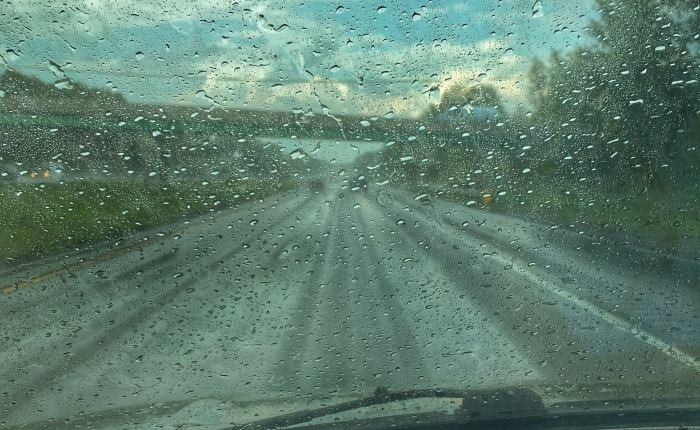
This summer I drove across the United States. First one way, from New Hampshire south to North Carolina, then across to Kentucky, Colorado, Utah, California, then the other, from Washington state back to Colorado and across the long green center to the Mid-Atlantic and the North. Back to New Hampshire, from the Sierras to the Whites, from one unending blue to the other.

In the eastern plains of Colorado I pulled off at a rest stop. It was a warm morning, yellow grass swaying in the breeze. I got out to stretch my legs, hit the bathroom and filled my water bottle. I was roughly 30 hours from home, a long stretch of road before me.

Across the way two men stood outside a green Honda Civic. They were scruffy, their clothes dirty. Modern hippies, maybe homeless, likely both. One had dreadlocks. The other held a leash that ran to a small black dog. Someone had written “Live Free or Die” in white paint along the Civic’s trunk. The dreaded man looked at me, nodded his head, smiled, and then pointed to his license plate with both hands like a maitre d’ showing me to my table: New Hampshire. The Granite State. “We are of the same tribe,” his smile said. I smiled back and waved, then steered toward the highway. Indeed.

A thousand miles later it happened again, this time crossing Ohio: A young man in a low-set Acura slid along the highway. He was driving fast, faster than I would have, weaving his way among the traffic. I saw him approaching in my rearview. I held my course to let him pass.

But when his window was adjacent to mine he slowed. When he paused, I looked. He stared back at me, probably in his early 20s, dark hair, a quintessential college kid. He smiled, raised his fist, quickly pumped it twice and then sped up, crossing back into my lane just in front of me. His plate: New Hampshire, the first I’d seen since Colorado.

What happened next is he slowed.

Not fully, but enough that his message was clear. “Follow me,” he seemed to be saying. “You speed up a little, I’ll slow down a little, and we can band together to cross this Buckeye State highway. As Granite Staters.”

As a tribe.

And here’s the thing: I did. I don’t know why. Maybe it was the months among American foreigners, of being surrounded by cars from California and Colorado plates, Kentucky-ites and Utahns.

The poignant reminder painted in green script and shadowed by a fallen Old Man was enough to push my foot on the accelerator. Maybe it was seeing someone call to me in brotherhood despite having no idea of my name. But cruising along I-70 with no reason to speed up beyond the wave of a non-friend I decided to exceed the posted limit a little more.

I lost him somewhere around Columbus where I-77 turns north. He pulled away amid the congestion, and like a cyclist too weak for the peleton I drifted backward. I didn’t find him again. And I was staying on I-70, driving east to see a friend in Philadelphia, my license plates having left out the full story of my destination. But I still smile as I think of him, a lone warrior whose befriending me stood on nothing but my tags. A true tribal spirit.

Maybe it’s only among foreign shores that such tribalism is born. In the West, highway speed limits read 75 mph. With cruise control pegged at 85 I’d find myself weaving past cars, flying faster than the flow of traffic. Weeks later on my return home through New York the posted limit read 50. I again pegged cruise control at 85, but this time I was the sluggard, a slow motion impediment crawling along the pavement. Empire State plates shot past like I was riding a farm tractor.

And for some reason it felt like home.


This column appeared in today’s Conway Daily Sun.

Traveling.

Traveling.

I have lots of thoughts. They begin with this:

If that is where your heart is, go.
Be prepared to be lonely, hurt, scared, lost, overwhelmed. And go.
If you wander you are accepting instability. It will overwhelm you at times, and it will show you tremendous beauty.
It will remind you of the impermanence of things.
It will give you the space and the emptiness to recall all of your failures, all of your imperfections.
And in facing those you’ll find courage, remember your heart. And you’ll also drown.

It is worth it.
But the things you are seeking to escape will still be there when you return home.
Life is a balance of movement and stillness, and it is in the stillness that we recover our hearts.
But the movement is necessary. It uproots what is otherwise hidden.
So that in stillness you can consider how to move through it.

Your heart is amazing. You are looking for it, trying to learn how to remember yourself. I get that. My heart is the same. All hearts are the same. The base ingredient of this world is love. Beauty and love. But we forget. Sometimes we need to shake things up to remember.
But in truth they are there all along.
You are those things.
In movement and in stillness.
Yet it is so hard to remember.
If you need to go to remember, go.
If you feel going may offer something, go.
And when it is time for stillness again, you’ll know.

It’s already there in you. Perfect, beautiful, amazing. But sometimes we need to remind ourselves.
And sometimes we need to wander.
But there are 1,000 ways to wander.
Some mental, some physical, some emotional.
If you have been in one place for too long, perhaps geography is what needs to change.
But.
A shift in place will not fill that space.
It will distract you for a time, an elongated moment, and then the emptiness will come screaming back.
But wandering will give you fresh eyes to see the connections you already have, the community you left behind.
It will remind you of its richness.
That is its gift.
That is why I say “Be prepared to be lonely, hurt, scared, lost, overwhelmed.”
Leaving will allow you to see what you have with fresh eyes.
But what you feel is missing is not missing.
Nothing is missing. Nothing is ever missing.

You are in this moment now because you need to be. Nothing is missing, nothing is broken. Your heart is reminding you it is up to you to create the world you love, the one that feeds you. Your seeking is about something else, something more elemental.
Movement may be part of recognizing what that thing is.
It may be an important part.
But the struggles inside you are your heart, not your place in the world. The place you are in is exactly the place you are meant to be. It is in recognizing how to move from that place that we get lost.
And in thinking there is a right way to do it.
Go or stay, you are doing what you need to do.
And stripping your heart bare—that is the key. To everything. No matter what.

Do not seek to be happy.
Seek to experience life.
Seek moments like now, where you are wondering what to do.
Those are life’s experience.
They are worth holding onto, moving within, breathing in, swallowing until they drown you, sharing.
You are worthy of sharing. Of being reckless with your heart and your choices. In whatever way fits for you, feeds you.
Love cannot hurt you. It cannot bleed, maim or kill you. It only seems to when we look to bend it to our own purpose, when we seek to control it, to force it to feed only us.
Instead, let your love feed the world. Offer service and kindness to others. That is the key. It is what feeds our hearts.

I cannot do this, what I aspire to do.
So I keep practicing.
You understand. I know you do.
The world wants us to see love as a gift, not a cage, not a binding contract. And yet we fight against the world. So it keeps reminding us.

If I sleep with you I’m going to want to keep you.
And that is OK.
It is the place I am at.
This life is about learning to let go.
So I keep learning.
But I do not start from a place of fear.
I start from a place of recognizing and accepting myself.
And gently leaning into the struggle.
Without judgement for myself.
That is love: a practice ever evolving.
You will slip and fall.
Yet that is not failure.
That is THE POINT.
It is you, you being perfectly you. It is beautiful.

We are all searching for a place to be ourselves, fully ourselves.
Most love is a box.
You are worthy of more than a box. You are worthy of everything.
Can I offer that?
Can you?
No.
But that is what we are yearning to become, where we yearn to be, not some other place but in a space where both we and the world can be ourselves.
So we practice.
Practice however you have to.
Nothing is missing.
We are just confused about love, the world and everything in it.
When someone else hurts you, remember they are confused.
When you fuck up, remember you are confused.
Never understand anything.
Just wonder.
I wonder about you.
It feels good to be wondered about. Amazing.
That is love.

Love everything.
Everyone.
Understand nothing.
Love the world. All of it.
Then you’ll see nothing is missing.
Your job is not to be perfect. Your job is to be a mess. To be confused. Lost. Drowning. Overwhelmed.
To let go of judgement. Of yourself and others.
When someone hurts you, you still love them. Love them fully. Openly. With everything. With your all.
Accept them as perfect, even when they are a mess.
The point isn’t to be happy. The point is to feel: sadness, hurt, loneliness, these are what you are searching for.

Confusing, but worth it.


13497627_1521654587860621_4683670894975756410_o

Belize’s Tired Tourism

Belize’s Tired Tourism

Belize-1050971Storms roll in each morning just after sunrise. The thunderclouds sweep the ocean and crawl up the beach, prolonging the night and laying soak rain across the sand, palm trees, patios and walkways. But it never lasts, the Caribbean sun quickly burns through and turns the air into steam. Placencia summers are sticky and dense.
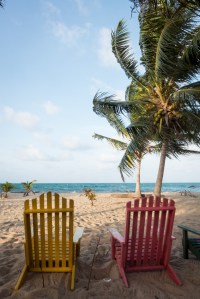
The town juts out like a thumb, surrounded on three sides by water. It’s a town of sand and ocean breeze and falling coconuts, a Belizean paradise. Pink and yellow cabañas dot the beachfront. A quiet walkway parallels the sea. Shops selling conch shell jewelry abut seafood stands. Placencia is the real thing, the kind of sleepy backwater escape first-worlders dream of.

And so they’ve come. Tucked among the shops and stands and bungalows are restaurants advertising happy hour drink specials, pizzas and ocean views. ReMax realty signs dot empty lots proclaiming the ideal locations for vacation homes. Tour operators bark snorkel excursion and scuba trip information in the streets. Everywhere the signs of a bustling tourist economy call.

But if that bustle marks opportunity, it is growth that leaves Belizeans behind. The realtors are expatriates, as are most restaurant owners, tour operators and even many shop and stand owners. The face in the window may be Belizean, but usually the owner behind them is not.

“They want to own everything,” one Belizean food stand owner told me, “and to tell us what to do.”

Belizeans smile and don’t let on about the tension, but if you ask they’ll tell you: the best of their country feels taken from them. Expatriates are the new colonialism. They own the resorts and restaurants and tourist businesses. They buy the land for cheap, developed it in ways no local could afford and then hire on the former owner at sharecropper wages. They sell to tourists and export the profits, leaving Belizeans marginalized, pushed aside in their own country and unable to afford a home in the towns they grew up in.

But no one will tell you that. Everyone is too friendly, too polite. You have to ask.

It’s not a dissimilar story to thousands of other tourism destinations, the skyrocketing real estate prices and the foreign investors/developers. But in Belize for some reason it feels different. The expatriate-owned properties are billed as ecoresorts, a term that conjures images of local cooperatives, not exploitive practices. That such sustainability-focused businesses are environmentally conscious but socially bereft (or worse, intentionally abusive) seemingly runs counter to their mission. The idea of an expatriate-owned business helping elevate overall economic standards seems an empty one.

Without the infrastructure built by such investment, however, there wouldn’t be much in Placencia. The tourism economy was founded by those expatriates, even as they changed it. The economic prosperity of the peninsula is intricately tied to those foreign-owned shops, restaurants and hotels.

How do you balance growth with economic prosperity? How do you ensure locals have access to the kinds of jobs that feed a future? Is it a business owner’s responsibility? Government?

Owners, it appears, aren’t doing it, but at the suggestion of government Belizeans laugh. “They’re as bad as the foreigners,” they say. Politicians in Belize are notoriously corrupt, and everyday Belizeans know better than to look to them for relief. If a big house on the beach isn’t owned by an expatriate it’s owned by a government official. The path out of poverty, it seems, lies elsewhere.

Perhaps it is in education, notoriously underfunded in Belize but a possible path to something other than displacement and servitude. The cost of high school, however, is borne by families, to say nothing of college. In a country of 300,000 it’s hard to spread the cost of public necessities. College is not in everyone’s future.

These are the quandaries hidden beneath white sand and rum drinks. They are the veiled problems of paradise. Belizeans know that Caribbean destinations are only desirable if they are warm, inviting, happy, and so they remain beneath the surface—to do otherwise would threaten the few economic scraps available. So any tourist with $40 U.S. can land a cabaña on the beach and stare at the stretching blue Caribbean, sip rum drinks near the lap of waves on sand.

But that is the tourist economy today—one of displacement and denial, an economic scramble that leaves behind more people than it elevates.

Welcome to Belize. Welcome to the world.

Belize-1050964


Ended Hiatus

Ended Hiatus

13730801_1553661621326584_6611188446585815400_oOK. So I’ve been working in Belize for the last month, which has meant I’ve not been keeping up with my posting duties. Internet access was temperamental, time was limited, etc., etc. But I fly back to the U.S. in a few days (currently hanging out on one of the most beautiful beaches in the world), back to my car (parked just north of Seattle), and figure out whatever is next.
And honestly I don’t have any real idea what is next for me. I had thoughts of staying out west, but over the last month a number of things have been calling me back to New England. Not enough that I know I’m heading directly there, but I’m looking harder at a handful of opportunities near what has long been my home.

It feels good to have that pull. Belize has been amazing—working with American high school kids running a summer camp for Belizean middle and elementary students focused on improving their literacy skills. It was a time out, time off from the road, from climbing and adventure, time for human contact and connection and cultural exchange.

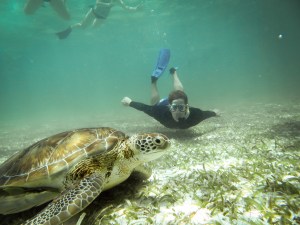
Belize-3503And it was an ecological exploration. Belize is home to the second longest barrier reef in the world, multiple ecosystem zones, caves, jungle, mountains and savannah. Iguanas crouch in the trees, tarantulas roam the forest floor, toucans haunt the air. I saw a manatee, two Harpy Eagles, a jaguar, held a boa constrictor, swam with sea turtles, pondered over leafcutter ants and got bitten by thousands of bugs. It was an awesome amazing trip, one I’ll be writing about more. But before that happens I wanted to share a video. My dance with sea turtles reminded me of it. At 2:25 is the job I think is probably most interesting in the world: sea turtle wrestler. Heck yeah! Lifetime aspirations! 🌊🐋
Flipping Sharks

Flipping Sharks

IMG_8391The Washington state ferry from the San Juan Islands to the mainland was the end of the trip. It’d been a day of chasing whales—an orca museum combined with Lime Kiln State Park, the best spot in the world to see whales from land. We did not, however, see any whales. Tim, Lev (Tim’s two-year-old son) and I had made a day of it, but now we were on our way back to Mount Vernon, Wash., and Tim’s farm.
Then an announcement came over the loudspeaker: “There will be a presentation on whales at the rear of the boat. Anyone interested is welcome to attend.”

Whales. I’d be there.

The naturalist presented to several rows of kids and families, but the kids quickly lost interest. I stayed, peppering her with questions about orcas. And she told me something peculiar. I was asking if changing ocean temperatures were causing more interactions between local orcas and great white sharks, and if so what was the outcome. “It’s pretty remarkable,” she told me, “they are meeting, and they fight. And when they fight the orcas win.”

“The orcas are pack hunters,” she said. “The sharks are loners. The orcas have learned that if they can flip the sharks upside down they essentially can put them to sleep. Killer whales are smart enough to take advantage of that fact. They’re pairing up and using the technique to put the sharks to sleep. Then they drown them.”

Whale versus shark, the whale wins. Awesome. And what’s this about putting sharks to sleep?

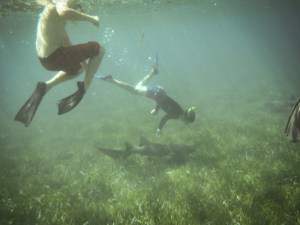
Less than a week later I found myself in Belize, snorkeling “Shark Alley” on the second longest barrier reef in the world. The sharks there are nurse sharks, a tame cousin to the white shark. Our guide Carlos took the opportunity to demonstrate exactly what the naturalist 2,600 miles a way had explained—he swam directly over a 6-foot nurse shark, put one hand on its back, another on its belly, then rolled. Instantly the shark went limp. He carried it in his arms and swam it over to us, let us pet it and touch its skin.

I wanted to try. I could see them swimming just six feet below, brown arcing bodies in the reeds. I dove down several times before I could work up the nerve to touch them. But then I went after one, put my hand about where its shoulder blades would have ben if the man-sized shark were human. Its skin was course as sandpaper. I swam with it, tracing its path, one hand on its back, then kicked myself down close and slid the other hand under its belly. We were tight together then, the shark and I. I rolled.

The shark rolled with me, and as it flipped and its belly rose toward the surface it went limp. I held it close, kicked my way upward, cradling the ancient beast in my arms. It felt about like holding a worn out Rottweiler in my arms—things were fine, but how long would they stay that way? After a few kicks I rolled the shark back over. It flicked its tail and instantly resumed swimming. I released my arms. It carved away.

I did this three times. One of the group members caught it with a camera.

Belize-0986

Belize-0987

Belize-0988

Belize-3589

It was amazing to be so close. I have since learned that what our guide was doing is frowned up, and that I shouldn’t have followed his example. I probably could have guessed that had I thought about it, but I didn’t. I looked to him for direction, and when I saw an opportunity to do something that scared me, something that seemed both amazing and stupid at the same time, I swam at it full steam. Literally. And so I got to carry a shark in my arms. Life is an experience and that was a unique one, even if it was foolish, illicit and perhaps damaging. Now I know. So don’t flip sharks. But it works. Orcas do it, and I have too.

IMG_8393

Shattered Glass Beach

Shattered Glass Beach

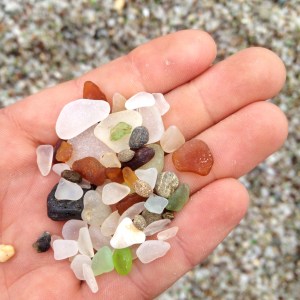
IMG_8192.JPGThe idea sounded cool when I read about it a month ago: a beach made of sea glass, stones replaced with ground shards of white, green and brown. Rare specks of blue and rose radiating in the sun, waves lapping the shore, giving the glass below the waterline an even more powerful sense of iridescence. Glass Beach, Fort Bragg, California. I wanted to see it.

I left Oakland on Saturday, the end of a month sleeping in beds (none of them mine and in four different states, but still). I had two weeks to get up the Pacific Coast to Seattle, where I’ll fly south at the end of the month to Belize. The Plan: surf, climb, paint, read, write and flyfish my way through Northern California, Oregon and Washington before my flight. See beautiful things, beautiful places. Maybe fall in love with one of them and decide to live there forever. You know, the usual roadtrip stuff.

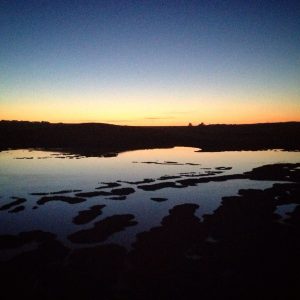
I crossed the Bay Bridge and the Golden Gate, aimed for Point Reyes National Seashore, where two lanes snake across highlands, surrounded by ocean on all sides. It juts into the Pacific, America’s left-coast thumb. Stiff breezes rake over grasslands and grazing cows, an unceasing roar from the north. Sand beaches stretch for miles, some lined by dunes, others by cliffs. Elephant seals bask in the sun. Seabirds glide on endless thermals overhead.

13497627_1521654587860621_4683670894975756410_oI drove to North Beach and watched waves pound the shore. It was a desolate place. I wanted to stay, to take in the starkness. The sun had warmth, but not enough to fight the wind. I pulled on my jacket, wandered down to the lighthouse at the point, then over the peninsula to a protected harbor. All of it wild, lonely and exposed.

I spent the night in a boat launch parking lot. Coyotes yipped in the dark; the wind carried their calls. I read by headlamp until I couldn’t keep my eyes open. I went to sleep still wearing my jacket.

The next morning I work up and drove the beach. The wind had died, the ocean was calmer, more orderly, but breaking against the sand. It would not be a surfing day.

Or so I thought. I got back to my car and saw a slip of white under the wiper. “Live Free or Die. 🙂 🙂 :-)” it said. It was a note scrawled in pen on the back of a paper receipt. “I moved here 21 years ago from North Hampton. No more ice cream headache! Come over to Drake’s Estero, wind will be offshore. Enjoy! Tony Szabo”

Surfing beta. The board strapped to the roof had given Tony the message I might need some direction about conditions. He was right. The estuary—I’d seen signs for it.  I climbed back into the Element and headed that way.

I came to Drake’s Beach and watched lazy rolling waves cut towards shore. The swell came north, the wind pushed its way south; a perfect combination. Small, but enough. I grabbed my board and wetsuit and headed for the water.

I’m not much of a surfer, the Pacific is a different animal than the North Atlantic, but it was fun, friendly but cold. After an hour I climbed out shivering, my hands numb. I fumbled my way out of my wetsuit, changed and headed north again.

Dinner, a podcast and a map later I knew I had 100 miles to go Glass Beach. I would be there by the morning.

IMG_8191.JPGThe morning was cloudy when I pulled into Fort Bragg, the ocean calm. I turned left of Highway 1 and parked, following signs to Glass Beach. “Please leave all cultural artifacts,” a note said. I descended cabled stairs to the shore.
And there it was—a beach of mostly seaglass. People were everywhere picking their favorite pieces, dropping them in bags, digging through the glass, mostly white, green and brown, the blues and reds long ago picked out.

This beach is a former dump. Until 1959 residents tossed all manner of trash off the cliff, and over the decades the ocean transformed much of it. Now it’s a park.

But a park with a past. Dig through the glass for a bit and your hands turn dark, grimy. The ocean did what it could to wash this beach clean, but even a half century of rinsing cannot rub the trash truly clean. Instead of a glow, the beach is a dull hue, still has the feel of a refuse heap. Down at the waterline it’s better, with the ocean actively rinsing, but even there bits of metal and old springs show through. The garbage dump is still home to garbage.

A few miles in either direction are more beaches, endless beaches. They are without glass, but they are also without the grime. The waves lap and coat them with salt, nothing more. These stretch in either direction, south to Mexico, north to Canada, broken by more cliffbands than roads. I went looking for the glass, for the one expired trash dump on 3,000 miles of beautiful coast. Thank goodness I made some stops along the way. I will be making many more.

13475114_1520378547988225_5068683986955992495_o

Seeing Bright Spots in the Sea

Seeing Bright Spots in the Sea

IMG_8135.JPGIt can be tough to read news about the environment. With oil spills and ocean acidification and coral bleaching and mass extinctions and rising temperatures it can seem overwhelming, just easier to just put your head down, worry about yourself and ride the doomed Earth into oblivion.

But that is only half the story. The other half is awesome.

Like this: the California Academy of Sciences announced yesterday they are partnering with coral reef conservation group SECORE to plant millions of concrete, reef-attaching “seeding units” in damaged reefs to “restore dwindling reefs with sexually-produced corals on a meaningful scale,” according to a statement on their website.

The project is part of an $8.5 million investment Cal Academy is making in coral reef research and restoration. “We’re not losing any time in our continued fight to understand, protect, and restore these majestic ecosystems,” Bart Shepherd, director of the Academy’s aquarium said.

That’s in San Fransisco. And there’s more. An article published on the Atlantic Magazine’s website on Wednesday profiles an Australian scientist who has been studying coral reefs and discovered that many of the world’s reefs in better shape than might be expected have frequent human interaction.

Contrary to what you might think, the bright spots weren’t all remote reefs, where humans were absent or fishing was banned. Instead, most were home to lots of people, who rely heavily on the corals and who frequently fished. They weren’t leaving the corals and fish alone; instead, they had developed social norms and institutions that allowed them to manage the reefs responsibly.

The study offers the evidence that it is possible for humans and reefs to coexist without the inevitable destruction of the coral.

At is an unrelated video about a chance discovery that sped up the growth cycle of slow-growing corals in Florida. It may be possible, it seems, to restore not just fast-growing corals but slower-growing species as well. More reason for encouragement.

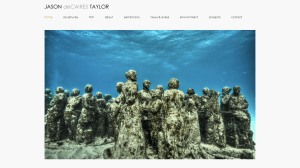
Screen Shot 2016-06-17 at 1.24.48 PMThen there is the work of Jason DeCaires Taylor, a sculptor who creates stunning installations underwater out of coral-accepting cements. His beautiful creations sit on the sea floor and transform over time. They become an intermixing of human and natural creation. His sculptures turn into otherworldy attractions that highlight the plight of the oceans, while at the same time offering sealife a space to thrive.

Taylor talked about his work on the TED stage:


Lastly, there is Norton Point, the Massachusetts-based company tackling the problem of ocean microplastics with capitalism. They are turning trash from the sea into something useful: sunglasses.

For every product we sell, even those not made from ocean plastic, we are committing to you to clean-up one pound of plastic from the ocean. In addition, we have chosen to give back 5% of net profits to global clean-up, education, and mediation practices.

Their Kickstarter campaign has exceeded its $37,000 goal by more than $5,000 this week, and there are still 20 days left until it finishes. An excellent example of how the environment inspires defender/entrepreneurs.

So instead of getting discouraged, instead of losing hope for the future of the planet and the environment, look for the bright spots, the many examples of people and organizations pushing for positive change. Look at the amazing discoveries they are making, the incredible support they are finding. Inspiration builds upon inspiration, success from success. Maybe it’s even time to join.


Climbing for Brian

Climbing for Brian

10553818_903535722993720_2619385696188103555_oTwo years ago my friend Brian died. He was climbing on Cathedral Ledge, doing laps on a route I’ve been on countless times before. I was in Peru at the time, a long way from home, a long way from the people I turn to when things get difficult.

I had plans to spend eight months in South America, plans to bounce from Peru to Chile to Argentina and all over and up to Central America. But it didn’t fit. After a month traveling in Chile I flew home.

Instead I went climbing: Red Rocks, Zion, Eldo, Rifle. Looking Glass. Rumbling Bald. The Obed. I wandered through 14 states over five weeks, clipped bolts, jammed cracks and hung on gear. I got scared. I got lost. I fell. I saw old friends and made new ones. I took the type of trip Brian loved taking. He and I had discussed a trip to the desert or to Yosemite, though it never happened. But I felt a connection to him out there, a recognition that “gone” and “with us” can be indistinct.

A month ago was Brian’s birthday. Facebook was kind enough to remind me. It popped up in my feed like he was still here, like I should send him a card or a gift. But he’s not.

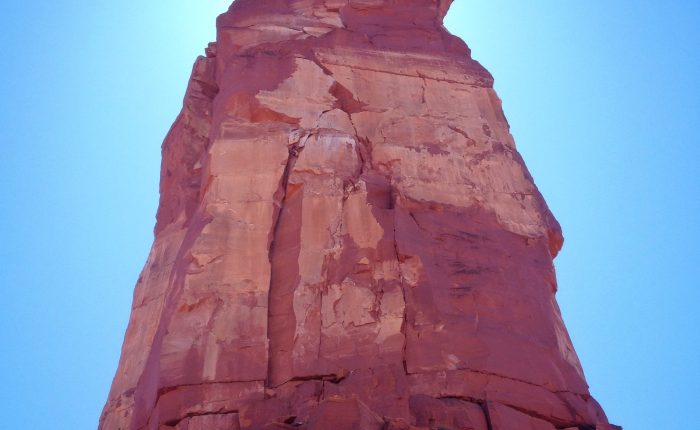
13172996_1480482645311149_7238612379710389030_oA few weeks earlier I made it to one of the desert towers Brian and I talked about. The North Face of Castleton is a beautiful 5.11- up steep orange rock. My friend Jim just happened to be in Moab at the same time as me, and it was his birthday. He put a post on FB asking if anyone wanted to climb the next day. “Seriously?!” I said. “You’re in Moab?? Let’s climb Castleton!”

We met the next morning around 10 a.m. and drove to Castle Valley. It was noon by the time we reached the route, but at only three pitches we figured it would go quick. I took the first lead, a steep blue Camalot crack that ended in thinner cracks through a patch of white calcite. Two guys were repelling off as I started up. “Mountain Project says you need 6 number threes,” one of them said. We had two. Jim looked at me. “Maybe leapfrog that one below you?” I heeded his advice.

But the crack was straightforward, the climbing uncomplicated. I jammed and I jammed, making quick progress. I hit the calcite rested and laughing, enjoying the movement and exposure. No wonder Brian so loved such places—the red of the sandstone gleamed, and every jam felt handcarved. This was climbing at its best.

13147451_1480754145283999_7137182934756421799_oJimmy followed, pushing his way up the final exposed crux with a grunt, and we scampered up two more pitches, both excellent.

From the summit the Valley ran off in every direction, a landscape carved out from the red stone with snow-covered mountains as a backdrop. It felt like paradise, God’s country, the kind of place Brian would smile at.

There is a photo of Brian taken on top of another tower. He is sitting, his legs outstretched, writing in the summit register. A valley spills out below him. The sun is high, the sky blue. It looks peaceful. This is how I like to remember him. He was joyful, at ease.

It’s been nearly two years since Brian fell. I’m on another trip, roughly 20 states in, another handful of climbing areas. There has also been surfing and freediving and random beach visits. And yet this still feels like an homage to him. He keeps popping up. I started this post a year and a half ago, while I was on that first trip. It came back to me today, begging to be finished. I couldn’t ignore that call.

There is a sense of being lost in wandering, but there is also an open door, a chance to be reminded of people, events, places that otherwise fall into darkness. So quickly we forget, but wandering we remember. Some of that can be painful. Other parts are beautiful. Perhaps every visit to the desert will in part be Brian’s. I hope so. I see him in the beauty of the landscape. I feel blessed to share it with him. It may only be in my heart, but that is enough.

13123037_1480754148617332_8038899256409081962_o

Great Reefs and Little Rats

Screen Shot 2016-06-14 at 10.09.24 PM
Bleaching in the NYTimes.

In Australia things are a mess.

First, the Great Barrier Reef: mass bleaching has left huge tracts of this 1,400-mile wonder dead. It’s the worst such incident scientists have recorded, and the third event of this type in two decades. In some places as much as half of the coral has been left dead.

Bleaching occurs when water temperatures climb too high. The warm water makes the coral release its colorful algae, turning it white. And often once released the coral needs temperatures to come back down if there is to be any shot at recolonization. Corals that do survive such warming events often do not grow as rapidly as they should.

Screen Shot 2016-06-14 at 10.12.13 PMSo that’s one. The other Australia story is also from the Great Barrier Reef, but this time from land: a small rat known only to live on one island is likely extinct, and the cause is us. Scientists are calling the Bramble Cay melomys likely the first mammal to go extinct as a result of climate change, and they haven’t minced their words:

“Anecdotal information obtained from a professional fisherman who visited Bramble Cay annually for the past ten years suggested that the last known sighting of the Bramble Cay melomys was made in late 2009.

The key factor responsible for the extirpation of this population was almost certainly ocean inundation of the low-lying cay, very likely on multiple occasions, during the last decade, causing dramatic habitat loss and perhaps also direct mortality of individuals. Available information about sea-level rise and the increased frequency and intensity of weather events producing extreme high water levels and damaging storm surges in the Torres Strait region over this period point to human-induced climate change being the root cause of the loss of the Bramble Cay melomys.”

“Human-induced climate change.” There it is. The rats have abandoned ship. Never a good sign.

I head to Belize next month with two missions: one to work on a social service project with American high school kids, and two to check out their reefs, which had their own bleaching event in March, also the third in recent decades. So I’ll get a look firsthand at what warming temperatures do to undersea life. So that’s to come.

Outdoors On Sale

Outdoors On Sale

13116472_1487458877946859_7391871088256538032_oI have an idea.

It’s one I’ve been batting around for weeks, something I’ve been brainstorming with friends and trying to figure out how to bring to fruition. It’s pretty simple, but it has roots: I want to use the outdoor industry to change the world. I want to use the outdoors to sell, but not products. I want to sell things currently struggling to make themselves marketable: to use the cultural cache of rock climbing, skiing, surfing and #vanlife to push a conversation about the environment, about climate change, about the plastics ending up in our oceans, the glaciers melting on mountaintops, rising seas and corals slowly bleaching on reefs. I want to use the culture of outdoor athletes to sell more than just jackets. I want it to make a difference for more than just some corporate bottom line. I want it to save the world.

Tall order, I know. But the outdoors sells. In this era of the Instafamous, of Jeep and Subaru ads, Prana and Patagonia catalogs, Redbull and Rossignol videos, this can work. These brands all count on the cultural hook outdoor sports offer to sell their products, so couldn’t the outdoors also sell itself? Couldn’t we use its cool-factor to remind people the world is changing, that it is itself threatened? Couldn’t the outdoors sell something invaluable for once?

I turned down an actual job in the outdoor industry to try this. I want people to hear the word “Patagonia” and think of a place, not a company, even if the company is a responsible one. It’s a concept I would hope even Patagonia would be on board with.

I have long ties to the outdoor industry. I’ve worked in retail, am a guide and athlete and I’ve done stints working as a sales rep. That last one was the hardest—selling outdoor gear. I remember listening to conversations about how some customer would buy whatever was the nice this winter, that a new set of skis had to go with a new kit. The job was to push people to buy a new jacket so they could get into the mountains, even if they already had a perfectly serviceable jacket already.

I couldn’t do it. That was not why I fell in love with the mountains. The outdoors were a step away from consumer-driven culture, a haven in an economy all about growth. Backpacking, hiking and climbing took me away from the blaring images of marketers, away from the constant stream of advertisements. There was something beautiful in that.

But the outdoor world has been co-opted; now it’s part of the pitch. The allure of #VanLife is the adventure, but it’s mixed up with a trendy lifestyle image used to sell things. A huge part is about the gear, about tricking out your rig. Van aficionados pour over websites and forums discussing how best to achieve their van dream, sinking money into solar panels that match the stove. Keeping up with the Joneses moved to four wheels.

And it’s not just the vans. I know people who revel in the breadth of their climbing rack. Others boast about their gear closets and post pictures to Instagram. The bikes, boards, kites and ropes are called toys, and he who owns the most toys wins, even if you barely have the time to use any of it. There are outdoor magazine articles and Instagram feeds dedicated to this stuff, and people surf the pictures from their office computers.

The dedicated outdoors people I know, meanwhile, don’t care about gear. They use whatever is around. These are guides, pro climbers, the people who make their living in the outdoors; they aren’t fussy about carabiners or climbing ropes because anything will do. Whatever is cheap and will get them outside is what they want. To them climbing is about action, not accessories, and as a result they spend more time and less money on the thing they love.

But that vision for the outdoors isn’t sexy, and it isn’t what dominates the outdoor industry today. The conversation is all about what is newest and latest and lightest. What is the best gear of this year?

Who cares? What piece of gear actually gets you outside? Your feet mostly, something you already own. Maybe you need a bike or a paddleboard, but what about all the knickknacks they sell alongside them? Some basics are usually useful, but most are useless. They are ways to make money off your desire and your passion. Most outdoors people wind up with a closet overflowing with stuff they never use, stuff they bought because they heeded the whisper of consumerism, stuff that could have been turned into time off, time outside, or plane tickets had it never been purchased. But modern American outdoorspeople are caught in the same consumer frenzy as other sectors, and they buy in. We buy in. We let ourselves get pulled back, let the consumerist urges we originally sought to escape return. They never let us stray far. They waited for us to put down our guard, and then they pounce.

That was feeling I had when I was offered the sales job, and it’s why I turned it down. It just didn’t fit. Selling to get outside stands exactly opposite of why I go outside.

That feeling was present this Sunday as well. It was my first real dive in the Pacific: Point Lobos, south of Monterey. A daytrip alongside a handful of other freedivers, all of them more experienced than me. I showed up with a surfing wetsuit, $5 dive fins I bought off Craigslist and a cheap mask and snorkel. It’s the stuff I’ve used since the day I started a year ago, some I accrued, some I sought out, some I borrowed. It is cheap, and it works. Everyone else had $200 freedive fins, top of the line low-volume masks and dedicated 7mm freedive suits. I got suited up, no gloves and no booties, and attached my bright yellow snorkel to my mask. The crew looked at me and laughed. “You did a course with those?” my friend Mika said, pointing to my short little U.S. Diver fins. “They let you do that?”

“Sure,” I said. “Why not?”

“They’re not freedive fins,” he said. “If you can keep up you must be twice the diver of any of us.”

He was right, and I was not. I watched the other three speed beneath the surface with each drop, kick after kick sending gushes of water upwards. Their equipment far outpaced mine, and they got deeper because of it.

But it didn’t matter. I wasn’t there to set records, I was there to explore the Pacific, to see the kelp forests and learn more about freediving. I was there to meet new people and to keep practicing this sport I’d discovered a year before, to get a glimpse of the underworld aquarium we call the ocean, to take a step outside of climate controlled and see the world in its raw state. There was no race. I wanted to be outside, in the water, and $5 fins were fine for that.

“I love the gear,” Mika told me later. “Half the point of any sport is getting the gear.”

Consumerism has found us. Going into the outdoors is no longer an escape.

But the originals, guys like Yvon Chouinard, Ed Hillary, Royal Robbins, they didn’t buy in. They may have made millions from the outdoors, but their own adventures were about making due. They figured out how to survive and adventure with what they had, never bought their way in. There wasn’t even the option in those days. They pressed things not intended for adventure into service, made them fit the fight. The first climbs of Royal Robbins were with a clothesline. The first ascents of Yosemite bigwalls required pitons carved out of stovelegs. Those were the hours of adventure, the moments of invention.

Not that we need to go back to stovelegs though. Without modern ice tools, screws, ropes and gear I would probably quit climbing—the risks those pioneers took were too much for me. Were I to attempt a grade five ice route with the equipment of their first ascent I would cower in fear. I know that. It is part of what makes original ascensionists so inspiring—they did it, and they did it with less. They did it when the oceans of rock above them were still a mystery, when there was no guidebook, no topos. They have shown us what original mettle looks like.I can only chase their accomplishments. There is something beautiful about that, something the advances technology can never equal.

I will eventually get freedive fins, and I will eventually get a dedicated freedive suit. But they will always be secondary, the necessary accessories rather than the point. Consuming is a part of existing—the lion eats, as does the mouse, and we are no different. It is neither good nor bad. But it is a pursuit in itself that remains without a purpose. Consuming for the point of consuming—I strove to escape. I went into the woods so I could live deliberately. And it has followed me here.

So I want to turn it around. I want the world to look at beauty I discovered in mountains, on cliffs, on the ocean and in the woods and see what I see. I want people to see the rawness of it and instead of thinking about buying think about saving. Think about the places so precious and rare, so tenuous and so perfect. I want them to think about those places as places, not brands. I want them to want the places to survive more than they way the goods to explore them.

I believe that is what the outdoors truly sells. I believe there is a market for that too.