Wednesday, or maybe Thursday, on Facebook

Wednesday, or maybe Thursday, on Facebook

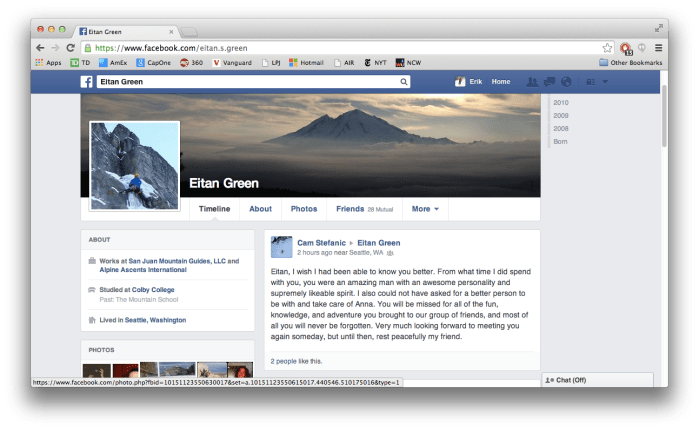
Screen Shot 2014-06-04 at 7.28.01 PMWhat’s it like, to die on Facebook? To have condolences and remembrances stream in after your power switch has clicked off? Your smile is still there, bright and alive, still glowing, but now the glow is lifeless, a screen left on in the dark.

Eitan died on a Wednesday, but Facebook called it Saturday. And really, what difference does a few days make, especially once you’re dead.

On the other side of this, do status updates matter? Does status matter? What matters? When you fall 3,000 feet over snow and rock and ice, does anything matter? It doesn’t matter enough to go in and find the body; not to them at least, and not at all to you. You are dead. The point is no longer the point.

Eitan died on a Wednesday. Actually, I’m only guessing about that, he could have died early Thursday. Regardless, the fact is he’s dead.

Why do we climb mountains? Why do we walk willingly into harms way, hold up our hands and embrace the chance we will die? Can anyone answer that?

Yesterday I wrote about Eitan, about the mountain, the snow, the ice, the fall, the death. Today I went to the mountain. I went without ropes, without a harness or a partner, without any cushion between perfection and death. I went because I have I had no choice. I went because the mountain called. I laced my rock shoes, opened my chalk bag and climbed, breathing slow, deliberate breaths with every move. I felt the sweat drip down my forehead and along my nose. I felt the wind peel it away. I felt the rippling granite beneath my fingertips. I felt it all. The sun baked my bare back. The rock radiated warmth under my palms, beneath my feet. What was left but to move? I took a step, then another, then another.

Eitan died on a Wednesday. Or a Thursday. He died on a day. We will all die on a day. He slid 3,000 feet, and he died. Where in the slide did he die? I’m not even sure he knows that. Or knew.

I’ve been there before, to the spot where he died. It was seven years ago, but I climbed past. I didn’t know Eitan then, and I didn’t recognize it as the spot where he would die, but there it was the whole time.

Eitan died. It was a Wednesday or a Thursday, nevermind what Facebook said. And now I can see his smile, the echoes of his life, whenever I want. I can see what he meant to people, the words they never said when he was here, words that cannot erase Wednesday. Or Thursday.

I left the ground today and I climbed for Eitan. Or was it for me? Is there a difference? I climbed for life, for mine and his and yours, for Mondays and for Fridays. The sun, the wind, the rock and the trees all climbed with me, urging me upward just as they must have urged Eitan down, down, down. For they have no compass, no morals, no judgment, they simply celebrate what is, the movement as it unfolds. Today I went up, so they cheered. On Wednesday (or Thursday) Eitan went down, so again they cheered. They live in perfection, in celebration of movement, no matter its direction, no matter its conclusion. They honor it, no matter the outcome. And so I will too. Soon enough I will approach Wednesday, or Thursday, and even Facebook will get it right. Eventually.

Author’s Note: Read the news story about Eitan Green here.

Fire, part II

Fire, part II

IMG_5620I wrote the last post while on the plane from New York City to Johannesburg. It is not a work of fiction. It was a story told to me a few hours before by a friend. The friend was driving up State Street in Portland, Maine, and crested the hill to see a man burning alive. The man was standing in Longfellow Square, at the intersection of Congress and State, engulfed in flames. The man had obviously lit himself on fire, and despite the flames he steadfastly refused to stop, drop and roll. Colin told me their eyes locked, and for a moment everything else stopped. The man was burning, and his last moments were spent in a visual embrace with someone sitting in a car at a stoplight. I couldn’t get that image out of my head, and as I flew it spilled out into my notebook.

About a week earlier I watched The Grand Budapest Hotel, the new Wes Anderson film. The movie was fantastic, funny and fun, but it was also more than that. The story is told through a writer, though it is not his story. It is the story of an old man and his youth. The writer, however, says he is never short of stories because people are always telling him theirs. His job is just to capture them. That’s how I felt with this. The story was Colin’s, but after he told it to me I knew I couldn’t just let it disappear. My version is not accurate from a journalistic standpoint—I did not take notes or probe Colin for details or fact check his account. Instead I took his story, which I believe, and filled in the details. I would not call it my story, because I merely retold Colin’s account. But it was a story that captured something primal, something real, that I wanted to tell. It had a power when he told it, and I wanted that power to keep rippling outward.

I’m not really sure why all that is at all important, other than it shares my process, my experience. There is no truth, and no one owns any of it. But the story is beautifully raw. It is a story worth telling.

Fire

Fire

pic-0007The two lanes wound through the city, cars streaming like a river towards the downtown. Colin banked right then left, steering from memory, pressing the gas pedal as the road began to climb. The leaves, fresh and green, rustled in the breeze. Colin pulled to a stop at a traffic light and felt the wind dance in his open window. It was cool and fresh. The light turned green. He pressed the gas.

As the car climbed, Colin saw smoke. It was billowing skyward from something over the crest of the hill. With every turn of the tires the horizon sank, revealing more smoke whirling in the breeze, dark against the blue sky.
The wheels turned, the car climbed, and Colin looked. The horizon dropped. What was burning? He couldn’t see.

Then the flames were there, dancing over the pavement skyline, red and yellow among the bricks. The fire strained for the sky, leaping and jumping. One more revolution and Colin would see what was burning. The car crested the hill at a stoplight—red—and Colin pushed the brake pedal. Across the street, standing on the sidewalk next to the intersection, stood a man engulfed in flames, burning.

His eyes were closed, Colin could see that. And his face was taut. His teeth glistened through a grimace. He held his arms out from his sides at an angle, both hands balled into fists. He seemed to be dancing, hopping from one foot to the other, red flames licking their way up his body.

His clothes were not yet burned away. They seemed to breathe fire all around him, drawing it down his shoulders, along his legs, up into his hair. A soft breeze fanned the flames like a flag and left the leaves shuddering in the trees behind him.

Colin sat at the light, both hands on the wheel. A woman in the next lane was also staring. A man and a woman were walking together on the sidewalk, laughing, unaware of the man and his flames.

Colin’s gaze returned to the man, still caught doing his strange shuffle. His clothes were melting, fusing into his skin. His lips were burning away from his teeth. The man opened his eyes—Colin couldn’t tell their color beneath the flames—and scanned around him through a veil of fire.

And then he stopped, his eyes on Colin. Through the intersection, the windshield, the glare of the traffic light, the red of the flames, the man’s eyes locked on Colin’s, even as the fire ate his eyelids.

And Colin stared back. They were transfixed—the burning man shuffling from foot to foot, Colin with his hands on the steering wheel, eyes locked across the divide. Colin could feel the sweat on his back, beaded and cool, something the man would never feel again. He held the man’s gaze and watched as the tissues around his eyes charred and turned black. He was unable to look away.

The light turned. Green. Colin rolled forward, still transfixed, still unable to turn. The burning man followed him as he passed.

Colin crossed the intersection, pulling the wheel to the left and glided into an open space. He leapt out of the drivers seat. The burning man had lost control of his muscles and fallen to the ground. From either side people ran towards the charred body. One was carrying a fire extinguisher, bright and red.

For Vivian

For Vivian

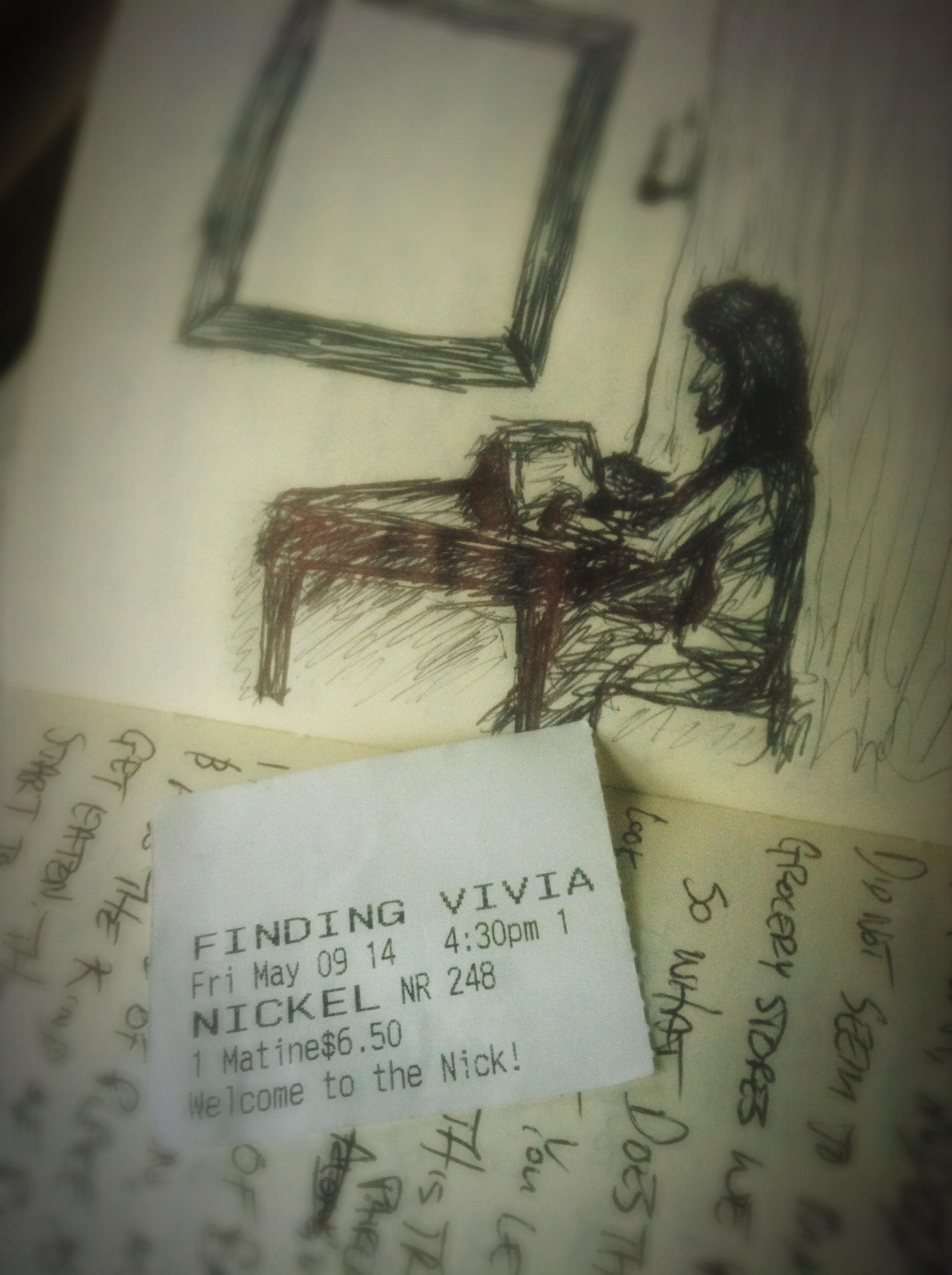
Last night I went to see Finding Vivian Maier, a documentary about one of the most prolific and talented street photographers of the 20th century. She shot without publication, amassing hundreds of thousands of negatives that were only discovered and recognized for their brilliance after her death.

There seemed to be this sadness, over the course of the film, that Maier was not discovered sooner, that her talents were never recognized during her lifetime. She shot in obscurity, earning her full time living as a nanny. It was only after her death, the film narrative goes, that her art became celebrated.

But I see it differently. Art, the word, can act as a verb, not just a noun, and her life was a celebration of the verb. She shot and shot and shot out of a drive, a passion, that wasn’t tied to money or fame or prestige. She shot because it fed her soul, because it was a way to capture her truth. The true beauty of her work was not the piles and piles of negatives she left behind; the true beauty was in a life lived devoted to the act of capturing moments, for no other reason than because the moments were beautiful.

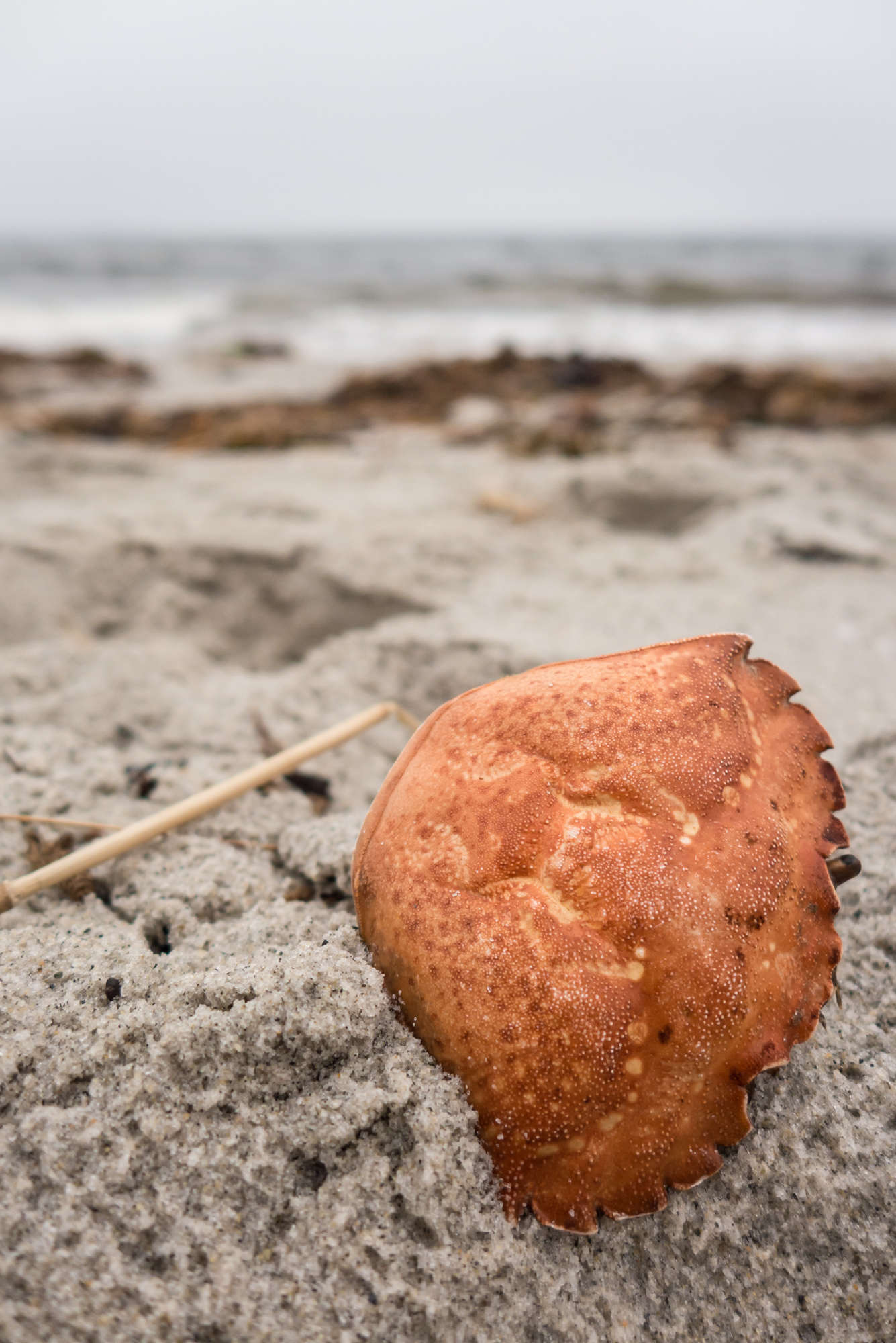
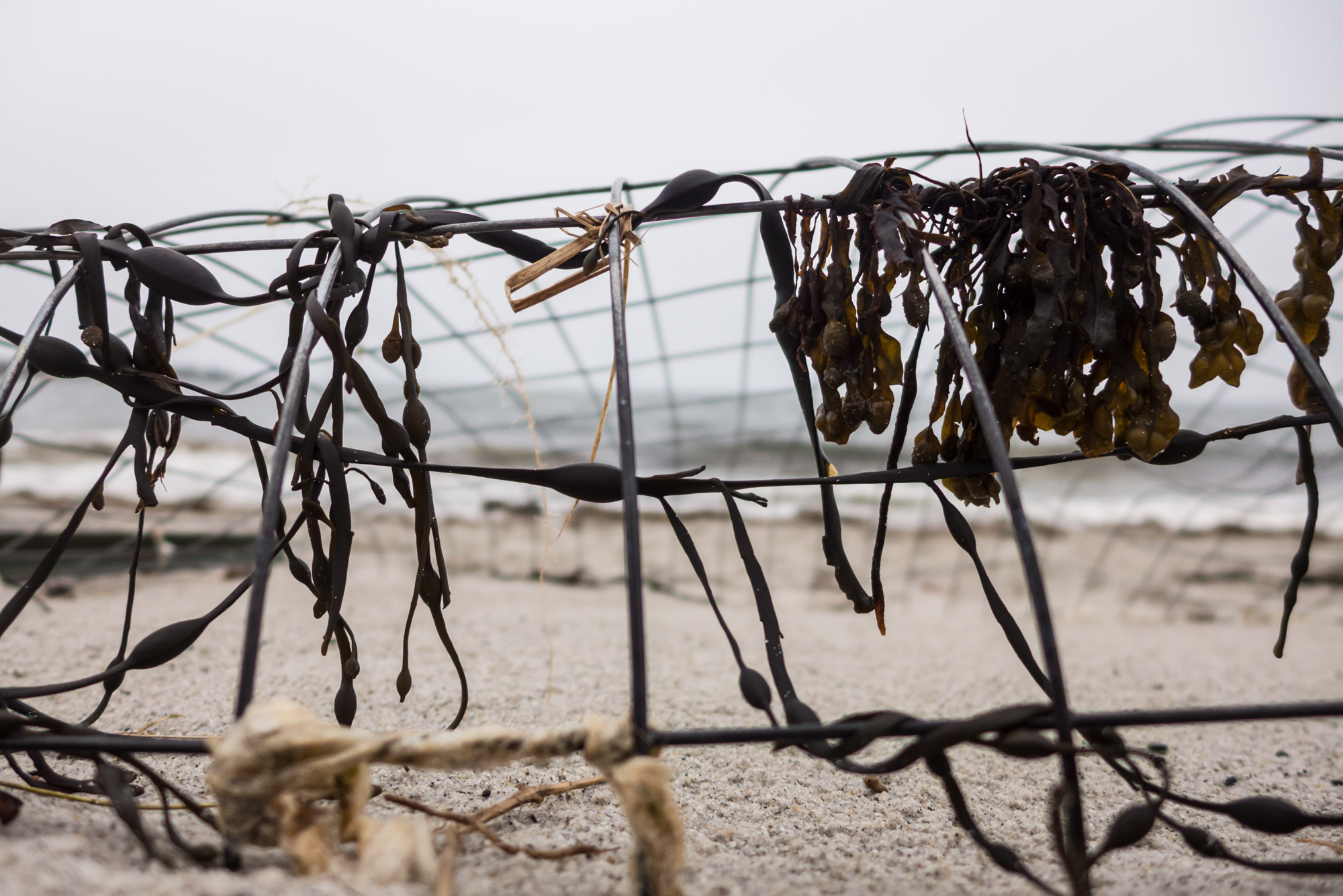
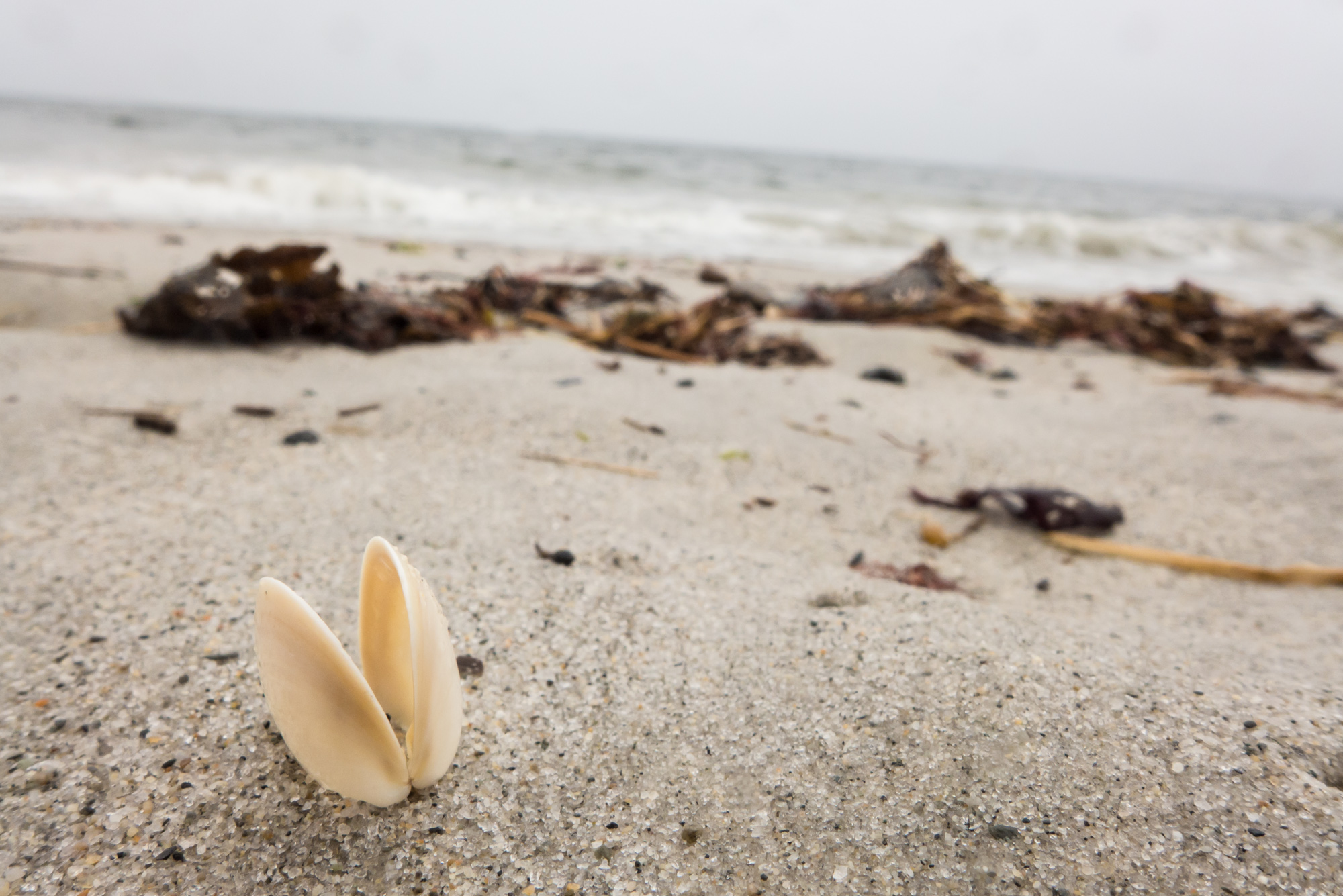
I woke up this morning and drove to Pine Point Beach, a beautiful stretch of sand about 20 minutes outside Portland. I brought my camera, and, inspired by Maier, searched for unnoticed beauty. It was raw and cold, the sand was still wet from the dew. I wandered to the breakwater and back in bare feet, looking for treasure. I was happy with what I found, the pictures I took. The moment, however, is not captured by the shutter. It was the act of looking, of pressing the release in the first place.

Just act, don’t ask why. The art is not (just) the result. The art is in the act itself.

The List

The List

Two months ago, while I was climbing in the RRG, I took a detour to visit a longtime friend who I hadn’t seen in years. The weather was crap, and it was a chance to check in on someone I’d lost touch with recently. She was going through several major transitions in her life, and at moments like those it is an incredible relief to just sit in the company of someone you know and trust.

We spent several days just hanging out and talking. Nothing transformational, so to speak, but the sort of conscientious conversation two people who have known each other through multiple life phases call “catching up.”

Today that friend sent me a something. “Doing some digital housekeeping,” she said, “I found this list I made after you left:”

Control
Death
Compassion, love, forgiveness
Present past future
Live in the vertical
Over thinking
Balance
Faith
Center
Follow heart
Path – sailboat
Perception
Right versus wrong

My own words staring back at me. Sometimes the most beautiful reminders come in subtle ways, through lots of experience and soul searching. Other times, however, they just pop into the inbox, marked “Unread.” What a beautiful way to begin today.

Suck, With Passion

Suck, With Passion

I’ve spent a lot of time outdoors hiking, climbing, skiing and mountaineering. I thru-hiked the Appalachian Trail at 18, worked as a pro patroller on tele skis in my early 20s, spent months living out of my vehicle, guided clients on snow and ice and climbed rock on three continents. But I still suck at stuff, and I love it.

I suck at surfing. My first experience was in college when an economics professor who knew I skied asked if I wanted to learn. I was in a summer class he was teaching, and we would meet a few hours early and go to Scarborough Beach. He had an extra wetsuit and nine-foot surfboard he let me borrow. On the first day I couldn’t even sit on the board without tipping over. I spent the whole session trying to figure out how to balance so I could watch for waves coming in. I didn’t catch a thing. Surfing was so much different than skiing, so much different than climbing. It was completely new — I had no relatable experience to draw from — and I was not good. I’d taken up other things recently, road biking, for example, which I’d picked up two years before, but on my first day cycling I didn’t fall off my bike. Surfing was a wake up, but instead of getting discouraged by my failure I reveled in the feeling. Being so unfamiliar, so awkward, gave me the chance to forget myself, to forget my ego and self-image, and just concentrate on finding balance. It was freeing, a chance to be a child again. I loved it.

I still surf. I can stand up and even occasionally ride a wave today. I’m barely proficient, but I’m no longer falling off my board while sitting. There are other things, however, I still suck at royally.

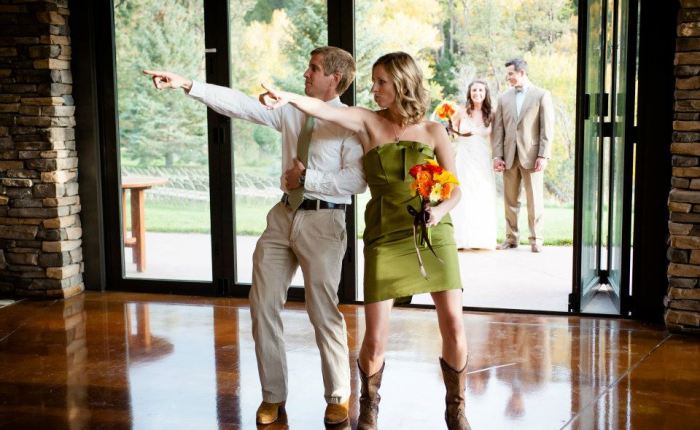
I can’t dance. I’m the classic white kid, with no rhythm. I’m not sure how many people actually can dance, but I’m not one of them. I’ll occasionally get out on the dance floor (like this past September at my brother’s wedding), but not often. It’s something I’m bad at and embarrassed about, so I don’t do it.

It makes me sad and at the same time laugh when I think how often that happens: how often do we say “I’m bad at that so I don’t do it,” and therefore shut ourselves off from ever learning the thing we think we’re bad at. Embarrassment is a fear without risk, and yet it so often holds us captive. THAT should be embarrassing.

This winter I took a jazz dance class specifically because I wanted to grapple with my discomfort with the fact that I can’t dance. I sashayed around a Portland dance studio in yoga pants and bare feet, doing my best to move in time with the music and failing miserably. I was bad, really bad. I was awkward, uncoordinated and looked silly. There was nothing dancer-esque about me. I discovered (as I already knew) that I look 100 times more graceful ascending overhanging rock than gliding across a wooden floor.

But who cares? Just like in climbing, no one starts out ready for the stage. I cringe at the idea I might have backed off climbing because I was too embarrassed to ask someone how to place gear. It took me a decade of practice to move through vertical terrain with the ease and confidence I do today, and that decade is full of fantastic stories and memories. My failures were my opportunities for growth, my ignorance was my opportunity, and it still is. Embarrassment should play no part in it.

I intend to go back to dance class. Wednesday nights, 7 p.m. Thursday night is hip-hop. I want to try that too. Movement is movement, and learning is learning. Don’t ever be too good, or too embarrassed, to try something new.

In that vein, I’m trying to learn to play Rubin and Cherise on the guitar, another passion I’ve poured less time into than climbing. Unfortunately I’m embarrassed by my lack of proficiency, which in this paradigm means I should put it out to the world and dispel the tension within myself. There is no risk in embarrassment. There is only the risk of not trying. So…

Here is what I’m shooting for:

And here’s where I’m at:

And let’s not get into my singing, that’s way too embarrassing…

I’m doing my best to be willing to suck. To do otherwise would be to endorse holding myself back. So instead I’m doing my best to be willing to do that which I don’t know how to do. It isn’t easy, but unlike soloing rock or ice there is no risk. What would failure mean? Nothing. There are no consequences. The only risk is to my ego. Failure is a chance to try again.

Never stop trying. Never be afraid of being embarrassed. Embarrassment is just another hindrance to life, that precious moment you lose the instant you spend it and never get a second shot at.

Morning with Monsters

Morning with Monsters

Fear is a funny thing. Run from it and it is always at your back, embrace it and its capacity to overwhelm you evaporates. Like darkness each morning, it can be pushed aside by the light. But as the sun rises in one place, darkness falls somewhere else. Face fear once, twice, a thousand times, and it inevitably crops up. We have a choice: keep facing our fears again and again forever, or try to run and hide from them for just as long.

This morning I got up before sunrise. My bag was already packed, tools strapped to the outside. I pulled on my Capilene, ate a small breakfast and jumped in the car. The road was coated in snow as I pulled onto Route 302.

About a month ago I soloed Standard Route at Frankenstein for the first time. It was an amazing experience, a moment where I embraced the fear of being ropeless and kept going. My brain screamed “NO” the whole way, and yet I continued upward, rejecting logic and letting trust and faith guide me.

Now, weeks later, the fear of being ropeless on Standard has dissipated. A week or two ago I ran up it again, this time before work. That time the tether anchoring me to the ground tugged but never grew taught. I was able to climb in control the entire time. The fear was gone, at least on Standard.

But there is always a bigger monster around the corner. As I drove to Frankenstein this morning I knew Standard was just the warm up. My fear, my test, was named Dracula.

The idea of soloing Dracula, the classic grade 4 at Frankenstein, first popped into my head on the descent from that first Standard solo. It wasn’t in yet, but as I walked past I knew in my heart it would go. This morning I went to Frankenstein determined to embrace that knowledge.

I got to the parking lot before the plows. It was still dark when I started walking down the railroad tracks. It was warm, above freezing, but I was dressed light enough I had to walk fast to stay warm. I followed deer prints in the fresh snow to the ice.

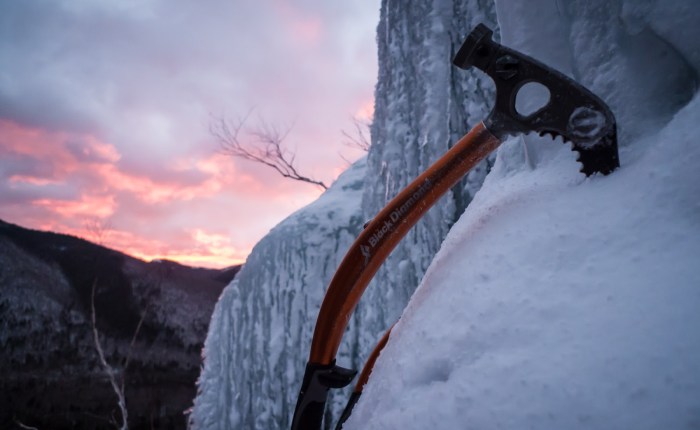
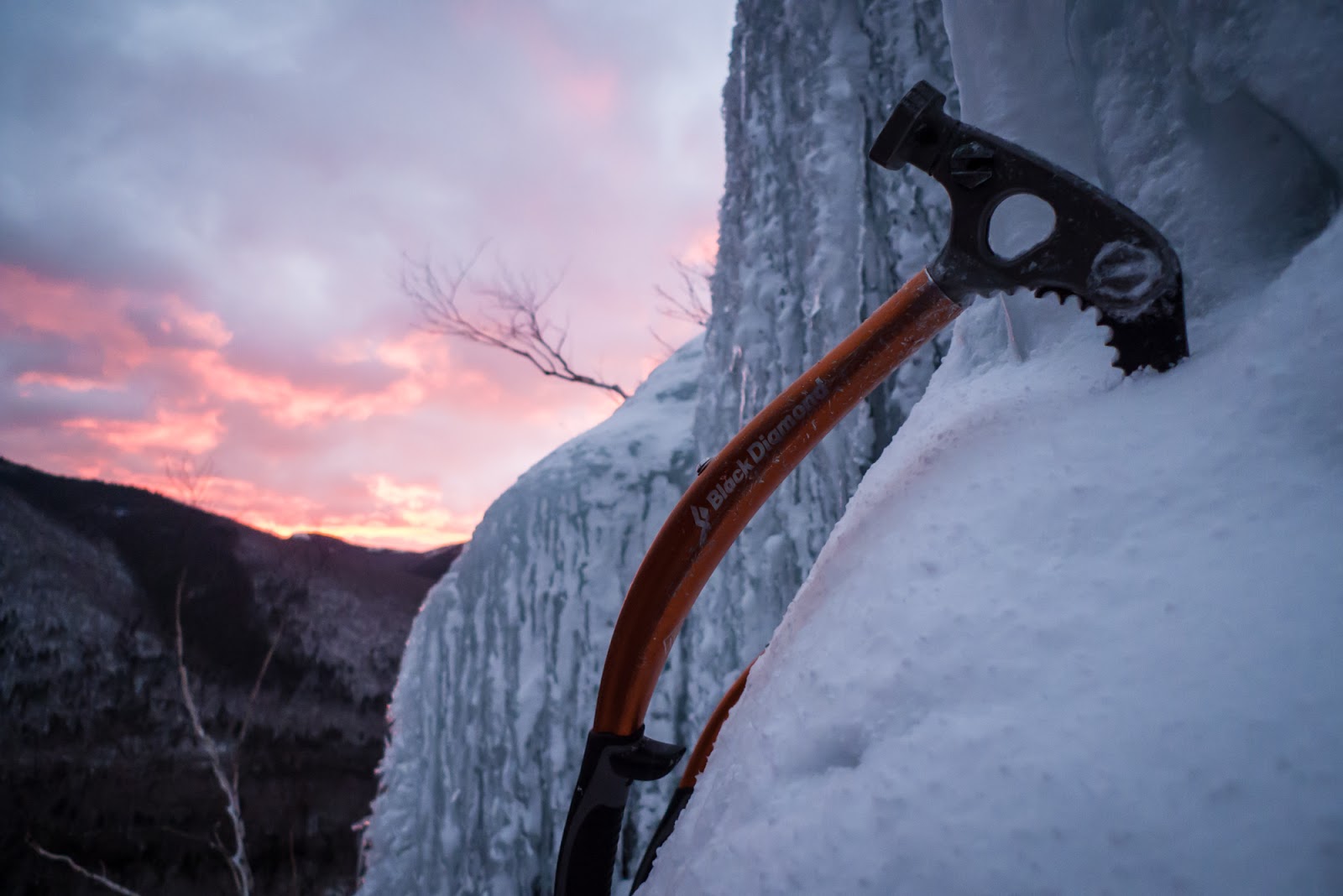
I got to the base of Standard and dropped my pack. The snow and ice above me glowed an eerie blue. I pulled on my harness, racked up and tethered into my tools in the pre-dawn light. I sighted the straightest, bluest line and started climbing. Standard flowed beneath my picks, an old friend accustomed to sitting together in silence. The first oranges and reds of morning sparked to the south. I snapped a few pictures as I climbed, but mostly I just cleared my head and concentrated on floating. “Breathe,” I thought time and time again. “Breathe.” In less than 10 minutes I reached the top and was walking back down.

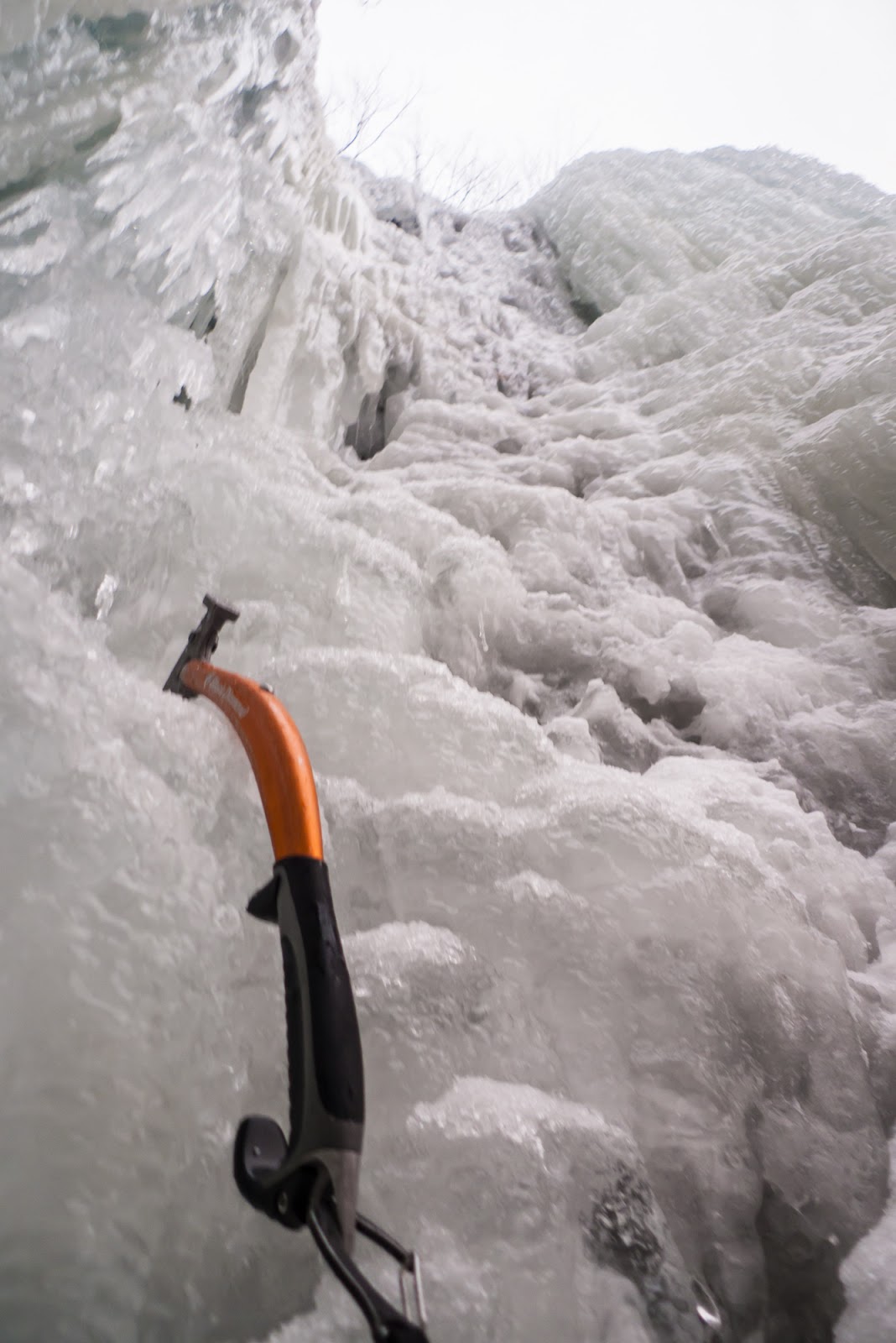
The descent from Standard makes it easy to consider a second act. Most days I don’t have time to consider such things before work, but this morning I’d started early. Dracula looked soft, forgiving and beautiful. I walked to the base and stared up at it. I knew it would go. I took a sip of water, ate a snack, pulled on a dry pair of gloves from inside my jacket and swung a pick into the column. The ice was wet, pliable, perfect. I swung in the other tool. “This will go,” I thought, and I began climbing.

The first steep section went quick, a handful of moves up to a ramp. From there I kept going, swinging and kicking into dryer conditions. The ice was an open book as it flowed down a corner, so I stemmed my way skyward.

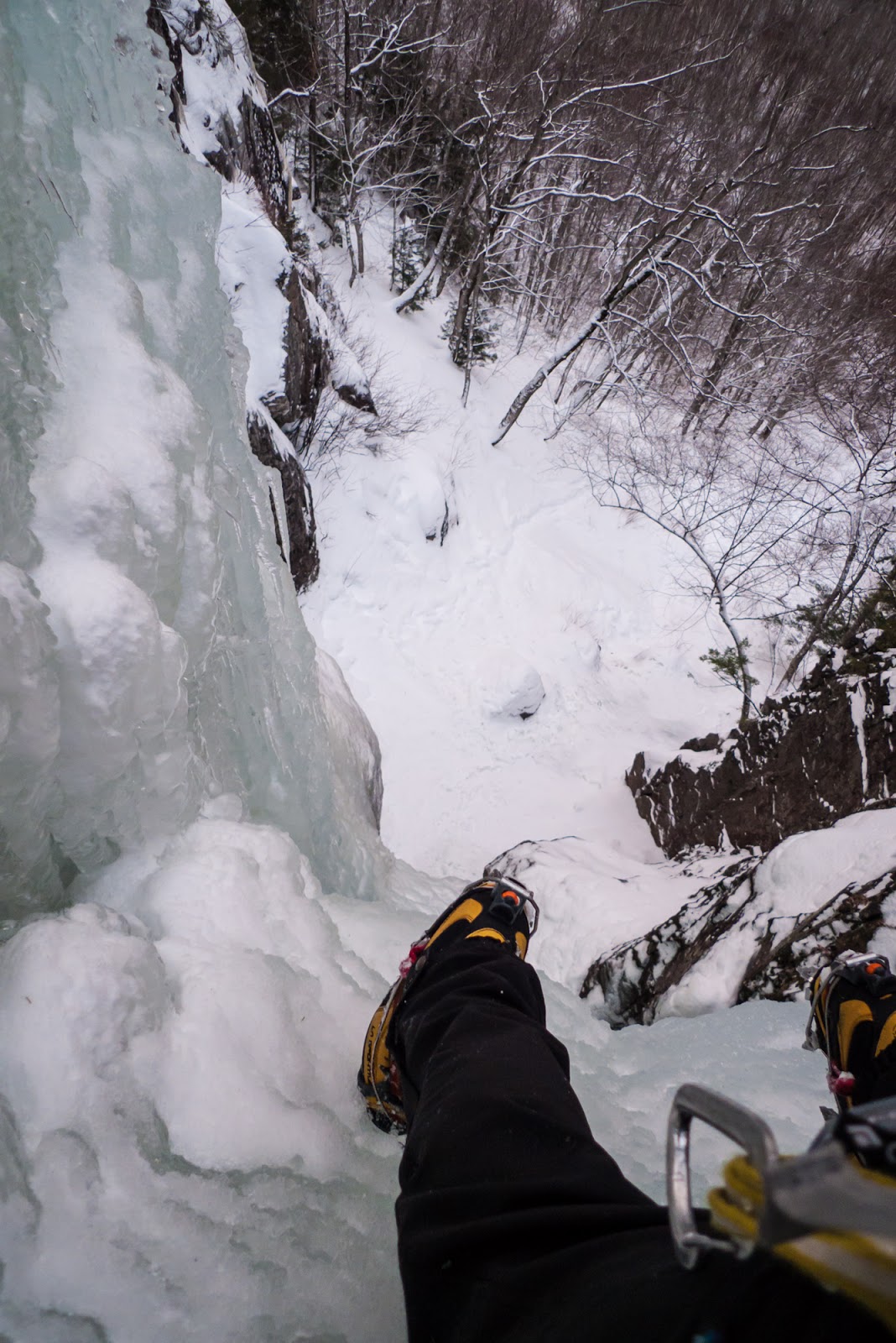
About halfway up, though, doubt crept in. My feet felt too wide. I was off balance, and the ice cracked more than I liked. I glanced down. A fall would break my legs and maybe my back. I’d bounce off the ramp, shoot out over the first column, hit the base and then tumble down the approach gully. I could see myself dying. “Shit,” I thought, “I don’t want that. Why am I here? This is stupid.” The terrestrial tether suddenly felt stretched to the limit. I prepared to climb down.

But I knew — KNEW — I could climb it. I’ve climbed Dracula countless times and never fallen. That doesn’t mean I never will, but I knew at that moment the thing holding me back wasn’t my strength or my skill, it was my head. The thing holding me back was me. I worked my way down, out of the corner and back to the ramp. I found a stance and buried my tools in the ice. I pulled off my gloves and tightened the laces on my right boot, took a deep breath, then another. “OK,” I thought, “you know the consequences. There is no logic to going upwards. None.” I switched feet and tightened the laces on the left boot. “Keep going and you could die.” I thought. “Just go down. The ground is safe.” I looked at my tools, drops of water glazing the orange paint, and then raised my eyes up. There were miles of steep ice above me. I looked at the sky, then down at the ground, and I felt a wall inside me crumble.

“That is wrong,” I thought, knowing in that instant I would continue climbing. “The ground isn’t safe. You think it is, but you may die there too. I might crash my car on the drive to work, or die of a heart attack at my desk, or get cancer. In fact, if I spend my entire life on the ground, it is inevitably where I’ll die. Going up isn’t about dying, going up is about living.” I swung my pick into the corner and started for the trees.

Every day we arrive at work on time, or make it to school, or meet a partner at the crag, we are fooling ourselves. We think because we made plans we were in control, that things worked out the way they did because we decided they would work that way. We’re wrong. We trick ourselves into believing we live in control, into believing that tomorrow will come just as today did, particularly if we avoid risk, never realizing the world can blow our plans off course at any moment. In a second we could die of a blood clot, or wind up shot dead in a movie theater. When it doesn’t happen each day we start thinking it won’t. We forget life is random, fleeting and final. We make plans for the future — a week, a month, a year, 30 years — thinking, KNOWING, we’ll be here to enjoy it. We walk through the world sure our lives will work out, wrapped in our own ignorance.

And we are wrong. I may die today. I may die as I write this, or tomorrow, or the next day. Life doesn’t wait and it isn’t guaranteed. It shows up wherever we make it, however we make it, whether on the ground or in the air. We will die someplace, that is the only guarantee. Darkness, fear may keep us from embracing LIFE, but it does nothing to stave off death. It rolls towards us nonetheless. The ground is not safety, and the route is not danger. They are simply the ground, and the route. There is risk in both, in all.

So I embraced the risk before me. “Breathe,” I thought as I moved up the final headwall. “Breathe.” It was the same thought I’d let fill my mind for the last 40 feet, the same thought I kept to the summit. It was my mantra, the thought that kept me in the moment, that pushed the fear of falling out, the fear of death out, the fear of failure and everything else out. I let the thought wash over me, let it carry me over the ice. It filled my mind, leaving my hands and feet to do the climbing they are so accustomed to. “Breathe,” I thought as I crested the ice and swung into turf. “Breathe,” I thought when I reached the trees.

I stood in the snow and let out a long, slow breath. “Today I lived,” I thought, rather than just survived. I smiled, clipped my tools to my harness and started the walk down.

Light is always looking for darkness. Allow it into one more place. And one more place. And one more place.