CDS Column: Home on the Road

CDS Column: Home on the Road

14066350_1588101947882551_955321454025779419_oWe are all part of a tribe. Family, community, state, country, it all comes out from time to time.

The Olympics, pitched as an instance of the world coming together, is one example. Countries meet on a global playing field, a time-honored tradition in camaraderie. But what is it really? Competition. Nationalism. The chants of “U.S.A.! U.S.A.!” that fill the stadium are a tribal call, a celebration of divisions, not just unity. It is about us and them, and us. Most of all us.

When Ryan Lochte acts like an imbecile it is not an individual insult but a tribal shame: “the ugly American abroad,” an old tribal stereotype. “He gives our entire delegation a bad name.” How true, a slandering of our tribe.

The Olympics are over. The overt national call has come to a close. But our tribalism has not. It never comes to an end, it is baked into the American fabric.

Some versions are ugly, acute reminders of the stereotype Lochte stands accused of reinforcing: the Ugly American. Those live in the political chants of Americans insistent on restricting entrance or accommodation based on religion. “No more Muslims” has somehow become its own tribal call. Same with “no more immigrants.” This in a country founded by immigrants, built on the principles of religious freedom.

The Ugly American indeed. But tribalism is emotional more than it is logical, it doesn’t always make sense.

Not every vision of tribalism is so bleak, however.

This summer I drove across the United States. First one way, from New Hampshire south to North Carolina, then across to Kentucky, Colorado, Utah, California, then the other, from Washington state back to Colorado and across the long green center to the Mid-Atlantic and the North. Back to New Hampshire, from the Sierras to the Whites, from one unending blue to the other.

In the eastern plains of Colorado I pulled off at a rest stop. It was a warm morning, yellow grass swaying in the breeze. I got out to stretch my legs, hit the bathroom and filled my water bottle. I was roughly 30 hours from home, a long stretch of road before me.

Across the way two men stood outside a green Honda Civic. They were scruffy, their clothes dirty. Modern hippies, maybe homeless, likely both. One had dreadlocks. The other held a leash that ran to a small black dog. Someone had written “Live Free or Die” in white paint along the Civic’s trunk. The dreaded man looked at me, nodded his head, smiled, and then pointed to his license plate with both hands like a maitre d’ showing me to my table: New Hampshire. The Granite State. “We are of the same tribe,” his smile said. I smiled back and waved, then steered toward the highway. Indeed.

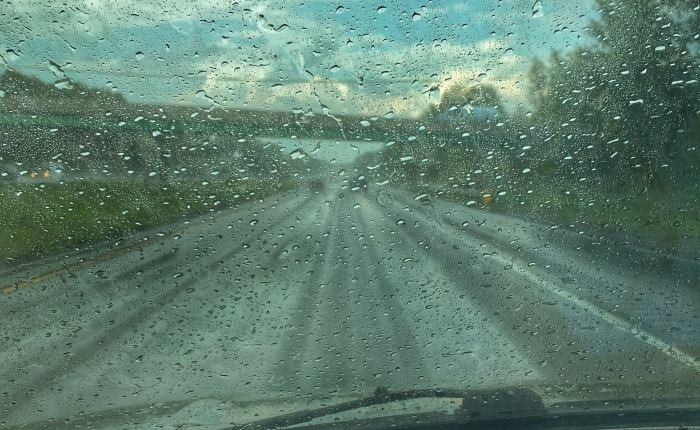
A thousand miles later it happened again, this time crossing Ohio: A young man in a low-set Acura slid along the highway. He was driving fast, faster than I would have, weaving his way among the traffic. I saw him approaching in my rearview. I held my course to let him pass.

But when his window was adjacent to mine he slowed. When he paused, I looked. He stared back at me, probably in his early 20s, dark hair, a quintessential college kid. He smiled, raised his fist, quickly pumped it twice and then sped up, crossing back into my lane just in front of me. His plate: New Hampshire, the first I’d seen since Colorado.

What happened next is he slowed.

Not fully, but enough that his message was clear. “Follow me,” he seemed to be saying. “You speed up a little, I’ll slow down a little, and we can band together to cross this Buckeye State highway. As Granite Staters.”

As a tribe.

And here’s the thing: I did. I don’t know why. Maybe it was the months among American foreigners, of being surrounded by cars from California and Colorado plates, Kentucky-ites and Utahns.

The poignant reminder painted in green script and shadowed by a fallen Old Man was enough to push my foot on the accelerator. Maybe it was seeing someone call to me in brotherhood despite having no idea of my name. But cruising along I-70 with no reason to speed up beyond the wave of a non-friend I decided to exceed the posted limit a little more.

I lost him somewhere around Columbus where I-77 turns north. He pulled away amid the congestion, and like a cyclist too weak for the peleton I drifted backward. I didn’t find him again. And I was staying on I-70, driving east to see a friend in Philadelphia, my license plates having left out the full story of my destination. But I still smile as I think of him, a lone warrior whose befriending me stood on nothing but my tags. A true tribal spirit.

Maybe it’s only among foreign shores that such tribalism is born. In the West, highway speed limits read 75 mph. With cruise control pegged at 85 I’d find myself weaving past cars, flying faster than the flow of traffic. Weeks later on my return home through New York the posted limit read 50. I again pegged cruise control at 85, but this time I was the sluggard, a slow motion impediment crawling along the pavement. Empire State plates shot past like I was riding a farm tractor.

And for some reason it felt like home.


This column appeared in today’s Conway Daily Sun.

CDS Column: Reality Politics

Screen Shot 2016-08-10 at 9.41.37 AMDonald Trump’s popularity is sagging.

Or that was the news story in New Hampshire last week: Hillary Clinton’s poll numbers climbed to more than a dozen percentage points over the Republican nominee in the Granite State. True, some respondents voiced concerns about whether the former first lady is fit to be president, but their concerns were eclipsed by the same question regarding Trump.

Polls are only a snapshot though, one of those things that flare up suddenly like wildfire, make their rounds and scorch everything in their path before they disappear.

The only poll that really matters is in November. Everything before then is a cupped ear to the whispering mood of public opinion, a national game of telephone guaranteed to amplify distortion by the time it ends.

And that’s in a normal election year. This year is anything but normal. A little over a year ago, Trump’s candidacy appeared an extension of his television career, a shot of reality TV drama dumped into politics. It didn’t register as real, left no hint it might transform the entire presidential debacle into reality TV.

But maybe it should have. Maybe Donald Trump is the candidate we’ve been asking for all along. Other countries elect leaders in a matter of weeks; American presidential elections last years. They unfold in campaign events choreographed for the cameras and polls that track competitors’ progress like runs per inning in a baseball game. Candidates campaign on words like “Hope and Change” and “Make America Great Again” rather than policy positions, and scandals and affairs unfurl like celebrity gossip. Democracy has turned into daytime drama. No wonder Trump does so well.

Clinton, meanwhile, makes something of an easy villain for the television narrative. Or the persecuted heroine. It all depends which side of the aisle you stand on. She has certainly had to bump her way to the top, and such wrestling leaves bruises. The reality of candidate Clinton is likely somewhere in the middle, however, neither nemesis nor innocent. She is a politician, one with hands dirtied by history.

But as a former senator and secretary of state she knows the system and has been an integral part of it. Is that what we need at this moment, one of the cooks long in the kitchen?

No? OK, then consider the alternative.

What a mess we’ve gotten ourselves into. Anything but a normal election year. A frequent complaint of America’s two-party system is that it leaves voters to choose between the lesser of two evils. But not this year. This year, the choice is between the distasteful and the absurd. Would you prefer the consummate politician or the TV host? It brings to mind the famous Winston Churchill quote: “Democracy is the worst form of government, except for all those other forms that have been tried from time to time.”

But Churchill never saw democracy made for television. Celebrity democracy. Production democracy. Campaigns run for the cameras, voters transformed into consumers, candidates as packaged products rather than people. It’s democracy’s latest form, and the worst possible.

It is distasteful, but it’s definitely ours.

It often appears America is prepared to “snap out of it,” ready to let go of its fetish with things flashy and loud in favor of substance, but it never quite happens. Politics is just the latest version.

Remember the days immediately following 9/11? Journalists left behind celebrity-styled reporting to reorient readers and viewers to America’s place in a complex world. And for a brief instant we cared. We spent time listening, learning, treating our news like information rather than entertainment.

It happened again in 2008 after the financial meltdown: As Americans watched their banks fail and their investments disappear they stopped watching financial news modeled on Sportscenter and started looking for stories and sources that actually explained what was happening. Again, for the briefest moment, the character of the conversation changed.

Perhaps we are in another of those moments now. The two major party candidates are both deeply disliked, and yet they rose to the top. Many Americans, including those who took part in the nomination process, are dissatisfied. We watched as one candidate was considered for investigation by the FBI and the other got in a public tussle with the family of a fallen soldier. This does not seem American democracy’s finest hour.

When the dust clears, once either Trump or Clinton is president, will we reflect on this election? Will we look at our political conversation the way we looked at our approach to foreign affairs and finance in those moments after more immediate disasters? Will we have the wisdom to revisit our celebrity fetish, to let go of the flash version of modern democracy in favor of something more concrete, long term?

Or will the cleared dust mark the moment we forget about all this? Will we never ask what went wrong, what led to a race between an obviously unfit candidate and one so divisive?

If our recent past is a guide, then we are in trouble: The lessons of history are able to blind us, but only momentarily. We reverted to national conversations devoid of historical perspective in the post-9/11 days. We returned to the “too big to fail” practices of the pre-meltdown era. Our slow-moving political disaster, one without the same immediacy as those, will likely suffer the same fate. Reinvent ourselves? No, not so long as our elections are entertaining, like game shows with only the slightest twist from “Who Wants To Be A Millionaire.” Or “American Idol.”

Or “The Apprentice.”


This piece appeared in today’s Conway Daily Sun.

CDS Column: Reflections Abroad

CDS Column: Reflections Abroad

Belize-1050964“Where are you from?” He was wearing a collared shirt, long pants with suspenders and a wide-brimmed woven hat. I sat next to him, sweating through shorts and a tee shirt in the Belizean heat.
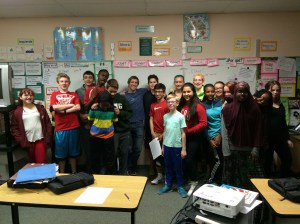
“The U.S.,” I said. “New Hampshire.”

“Where is that? Higher than Pennsylvania?”

“Yes, above Pennsylvania. Near Boston.”

“Does it touch Canada?”

“Yes.”

“Huh,” he said. “Is it cold there?”

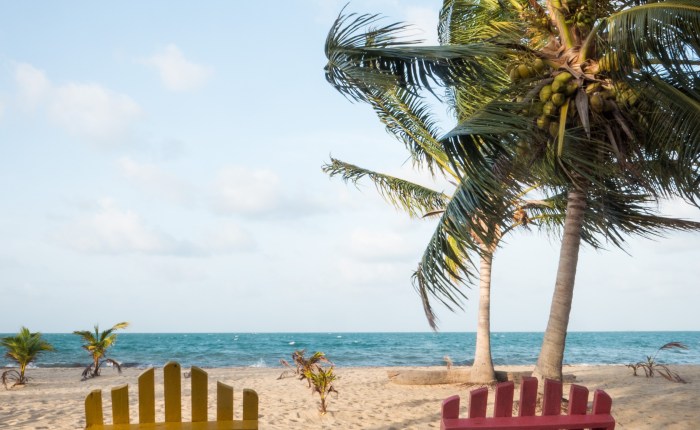
He spoke with precision, like he was reading off a script. He addressed me directly, never breaking eye contact. His name was Elias. He was a Mennonite, a Christian sect similar to the Amish common to Belize. We were riding south out of Belmopan, the capital city, in a retired school bus with brown vinyl bench seats and windows that only slid halfway down. I was headed to the Caribbean coast. He was going home.

“It is cold,” I said. “It even snows. But not right now, only in winter.”

“I’ve never seen snow,” he said. “I couldn’t handle it.”

He smiled. He was 24, a farmer and one of 10 children. He lived with his family in central Belize, but he’d visited the United States a handful of times and had dual citizenship. His father left their church in Pennsylvania decades ago in a return to his core beliefs. His American community was using tractors and driving cars, Elias said, slipping towards modernity, so his father and a selection of others moved south, way south. They now farm tomatoes and peppers and corn, he said, in a community of 15 families.

“Did you go to Belizean school?” I asked.

“We have our own schools,” Mennonite academies separate from the national system, he said. “But we only study until eighth grade.” After that, Mennonite children become farmers.

“Do you ever feel like you are missing out? Ever think maybe technology and education and everything might be better?”

His answer was unhurried. “No,” he said. “I’d like to know more geography, to understand the layout of things better, but that’s about it. I don’t follow the world, really. And the pieces I hear about don’t make me want to take greater notice.”

“Explain that,” I said.

“You have an election coming up, right?” he said.

“Yes,” I said, suddenly sullen.

“I don’t know much about it,” he said, “but it seems a mess. I don’t think I want a bigger part of that world.”

The bus lurched. I sat quiet. He had a point.

That’s why I love travel: It’s a mirror, a necessary step back for reflection. Only from a distance can you get a full view of yourself.

As a country, it’s no different — without adequate space it can be impossible to formulate an accurate view of your policy, your politics. Only in leaving can you see more clearly.
Another glimpse came from Karina, a Belizean mother of three. Every morning she sat outside the school. Inside, American high school students ran a summer camp for Belizean middle and elementary kids. Karina’s daughter was in the youngest class, made up of kindergarten and first graders. She would bawl inconsolably if Karina wasn’t nearby, so each day Karina sat at the picnic table outside the classroom.

Karina was black. She had grown up in central Belize not far from the school, and for the last two years she’d attended college in America.

“What was it like,” I asked her, “going to the U.S.?”

“It was wonderful,” she said, “but hard.” She wasn’t ready for the racism, she said. As a Belizean she hadn’t developed the thick skin required of a black woman in America. Her culture is multiracial, but it lacks the divisions she encountered in the U.S. Encountering the stinging blows of prejudice as a young adult shocked her. She was unprepared for it. She would cry a lot, she said, and was hurt easily.

“I didn’t expect that,” she said. “I was happy to go to an American university, but it’s really nice to be back.”

These moments give pause. They are brief glimpses into the mirror of ourselves, of the country we have built: A Mennonite man with a middle school education who sees our politics clearly enough to know he wants no part in them. A young mother whose experience with American racism left her in tears. These versions of America grow fuzzy to those of us who live them every day. They seem impossibly entrenched and complex up close. But from abroad they look different. With the benefit of distance they seem both larger, more intertwined in the American fabric, and also smaller, more isolatable, more feasible to face head on.

At home, issues of race and politics seem too overwhelming to be changeable, too thickly American. But from 1,000-mile shores they become remote enough to appear moveable. They seem again to be in our hands, something within American control, within the control of the citizens who make up this country. They are ours to manipulate and eradicate if we chose. Racism is not part and parcel to this nation. The politics of money, fear and limited choice is not an inexorable American parasite that cannot be purged without risking the host. These are momentary glimpses of our country at this moment, they are not what define it.

But to change them, first we have to look in the mirror. First we have to decide if we like what we see.


This piece appeared in the Conway Daily Sun.

CDS Column: The Cost to Learn

CDS Column: The Cost to Learn

IMG_0400The other day I came across a news release from my alma mater the University of Southern Maine: “USM hails turnaround,” was the headline, “Admissions numbers substantially up and budget balanced for first time in years.” Classes are full, and the university is in the black. Officials were upbeat; for the first time since the Great Recession the university is making money.

USM was hit hard back in 2008. There were cuts, layoffs, changes in leadership. Officials threw countless levers in search of something capable of putting things back on track, of making ends meet. Now they finally have good news: “The number of high achieving high school graduates attending USM this fall is soaring. ‘Last year at this time 16 admitted students who were awarded merit scholarships sent us a deposit,’” a school official said. “’This year that number is 216, and we expect the numbers to climb.’” Things are looking up.

I studied at USM a decade ago, graduated in December of 2007 in the calm before the financial firestorm. Those were flush days for the university, before a lot of tough decisions and belt-tightening.

Today in-state USM students pay $253 per undergraduate credit. That’s not much different than when I was there. Out-of-state tuition, meanwhile, costs $665 per credit. One year of classes and fees costs $8,920 per year for in-state students, while out-of-states pay $21,280.

An hour away, meanwhile, at University of New Hampshire, an in-state student pays $600 per credit hour. A year of tuition costs $14,410, plus an additional $1,607 in fees. Over four years those numbers add up, and the $60,000 price tag for UNH doesn’t include food or a place to sleep. College today is full of opportunity, including for students to saddle themselves with significant financial baggage barely into adulthood.

It wasn’t always this way. The prosperity of the American Century wasn’t financed by 18-year-olds; it was fueled by public investment. In the wake of World War Two former soldiers swarmed university campuses backed by G.I. Bill dollars. A generation later their children attended low-cost state universities, another gift of government dollars. These two generations—the Greatest and the Boomers—built success out of this community investment. They prospered, and America prospered. They grew in tandem, gains forged in the fires of collective investment in higher education. We were a nation of government-funded students and state-sponsored graduates, two parallel rails that fostered America’s transition from industrial nation to an economy interlaced with technology. Today forms of commerce unimaginable in the post-World War Two years are commonplace, built by this army of first financial aid recipients. Complex derivative industries now sustain us, and the grandchildren of people born before telephones reached a majority of households are finding jobs as ap developers for smartphone companies. Such is the growth in an educated society.

1140f-highBut those opportunities are becoming harder and harder to afford. Over the past 50 years education has changed. The opportunities have changed. Even as the necessity of a college degree has increased, support for obtaining one has dwindled. Political pressure has forced entities built on public investment to operate more like businesses, to focus on growing income streams rather education opportunities. School budgets once covered by government have been cut while the portion left for students to bear has ballooned. The task of educating, a responsibility once felt by all of us, has been privatized, individualized and handed off to the kids. Education has transformed into something you buy, and it’s no longer affordable.

How did this happen? How did investment in a strong workforce, with the stability and prosperity that it brings, become the responsibility of 19 and 20-year-olds? How did we so erode our public support of higher education that the costs now land on the shoulders of children?

Perhaps it is tied to the modern narrative around education. The story of school was once that of a tide that lifted all boats: No one lost by investing in education. Gains might be unevenly distributed, but society as a whole saw tremendous advancements as a result of rising standards. Better education meant better jobs, more wealth and general upward mobility. The trajectory was one of growth. Investment in education was a building block in creating middle class communities, an investment in a collective future, and a brighter one.

Today, however, that storyline is gone, replaced by a simpler tale. Today we are told education exists for the individual. It is a personal investment with personal rewards: the chance for more money and a better job. From a societal level there is little incentive to see others educated, as only the individual sees the benefits. Taxpayers, meanwhile, bear the expense. Society is saddled with the cost. For individuals college is an investment; for the rest of us it is an expense.

Such a shallow view of our society, history and economy. Education, like economics, is not a zero-sum game; with investment, the pie grows. There is no finite number of slices. Inventions like the internet and the iPhone revolutionize entire sectors, creating new opportunities and derivative markets that spill their way down the economic food chain. Exploding technologies may be built by engineers and computer programmers, but they create opportunities for accountants and janitors, lawyers and food service workers, CEOs and parking lot attendants. Everyone benefits. Education is no simple rising tide; it is a wave, a tsunami, a tremendous force for change.

We knew this, and for years we watched it work. For generations. The result was the American Century, a middle class revolution built on public investment in knowledge, creativity and growth. America led the world, leadership funded by all of us.

We could get back there, but not by ignoring the cost. We must spend wisely and choose which bills to make our own. Education is one that belongs to all of us.


This column appeared in today’s Conway Daily Sun.

CDS Column: Constitutionally Speaking

CDS Column: Constitutionally Speaking

6f8cf-rustIt’s happened again: Another shooting. In Orlando this time, 49 victims plus wounded.
And in the aftermath we fight. Among friends, countrymen, the arguments begin. It didn’t take a day — 2 a.m. shooting, lines drawn by sunrise — that is America.

We are a nation trapped by ourselves.

Omar Mateen was an American Muslim, a U.S. citizen of Afghani roots inspired by foreign extremists to buy guns legally and turn them on gay nightclub goers. In one hateful rampage Mateen put himself into the center of multiple American tinderboxes — immigration, religion, guns, foreign wars, terrorism, homosexuality. If his attack was an act of terrorism it was one well-aimed — these issues we willingly tear ourselves apart over. His spark hit its mark, and it was more than enough to ignite an explosion.

But that is where America is today: Ever ready to draw swords. Fight-or-flight is now our political status quo, and over and over again, America’s choice is to fight, especially among ourselves.

But where does that get us? What kind of country is left when every debate turns brutal? That is our habit, but how do you govern from a never ending cage match?

Take guns, for example, that tinderbox among tinderboxes. What is the appropriate gun policy? Is the current level of regulation enough? Too much? What does the Second Amendment really mean? How does “a well regulated Militia” play into “the right of the people to keep and bear arms,” a right that “shall not be infringed”? How does that fit in the era of the Glock and the AR-15? Is it still relevant?

These are reasonable, basic questions, the sort of conversations that should be raised in the halls of Congress after such an incident as Sunday’s attack. Any modern state would consider such questions foundational to finding a balance between the rights of citizens to own guns and the rights of citizens not to be killed by them.

But we have no such discourse. Opponents of guns declare there is no legitimate use for an assault rifle. Ardent defenders return to the “cold dead hands” refrain. Instead of an articulate conversation on gun policy we are fed campaign slogans. The conversation inevitably goes nowhere.

Two hundred and thirty years ago, the Founding Fathers banded together “in order to form a more perfect Union, establish Justice, insure domestic Tranquility, provide for the common defense, promote the general Welfare, and secure the Blessings of Liberty to ourselves and our Posterity.” This sort of squabbling is not what they meant.

But in America today conversations go nowhere. The greatest country in the world, we can’t talk about our problems. We can’t discuss what is killing our citizens. We need a frank discussion on guns, gun rights and the appropriate balance between individual rights and collective security, but all we get are shouting matches and campaign slogans.

This is one issue. There are more: immigration, terrorism, religion. Mateen touched on many of them. But there are still more: abortion, economic stratification, race, gender equality. These are the tinderboxes that tear America apart, and they are also the issues too tender to address directly and with grace.

They are issues close to our hearts, ones we have stared at too closely for too long, and now all we can do is fight over the details. We measure our progress in battles but have forgotten the point of the war.

And what is the point? “To form a more perfect Union.” To “insure domestic Tranquility” and “provide for the common defense.” To “promote the general Welfare,” to “secure the Blessings of Liberty.”

But what good is liberty when Muslim Americans are killing gay Americans in American streets, and no one is willing to talk about it?

Shout about it? Sure. But not talk.

We are a nation populated by rugged individualists grown too independent to govern ourselves. The general welfare and the common defense are concepts alien to us. We are left with 330 million different burning visions for America that struggle against each other.

Maybe it was always this way. Maybe we have always shouted past each other. Maybe the common defense was never that common, the general welfare never that general. Maybe when the Framers who wrote the Constitution 230 years ago did it it was with a smirk and crossed fingers. Maybe those opening words were window dressing.

But men who conjure a country from thin air aren’t the sort to shy away from tough conversations. Our Founding Fathers knew the importance of discourse, of disagreeing agreeably. They fought, but they did so with a shared goal: “in order to form a more perfect Union.”

Where has that spirit gone? Where is the sense that America is the sum of its parts, and those parts are myriad. This country needs room for ideas, room for discussion, and debate and disagreement safe from being declared tantamount to treason. The problems facing us are global, and in an interconnected world, damage is never isolated. A shooting in Florida sparks fear everywhere. The tinder will light. No one is immune.

Yet we stand by our individualism as it kills us. And all the fires Mateen so efficiently set around immigration, religion, guns, foreign wars, terrorism and homosexuality, they remain burning. To be defused and extinguished will require thoughtful consideration, citizens and legislators working together to hammer out compromises that navigate a sea of conflicting tensions: security versus freedom, security versus privacy, individual rights versus collective rights, religious freedom versus personal freedom. All in an evolving world, where terrorism is the new communism and the new terrorism is only a matter of time.

To do that we have to start talking, we need to be willing to ask hard questions. Of each other. Of all of us.


This piece appeared in today’s Conway Daily Sun.

CDS Column Archives: Gun Talk

CDS Column Archives: Gun Talk

d8a5e-s-1070996Sometimes a conversation seems impossible to begin.
Sometimes there is something critically important to talk about, but the words never find their way out.

Sometimes. Like now.

About 10 days ago I walked into a high school cafeteria. It was me and 20 others, surrounded by low ceilings, folding bench tables and fluorescent lights at a school in southern New Hampshire. The class: hunter safety.

It came in two parts: a Friday night, where we learned the basics, then a week off before a Saturday and Sunday of more lessons and a day of field training. That night we went over the seasons for different game, the importance of wildlife conservation, the parts of a gun and the rules of gun safety. We learned about hunting strategies, the importance of approaching landowners before going on their property, basic survival skills and what to do should we become lost. And we learned about guns. We learned about muzzle control, about keeping your finger off the trigger until you are ready to shoot, about treating every gun as if it’s loaded and ensuring your shooting path is clear both up to your target and beyond.

That was Friday. Six days later a 26-year-old Oregon man walked into his college English classroom heavily armed and wearing body armor. He shot more than a dozen people. Nine died. The man then killed himself. It was the 294th mass shooting (more than four people killed or injured) this year.

Two days later I was back in southern New Hampshire, back beneath the glowing fluorescent lights. It was phase two of hunter safety, which, let’s face it, is primarily a course on gun safety.

“Muzzle control, muzzle control, muzzle control,” the instructor, Bob, told us over and over again. “If you learn one thing from this class, I want you to learn muzzle control.”

Learning about guns in the wake of a mass shooting can leave you wondering about your choices. This was, after all, not the first time this had happened to me. In 2012 a friend of mine, a firearms instructor, took me to the pistol range to teach me about handguns. I went back a handful of times and was having fun with it until 20-year-old Adam Lanza walked into a Connecticut elementary school and shot 20 first-graders. He brought with him the same make gun as I’d been shooting. It was the worst elementary or high school shooting in history, and in its wake handguns didn’t seem so “fun” anymore. I have not shot one since.

A taste of that came back this weekend. I took the course because I had this whole ideology behind hunting: I like meat, and I’m more than happy to eat hamburgers, bacon and chicken, but I, like many Americans, have become estranged from what goes into what I eat. My fondness for steak aside, I would struggle to kill a cow if one were put before me.

Or a pig. Or a chicken. I signed up for a hunter safety course because I wanted to acknowledge that disconnect between my appetite and my actions. The act of ordering buffalo wings or pepperoni sets in motion a whole string of market forces that are in fact a complex version of pulling the trigger, and I wanted to acknowledge my part in that killing. Not to call it wrong, but just to recognize my place within it.

But when someone takes that same trigger and turns it on a crowd all of the sudden my interest in guns feels dirty by association.

And the conversation that follows leaves me embarrassed. In the wake of the shooting, as after every shooting these days (there seem to be a lot of them), the sharp claws came out. Snarky memes like “Timothy McVeigh didn’t use a gun, yet you can still buy gasoline, fertilizer, and rent a box truck” line up against charts depicting the number of Americans killed since 2001 by guns (406,496) and terrorism (3,380). The sides are picked—gun-rights or gun control—and the yelling begins. It’s a broken conversation, one we are all caught in and caught by, one almost assuredly better to sit out than to join.

In a way America reminds me of myself eating the chicken without recognizing my part in the killing. Those numbers—406,496 versus 3,380—clearly portray the American disconnect. We fought two wars and instituted sweeping government overhauls to combat terrorism, a risk that takes less than one percent of the lives of gun violence. How are we so blind to 30,000 deaths a year and yet so prepared to fervently fight a shadow? How are we not at least compelled to talk about guns?

It shouldn’t be that complex a discussion; this isn’t the first time something quintessentially American has been killing us an out of control rate. In the 1960s, 1970s and 1980s it was the automobile. Between 1966 and 1974 more than 50,000 people a year died in car wrecks. So the government began requiring automakers to install seatbelts, police began enforcing drunk driving laws and states began requiring passengers to buckle up. The results were dramatic: fatalities dropped even as the number of cars on the road increased. By 2013 there were 32,719 automotive-related deaths, 917 fewer than caused that year by guns.

America did not need to get rid of cars to make its citizens safer. It just had to be smarter, more considered, about its car policy. The same is true of guns: America does not need to get rid of them, but we need to be smarter. The country needs to take a hard look at the disconnect between the rhetoric about protecting American lives and the laissez-faire policies that contribute to 30,000 dead Americans each year.

It shouldn’t be that hard, but it can only begin with a conversation.


This piece appeared in the Conway Daily Sun in October of 2015.

A Tale of Two Studies

A Tale of Two Studies

9129d-ski-1080245The scientist who uncovered acid rain in North America 50 years ago now sees a parallel struggle waging around climate change and the effects of global warming.
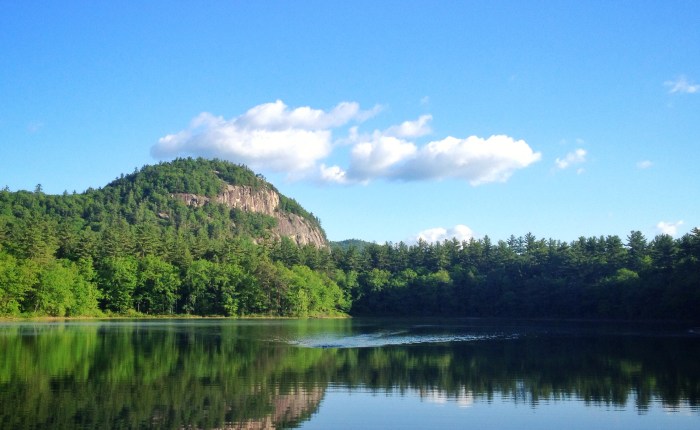
“The pushback was just like it is now,” ecologist Gene Likens said on Tuesday, talking about how his research in the White Mountains was received when it went public in the mid-1970s. Big vested business interests and their allies rejected his findings, he said, until he and his teams could show scientifically where the pollutants causing acid rain were coming from—industrial polluters in the Midwest.

From initial discovery to the enactment of new rules limiting those polluters took nearly a generation. Or, as Likens likes to put it, “27 years, three presidents and one pope.”

Now, he said, he’s watching something similar happen with climate change.

Likens research and his legacy are intimately tied to the White Mountains. It began in 1963 when Likens was a professor at Dartmouth College. He was the lead scientist of a team studying streamwater chemistry in the Hubbard Brook Experimental Forest outside Lincoln, the U.S. Forest Service’s forest-laboratory of the White Mountains. His team wanted to know how the forest worked, to understand the inputs and outputs, what made it tick. They weren’t looking for anything specific, Likens said, but what they they found surprised them: water infused with sulfur dioxide and nitrogen oxides, a concoction capable of leaching aluminum from the soil and depositing it downstream in lakes and rivers, and also capable of killing insects, fish and plants along the way.

What they found was acid rain.

“The very first sample of rain we collected was very acidic,” said Likens, with acidity levels 100 times above normal. “Nobody knew there was a problem,” he said. “It was pure serendipity. So much of science is that way. We didn’t set out to discover acid rain. It was there and we ran with it.”

Their research led to an article in the journal Environment in 1972. Two years later Likens, now a professor at Cornell University, replicated the experiment in the Finger Lakes region of central New York, where again they found sulfur dioxides and nitrogen oxides in the water. He and a colleague published again published their findings, this time in the journal Science.

That’s when their research got noticed.

“It was picked up by the New York Times,” Likens said. “It ran on the front page.”

The year was 1974. Acid rain for the first time was in national headlines. It would be another 16 years before Congress passed revisions to the Clean Air Act to curb the industrial pollution that was the cause.

From acid rain’s discovery in 1963 to Congressional action in 1990, all of it started in the White Mountains, in the Hubbard Brook Experimental Forest, which Likens calls one of the most studied ecosystems on the planet.

“We are much more effective stewards when we have long-term monitoring to guide us,” Likens said, “but the reality is such studies are quite rare.”

Likens research has included collecting decades of stream water chemistry data and associated rainfall information, creating one of the longest such records for any site on Earth. “And I’m still doing it,” he said.

And scientists in other disciplines have been doing similar work, leaving long records that allow researchers to see trends over time.

“So with climate change we can say what happened,” Likens said, “and what is happening.”

Birds in the forest, for example, are arriving earlier. Buds sprout earlier. Mirror Lake, “probably one of the most studied lakes in the world,” he said, is now covered by ice 20 days less each winter than in years past. The planet is definitely warming.

But when it comes to climate change some people push back against the science. And they doubt human involvement. Likens said he seen this before, that it was the same debate over causation that raged with acid rain.

But as a researcher, Likens said, his job is not to get lost in those arguments. A researcher’s job is to continue working, he said, to explore and examine, to collect data and ensure a record exists of what happens in the world.

“I’m not an advocate,” Likens said. “I’m not a politician. I’m a scientist.”


A version of this story ran in Saturday’s Conway Daily Sun.

On Science

On Science

IMG_7944-1Yesterday I woke up to a bear in the yard.

He wasn’t doing anything really, just milling about. I watched him through the window, basked in orange sunlight as he snooped. Then I packed my things to go swimming.

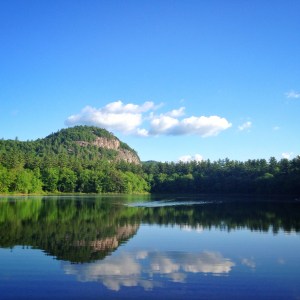
I’m not much of a swimmer. I did a lap across the lake, pausing in the middle to lie on my back, float and stare upwards. I could feel my heartbeat in my ears as I let my wetsuit suspend me, limbs dangling in the water. When I exhaled I sunk. When I inhaled I rose. I watched clouds track overhead, felt the ripples as they brushed my face, then closed my eyes, floating. I stayed like that, motionless, just breathing, for what felt like hours. It may have only been a minute; I lost track of time. Then I turned into the water and aimed for the near shore.

Driving home my phone rang. I didn’t recognize the number, but I answered anyway. “Hi, this is Erik.”

On the other end was Gene Likens, the scientist who 50 years ago discovered acid rain. An ecologist and former Dartmouth College professor, his most recognized work took place at the Hubbard Brook Experimental Forest, a site an hour drive from where I spent my swim. Likens co-wrote a book on the forest, and I thought it might be worthy of a story. We spent 20 minutes talking. He described the surprise of discovering acid rain.

“Nobody knew there was a problem,” he said, but “the very first sample of rain we collected was very acidic,” up to 100 times the normal levels.

What got them to look at rainwater? Curiosity.

“It was purely serendipity,” he said. “So much of science is this way.”

“We didn’t set out to discover acid rain,” he said. “It was there and we ran with it.”

A quote has sat on my desktop for several years:

The beauty of science is not in the answers it provides, but in the act of questioning. And each question leads to more questions. There are no answers, only infinite questions.”

It’s not a quote from some book or from anybody famous. It’s mine, just some musings I scribbled. I jotted it down one day when it popped into my head, something I didn’t want to forget, even though I’ve now forgotten the context it came from.

But yesterday I heard echoes of it in Likens. He was not studying stream water to prove some point. He was there to learn, driven by curiosity. It was a search of wonder, devoid of ego, even though it eventually made a name for Likens.

Science is built on such wonder. It is the act of questioning, of exploration and answers so tenuous they are subject to constant revision. But through the soft passage of time, through the constant brushstrokes of curiosity, a truth emerges. What emerges is the heart, the soul of our world, something foundational. But no part is so sacred it cannot be discarded, slain. Everything is open to more questions. There is something beautiful in that.

I can’t help but wonder if religion is born from the same roots, if at one point humans looked at the majesty of the universe and couldn’t help but exclaim, “Who could have made such a beautiful thing?!” and the answer they came up with was God.

That question is a perfect one. Who could have made such a beautiful thing? What could have led to this, to this world and this life? They echo the question scientists ask today. Look into the heart of the world. Whether your launch point is science or religion it is impossible not to be overcome by wonder, by beauty and grace and the perfect harmony of things larger than ourselves. How does the Earth spin around the Sun? How did life come into being? How did so much order grow out of seemingly infinite chaos?

Those questions were with me too. They were in the bear sitting outside the window yesterday morning, in the beat of my heart in my head, in the caress of the water and the color of the sky. They are questions I asked the lake lying on prone in the water, buoyed up by a force I will never fully understand, asked the sky gazing at clouds dotting a blue so striking it felt like more water. Neither revealed their secrets, but they shared gifts just the same.

Wonder. Beauty. Grace. These are both the heart of science and the heart of religion. Indeed, they are perhaps the heart of everything. The magic of creation is captured in a piece of music, a Van Gogh painting, in Shakespeare and Hemingway. In the movie that speaks to our hearts, in the play that touches our souls, in the book that we come back to and back to. Science, religion, music, art—it is all the same. It is all one thing, different versions of the same dance.

And that dance can take place in the world, with the Earth as your partner: the perfect wave to the surfer, the long winding trail to the runner, the sweep of immaculate stone to the climber. The friend that stands opposite you in dark times. The lover who shares your bed. Creations all. Art, science, religion, beauty all. Questions, infinite questions, too big to ever contain in something so small as an answer, all.

I wrote the piece on Likens today. It will never do justice to his story. But his answers are not the point. He is a scientist; the point is always the questions.

CDS Column: Cuba, A One-Hour Visit

CDS Column: Cuba, A One-Hour Visit

IMG_8150How do you explain a country?

It’s a presumptuous task. I’ve taken six trips to Cuba in the last year, spent a little over two months there, visited a handful of towns, climbed in the western mountains, swam in the clear blue Caribbean, danced in Salsa wherever I could and wandered the Malecon. I’ve also listened to multiple professors discuss topics from trade to transgender rights, studied their history and talked politics with the people.

But still. The Cuban/American relationship is so embattled, so complex, how do you boil it down to an hour talk?

GEMM9041
Jamie Gemmiti photo

That was Thursday night. The North Conway Public Library asked me about giving a slideshow on Cuba, about what it’s like to go there. I agreed—I fell in love with the country, and after a handful of visits it was clear the island was vastly misunderstood at home.

How? Communism, for example: Cuba is a country of small-scale entrepreneurs running restaurants and rooming houses out of their homes. There is a hustle to these new businesses, a creative energy akin to the growing food truck culture of the United States.

These enterprises exist against a backdrop of state-run restaurants and hotels that Cubans themselves will tell you are bad, not worth visiting. The state-run enterprises get government funding, but they also suffer from the endemic sluggishness of businesses allowed to bloom without fear of competition. Communism exists in Cuba, but it is no longer ubiquitous. It is the dead skin the country is still working to slough off.

And history. Explaining the longstanding Cuban desire for an independent state to Americans is an upstream paddle. We remember the Bay of Pigs and the Cuban Missile crisis but have forgotten the Spanish-American War. Cubans remember both. And their version of those stories are different from ours.

Cuba was a Spanish slave colony for hundreds of years, a satellite possession rich in sugar. But that wealth was siphoned off. The island was populated by serfs and a few wealthy masters who minded the plantations.

But in the mid-1800s a handful of those masters grew distasteful of the inequality surrounding them. Like American patriots 100 years before, they began writing and speaking about a freedom and building a national consciousness where previously there had been none.

Then in the 1890s they went to war with Spain, and the United States joined the fight. Cubans reasoned American assistance was offered in solidarity—America too had once been a colonial possession. But when the war was over and Cuba “liberated” freedom proved to be in name only: the country traded one overlord for another. Their protector became their new master.

That is not history most Americans remember, or how most Americans remember that history. But island stayed as it was: a land of serfs ruled by far off masters. Their dreams of freedom were deferred.

Enter the revolution. In American eyes it was the insidious growth of communism. But to Cubans it was the realization of a long held dream, one of national self-determination and governance. Nearly 200 years after Americans threw off the yoke of colonialism by kicking out the British Cubans got to do the same, but the oppressor they had to expel wore the Stars and Stripes.

Again, not a story Americans are used to hearing. But walk around downtown Havana and you’ll see indications of just how much influence the American Revolution had on Cuban thinking. Statues and depictions of U.S. presidents dot the city. Their words are inscribed on Cuban monuments. Cubans feel a brotherhood with anyone striving for freedom, regardless of past (or current) animosity. It is a refreshing view of the world.

And that’s how the people are too: not once in six trips did I have a Cuban cuss me out for being American. Indeed, what I experienced was the opposite—excitement that I was visiting their homeland, that I was interested in their country. Tell a Cuban you’re from America and they’ll smile wide. They’ll grab your hand and shake it vigorously. They clap you on the shoulder and tell you “Welcome!” This is not the response of an enemy; it is the reaction of a long-missed friend.

And that’s what’s so hard to explain. To Americans Cuba’s isolation and glaring absence from the standard diplomatic worldview has gone largely unnoticed. And when it pops up it is something askew, a decision that is their fault, the result of their bad behavior. That is our reading our history.

But for Cubans the country they feel most akin to walked out on them. Their cultural touchstone, indeed their inspiration for independence, shut the door on them. That it is now cracking back open is a joyous thing.

I gave a slideshow on Thursday about Cuba. It was mostly words and pictures, sunsets and sand beaches. Those things are beautiful, and Cuba is rich with them.

But it’s much harder to capture the island’s palpable emotion, the joy that rekindled relations has brought the Cuban people. It’s a warmth of welcome Americans struggle with—our enemies of 60 years are often deeply demonized, universally denounced as “evil.” Few people say of Iraqis and Afghans, Iranians, North Koreans or Cubans “but the people, they are our kin.” They are more often viewed as hostile collaborators, willing supporters, people to be feared. The governments and the governed are viewed through one lens.

That is where Cubans are most refreshing: 60 years of exclusion and they still haven’t lost their sense of nuance. The American people are not the embargo, nor are they the travel ban. They are people, just like their Cuban counterparts, and people are meant to be welcomed, embraced, warmly greeted, regardless of politics or history. Cubans know that.

Amid the pictures of Afro-Cuban street musicians and colonial cityscapes I would have done well to mention that more.


This piece appeared in today’s Conway Daily Sun.

Enoch Glidden, and the Question “How Can I?”

Enoch Glidden, and the Question “How Can I?”
DSC01212-2 1
Glidden on Washington Column.

What does it take to climb a 3,000-foot cliff?

For Enoch Glidden, a 37-year-old wheelchair-bound climber born with spina bifida, it might sound like a complex challenge built around planning, hundreds of feet of rope, specially designed climbing equipment and more.

But ask him what it takes, and he doesn’t give a complex answer. The Western Maine native keeps it simple: Climbing a 3,000-foot cliff requires friends.

“Nobody does anything without help, disabled or not,” he said.

Next fall Glidden is headed to Yosemite Valley, Calif., the mecca of American rock climbing, with plans to climb El Capitan, the massive granite touchstone for rock climbers worldwide. He’s been there once, last year, and despite his inability to move his legs, he climbed 600 feet up a towering granite rock face.

“It’s possible,” he said. It just comes down to a question he’s asked himself over and over: “How can I?”

That is the theme of the slide show Glidden will be giving Saturday night at International Mountain Equipment in North Conway. “Go Beyond the Fence” discusses his trip last fall and is a step on the road to his next challenge, El Capitan.

“That question has come up my whole life,” Glidden said. “How can I?” He got his first wheelchair when he was 4. Paralyzed from the waist down, he refuses to let that hold him back: He skis (both downhill and cross-country), competes in wheelchair races, plays basketball and is close to getting his pilot’s license. When he sees a challenge he runs at it, and four years ago the new challenge he discovered was climbing.

“It’s just kind of the ultimate challenge,” he said. “It’s all me to get up there.”

He started in New York with Paradox Sports, a Colorado-based nonprofit dedicated to adaptive sports. That led him to ice climbing closer to home — he’s attended Paradox Ice events in North Conway the past three years.

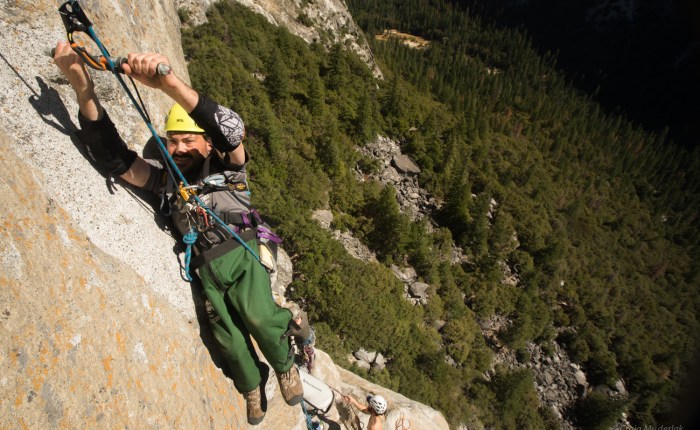
In Yosemite last year, he and a team climbed up Washington Column, a granite tower a few miles north of El Capitan.

But as he said, these kinds of climbs don’t happen alone.

“Pretty much everywhere I go, someone volunteers,” Glidden said. Last fall they had a team of four the night before the planned ascent. By the next morning, their team was up to double digits. People just seem to want to be involved, Glidden said. “I did one presentation, and a whole bunch of people volunteered.”

The group hiked to the base of Washington Column, carrying Glidden over broken rock and talus. They climbed 500 feet up, spent the night, then climbed another 100 feet the next day.

“Two climbers go ahead and set the rope,” Glidden said, “and then I do pull-ups on the rope.”

He has a special rope-climbing device rigged with a mini pull-up bar, he said, which he uses to climb the rope.

“The hardest part is living on the wall,” he said. He can’t stand up, so he can’t move around easily. That makes routine tasks like dressing and going to the bathroom difficult. “You can train for pull-ups. You can’t train for the portaledge,” the fabric platform he uses for resting and sleeping, he said.

But he learned a lot on that trip, worked out many of the kinks. Now “I’m pretty much dialed in,” he said. For his trip this year he won’t be scouring around Yosemite for partners. “This time I’m bringing people with me.”

The climb will take five days and nights, and involve sleeping on the side of the cliff. Glidden will again ascend a rope strung up by partners, doing thousands upon thousands of pull-ups over the course of the ascent. This will be by far the biggest climbing challenge he’s attempted.

But in some ways the vertical world is easier than some of the challenges that come before. First, he has to get to the wall. It’s a steep walk over rough terrain to get to the base of Zodiac, his planned route up El Capitan’s right flank.

That’s where the friends come in: helping get him to the climb, not just up it, and then also off the top of El Capitan and down. He’s got 14 people planning to join for some part of the mission, but it’s still up to him to do all those pull-ups. There will be a crew shooting video, plus Glidden blogging, and Paradox Sports and the Spina Bifida Foundation of Greater New England will be broadcasting the climb as well.

But all that is in October. For now, Glidden is still training, still getting ready for the challenge ahead. He’s been taking lessons from Sean O’Neill of Brownfield, Maine, who pioneered many climbing techniques for paraplegics. O’Neill climbed El Capitan by the same route in 2006, also doing thousands of pull-ups.

“He basically taught me everything,” Glidden said.

And along with training, he’s pulling together the funds to get himself out there. He just finished his degree in computer information systems, and he’s planning to intern for the summer in Palo Alto, Calif.

“The day that ends I’m going to Yosemite to go climbing,” he said.

But Saturday night at IME, 2733 White Mountain Highway, North Conway, the Mount Washington Valley will get a taste of his ascent, with video shot from his trip last fall. And Glidden wille discussing that all-important question, “How can I?”

The event will be held upstairs at IME on Main Street in North Conway Village. Doors open at 6:30 p.m. with free beer courtesy of Tuckerman’s Brewery. The film portion will begin at 7 p.m. There is a suggested donation of $10.

This story appeared in today’s Conway Daily Sun.