On Science

On Science

IMG_7944-1Yesterday I woke up to a bear in the yard.

He wasn’t doing anything really, just milling about. I watched him through the window, basked in orange sunlight as he snooped. Then I packed my things to go swimming.

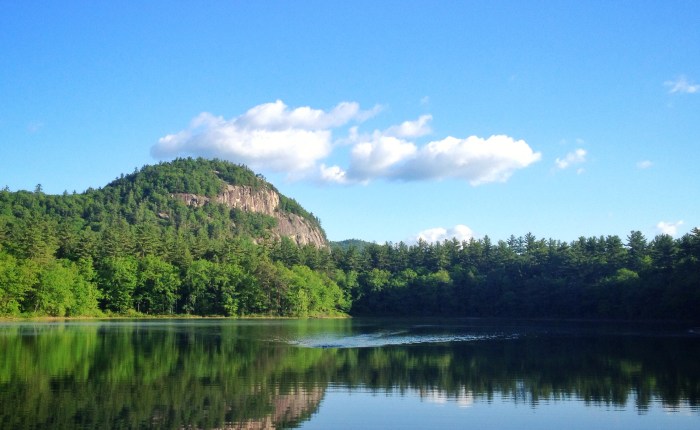
I’m not much of a swimmer. I did a lap across the lake, pausing in the middle to lie on my back, float and stare upwards. I could feel my heartbeat in my ears as I let my wetsuit suspend me, limbs dangling in the water. When I exhaled I sunk. When I inhaled I rose. I watched clouds track overhead, felt the ripples as they brushed my face, then closed my eyes, floating. I stayed like that, motionless, just breathing, for what felt like hours. It may have only been a minute; I lost track of time. Then I turned into the water and aimed for the near shore.

Driving home my phone rang. I didn’t recognize the number, but I answered anyway. “Hi, this is Erik.”

On the other end was Gene Likens, the scientist who 50 years ago discovered acid rain. An ecologist and former Dartmouth College professor, his most recognized work took place at the Hubbard Brook Experimental Forest, a site an hour drive from where I spent my swim. Likens co-wrote a book on the forest, and I thought it might be worthy of a story. We spent 20 minutes talking. He described the surprise of discovering acid rain.

“Nobody knew there was a problem,” he said, but “the very first sample of rain we collected was very acidic,” up to 100 times the normal levels.

What got them to look at rainwater? Curiosity.

“It was purely serendipity,” he said. “So much of science is this way.”

“We didn’t set out to discover acid rain,” he said. “It was there and we ran with it.”

A quote has sat on my desktop for several years:

The beauty of science is not in the answers it provides, but in the act of questioning. And each question leads to more questions. There are no answers, only infinite questions.”

It’s not a quote from some book or from anybody famous. It’s mine, just some musings I scribbled. I jotted it down one day when it popped into my head, something I didn’t want to forget, even though I’ve now forgotten the context it came from.

But yesterday I heard echoes of it in Likens. He was not studying stream water to prove some point. He was there to learn, driven by curiosity. It was a search of wonder, devoid of ego, even though it eventually made a name for Likens.

Science is built on such wonder. It is the act of questioning, of exploration and answers so tenuous they are subject to constant revision. But through the soft passage of time, through the constant brushstrokes of curiosity, a truth emerges. What emerges is the heart, the soul of our world, something foundational. But no part is so sacred it cannot be discarded, slain. Everything is open to more questions. There is something beautiful in that.

I can’t help but wonder if religion is born from the same roots, if at one point humans looked at the majesty of the universe and couldn’t help but exclaim, “Who could have made such a beautiful thing?!” and the answer they came up with was God.

That question is a perfect one. Who could have made such a beautiful thing? What could have led to this, to this world and this life? They echo the question scientists ask today. Look into the heart of the world. Whether your launch point is science or religion it is impossible not to be overcome by wonder, by beauty and grace and the perfect harmony of things larger than ourselves. How does the Earth spin around the Sun? How did life come into being? How did so much order grow out of seemingly infinite chaos?

Those questions were with me too. They were in the bear sitting outside the window yesterday morning, in the beat of my heart in my head, in the caress of the water and the color of the sky. They are questions I asked the lake lying on prone in the water, buoyed up by a force I will never fully understand, asked the sky gazing at clouds dotting a blue so striking it felt like more water. Neither revealed their secrets, but they shared gifts just the same.

Wonder. Beauty. Grace. These are both the heart of science and the heart of religion. Indeed, they are perhaps the heart of everything. The magic of creation is captured in a piece of music, a Van Gogh painting, in Shakespeare and Hemingway. In the movie that speaks to our hearts, in the play that touches our souls, in the book that we come back to and back to. Science, religion, music, art—it is all the same. It is all one thing, different versions of the same dance.

And that dance can take place in the world, with the Earth as your partner: the perfect wave to the surfer, the long winding trail to the runner, the sweep of immaculate stone to the climber. The friend that stands opposite you in dark times. The lover who shares your bed. Creations all. Art, science, religion, beauty all. Questions, infinite questions, too big to ever contain in something so small as an answer, all.

I wrote the piece on Likens today. It will never do justice to his story. But his answers are not the point. He is a scientist; the point is always the questions.
Plastics, the Environment and the Economy

Plastics, the Environment and the Economy

IMG_5458Sometimes the economy and the environment are at odds.

In recent weeks I’ve been reading a lot about plastic, and plastics in the ocean in particular.

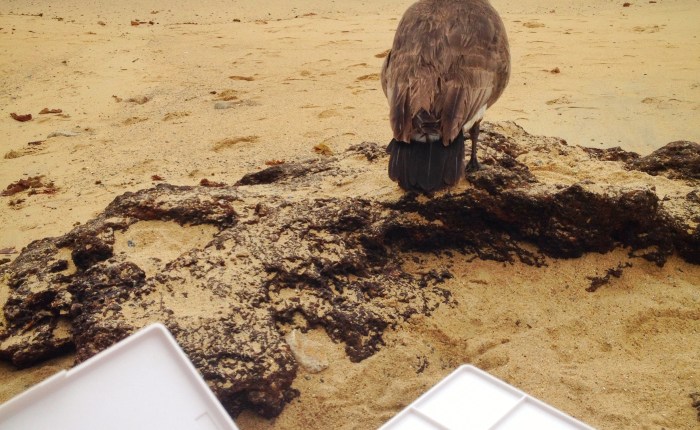
It started in April with a stop at the Smithsonian Museum of Natural History. Wandering the exhibits I came across a pair of displays in the Sant Ocean Hall that caught my attention: two piles of trash. One was pulled from the stomach of a seabird, the other from the stomach of a whale. In each pile were hundreds of scraps—pieces of bags, bottle caps and boat parts—almost all of them plastic. Both animals died as a result of their ingestion choices. Plastics look bright and shiny, similar enough to edible tidbits these creatures have eaten for generations to be deadly. So they gobble it up. The result is a belly full of trash.

That was the first thing that got me thinking about plastic. Then I stumbled upon a “say no to straws” campaign highlighting the amount of plastic used each day for the completely arbitrary task of getting our drinks out of our glasses and into our mouths. It seemed absurd: like there isn’t another way to drink a drink? Is that really what we are doing, filling our oceans with garbage in exchange for saving us the trouble of lifting our glasses?

After a bit more research and a few conversations with friends I learned about this initiative:


Apparently the answer is yes, that is exactly what we are doing. Plastic is everywhere. EVERYWHERE. In the ocean, ground up into little bits so small we can’t even see them, rolling among the waves.

That is plastic in the environment.

Then there is plastic in the economy. This morning a news piece from Marketplace.org called “The Next Global Glut: Plastics” popped up on my news feed. The gist is this: with crude oil prices at record lows production of oil-derived goods like plastic are going to increase.

Several new petrochemical plants are being developed, especially around Houston and Louisiana. Vafiadis said the high output from the natural gas industry in the U.S. makes it financially feasible for companies to spend billions of dollars in new plants. 

“There’s enough natural resources available to make the majority of the projects that are being considered today viable,” Vafiadis said. 

As new plants come online, global plastic output will swell. IHS expects that more than 24 million metric tons of new production capacity of polyethylene alone will be added to the market by 2020. About a third of that new capacity will come from the U.S. and will come online within the next few years.

Not mentioned in the story is with increased production comes increased disposal. The giant pile of trash already swirling in ocean will grow.

The environment and the economy—when it comes to plastics there seem to be two distinct conversations: one about growth, the other about impact. Watching these conversations unfold in tandem and without intersection is like watching someone with multiple personality disorder argue with themselves. It’s two halves of the brain unable to connect directly. There are questions of demand, but also of impact. Where is that, the complete conversation, supposed to live?

10,000 Seafloor Clicks

10,000 Seafloor Clicks

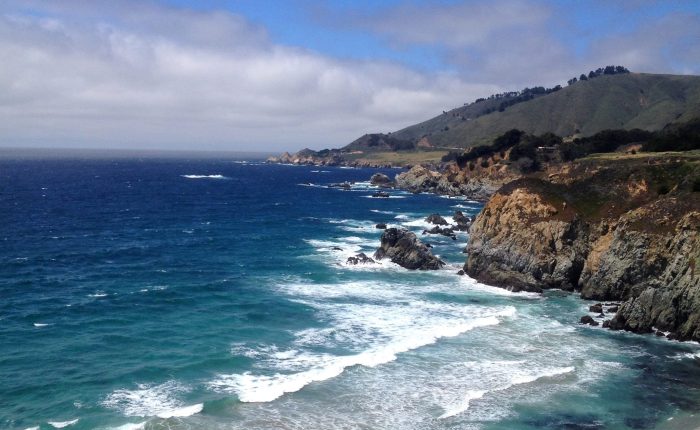
13235224_1490935110932569_1854608173923259447_oIt’s a long drive from Monterey Bay to San Diego, punctuated by towering seacliffs and emptiness. It’s the kind of drive were you find yourself pulling over every five minutes, where the landscape looks sculpted by god. Big Sur. Kerouac’s coast. Every photo looks magnificent, but none are able to capture the spirit of the place.
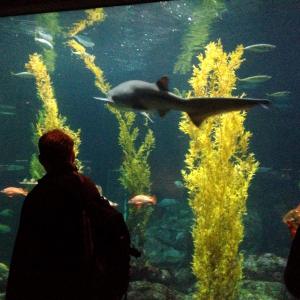
I spent the morning at the Monterey Bay Aquarium, where you can pet a stingray, watch bluefin tuna and hammerhead sharks grow frantic around shimmering clouds of sardines, see hoards of jellyfish from inches away and marvel at octopus species so different one looks like graffiti and another like camouflage. It took hours to wander through the exhibits, past giant bass and sharks and sea anemones.

One small crustacean I barely took notice of was a shrimp. He was a few inches long, with a pair of lobster-like claws, one substantially bigger than the other. His name? The snapping shrimp. I definitely saw one stowed underwater and behind glass, but I barely took notice. It was just another weird little ocean creature, nothing as majestic as the large pelagic predators or as striking as the brightly colored fish. It was just a shrimp.

13235634_1490935080932572_338291320125641097_oThen I started driving. I skirted my way out of Monterey, past Carmel and onto the Pacific Coast Highway. Hours clocked past. The landscape grew into lofty hills above an azure sea. First cell phone coverage faded, then the radio stations. “Next gas 62 miles,” the sign said.
But I come prepared for such terrain: I plugged my iPhone into the auxiliary jack and scrolled through my podcasts. Suddenly one of my favorites caught my eye—Radiolab.

The episode was called “Bigger than Bacon,” and it was about this strange sound emanating out of the ocean: a crackling, like the popping of bubblewrap. What was the culprit? Snapping shrimp!

But more amazing is the power of that sound, as well as the phenomena that accompany it. The snapping is masked by water, muffled, but in reality each snap is roughly 220 decibels, or about as loud as a jet engine. The claw closes at 60 miles an hour, but it occurs in a space so small something amazing happens: at the base of the ocean where no air sits, the snapping shrimp’s claw closes so quickly it forces away all the water, literally vaporizing it, creating a vacuum, an air bubble. Suddenly a void exists where previously there was none, a brief spot of emptiness created by a couple-inch-long organism.

And when the water rushes to fill that space it does it with a vengeance. Molecules slam into one another at such a pace that the space that was once a bubble heats up to 5,000 degrees, the temperature of the surface of the sun. On the seafloor. In the claws of a shrimp.

Seriously. This is no joke. This is real. Scientists even captured it on video:


But here’s the best part: as I listened I drove. And I drove. I drove past the pristine shores of central California, past Santa Barbara and Ventura and the megapolis of Los Angeles, to San Diego, to friends and surf and southern California beaches. I spent a week there, surfing, eating tacos and diving; swimming through Pacific waters in a mask, fins and snorkel, chasing sea lions and Garibaldi fish and leopard sharks.

And the whole time I heard snapping. Every time my ears broke the surface I heard it. I’d never noticed it before, never paid enough attention, but now whenever my head went underwater it was an orchestra. The shrimp were everywhere. I could hear the snapping of their claws at the surface, and when I dove it only got louder. I never saw them, but I could picture the little crustaceans scampering across the seafloor, smashing their claws together like Marvel Comic heroes generating plasma-like heat rays in their palms. The floor of the ocean was on fire, but only the shrimp could see it. And me.

(The full Radiolab is definitely worth a listen. Maybe on a drive?)

https://www.wnyc.org/widgets/ondemand_player/radiolab/#file=%2Faudio%2Fxspf%2F603688%2F

Saving Caucasian Snow

Saving Caucasian Snow
11935159_10206619945471708_9033694213573887170_o
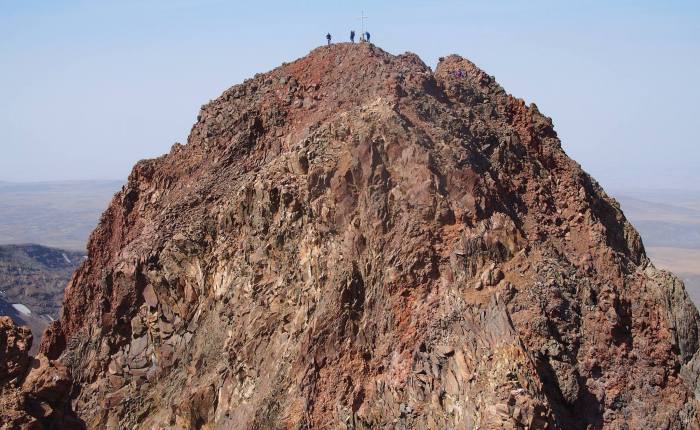
Part of our team on the north summit of Aragats. Tim Terpstra photo

Last September I took a flight from Boston to Yerevan, the capital of Armenia, a country I had barely heard of and knew even less about. Tucked in between Turkey, Iran and a handful of former Soviet republics, it is an arid plain with a history of invasion and cross-invasion.

It is also home to the Lesser Caucus Mountains, part of the mountain range that divides Europe from Asia. I was there on an American Alpine Club climber exchange, teamed up with Americans, Armenians and Iranians climbing our way across Armenia and Georgia, everything from single-pitch sport and trad routes to alpine snow and ice up 5,000 meter peaks. It was a tremendous three weeks, one full of new friends and meaningful connections.

One of the mountains we climbed along the way was Mount Aragats, the tallest peak in Armenia. (Historically Mount Ararat was the tallest peak in Armenia, but it’s now part of Turkey, and the border is closed. This is a painful fact for Armenians.) Aragats has four distinct summits, the north being the tallest at 13,420 feet. Climbing it means clambering over loose shale and boulders to windswept ridges. Most of the mountain feels unstable, like stacked blocks barely held together. There was one small patch of snow tucked beneath the southern and western summits, but otherwise it was dusty, dry and hot.

Historically, however, the snows of Aragats have held through the summers. They have kept creeks flowing in hotter months. Prior to escalating global temperatures, Aragatan snowfields would last through the year and provide a stable source of water through dry times.

Today, however, high temperatures melt things quickly, leaving the valleys flooded in the spring and parched by fall.

This short documentary by Armenian filmmaker Vardan Hovhannisyan lays out what is happening, and what local scientists are trying to do about it:


Yep. Thermal blankets. Several of us noticed them on our descent—white mounds squirreled away beneath the south summit. We didn’t realize what they were, that they were an attempt to save Aragats’ last few patches of snow. I remember discussing them when we got back to camp, but no one could tell exactly what they were. Now we know.

Blankets. Is that the solution to global warming? For now, the answer in Armenia seems to be yes. But it’s a lot of pressure for a few swath of fabric. What if the blankets insulate too well? Or not well enough? How many do they need to makes sure there is enough water? Do they have to cover the mountain? What happens if things don’t last through the summer?

These are complex questions, ones previously left to nature to ponder. But lately her answers have left Armenians parched. Now it’s up to Armenian scientists to see if they can do better.

When we were there in September our team didn’t know the difference. We didn’t realize we were walking over fields usually covered with snow. We scrambled the bare rocks unaware they normally would be entombed by snow.

To us Armenia was just dry. Now we know why.

Rhinos, Horns, and Compounding Complications

Rhinos, Horns, and Compounding Complications

Moz-1020958I was working this morning when a story about the legalization of the rhino horn trade in South Africa drifted across my computer screen. The South African Supreme Court yesterday struck down a ban on domestic sales of rhinoceros horns. International trade is still illegal, but the verdict makes it possible to now sell horns inside the country.

Harvesting horns can be done without killing the rhinoceros. If the horn is cut off above the root it will grow back. One rhino rancher in the story said he had stockpiled five tons of horns since the domestic ban was implemented in 2009.

But the lifting of the ban opens the door for the sale of illegally harvested horns too. And considering the value of rhino horn, the market demand in Asia and the corruption prevalent in South Africa, it seems destined to bolster the illicit trade.

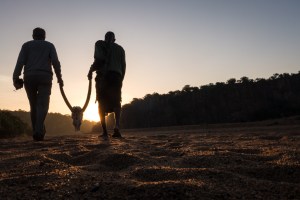
Two years ago I was in South Africa. I was there for work, but I had time to tour Kruger National Park, one of the largest game reserves in Africa and home to many rhinos. I drove through after a week in Mozambique alongside Majka Burhardt working on a development project in the newly-born Limpopo National Park. The project was short-lived, but it gave me a chance to see Kruger, and Limpopo.

It also gave me a chance to see just how complicated effective conservation can be, even when what is at stake is something as endangered and iconic as rhinoceros.

Limpopo abuts Kruger National Park, sitting just over the Mozambican border. It’s about half the size of Kruger, running roughly half its length. On paper the two are similar—massive game reserves that together form a transnational park—but where Kruger has a 100+ year tradition of conservation Limpopo is brand new. The roads are rough, the facilities primitive, the infrastructure nonexistent. Mozambique is nowhere close to South Africa in its development or its ability to provide effective governance. One South African telling us, “This is real Africa,” like his country was Africa-light.

And it seemed true: South Africa is far more developed than its neighbors. The Mozambican government had hired a team of white South Africans to help implement the new national park and teach Mozambique the techniques that had made Kruger successful. And those South Africans collectively shook their heads at the challenges in Limpopo.

The largest challenge? Poaching. Specifically, rhino poaching. But not in Limpopo; in Kruger. Poachers were using Limpopo as a launching point for excursions into Kruger, where stocks of rhinos were plentiful, and as a refuge for once they had possession of a horn.

Limpopo is a new park, new enough that it still contains villages. As we passed over its rough dirt roads small outposts of huts sprang up. Inhabitants numbering in the dozens, perhaps up to 50. Those villages, according to park officials, are where the poachers live.

But Limpopo lacks animals. In two days there we saw one Cape buffalo. In Kruger we saw whole herds. We saw zero lions, zero elephants, zero hippopotamus. Compared to Kruger Limpopo was desolate, empty of the game that make African parks famous. A hunting concession in its former life, Limpopo was barren. So while the 20th century offered Kruger’s animal populations protection, Limpopo’s fauna faced getting shot. Today anything within its borders is protected, but in reality there isn’t much left to protect.

And according to park officials, the villagers in Limpopo include teams of poachers who sneak across the border to shoot rhinos, hack off the horns with axes and then return home.

As we drove through the villages an official pointed to one of the huts. A pickup truck sat parked out front. “That’s a poacher,” he said. They don’t hide it. They don’t have to.

On the Kruger side, however, they do. In the field it’s often the sound of the ax that gives them away. The chopping—you can hear it for miles. But still, it’s hard to catch them in the act. Often times patrols find the bloody carcass with a snout in tatters.

It would be tempting to just move the villagers, to declare Limpopo a park and demand they find somewhere else to live, but this isn’t 1898. Native people have rights, and like the rhino, they also are in need of protection. Limpopo officials would love to pick up the villages and relocate the inhabitants outside the park, instantly cutting the poachers’ easy access to the rhinos, but in the modern era relocating native people is no simple task. What is the government to do, put them on “reservations” somewhere nearby? The world has a long history of such maneuvers, of taking people pulled from their native soil and forcibly settled on some new plot of land. Few of these tales have happy outcomes.

So in Limpopo the rights of villagers to clash with those of the rhinoceros. Protect the rights of one or the other, but not both. Who should officials prioritize? In hindsight either choice will likely wind up seeming crass and misguided.

But perhaps that is modern conservation: the easy problems have been solved. What’s left are difficult, intractable ones. It might be that way everywhere, not just in Limpopo.

And now South Africa has cracked the door to the rhino horn market. The problem doesn’t grow any simpler.