
 How long does it take to turn a ship? How long does it take to change course, to do something different, to avoid the metaphorical icebergs?
I say “metaphorical icebergs” because the risk of real icebergs is dwindling. It’s a warming world. Things they are melting, and there are real risks hiding behind the warmth: rising sea levels, drought, severe storms. These are the icebergs. Which of the levers do the turning? Does anyone understand the controls?
I spoke to ecologist Gene Likens last week, the scientist who discovered acid rain in North America. It took a generation to get from initial discovery to the passage of legislation aimed at curbing the pollution that caused it, or as Likens puts it, “27 years, three presidents and one pope.”
There are important things to note in that timeline: his first study, for example, came out 9 years after the discovery, meaning 27 years falls to 18 from when the information was publicly available. And it wasn’t until a 1974 study that newspapers picked up the story. That’s when acid rain really became a household issue; now we’re down to 16 years.
16 years is not the generation 27 years nears. It is, however, a long time. Likens said his science faced pushback from industry. Entrenched interests like oil and coal rejected the premise they had any responsibility for acid rain. It took proving that link scientifically to end the argument.
Of course such proof is important—there is no use in regulating an industry innocent of the charges. If it wasn’t oil and coal those laws would have just been more wasted time.
But every day that passed was a lost opportunity. More acid fell from the sky. There is a saying that the only two days that are impossible to change are yesterday and tomorrow. A lot of todays, however, went by in inaction, todays that could have turned the ship.

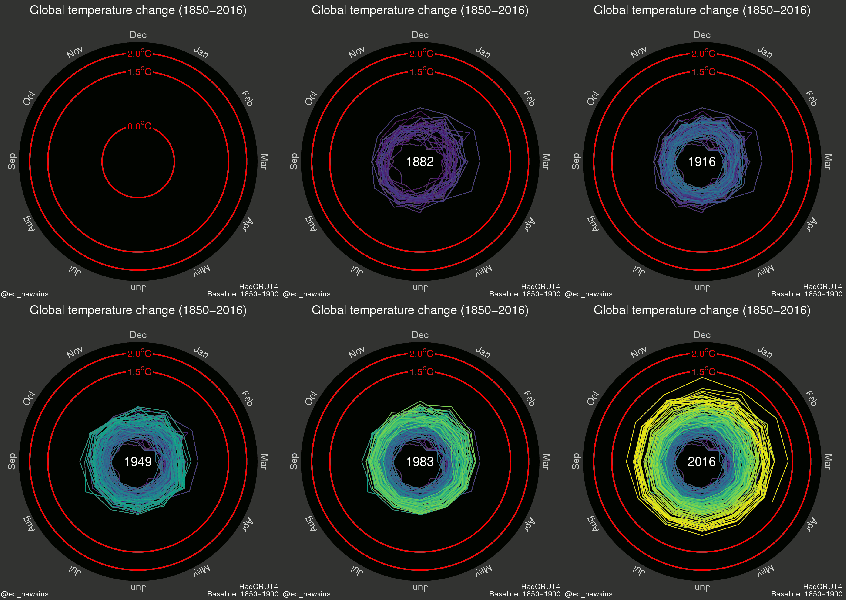
Now we face a different iceberg. Scientifically climate change is undisputed. The argument over human involvement remains, but the planet is getting hotter. And every today gets us closer to whatever comes next. Perhaps it is nothing. Perhaps it is catastrophe.
Likens compared the struggle over acid rain science with what’s happening today with climate change. “The pushback was just like it is now,” he said, again pointing to entrenched interests. Another generation-long fight could be in store.
A decade ago An Inconvenient Truth exploded the conversation about climate change, much like the New York Times coverage of the 1974 acid rain report. So if we benchmark the two, we’re at 10 years. Maybe we can match 16; maybe some course alteration will come down in 2022. That is a long way off, but it’s also almost here.
And what would it mean? What would turning the ship at this moment do? Are we surrounded by icebergs already? Are the coming changes beyond our power to affect? Are we simply too late, caught in a disaster impossible to avoid?
Who knows.That falls to tomorrow, one of those days you can’t change. But we can change today. But to do that we need to have faith in science, something seemingly in short supply with some.
Science is not the conspiracy of one man. It’s multilayered work, an exploration of chance, a process of search more than an answer. And while it can be mistaken (think of early experiments aimed to determine whether light was a particle or a wave—it behaves like both), those missteps are part of the process. The call is always daring to be proven wrong. Scientists strive for that, and yet climate change is not proving wrong.
Industry, meanwhile, as Likens pointed out has a mixed record, much more so than science. Tobacco companies, for example, showed the willingness of big business to subvert science for their own ends. Science’s agenda, meanwhile, has no choice but to bend toward truth. It’s built into the method, the practice of the discipline. It may be hard to put the two on a scale, but if you could the weight of replicable results would trump corporate claims, particularly when huge revenue losses enter the conversation. The skeptic sees industry with strong motivation to deceive; scientists, meanwhile, do not gain by being controversial, or by being wrong. They succeed by being right, precise and verifiable.
And these debates are the fulcrum on which the ship turns. Is there still time to spin the wheel? Even science doesn’t know. But we may all get a chance to find out. Tomorrow.

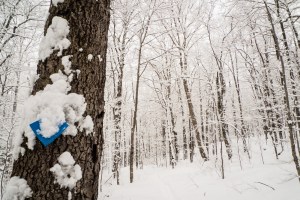 The scientist who uncovered acid rain in North America 50 years ago now sees a parallel struggle waging around climate change and the effects of global warming.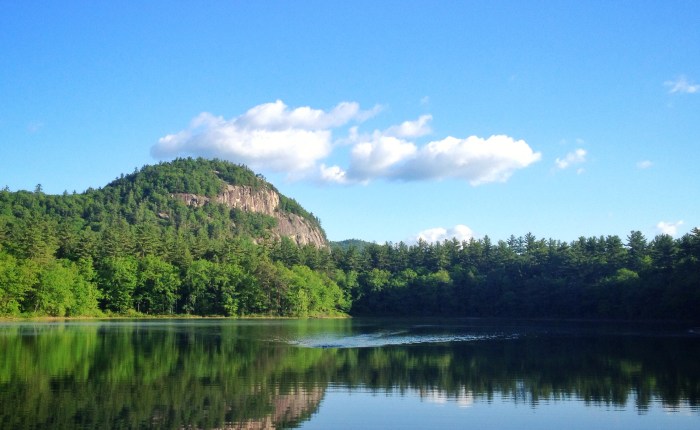
 Yesterday I woke up to a bear in the yard.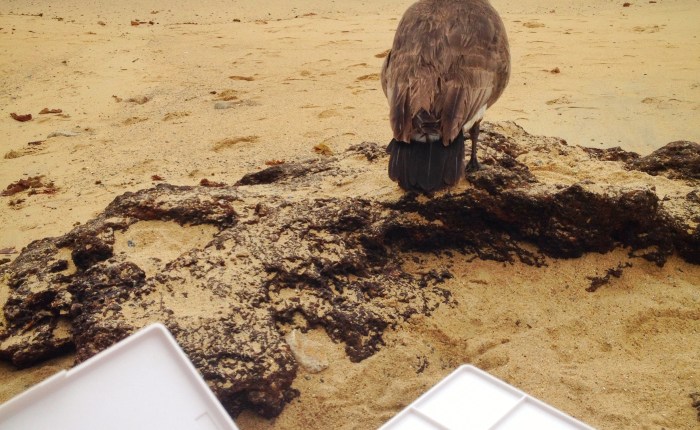
 Sometimes the economy and the environment are at odds.
 Last week I wrote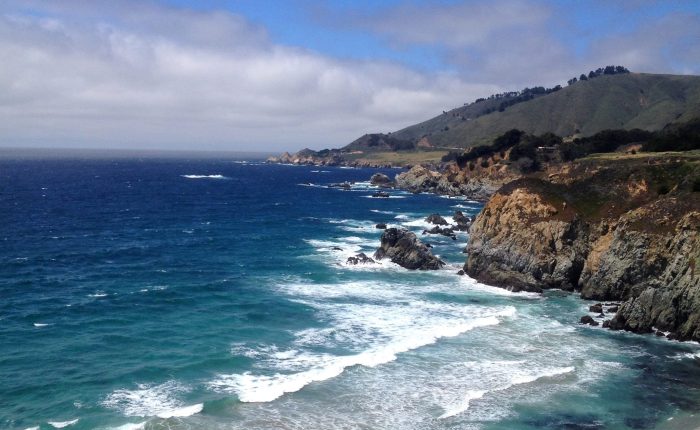
 It’s a long drive from Monterey Bay to San Diego, punctuated by towering seacliffs and emptiness. It’s the kind of drive were you find yourself pulling over every five minutes, where the landscape looks sculpted by god. Big Sur. Kerouac’s coast. Every photo looks magnificent, but none are able to capture the spirit of the place.
 Then I started driving. I skirted my way out of Monterey, past Carmel and onto the Pacific Coast Highway. Hours clocked past. The landscape grew into lofty hills above an azure sea. First cell phone coverage faded, then the radio stations. “Next gas 62 miles,” the sign said.
 The ceilings hung squat and low, traced by fluorescent lights dotted among recessed tiles. The hallway was dingy, scraped paint along bare walls and floors that wouldn’t shine no matter the scrubbing applied. Worn signs hung on the bathroom doors, faded now after too many handprints, only half the words now visible. Someone redrew the head on the men’s bathroom symbol, but they’d drawn it square. Inside, a black Magic Markered smiley face stared out.
 I was working this morning when
 Water. In Fryeburg, Maine, it’s a big deal: 603,000 gallons a day, a multinational company, a legal battle, a state Supreme Court ruling. Water is a very big deal.
 ErikEisele.com