The Smoke and the Fire

The Smoke and the Fire

e597d-dsc_0047Heroin. I’ve wanted to write about it for a while, about addiction and its affect on our state, our communities, but what do you say? It’s a drug, cheap, powerful and terrible. It destroys lives, families, futures. Column finished.
But it’s not that simple. Heroin is a symptom, the smoke that evidences fire. The actual disaster, however, runs deeper.
I’ve written several stories on opiate addiction, interviewed local officials, pulled court records, police logs, etc. A few years ago it was pills, but now it’s the street stuff. The tools themselves change, but the underlying story remains — people caught chasing the sweet release of poppies.
Among the conversations I had while writing those stories was one with a treatment specialist. Back in the 1960s and 1970s, he told me, during the Vietnam War, thousands of soldiers became heroin addicts. It was in easy supply in Southeast Asia, and in the chaos of war GIs turned to drugs to cope. There were fears at the time that returning troops would flood the streets of America as addicts, still searching for a fix.
But they didn’t. The flood never came. The soldiers returned home and settled back into their lives, rejoined their families and got jobs. They put the needles down and stepped back into the world.
That was 40 years ago, a very different world. Today the drugs are cheaper and more powerful, and many get hooked at the hospital, not at war. But the addictions remain, and this time they hold. They do not let go when people get home.
So what is different? What made it possible for veterans to let go of something that today swallows so many?
Community. Family. Opportunity. Connection. Those were the things that soldiers came home to, the treatment specialist told me, and they are missing now. The world is different. Decades ago returning veterans plugged back into communities, family units and an economy that was anticipating them, hungry for their participation. They came back to something, became part of something. They turned to heroin and other drugs to cope with a war, when they were lost and alone and disconnected, but upon reentry they found themselves surrounded by all the things that make life rich. In that environment, the needles lost their appeal.
When I look around today, that explanation makes sense. The land of the lost has migrated. Today we call it home.
What are the middle class opportunities today, the jobs that take those millions of Americans from struggling to standing on their own two feet? The mills are gone. So are the furniture making and logging jobs. Elsewhere it’s the auto industry that has evaporated, and the steel industry. And fishing. And manufacturing. Those places that four decades ago offered a stable middle class life to millions willing to work hard are shrinking or gone. They’ve been replaced by Walmart, by openings at hotels and restaurants, by service industry employment that makes ends meet only when you have two or three jobs.
Those are the opportunities now open to the same people who were once the backbone of America’s manufacturing might — the hardworking high school graduates, the people with “some college” or even degrees. No longer building, they instead serve, and they struggle to survive.
Families, meanwhile, have also splintered. The social fabric is now torn, and where parents and siblings might at one time have had the resources to catch a loved one slipping through the cracks, today everyone sits close to the edge. Parents whose retirement evaporated in the 2008 housing crash are in no position to buoy up their grown children in moments of crisis. It takes two incomes to build a life today, but families are split by more divorces than ever. Everyone is caught alone in their own race against insolvency; there is no time to look over your shoulder to check on someone else.
This stark landscape is now the foundation of entire communities — people struggling and alone, disconnected, unable to make ends meet, unable to look out for one another. The economic and family demographic transformation of 40 years, has wreaked havoc on the larger social structure that once made neighbor accountable to neighbor. More and more we are alone.
The Granite State in particular, with “Live Free Or Die” emblazoned on our license plates, takes pride in its independent streak. But in this instance our independence exacerbates our isolation — fierce libertarianism and community make confused bedfellows.
This is the land we live in. It may not be your reality, but it is the reality of many of our neighbors. They struggle to survive, to make ends meet, often alone or in relationships caught under massive strain, few family or community supports available as buffers. They are never far from the cracks, their options few and dwindling in a world with seemingly less and less space for them. A health problem, car issue or home repair can easily push them over the edge.
So, like the soldiers, they turn to drugs.
Like the soldiers, they turn to something that lets them escape reality, frees them for a moment from unsustainable lives. Like the soldiers, they turn to something to forget today, what they saw and lived, the sadness and disconnection, if only for a moment.
The soldiers, however, eventually got to come home. Our neighbors are not so lucky. Heroin is the smoke, but the fire is in our homes. In our families, our communities, our economy. Put out the flames, and the smoke will dissipate.
Our neighbors, then, will come home too.

This story appeared in the Conway Daily Sun in January 2016.

Cuba: Island found, or lost?

Cuba: Island found, or lost?

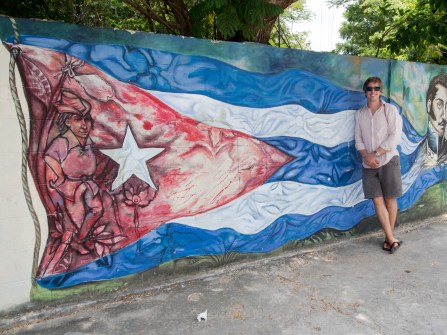
Cuba-2570“How do you get there?” It’s always the first question whenever I tell someone I guide trips to Cuba. Maybe they’ve heard of Americans slipping in illegally through Canada or Mexico. Maybe they figure I’m doing the same.
“Miami,” I reply. “By charter. It’s less than an hour flight.”

The next line is also scripted: “Well, now’s the time to visit. Before the Americans get there and screw it up.”

To be clear, these aren’t Europeans, Canadians, or Mexicans I’m talking to, they are Americans. Most of them haven’t visited, but they know Cuba is opening, and they know when it does Americans are going to ruin it.

The Cubans I talk to aren’t so sure. When they hear “American,” they smile and reach with both hands. “It’s about time,” they say, eager to shake.

View Story
Cuba: An island seeks to connect
I hate to be the one to do this, but I’m here to tell you that the frozen-in-time utopia is not a realistic picture of present-day Cuba.

My job as guide to Cuba is a new one. Before last December, before President Obama announced reestablishing US-Cuban relations and loosening travel restrictions, just visiting could have landed me in jail. Even now the US government forbids tourists from going; our groups are classified as “people-to-people” exchange trips, and they require US Treasury approval.

There are no beach visits or snorkeling trips on our tours. We go to meet Cubans, experience the culture, and explore a country hidden behind 60 years of embargo.

That’s why participants go. I go to watch history unfold. If those Americans are right and we are going to ruin Cuba, then I am the leading edge of the invasion force. The destruction — the Starbucks, McDonald’s, and Marriotts — will come in my wake.

But despite the risk, Cuba’s excitement for what comes next is palpable. On our April trip, every time someone learned our group was American, they got excited.

“Do you think it will happen?” they said. “Will the blockade end?”

Then President Obama shook hands with Cuban President Raul Castro, and overnight we became celebrities. Whenever we were in the street and people learned we were American, they’d grab us.

“You’re Obama,” they’d say, grabbing our hands, “I’m Castro.” Then they’d shake vigorously, smiling. This didn’t happen once or twice. This happened a lot. Our group was there to meet Cubans, and the Cubans used the opportunity to re-create an emblematic moment of their expanding future.

It’s a moment that keeps moving forward: My last trip coincided with the US announcement it would reopen its embassy in Havana. Next time I visit, the embassy will be open. Things are changing fast.

But not everything. The streets are still flooded with 1950s Fords and Chevys, and the faces of Fidel, Che Guevara, and Hugo Chavez still loom large on countless murals and billboards. Soviet-style architecture still dots the Havana skyline, and when the sun goes down, crowds still swarm the Malecon, Havana’s iconic 8-kilometer seawall.

Cuba seems caught somewhere between the developing and developed world: Everyone has health care and a university degree, but buildings are falling down and basic goods can be scarce. But it’s that juxtaposition that makes Cuba remarkable. There are few places in the world where I would encourage people to go out after dark to wander the streets and look to strike up conversations, but social hour in Havana doesn’t begin until 9 p.m. and crime is rare. If “people-to-people” interaction means meeting Cubans where they are, then it begins at dusk on the Malecon.

Other parts of the Cuba experience, meanwhile, seem cribbed from old jokes about the ills of central planning: the three elevators in the upscale Habana Libre hotel that have been down for months; the stores that just keep running out of bottled water.

Then there’s the undercurrent of hard currency that lubricates every interaction; nothing happens without a few dollars exchanged in the palm of a handshake. There are two sides to this game: One is that the government pays so little, everyone must supplement their income with “tips,” the other is that without a contribution, you might be turned away next time. The restaurant might be closed. The tour could be cut short. It’s part of how Cubans get by, and after 60 years in the shadow of the embargo, Cubans know how to survive.

And that’s the truth I come back to each time an American tells me we’re going to ruin it. A half-century of sanctions, spies, and submarines didn’t succeed. Instead, that time taught Cubans to think on their feet, to adapt and endure. As the country opens, Americans will come — for both vacations and business ventures — and Cuba will greet them openly, with a handshake and a smile.

But I’m willing to bet it will still be Cuban palms that wind up filled with folded bills, and again without losing their island.

I’ll tell you for sure after my next trip. Or the next.


This story appeared in the Boston Globe in August of 2015.

One Page, Typewritten

One Page, Typewritten

12466190_1372029352823146_3197915331627306497_oJune, 1947. Page, 24, sits at the bar in the Sheraton Plaza Hotel in Daytona Beach, Fla. It’s hot, Florida in summer hot. She sips a drink alone.
A man walks in. A sport coat and pressed shirt drape over his lanky frame. His nose is sharp, eyes the color of coffee. As he crosses the room he seems to point to the floor — his eyes, his nose, his head, his chest. He served in the war. It’s that walk, she can tell. He comes toward her.
“Hi,” he says. “May I sit down?”
“Yes, of course,” Page replies.
He pulls open the chair and sits. “Thank you.”
The past can be hard to picture, it leaves only shadows. The impression remaining is cobbled together like scenes from old movies — the characters are real, but the settings are wooden, the dialogue imagined, almost fiction.
But Page is real. And so was he.
They talk. He’s witty, makes her laugh. She orders a second drink. He finishes his first. Late afternoon slips to evening, but the dark Florida June is still stifling. Soon he has to leave.
“I’m giving a talk,” he says. “It’ll be an hour. Will you wait?”
She smiles. “Wait for what?”
“I’d like to have dinner with you,” he says, standing.
“An hour?” she says. “Yes, I’ll wait.”
When he returns they leave together, walk out of the bar, out of the hotel and into a restaurant. They keep talking — him telling stories and her laughing. When they finish dinner they go to another bar, then a third. It’s after midnight when they walk back to the Sheraton Plaza.
“Thank you,” Page says, leaning against the door to her room. “I had a wonderful night.”
“Me too,” the man says.
She steps inside, closing the door behind her as he walks away.
The next morning early there is a knock. Page pulls on her robe. “Yes?”
“I wanted to thank you again,” the man says. She opens the door and he hands her his card. His fingers trail across hers as she takes it. “It was the perfect night.”
He smiles. “Write me,” he says, and then turns.
She looks at the card: J.D. Salinger, writer.
1947, four years before “The Catcher in the Rye.” Page is now 92. Her birthday just passed. She lives in South Carolina, still drives, still lives in her home. She is my grandmother.
I knew none of the story when I visited last fall. She’d fallen, broken her pelvis and was in a rehab center awaiting surgery. I drove down to offer help. Aside from the break she was healthy and strong, “This place is full of old people,” she told me. “Not like me. I’m old, but these people have no idea what day it is.”
But not her. Ninety-two or not, she remembers.
“You’re a writer, so you might appreciate this,” she said, and she told me the story: the bar, how he came in then left then came back. Dinner. The next morning. All of it.
“Go in my desk,” she said. “In the back there’s an envelope. Look inside.”
“Write me,” he said. And she did. And he wrote back.
The envelope was yellow and stuffed with clippings. The return address — P.O. Box 32, Windsor, VT 05089 — lacks a name; the postmark read May 23, 1976, 29 years after the hotel.
“Dear Page B.,” the letter begins, typed in the irregular stroke of a typewriter. “Mainly, I suppose, because of the kind of work I’ve got myself into, my memory seems to be almost extinct. Or so cluttered and cross-cluttered that I can get at things only at their convenience, not mine. Not that it doesn’t all come back if someone very kindly presents me with an artifact or two — the seating plan of some old dining room, say, or a sketch of the way deck chairs were placed around the swimming pool, or sometimes just a plain wet black bathing suit does the trick.”
But even faded, the memory survived: “I was back at that Daytona hotel a couple of winters ago, with my children, but the place had turned seedy and the weather was cold, and we cleared out in a hurry.”
One page only, signed “JDS.” He referred to her children (“I’m aware of what goes into having just two. The algebra of seven is too much for me.”) and her separation, indications of past correspondence. Her words, however, are silent, only echoed on the page of a man who splashed letters like paint.
“You do sound intact, but very much, though, and I’m glad. For what very little it must be worth, I send you all these inanities with warm apologies.”
He is dead now. She is 92. But the letter remains. Thirty-nine years later, 68 years later, the past is still cluttered and cross-cluttered. Memories fade, then disappear, and from the rearview it sounds almost like fiction.
Almost.

This story appeared in The Conway Daily Sun in July of 2015.

3,977 Miles

3,977 Miles
10553818_903535722993720_2619385696188103555_o
Brian on the East Buttress of El Cap. Dominic Tracy Photo.

It’s a long way from Cuzco, Peru, to home. It’s almost 4,000 miles. 3,977, to be exact.

But that’s to North Conway. I wonder what the distance is to Cathedral Ledge? To the upper left section of the cliff, the Barber Wall? To the route Double Vee, a 5.9 crack I’ve climbed many times before, where yesterday my friend Brian fell and died. How far is from the place I sit, in my hotel in Peru, to that spot? 3,977.6 miles? 3,978.3? I’m not sure, but it feels like a long way.

In 15 years of climbing, I’ve never had a friend die. I’d had friends get hurt, and I’d known of many friends of friends who died, but none were my partners. None were direct connections to me. In the last month and a half, however, the mountains have claimed two. Eitan fell 3,000 feet down Mount Rainier. Brian fell 50 feet off the top of Double Vee. Both were men I’d shared a rope with. Both were on routes I’d climbed, died in places I’d stood. Now both are gone.

What is death? The speed with which it comes, the ferocity with which it attacks, makes no sense. It’s like a cloud above gets transformed from weightless mist into solid concrete, and when it falls it does so with ruthless finality. One minute, floating peacefully, the next, wreckage. Where will it land? Who will it smother? More than I can know. The light of life is not constant. Too often it flickers and dies without warning.

But in every flicker lives the roaring strength of first light, the brilliance of the star we were born from. There can be no fade without that brilliance, and the darkness left behind is directly proportional to his radiance. And Brian’s light shone rich, alive and perfect. Before the clouds fell, he was the sun.

I do not know the story. 4,000 miles is a long way to search for answers. The light, however, has faded. That much I know.

GLA-1040533But with every light, with every life, there are choices. Life is short, and choices can make it shorter still. But each body, each heart, is a vessel. A longer life, one built of safer choices, may make for more years, for a larger vessel, but it says nothing of the potency of what fills it. Brian’s life was one of passion, one of kindness and friendship and adventure. Perhaps those choices not to live a safe, sheltered, quiet existence shrank the volume of the vessel that was his life, but it only strengthened the nectar of the man that vessel contained. Brian was pure, undiluted. He did not live at a deficit, at a loss. He lived recklessly, with an open heart, throwing every ounce of his being into his life and himself, into living with richness and passion and love and perfection and freedom. I would not ask it to be different. A bigger vessel, a few more years, would not be worth trading in the man he was.

But then, such questions are meaningless. There can be no revisions in this book. There is only today. Today, Brian is dead. The clouds fell. His vessel has shattered. But the Earth is sweeter for what his life has spilled. Even 3,977 miles away, I can taste it.

Author’s Note: The news story I wrote about the accident is available here.

Wednesday, or maybe Thursday, on Facebook

Wednesday, or maybe Thursday, on Facebook

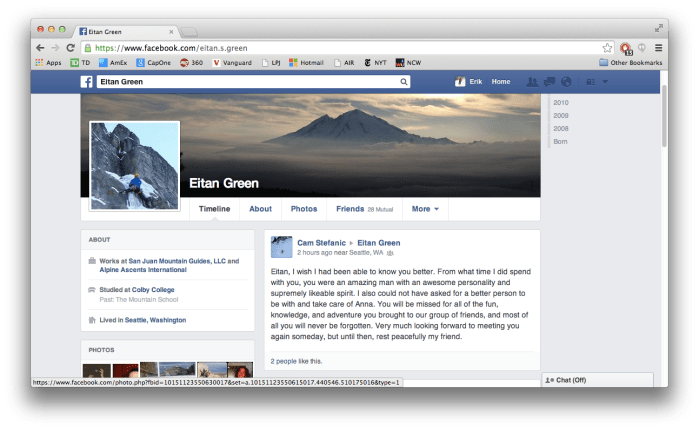
Screen Shot 2014-06-04 at 7.28.01 PMWhat’s it like, to die on Facebook? To have condolences and remembrances stream in after your power switch has clicked off? Your smile is still there, bright and alive, still glowing, but now the glow is lifeless, a screen left on in the dark.

Eitan died on a Wednesday, but Facebook called it Saturday. And really, what difference does a few days make, especially once you’re dead.

On the other side of this, do status updates matter? Does status matter? What matters? When you fall 3,000 feet over snow and rock and ice, does anything matter? It doesn’t matter enough to go in and find the body; not to them at least, and not at all to you. You are dead. The point is no longer the point.

Eitan died on a Wednesday. Actually, I’m only guessing about that, he could have died early Thursday. Regardless, the fact is he’s dead.

Why do we climb mountains? Why do we walk willingly into harms way, hold up our hands and embrace the chance we will die? Can anyone answer that?

Yesterday I wrote about Eitan, about the mountain, the snow, the ice, the fall, the death. Today I went to the mountain. I went without ropes, without a harness or a partner, without any cushion between perfection and death. I went because I have I had no choice. I went because the mountain called. I laced my rock shoes, opened my chalk bag and climbed, breathing slow, deliberate breaths with every move. I felt the sweat drip down my forehead and along my nose. I felt the wind peel it away. I felt the rippling granite beneath my fingertips. I felt it all. The sun baked my bare back. The rock radiated warmth under my palms, beneath my feet. What was left but to move? I took a step, then another, then another.

Eitan died on a Wednesday. Or a Thursday. He died on a day. We will all die on a day. He slid 3,000 feet, and he died. Where in the slide did he die? I’m not even sure he knows that. Or knew.

I’ve been there before, to the spot where he died. It was seven years ago, but I climbed past. I didn’t know Eitan then, and I didn’t recognize it as the spot where he would die, but there it was the whole time.

Eitan died. It was a Wednesday or a Thursday, nevermind what Facebook said. And now I can see his smile, the echoes of his life, whenever I want. I can see what he meant to people, the words they never said when he was here, words that cannot erase Wednesday. Or Thursday.

I left the ground today and I climbed for Eitan. Or was it for me? Is there a difference? I climbed for life, for mine and his and yours, for Mondays and for Fridays. The sun, the wind, the rock and the trees all climbed with me, urging me upward just as they must have urged Eitan down, down, down. For they have no compass, no morals, no judgment, they simply celebrate what is, the movement as it unfolds. Today I went up, so they cheered. On Wednesday (or Thursday) Eitan went down, so again they cheered. They live in perfection, in celebration of movement, no matter its direction, no matter its conclusion. They honor it, no matter the outcome. And so I will too. Soon enough I will approach Wednesday, or Thursday, and even Facebook will get it right. Eventually.

Author’s Note: Read the news story about Eitan Green here.

Trinkets

Trinkets

4b7c0-mailIt’s all crap really, the things we save.

An attic full of old books, a beat up record player, socks that never fit. A baseball bat lays next to an Easter basket. I don’t get the point of saving it all.

But then I sit down. The air is hot, stale and smells of sawdust. I reach over and pick up a book. It’s pages are yellowing with age and twisted from years of haphazard storage. The spine cracks as I open it.

Charlie Brown. Snoopy. Peanuts. I can’t help but laugh. The comic strips aren’t new to me. I’ve read this and every other Peanuts book in this attic a hundred times. I’d read them on weekends, on sick days home from school, in the evenings before bed. Every page holds the warms for recognition, of familiarity, of a time before work, family, Facebook and relationships filled my days.

I read a further. The strips aren’t funny, I realize. A few are—I can remember laughing endlessly at several of the pages—but overall they aren’t. What they are instead is a reminder. I wanted to be in those books. I used to pretend I was a pilot, flying a Sopwith Camel, stationed in France, locked in dogfights with the Red Barron over Normandy. I wanted a beagle. I wonder if I knew he would sleep in his doghouse, not on it.

I closed the book, set it down and pick up an old catcher’s mitt. The leather is cracking, but there is still a ball in it, put there to maintain the shape of the pocket. I try to put my hand inside, but the body I’ve grown into doesn’t fit into the echoes of the past. I smile at the hand that rattled inside the same glove so many years ago.

I look around, then slowly rise to my feet. There is so mush here, I could dig for days. Traces of the past are everywhere: high school trophies, basketball cards, a favorite pair of boots now sizes too small. But the hot air is making me uncomfortable, and it’s time to go.

It’s all crap really. I can’t use it. I don’t have room for it. It’s the same worthless nostalgia that hits me again and again, whenever I drive past my old school, see a name from the past in my inbox, hear American Pie on the radio. I shut the door, slide closed the lock. It’s worthless anyway.

Worthless, but I won’t throw it away.


I was cleaning out some of my things and found this piece. I thought it would fit well on here, so I made some minor revisions. I wrote the original in college.

Fire

Fire

pic-0007The two lanes wound through the city, cars streaming like a river towards the downtown. Colin banked right then left, steering from memory, pressing the gas pedal as the road began to climb. The leaves, fresh and green, rustled in the breeze. Colin pulled to a stop at a traffic light and felt the wind dance in his open window. It was cool and fresh. The light turned green. He pressed the gas.

As the car climbed, Colin saw smoke. It was billowing skyward from something over the crest of the hill. With every turn of the tires the horizon sank, revealing more smoke whirling in the breeze, dark against the blue sky.
The wheels turned, the car climbed, and Colin looked. The horizon dropped. What was burning? He couldn’t see.

Then the flames were there, dancing over the pavement skyline, red and yellow among the bricks. The fire strained for the sky, leaping and jumping. One more revolution and Colin would see what was burning. The car crested the hill at a stoplight—red—and Colin pushed the brake pedal. Across the street, standing on the sidewalk next to the intersection, stood a man engulfed in flames, burning.

His eyes were closed, Colin could see that. And his face was taut. His teeth glistened through a grimace. He held his arms out from his sides at an angle, both hands balled into fists. He seemed to be dancing, hopping from one foot to the other, red flames licking their way up his body.

His clothes were not yet burned away. They seemed to breathe fire all around him, drawing it down his shoulders, along his legs, up into his hair. A soft breeze fanned the flames like a flag and left the leaves shuddering in the trees behind him.

Colin sat at the light, both hands on the wheel. A woman in the next lane was also staring. A man and a woman were walking together on the sidewalk, laughing, unaware of the man and his flames.

Colin’s gaze returned to the man, still caught doing his strange shuffle. His clothes were melting, fusing into his skin. His lips were burning away from his teeth. The man opened his eyes—Colin couldn’t tell their color beneath the flames—and scanned around him through a veil of fire.

And then he stopped, his eyes on Colin. Through the intersection, the windshield, the glare of the traffic light, the red of the flames, the man’s eyes locked on Colin’s, even as the fire ate his eyelids.

And Colin stared back. They were transfixed—the burning man shuffling from foot to foot, Colin with his hands on the steering wheel, eyes locked across the divide. Colin could feel the sweat on his back, beaded and cool, something the man would never feel again. He held the man’s gaze and watched as the tissues around his eyes charred and turned black. He was unable to look away.

The light turned. Green. Colin rolled forward, still transfixed, still unable to turn. The burning man followed him as he passed.

Colin crossed the intersection, pulling the wheel to the left and glided into an open space. He leapt out of the drivers seat. The burning man had lost control of his muscles and fallen to the ground. From either side people ran towards the charred body. One was carrying a fire extinguisher, bright and red.

For Vivian

For Vivian

Last night I went to see Finding Vivian Maier, a documentary about one of the most prolific and talented street photographers of the 20th century. She shot without publication, amassing hundreds of thousands of negatives that were only discovered and recognized for their brilliance after her death.

There seemed to be this sadness, over the course of the film, that Maier was not discovered sooner, that her talents were never recognized during her lifetime. She shot in obscurity, earning her full time living as a nanny. It was only after her death, the film narrative goes, that her art became celebrated.

But I see it differently. Art, the word, can act as a verb, not just a noun, and her life was a celebration of the verb. She shot and shot and shot out of a drive, a passion, that wasn’t tied to money or fame or prestige. She shot because it fed her soul, because it was a way to capture her truth. The true beauty of her work was not the piles and piles of negatives she left behind; the true beauty was in a life lived devoted to the act of capturing moments, for no other reason than because the moments were beautiful.

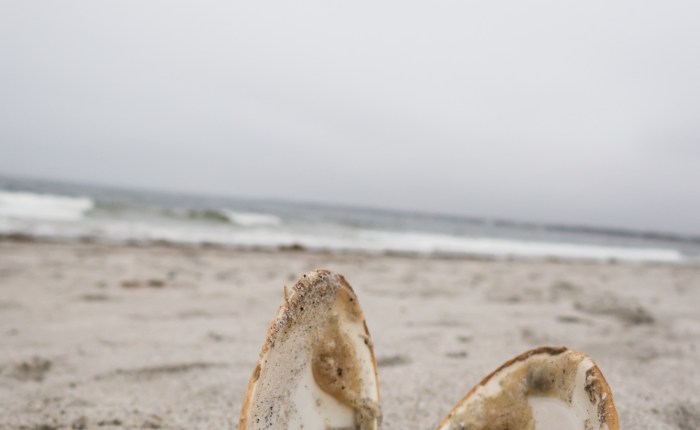
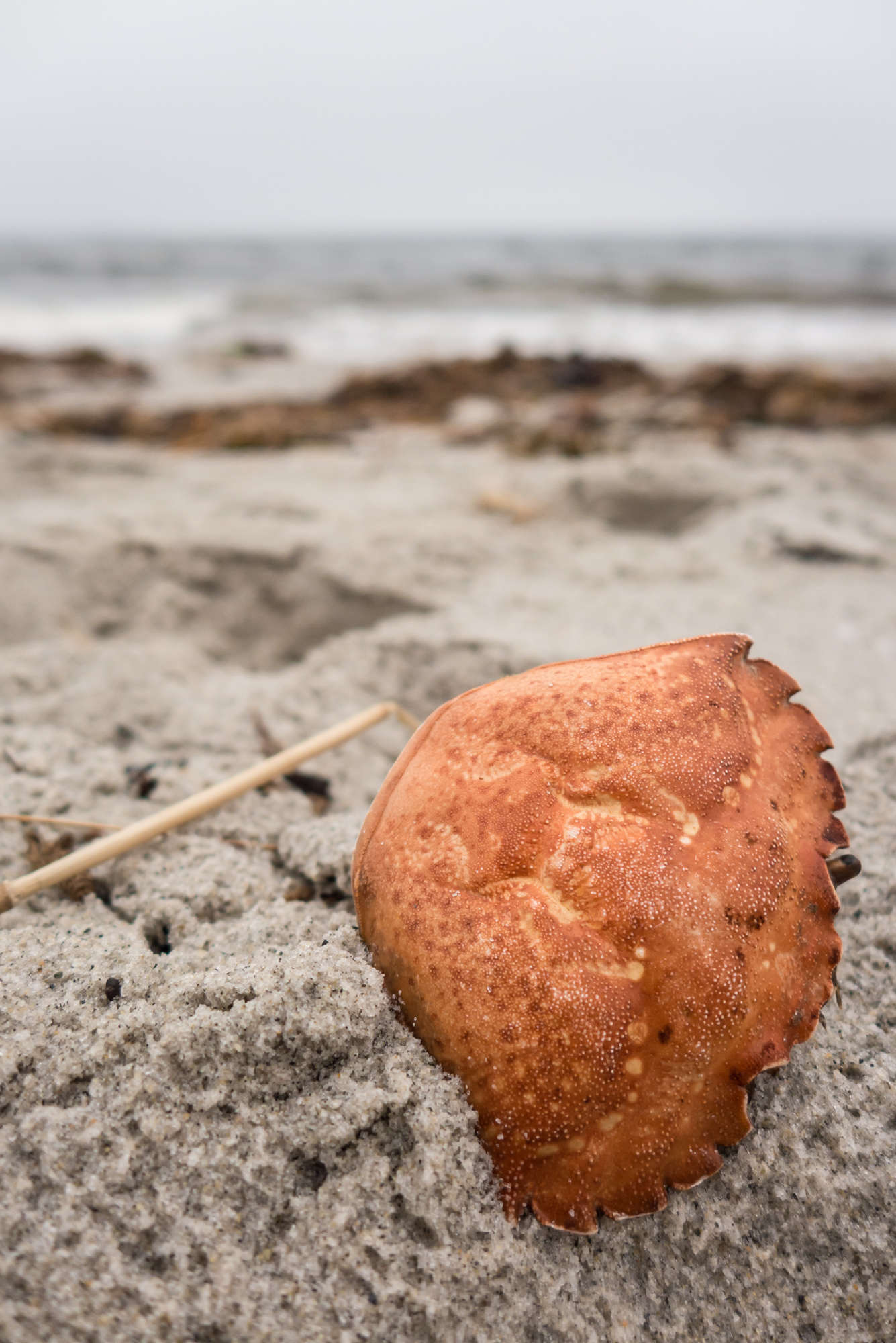
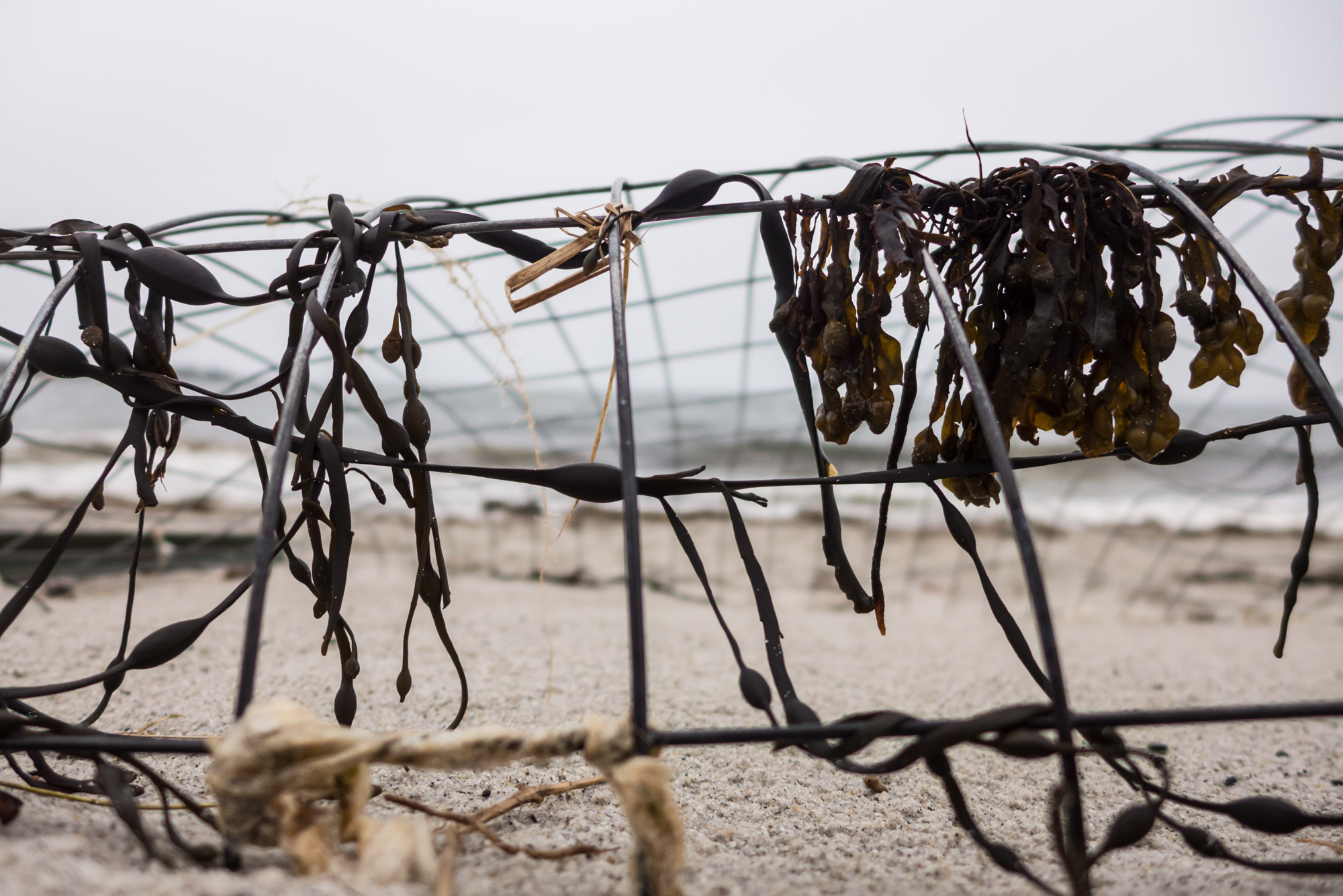
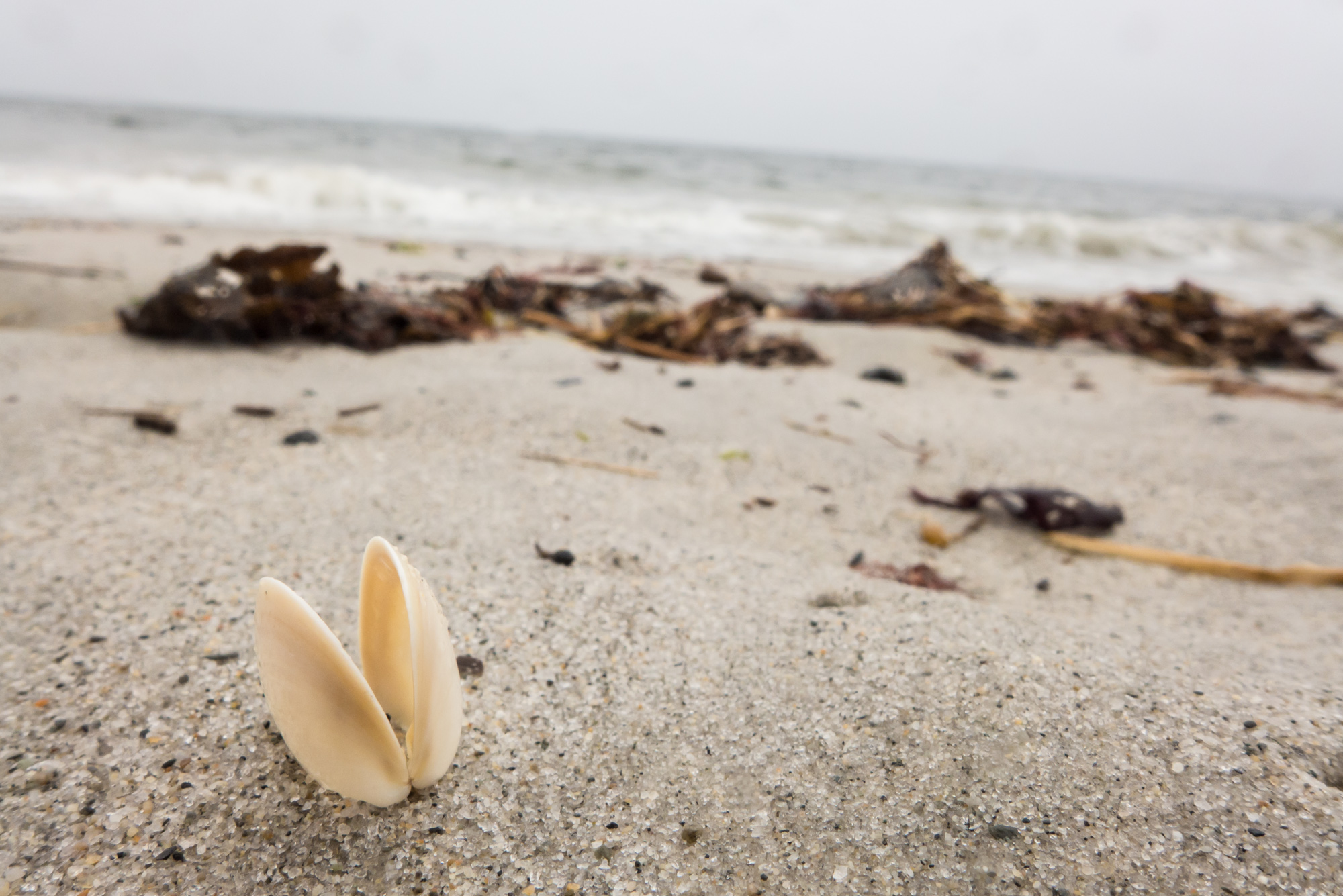
I woke up this morning and drove to Pine Point Beach, a beautiful stretch of sand about 20 minutes outside Portland. I brought my camera, and, inspired by Maier, searched for unnoticed beauty. It was raw and cold, the sand was still wet from the dew. I wandered to the breakwater and back in bare feet, looking for treasure. I was happy with what I found, the pictures I took. The moment, however, is not captured by the shutter. It was the act of looking, of pressing the release in the first place.

Just act, don’t ask why. The art is not (just) the result. The art is in the act itself.

Thin Places

Thin Places

At any point clarity and presence are but an arm’s length away. Our eyes may be closed to them, but they whisper from dark places, from anywhere where the weight of the unknown overwhelms the veil of a stable life. They sit just beyond the view, beckoning us to remember life is fleeting, not to waste a moment.

Clarity and presence, however, stay separate from us. They scream a few feet away, but that’s where they stay, almost out of earshot.

Except…

Except in certain sacred spaces where the veil turns translucent. In those places the border between clarity and life, between presence and the moment, stretches thin, from feet to inches to millimeters, until every hint, every whisper those words carry rings loud in your ear. In those places presence reigns, and clarity just is. They are no longer abstract concepts — they stare back, clear as a spring day after the rain, unwilling to look away.

Cathedral is one of my thin places. In winter, its Cave is my sanctuary, a space where truth is inescapable. It is a place where I can feel the pulse of Heaven, where in the mornings a lightness shines in that washes away fear and erases regret. In summer high on Recompense I can smell perfection on the breeze. If we got to pick where we died, I’d choose there.

Shagg Crag is another of my thin places. Even on the coldest days the rock remembers me and brings a warmth to my touch, a tenderness I can’t fathom. It welcomes me like an old friend, never worried how long I’m staying, always smiling when I visit.

I stopped there today for a while. When I got to the cliff I rested my hands on rough holds. I felt myself, my heart, pushing back from the other side. “Trust me,” it said. “You have everything you need.” The veil was like wet rice paper — so tender I could almost walk through it. I closed my eyes and let its moisture rinse over me. I let out a breath, and with it came my fear, my self-consciousness, my ego. I was naked and empty standing before the rock. I opened my eyes, still breathing slow and deep, and began to climb. I fell upwards, letting the lightness carry me. In thin places there is no falling, only floating. Only flying.

The List

The List

Two months ago, while I was climbing in the RRG, I took a detour to visit a longtime friend who I hadn’t seen in years. The weather was crap, and it was a chance to check in on someone I’d lost touch with recently. She was going through several major transitions in her life, and at moments like those it is an incredible relief to just sit in the company of someone you know and trust.

We spent several days just hanging out and talking. Nothing transformational, so to speak, but the sort of conscientious conversation two people who have known each other through multiple life phases call “catching up.”

Today that friend sent me a something. “Doing some digital housekeeping,” she said, “I found this list I made after you left:”

Control
Death
Compassion, love, forgiveness
Present past future
Live in the vertical
Over thinking
Balance
Faith
Center
Follow heart
Path – sailboat
Perception
Right versus wrong

My own words staring back at me. Sometimes the most beautiful reminders come in subtle ways, through lots of experience and soul searching. Other times, however, they just pop into the inbox, marked “Unread.” What a beautiful way to begin today.