CDS Column: Lost Hiker

I don’t hike much anymore.

I used to. I used to hike all the time. Through high school it’s all I wanted to do. When I graduated I wasn’t ready for college, so instead I went hiking — first on a cross-country road trip to hike Colorado, the Grand Canyon and Jackson Hole, then on the Appalachian Trail. At 18, I walked from Georgia to Maine. It took four months and transformed me from relative backcountry novice to old hand. Night after night, firing up a tiny backpacking stove, filtering water, sleeping among the pines, hiking became my first full-time job.

From there I moved to mountains, to rock climbing, ice climbing, mountaineering and skiing, added tools to get me to the top, techniques to push adventures to new heights. “Hiking” became something I did to get to the fun part: the snow, the rock, the vertical parts where the rope came out. I hiked on 14ers in Colorado (the state’s highest peaks), volcanos in Washington and the knife-like ridges of the Tetons, to rock faces in the Shawangunks in New York and Yosemite Valley in California, but keep in mind none of it was hiking.

And over time it moved even further aside. It got renamed “the approach” as I traveled to South America, Europe and Africa for mountains, rock and ice climbs. “Hiking” meant carrying a rope, harness, helmet and all the climbing gear for the adventure ahead, and thus weighted it became more work than fun. The sport once again found itself on my periphery.

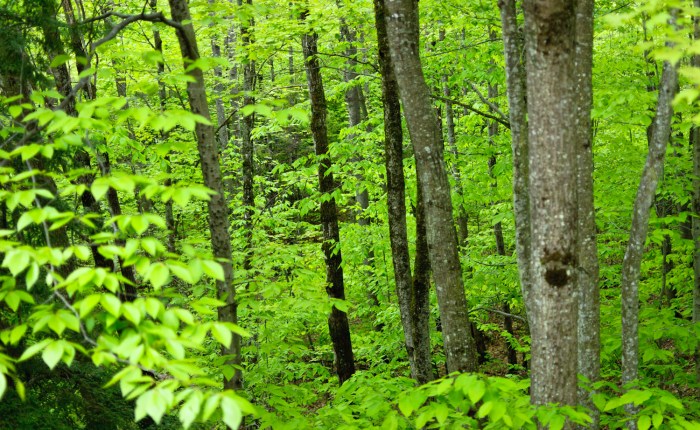
But recently I’ve found myself back in the woods. I find myself there with no summit in sight, tramping between trees and ducking under spruce bows, the trail unbeaten and unmarked. I’m out there wandering, splashing through creeks and past logs downed by beavers. It feels like a return, a recovery of my hiking spirit.

But it’s not. It’s from before my high school days, before hiking boots and Gore-Tex and double-walled tents. It’s from my very first explorations of the woods, back in late elementary and middle school when I would pull on duck boots, grab the dog and vanish into the trees out past the cemetery at the end of the street. There were trails, but they were serpentine and poorly marked. The spruce and pine hung close, and though it was only a few hundred acres hemmed in by road on one side and ocean on the other, it was enough to get lost in. There were rotting logs and moss-covered rocks to climb over, and a canopy so thick sunlight struggled to reach the forest floor. It was just woods, more rugged than any hiking trail. My Australian shepherd Cody and I would walk for hours, wandering deer-paths looking for stray antlers and animal signs, imagining ourselves intrepid explorers, Native Americans maybe.

But that’s where hiking began for me, those first forays into woods as pretend hunters and explorers. The nylon windshirts, LED headlamps and ultralight stoves came later, the slick well-marketed modern trappings that now adorn that early call.

My earliest role models weren’t looking to stand on top of things. “Because it’s there” is a modern concept. They were looking to survive, to find enough to eat or the safest/quickest route. “Adventure” was an accident borne of necessity. Hiking wasn’t the approach to those explorers, it was the pre-industrial equivalent to a trip to the grocery store. It wasn’t sport, it was just part of life.

What brought me back to my roots? To the root of my roots? My new hiking partner—not an Australian shepherd, but a 30-year-old Sears and Roebuck 12-gauge.

That’s right, hunting is my new hiking. With my dad’s old shotgun I wander, no vertical objective calling from the horizon. I find myself stumbling through undergrowth, pushing aside tree branches, mucking across marshes and otherwise tramping, the original forest call. I’m not ticking off another peakbagging summit or trying to break my speed record up Washington; I’m just walking, wandering the woods, looking for antlers and animal sign.

And with the walking the wonder returned. The things I used to love about hiking — noticing the feathers scattered among the tree roots marking some kill, walking an old logging road in the cold morning air that eventually peters into nothing, tripping on the rusted hulk of an old peavey left by some long forgotten logger — now lives in blaze orange. It’s exploration with a walking stick of wood and steel.

And just like those early walks with Cody, when I go hunting I have no idea what I’m doing. I get lost. I get wet. I find myself tired and hungry and running low on water. I overdress or underdress, wear the wrong socks or wrong hat. It’s all those things I used to struggle through while hiking, but when there are summits involved I’ve long since learned my lessons. Not in hunting though. In hunting I’m still the utter beginner, more akin to that elementary school kid than ever.

As a result the animals of the forest are safe. I see game, but everything in the woods moves so much faster than me. I have yet to get my gun to my shoulder much less get a shot off before my quarry disappears. It’ll be a long time before I kill anything. When I see something I wind up chasing, but the animals know the hiding spots better than I do. So I search, walk in circles sometimes for hours.

It’s the most hiking I’ve done in years.


This column appeared in today’s Conway Daily Sun.
From the Backseat: Fear, the Biggest Liar

I will not be afraid.

Fear is a mask without holes to see through. It pulls at us, weighs us down. It is a yoke, a liar. I will not be afraid.

I will, however, say thank you to the women in my life: my sister Liz, my mom Nell, my nieces Charlie, Kennedy and Mackenzie. My sister-in-law. My step-mother. My cousin Lisa. My friends Helga, Lindsay, Terry, Nicole, Ana, and others too many to list and too strong to hold down. You are breathtaking. Powerful. Worthy. Equal. Unique. Amazing. I can only imagine your thoughts, the frustrations spinning inside. There is nothing I can say or do, but I hear you, grieve with you. Not for a missed political opportunity, but for the national sidestep around your inherent equality, our collective rejection of your internal capacity. For the continued elevation of your bodies as objects. For the grinding lack of respect you endure.

And to my friends of color — Jahad, Cynthia, Sinclair, Ish, Katie, Miguel, Helga, Lisa — my Muslim friends — Wasim, Farah, Selma — I can only imagine this moment for you, the feelings of exclusion, of otherness. You are the blood and bones of America. Your Haitian heritage, Salvadoran past and Saudi roots add texture to our fabric, your Friday prayers as sacred as Sunday. Worth does not live in color, sex or religion. It just is. Do not dim your light for anything, for anyone — doing so robs both you and the world.

Where to go from here? Part of me wants to drop the anger, to push for healing and national unity. But another part realizes this is a false choice, that the repudiation of Clinton and Obama grew out of racism and misogyny. Anger at the extreme right, meanwhile, is a rejection of these most American characteristics.

So how do we extract hate and exclusions from America? How do we instead spread ideals like tolerance, inclusivity and religious liberty? By yelling at opponents? No. We have to try something else.

Hurt people hurt people, a friend told me. Hurt people lash out. They react. They do damage. America today is full of hurt people. Will we, the tolerant, now become hurt too? Will this rejection grow to anger?

No. I will not be afraid. Fear is what got us here. I am sad, disheartened, but I will not move forward in anger. America has had enough of that.

Instead, I will look for the bright spots. Like Pious Ali, who was elected to Portland’s City Council. The first African-born Muslim to hold the office, he is a resounding voice for America’s integrated future. I heard Ali speak in September on young immigrants and people of color in America. His message was clear: We are stronger together. The gaps that divide us are narrow. The success of our newest citizens mark success for us all. Ali is not a man of fear. His eyes are open. He sees the American challenge with clarity, and instead of cowering in its shadow he smiles at it. He brings an unfettered heart to the fight. We must do the same.

The forces of inclusivity are strong, woven deep within the American experiment. We, the tolerant, are not alone. Fear and exclusionary violence will erupt from time to time, but those blows cannot overcome America’s inevitable grind towards equality. Over the long arc we are moving forward, and that movement continues, however awkwardly.

But our fight will always be hamstrung. We are cursed with the knowledge our opponents are as human as we are, as worthy and valuable as ourselves. We cannot demonize; even those who see us as abhorrent are our brothers.

How do we rise from such handicap? Like Ali: With clear eyes. By refusing to cower and rejecting the shadows. By realizing our commonalities will always be stronger than our rifts are deep. By engaging even our adversaries with curiosity and compassion. By refusing to be afraid. Fear is a liar. Put down that mask.


This column appeared in the Portland Phoenix.

From the Back Seat: America’s Argument

It has come to an end. After almost two years of buildup: the election, the point on which it all hinges. Dragons will either be slain or Armageddon will soon commence.

Which, of course, depends on your political bent, whether Hillary is your Antichrist or Donald. But either way there will be an offended swath, American outrage that hasn’t occurred since… last election.

Remember in 2008 when Obama became president and the TEA Party stormed the streets in protest? We still see the racially-tinged aftermath of Taxed Enough Already in the selection of Donald Trump. Obama marked the Socialist takeover, the “they’ll come for your guns” moment, another pivotal dragons and danger moment.

And yet today America stands, gun in hand. Rome has not fallen. There have been incremental ticks, changes to health care policy, the recognition of same sex marriage, withdrawals from Iraq and Afghanistan, but much from before remains. Guantanamo is still open. America still kills from the sky with unmanned aircraft piloted from the Heartland. Abortion is still legal and under stress. A black man may occupy the White House, but beyond condolences he’s been unable to offer anything to curb the mass incarcerations of innocents or shootings by police. America is thick with its own history, and the wave of his hand proven insufficient to part the Red Sea.

Foreign-born Muslim Socialist or not, presidential powers are limited. Armageddon will have to wait.

The same can be said of Maine and the 2010 sweep that brought the 39 percent to power. Despite his best threats, Gov. LePage proved unable to eradicate functional government. His insistence on undermining the bureaucracy rather than reforming its aims was caustic but not calamitous, and lumbering beast though it is, the government proved agile enough to stay steps ahead of the governor.

Mainers still pay taxes and state agencies continue to offer services. LePage did his damage, but much of it was superficial. The occasional racist comment proved the governor an unsavory mascot, but his real goal—to free the state of the tyrannies of government—stands uncompleted.

Another disaster dodged. Armageddon again averted.

But was Armageddon really the risk? That is language of elections today, both from conservative corners and progressive politicians. But in American democracy nothing burns overnight. Things don’t happens fast. Neither man nor movement has the sway they claim. Our institutions are great pyramids standing on bases that stretch for miles. One man or woman at the top has not the strength to move it. Even armies of protesters lack the might to push them over, be they the TEA Party or Occupy Wall Street.

A state is so much more than its government. A country is so much livelier than its laws, its politicians. These are small choices, momentary blips, water and sand only have the power to eat away the stone that forms our foundations. One day, through the slow erosion of time, shifts may come, but there is no earthquake on the horizon. Shout as they might, this country can endure.

And regardless of its smaller swings, America lumbers in the direction of its founding, the words it was born with: “We hold these truths to be self-evident, that all men are created equal…”

America is a country forged out of words and ideas, not the other way around. It was plucked from thin air by idealists on land made clear by genocide. We live a nation rife with contradiction. Questions of diversity and wealth and what it means to be free run in our blood. They are our history, our legacy, our burden. And they are bound to resurface at times. At times like these. Indeed, they might never go away.

Sometimes this argument we have with ourselves is raucous, ugly even. But it is our argument, one we must embrace to push forward those American words.

But for all the fighting the sky will not fall. This argument, this ungracious snarl, is the messiness of democracy. There will be no dragons gone after Nov. 8, and Armageddon will still have to wait.


This column appeared in the Portland Phoenix.

CDS Column: Right, Left and Center

image1-2When it comes to voting for federal office in New Hampshire this cycle we don’t have a lot of choices to be excited about; both the Republican and Democratic tickets are bleak. At the top is Donald Trump, clearly unfit to lead, or Hillary Clinton, the consummate politician. One step below is the U.S. Senate where Gov. Maggie Hassan is hoping to unseat Sen. Kelly Ayotte, two candidates more astute at political maneuvering than practicing leadership or instituting policy. Two strikes for the federal ballot.
Then there is the race for Congress: incumbent Frank Guinta running against former representative Carol Shea-Porter in the fourth matchup between the two. These two have gone back and forth, and every time the seat flips.

Why? Because it doesn’t matter which one is in office, both have proven uninspiring. It’s another version of the races above it, but it’s also worse: Guinta versus Shea-Porter is more bad TV, but in this race we have to watch a rerun.

In one sense we’re lucky: In a country where almost every congressional seat goes to the incumbent it’s a rare thing to see a contested race. But it hasn’t done us any strategic favors. Rep. Guinta has members of his own party (including Sen. Ayotte) suggesting he resign following his finance scandals, and still Shea-Porter is unable to trounce him.

Is that because Guinta is likeable? Nope. He’s come by the Sun a number of times, and each visit is reminiscent of a sitdown with a used car salesman.

But Shea-Porter offers nothing more promising. Both candidates sit square within their parties, basically stooges for Washington games. If a bright idea has come from either it never made it to paper.

But in the house race 2016 isn’t a rerun. We finally have a chance to watch something other than the lumbering Shea-Porter-Guinta-Shea-Porter drama. This year there is an Independent in the race. And Shawn O’Connor is a guy worth voting for.

Who is O’Connor, and why haven’t you heard of him? I hadn’t heard of him either before he came by the Sun office earlier this month and introduced himself. O’Connor is an entrepreneur and businessman from Bedford, the founder of Stratus Prep, a test preparation and admissions counseling firm, also the founder of the Stratus Foundation, a nonprofit the helps underprivileged kids access college prep services. He earned an MBA and a law degree from Harvard and studied international politics at Georgetown as an undergrad. He graduated all three with honors.

He’s smart, but more important than that, he’s reasonable. And unlike his predecessors, he’s without puppet masters to pull his strings; he’s running as an Independent, and in his case that means truly independent.

The Guinta-Shea-Porter brawl is loud. So you might have to turn down the volume to find O’Connor. But if you do you just might find something you like. Here is a thoughtful, considered candidate running for elected office, the kind of person who usually steers clear of Washington, or else is corrupted by it. He has ideas for addressing healthcare, minimum wage and social security that pull from both conservative and progressive corners, taking the good ideas from both and applying them to American problems. With no ideological allegiance and a background in business he’s a free man, something Washington lacks.

And what’s more, he’s already made his money. One of his pledges is to donate the bulk of his Congressional salary, roughly $160,000, to a charity selected by an independent board. He’s not going to Washington to help himself.

To be clear, as a New Hampshire reporter you sit through a lot of interviews. Politics is kind of New Hampshire’s thing, and as a result we bat around ideas with everyone from presidential hopefuls to prospective school board members. And often these editorial board meetings feel like a game of cat-and-mouse with the candidate unwilling to say anything concrete and the team of reporters chasing them to nail down a policy position. The best escape artists (Mitt Romney comes to mind) evade every attempt like a bullfighter avoids the horns. Lesser versions (Newt Gingrich, Marco Rubio) do it with less grace, but all of them come off feeling insincere.

Guinta and Shea-Porter (and Hassan too) always struck me as part of Team Insincere, team bullfight. They’re of the ilk who will say anything to win election, always trying to escape their own records and avoid firm points.

O’Connor, meanwhile, sat in front of us and took thoughtful, nuanced policy positions. He avoided partisan rhetoric and instead carved a platform in part conservative, in part liberal. His talk truly earned the label “Independent,” was the kind of candidate you can actually feel good about sending to Washington.

That’s a rare thing these days. Most races are about selecting the least poor option. O’Connor flips that on his head.

But can he win? That’s the question. As he pointed out, New Hampshire is the New England state with the widest independent streak but Maine, Vermont and Connecticut have sent Independents to Washington. New Hampshire could do it too. Voters just have to demand service, not politics, from their representatives. It was talk reminiscent of Ray Burton, the longtime executive councilor who cared more about his constituents needs than their party affiliation. Since Ray passed no one else has picked up the mantle.
O’Connor can change that. He is a candidate for all of us, not one stuck to the margins. He claims to want to Washington to support New Hampshire’s people as opposed to a party. Neither Guinta nor Shea-Porter have done that. Maybe it’s time for a change.


This column appeared in Wednesday’s Conway Daily Sun.

From the Backseat: Oceans Apart

14188296_1606188992740513_8342364284182226130_oI used to think the North Atlantic was mean. All the stories of shipwrecks and European sailors tossed around in icy waters. Growing up I watched winter waves pommel the shore, saw fog swallow roads, houses and fields, watched hurricane swells grab a 40-foot lobster boat and toss it like a seashell. The sea was raw power, the North Atlantic menacing.

Then last fall I visited the Pacific. I wanted to see the Olympic Mountains, to soak in hot springs, wander rainforests and paddle the Strait of Juan de Fuca. Out West, cities face inward. They sit on water but don’t risk open ocean: San Francisco has the Bay, Seattle the Sound, Portland the Columbia River but north of sunny Southern California few outposts brave the sea. And so the Pacific is forgotten. Those placid and welcoming bays and bodies come to represent western water. The ocean lies eclipsed.

But four hours west of Seattle it sits guarding America’s edge: water dark as arterial blood rolling and falling onto itself like a wounded animal, roiled, frantic, ferocious. Unpredictable. Great trees tumble among a constant roar. Seafoam stretches for miles. Wind dashes the shore with tendrils of saltwater, everything glistening and cold. Drizzle falls from a sky only a shade lighter than the water. More trees sit half-buried in sand, ripped from the shore by past assaults, now imprisoned.

This is no Puget Sound, no tranquil shoreline. Here the full force of 5,000 unbroken miles slams unceasingly without stories or reputation to precede it, just a quiet pounding of the American West. Uprooted trees the size of small buildings swing like toys in a perpetual grey of clouds, drizzle and churning. The Pacific marks an endpoint, and there is no mistaking its edges. America closes and it takes over. No abbreviations.

New England is different. The East Coast is warmer, more gentle, dotted by islands and inlets that break up a full assault. Any water runs only a short distance before intersecting land. Only hurricanes carry the intensity of the everyday Pacific.

But home carries its own mysteries.

I arrived in early evening. The ocean stood calm, a mirror of lobster buoys and boat masts. Fog sat heavy, the coastline waning in either direction, an easy day to get lost. I parked at the boat ramp and pulled a paddleboard from the roof. An oversized surfboard mostly meant for lakes and ponds, on the ocean it feels like a thimble. But there is magic in braving something so vast atop something so small. A seagull screeched from the rocks. Cormorants dotted the nearby mooring balls, their wings outstretched like goblins. Everything stood suffocating white. I buckled my life jacket, slid the board into the water and cast off.

Under my feet the mirror shook. Strands of seaweed buoyed by air sacs stretched towards the surface. A loon called inside the mist. The blanket muffled a bell buoy and held shorelines distant. I coursed around a small island at the periphery of the bay, a line of rock mostly buried by the tide. Huddled pines climbed above a highwater mark so low winter storms must sweep the whole of it. But the only moisture touching the pines today was fog.

I paddled to the island’s beach—sand and stone dotted by shells and seaglass—and pulled ashore. White-grey peeled its way across the water, but for a moment the sun broke through. Trees opposite peeked green. From my perch I watched the Atlantic’s shifting mood, an ocean in utter calm.

Our constant neighbor, moody but not malicious. Our porch and guest space for welcoming in the wild. Angry? Mean? Barely. So much more gentle than the Pacific, she allows us to sit on her islands, lets us look into her reflection.

The clouds descended with resurgent fog. I looked back to the mainland’s faint outline, only silhouette now, and walked back to the sea. I slid my board into the mirror, the only ripples ours.


This piece appeared in this week’s Portland Phoenix.

CDS Column: The American Locker Room Tradition

CDS Column: The American Locker Room Tradition

13475016_1517641101595303_7355454198074171565_o“Locker room talk” is a catchy phrase and now the talk of the nation. Never have the tiled quarters of towels, benches and shower stalls garnered such attention. It is, however, a presidential year, so no wonder.
It’s been interesting to watch lines drawn around Republican nominee Donald Trump’s comments, “locker room talk” or “sexual assault” depending on your political leanings. His supporters rallied, some Republicans used the comments to justify severing support, and opponents pointed aghast saying, “See! See! We told you!”

But Donald Trump’s comments don’t make him a monster; they put him squarely within American culture. They mark him as an American male, the personification of American masculinity stated in stark terms, its dark edges exposed, things we don’t often dwell upon out. His “grab them by the pussy” comments are not so far fetched or outlandish, not as far afield as many claim. This is the raw of American male conversations on sex, particularly among young men — proud, boastful men still finding their way across the landscapes of adulthood.

Trump’s comments shine a light into a world we look to ignore. Not a political point; this is a truth about us, about American male culture and the customs we carry. Donald Trump is no outlier here. He lives squarely within the American psyche, the sexual culture we cultivate. This is about American men, our mores and a tradition of celebrating aggression.
Sounds dramatic, but it’s not meant to be. American men are not predators. But we carry a school of conditioning, a cultural norm: From a young age, American men learn to talk about sex in grand terms. Sex is not a subject to ask questions about, something for discussion, learned easily within our social network. It is instead something to boast about, a way to prove your position within the pecking order. If you are an American male you’ve seen this before: raunchy conversations where participants compete to be the most brash, the most raw, the most confident and loudest. If you’re an American male, chances are you’ve felt your place within the hierarchy, and you’ve probably either striven to prove yourself or else felt ostracized by it. Likely both.

From middle school on there is pressure to conform, pressure to be the most experienced, the most promiscuous, the silverback, the alpha. Sex talk, “locker room talk,” is never gentle, thoughtful or considered. It is “grab them by the pussy” and worse. This is how we grew up, our sexual education. It is where and how American men learn to talk about women.

Most men don’t act out these lessons. For most it is a show, a performance we make to fit in, part of joining the tribe of our peers. It does not become foundation for sexual assault or sexual violence but remains the bluster of “locker room talk.” Is it necessarily happening in locker rooms? No, but make no mistake, it’s happening.

And that bluster does two things: It leaves young men and boys feeling ostracized, wondering how their peers know so much about sex when they themselves are clueless (despite whoever or whatever we just claimed to have carnal knowledge of), and it permanently impacts the language we learn to use around sex, the character of the conversation we embrace. We adopt the swagger and bravado to fit in, and it is the swagger and bravado that make us afraid to ask questions, afraid we are the only ones who don’t know. To speak in opposition to the boasting rhetoric becomes unthinkable — it risks exposing ourselves as ignorant children, fakes. And with that coincides a tumbling loss of social position, a risk we cannot take.

And if men know the bragging and rough talk, women know the ignorance, the bumbling, the delicate male egos propped on false claims of past deeds. This is our “sexual education,” the path carved for young American men and women to reach adulthood, our incubator for home, family, partnership.

And it has consequences. It leaves young men groping to prove themselves, to show they are who they say they are. From private New Hampshire high schools to the swimming pools at Stanford we’ve seen young men from the top of the pecking order strike out, thrash their way into sex rather than risk a question, an about-face. Boys employing the crude tools our culture has equipped them with.

And their thrashing has consequences. Their thrashing leaves victims.

But they, too, are victims. They are victims of our collective unwillingness to talk openly about sex, our timidity and our vision of American maleness. They grow to be men never baring their ignorance, never risking what they don’t know. They learn only through thrash and bluster, bumping their way down the hallways. Then they have their own boys, and the cycle continues.

Donald J. Trump. Alpha. Silverback. He stormed the pecking order with braggadocio, and now like so many of us he cannot risk an about-face. He is a man, built of words like so many other men. Some of us may fumble our way out of the locker room but still we find ourselves back there at times, fighting our way within the hierarchy. Billy Bush, the other man on the Trump tape, knows that fight.

What that tape shows us is ourselves. This is how we as Americans engage in conversations about sex. We learn young, and we learn well. Maybe we spend the rest of our lives unlearning it. But this pattern shapes our perspectives, forms our culture. And what we never learn to say shapes our children.

And so we should be grateful to Donald Trump. Because this conversation is one way overdue.


This column appeared in today’s Conway Daily Sun.

From the Backseat: Maine, Live on the Street

From the Backseat: Maine, Live on the Street

img_0656-3It was a Thursday, normally a workday but we were tucked in the downstairs of the Portland Museum of Art, around 100 of us taking pause to listen to Maine, live.
That’s what they call it: Maine Live. Like a TED conference fitted with flannel, 15 speakers with 15 minutes each to talk about whatever they want. Mainers of all backgrounds: a former U.S. Olympic luge racer, the co-founder of ReVision Energy, the department chair of obstetrics and gynecology at Maine Medical Center, business owners and nonprofit directors and artists. Pious Ali, Maine’s first African-born American and Muslim to be elected to a public office, shared stories of young immigrants and people of color searching for jobs amidst more roadblocks than on-ramps. Kennebunk-based architect Brian Beaudette talked about knowing he was gay but pushing his feelings aside through high school, college, a marriage and fatherhood. MaineWorks founder Margo Walsh shared her own struggle with alcoholism and how her work helping felons and addicts find jobs helps her, too.

Like most conferences of the inspirational type there were standing ovations, moments of teariness, hors d’oeuvres during intermissions and photo handshakes. But at Maine Live there was more. It was a distillation of creative energy, the state concentrated. Put 15 Mainers in a room and let them to speak on whatever they want and there could be 15 distinct topics, no linking thread. But themes emerged: immigration, climate change, the power of business for positive impact. If you wanted a pulse on Maine, a hint at what was important and pressing in the state today, with Maine Live as a carotid snapshot you got a chance to see it, what matters to those in the thick of it, out in the morass.

And there was a shadow among themes, a darkness that kept rearing: any Maine Live participant would be forced to note how often heroin came up. Among a roomful of professionals, nonprofit-types and business people opiates were everywhere. One speaker, Biddeford-based plumbing and heating business owner Jim Godbout, devoted his entire talk to addiction, to the impacts of heroin and other drugs and the toll they’ve taken on his community. He stood wet-eyed on stage and shared stories of more than 40 friends and loved ones lost. This inside the white walls of the art museum, a space more familiar with the picturesque projections of upper-middle-classness than somber stories of social decay.

But opiates have emerged so insidious they’ve wormed their way into all our halls, part of everything and everywhere, in the art museum not in some scrawlings by an on-edge surrealist but among the crisp crowd who rents the space for the ambiance. Addiction has left the shadows, gone mainstream.

It is a funny thing, watching talk of heroin and opiate addiction wind its way through such circles. These $100-tickets events are usually reserved for generative conversations that lighten the heart, exchanges that make you think, make you wonder. Perhaps they highlight a societal problem, but one distant. But here sat a hint of alarm bells, indications of a problem metastasizing close to home. Addiction the wrecking ball swings at all walls, even those lined by Wyeths and Winslow Homer. Something needs to happen, soon.

That was in the museum. Then Maine Live ended. I walked out onto Free Street, crossed over to Congress in my sport coat and dress shoes.

Around Forest a man pointed at me from a few feet away. He was walking towards me wearing a tee shirt and dirty jeans. “Wait!” he said. “Before you take another step…”

I kept walking, closing our distance.

“…can I have a dollar for something to eat?”

I continued to walk, brushing past him. I heard him turn but he didn’t follow.

A dozen more steps and I heard his voice again, this time shouting: “Who is going to give me a dollar so I can buy SOMETHING TO FUCKING EAT!”

Maine, live.

No one paused to listen.


This column appeared in the Portland Phoenix.

CDS Column: Entertainment? Debatable.

This week included the first debate of the 2016 presidential election. Did you watch?

You could sense the excitement Monday evening, the closing of doors as people rushed home to make sure not to miss anything. It had the feel of the Super Bowl: blue lights of the TV screen flooding living room after living room, the proud rooting for a chosen team, a clawing desire to win.

But it also held the feel of a car accident, a train wreck that people wanted to glimpse. What would go wrong? What outlandish things would Trump say? Would Clinton be able to hem him in and fend him off, or would he eviscerate her as easily as he did the Republican field?

I met three friends for dinner Monday night. In town for an afternoon of rock climbing, they were on a mission to make it home in time for the debate. “I want to see what happens,” one of them said. “It won’t change who I’m voting for, but I know it’ll be good.”

He was not the only one to say so — another friend stopped by to ask if I was watching. He too wanted to see the drama unfold onstage. The unpredictability of 2016 has transformed the race for the White House into top-rated reality TV.

That is our election today: entertainment. A sideshow. We are ostensibly choosing America’s next commander in chief, but it feels more like a trip to the Colosseum.

What has happened? This isn’t the first time a presidential election has taken on the carnival feel — the selection of Sarah Palin to be a heartbeat away from the Oval Office was another step in that direction.

She brought folksy appeal to the ticket but neither experience nor a global perspective. After the 2008 election loss, the former governor moved on to reality TV, hosting a 2010 show called “Sarah Palin’s Alaska.” According to People Magazine (always a trusted source) she is currently developing a Judge Judy-type courtroom program.

Reality is no longer real enough. We now select candidates more focused on Hollywood than Washington. Is this what voters consider “meaningful change”?

But two policy wonks standing behind podiums arguing the merits of Social Security reform makes for terrible television. No one is going to tune in for that show. Analysts projected the Clinton-Trump debate will be one of the landmark viewing events of 2016, with 17 percent more television viewers than Romney-Obama in 2012. And in the intervening four years much watching has migrated to online streaming media, which those numbers don’t account for. If we are upset with our choices for president, we sure give them our undivided attention. Perhaps our interest is really to be entertained.

A Palin presidency, however, would not have been entertaining, and neither would a Trump presidency. While it may be hilarious to watch the Republican nominee resurrect his signature tagline “You’re fired” in political form, he is without experience, temperament or the necessary judgment to lead. He is a conman stoking divisions and discontent. More of it won’t be entertaining to watch, and a Trump presidency wouldn’t be entertaining to live under.

So, what were viewers looking for? How many of the millions of them were trying to decide which one of these two candidates had the makings of a president? Or is that not what debates are for anymore?

Television companies appreciate them. If discord as entertaining as Trump versus Clinton could face off every year, it’d sprout a cottage industry with as many advertisers as the Super Bowl. And who wouldn’t want to see creative, funny depictions of red state versus blue, candidate versus candidate, issue versus issue. Perhaps Planned Parenthood could deploy croaking frogs and Focus on the Family a new World’s Most Interesting Man.

Maybe this is how we make America great again. Maybe we can sell ourselves back to viability. Maybe taking a page from our reality TV nominee’s book and stenciling our last names across the top floor of all of our houses from the North Country to the coast, from Cleveland to inner city Chicago, we pull us up by our bootstraps.

Really? That seems like a con. Rural America is struggling, and meanwhile Congress fails to meet to make basic compromises. America finds itself in a multipolar world amid powers not necessarily our friends. These are not joking times, not the moment for a clown, a conman. It will take vision, solid policy and hard choices to navigate the times we find ourselves in.

And yet, we as a country elect to tune in, to be entertained. We are trained to watch. We gripe about Washington and then refuse to engage in the boring meaningful work required to change it. We rush home in anticipation of getting to watch grownups act like toddlers onstage and then curse our lack of better choices. Is that true, we are without choices? Or are our politics a reflection of us? Do we have anything to offer, an attention span to listen on policy rather than vote for entertainment value?

There will always be conwomen and conmen. There will always be someone selling something we don’t need at a price we can’t afford, a shill looking to entertain.

And so, we have been left with one choice in this election. The cynical view has always been presidential elections are a choice between two evils, but not this year. This year we have a consummate politician, someone who in normal circumstances would be the very definition of bum in a call to “throw the bums out.” But the conman has transformed Hillary Clinton from sleaze into white knight. There is no other choice, the alternative is absurd, unthinkable.

So we have the election we built for ourselves. But at least we are entertained.


This column ran in the Conway Daily Sun.

CDS Column: Freedom, Iceland and Campervans

14188326_1604753102884102_6073273407149284030_oIn Iceland it’s easy to rent a camper van.

They are everywhere, little Citroens, Peugeots and Ford Transit Connects rigged with curtains, beds, sinks and stoves. They zip up and down the two-lane highways like miniature delivery trucks pulling over wherever to offer overnight accommodation.

There are bigger Mercedes Sprinter vans and full campers, too, and even rigs that look like a cross between an RV and military transport, go-anywhere-campers equipped with huge tires and undercarriages that ride feet above the road, but it’s the little camper vans that buzz around the desolate isle like bees, their occupants in search of adventure.

And there are adventures to be had in Iceland — glaciers, mountains, geysers and waterfalls, hiking trails and hot springs, whale watches and black sand beaches. The country is crawling with visitors, mostly Europeans but Americans and Canadians, also, there to see volcanoes and ice caps, to ride horses and explore ice caves.

And when the day is over, they pile into their delivery vans, find an empty parking lot and go to sleep.

This isn’t like New Hampshire, where landscape and pine forests might conceal the little red cars with names like “Happy Camper” and “KuKu Camper” pasted on the side. Iceland is a barren place; lava flows coated in emerald moss stretch for miles. It would be easy to veer off the blacktop and just drive almost anywhere, no obstructions for miles. Far-off mountains, plateaus and camper vans dot the landscape, all in clear view. Scenic viewpoints and dirt pull-offs everywhere become impromptu campgrounds each night, three or four cars to a lot.

14124927_1603110626381683_7502455490426160407_oBut no one minds, and no one complains. The police — there are few in Iceland — aren’t about to break up the party. No one is asked to move along. It’s just not a problem, something part of the culture.
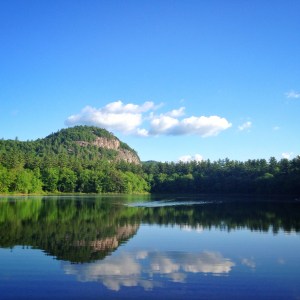
And it’s not just the cars: In Iceland you can go almost anywhere. There are trails crisscrossing private land, and tourist sites sit adjacent to homes. Iceland is just open. Anyone can go anywhere. Roads might be posted for vehicles, but walkers can go pretty much anywhere.

The rules are codified in the Icelandic Nature Conservation Act, which stipulates “everyone has the right to travel around the country and enjoy its nature,” according to the website of the Environment Agency of Iceland, “as long as the traveller is tidy and careful not to damage or otherwise spoil natural resources.”

It is “permissible to cross uncultivated private property without seeking any special permission” in Iceland. “Landowners may not hinder passage of walkers alongside rivers, lakes and ocean, or on tracks and paths.”

The result? A country where everyone is free to wander, welcome to roam. Backpackers pitch tents in any open field, walkers wander along exposed clifftops, and car-campers park for the night anywhere they please.

Another result is less concrete by no less real: a feeling of openness, of freedom, of unrestrictedness, a right to be where you are. It is a feeling unfamiliar in America. But in Iceland no one is ever going to ask you to move. They aren’t going to ask you to explain yourself, to demand you produce your ID. The default assumption is you have the right to be where you are, to stand where you are standing and walk where you are walking. Private property is not so private to exclude you access to it.

It is a different version of freedom, one that runs deep on the island of fire and ice. It even extends to the national parks: There are no entrance fees, no gates or rangers. The mountains, waterfalls, natural hot springs and glaciers are all open; there are no ticket sales. Iceland may be expensive — it is an island, after all, and imported goods cost accordingly — but to gain access to the land is free.

Contrast that with our version of freedom, the version so vehemently celebrated in the Live Free or Die state. Here the word means not universal access to the land but the right not to be bothered. “My home is my castle.” “Don’t tread on me.” Freedom is a celebration of a place where I do not have to fear interruption.

Here in New Hampshire — and in America — freedom is a form of protection, a cloak, a warm blanket to wrap ourselves in. It shields us from the darkness and the night, all the terrifying and unwanted things crowding outside our doors.

But freedom doesn’t have to mean that. Iceland lives a different version. Freedom there is not the protection of a closed door but the chance to throw open the windows. It is a chance to abandon home completely and explore the world, to wander and get lost without fear of persecution, to head for the horizon without risk of reprisal. It is the right to exist exactly where you are, to not apologize for standing in place no matter where that place is.

Maybe everyone grows accustomed to the version of freedom they are born into, the version they grow up with. But those camper vans dotting the highway, those hikers pitching tent in empty fields, they represent a different version of the word, some meaning long since forgotten at home. Somewhere between the White Mountain parking passes, the Do Not Enter signs and Echo Lake entrance fees, we got lost. Suddenly, our land wasn’t ours anymore. It was yours, and only yours, to keep free.

But that’s not everywhere. In Iceland, little red cars with beds in the back swarm the land, buzzing their way freely wherever they like. The wind carries them past the lava and snow, over rivers and next to oceans. It’s all free, and it’s theirs. Because “everyone has the right to travel around the country and enjoy its nature.”


This column appeared in the Conway Daily Sun.

CDS Column: A Shot in the Dark

CDS Column: A Shot in the Dark

IMG_7944-1I’m not much of a hunter.

Last year was my first season. I took the hunter safety course in the southern part of the state, a consequence of waiting until the last minute to sign up. But three days of spoon-feeding later — information distilled so simply failure wasn’t an option — I had state approval to walk the woods with a gun.

A hunting license, paired with no idea what I was doing. An old hand-me-down 20-gauge I’d been given in high school would serve as my long sword, and a few stops at the L.L. Bean outlet set me up in blaze orange. I was suddenly poised to kick around the woods with a loaded firearm, crisply dressed and legal but still far from lethal.

So, for my first day out I recruited an experienced friend to lead me in my pursuit of ruffed grouse, an appropriate-seeming challenge. We walked Jackson woods on overgrown logging trails waiting for an explosion of wings or the sound of their distinctive drumming, but we saw nothing. Instead of entering the arena of primordial provider, I took a pleasant afternoon stroll.

Lots of hunting days, my friend explained, are spent like this, more wandering through empty woods than shooting. The gun on those days is a hiking accessory.

Two days later, I was back, this time on my own. A grouse, I was determined, would find its way to my table. I drove the same dirt road looking for deciduous forests along sunny slopes, the sort of place a healthy grouse might opt to make roost. I parked at a pullout, donned my orange vest, loaded my shotgun, laced my boots and set off into the forest.

The explosion caught me off guard, barely five minutes in. A rustle catapulted a bird into the sky, and it streaked from left to right like a football bound for the endzone, wheeling around trees and darting out of sight.

My gun never came up. The lightning bolt erupted faster than I’d imagined, and I stood dumbfounded. This was going to be harder than I’d thought, I realized.

But I’d seen it, noted its general direction. It wouldn’t go far. This was its territory and it’d stick close. So, I followed it, tromping dead trees and downed limbs looking for wherever the football had landed.

Fifteen minutes later, my steps triggered another explosion, this time streaking back right. I’d found it, but again I was flat-footed. My gun hung across my thighs, never approached my shoulder. I didn’t have a chance. This bird was better equipped for survival than I was, and another hour of walking failed to scare it up for a third time. I walked back to my car with nothing but a shotgun in hand.

More wandering in the woods than shooting. It was proving true.

But the shooting was what drew me to the woods, what pushed me to hunt: Not the sport of it, but the killing. Like most of us, I am happy to eat a hamburger or chicken on my Caesar salad. But I have never killed a cow, never chopped the head off a hen. Our food does not demand such commitment. It’s easy to eat steak without ever coming face-to-face with a living, doe-eyed cow, much less having killed one. Our killing today, like so much in our economy, has been outsourced, and not just to the neighborhood butcher.

Not that I’m opposed to the killing. Every carnivore and omnivore does it, all without the guilt humans wrestle with. But our habit is to kill from a distance, to leave it to others while reaping the benefits. It’s a tendency that engenders complacency. Ignorance in the face of death lets things to get messy in dark corners.

Across Idaho, Utah and Kansas vast feedlots line the highway. Herds stand crowded into brown squares stripped bare of grass. Cows stained dark with mud and feces stand resigned to lives hemmed in on four sides, the bovine equivalent of cubicle-bound.

These are not happy cows. They live this way as a consequences of distance, the result of ordering the sandwich without having to raise the meat. It is a system built to maximize efficiency at the expense of humanity (or bovinity perhaps). Bullfights may be decried as cruel, but the ring offers more life than the feedlot, and everyone winds up hamburger by dinnertime.

The factory farm, however, lets us keep our hands clean. The bullfight, meanwhile, occurs center stage in blood red. How curious one is banned while the other is good business.

Hunting was my reckoning. I went into the woods to walk among feedlots, to take my part in the killing up close, a shotgun filling the space of captive bolt pistol, no more handing off the task at reduced rates.

But it didn’t happen. I didn’t even raise my gun, not that day nor any of the following. I wandered woods and watched birds streak like footballs through the foliage, but my reflexes were too slow, my gun never reached my shoulder.

Left to my own devices, I determined, I would starve. Ideas about ethics and ideology would play no part. The only meat would be store-bought, and questions about the veracity of my carnivorous spirit remain unanswered. The ferocious hunter I was not.

It is, however, that time of year again. Lucky for the birds I’m not much of a hunter.


This column appeared in Wednesday’s Conway Daily Sun.