CDS Column: Tourism Tales

CDS Column: Tourism Tales

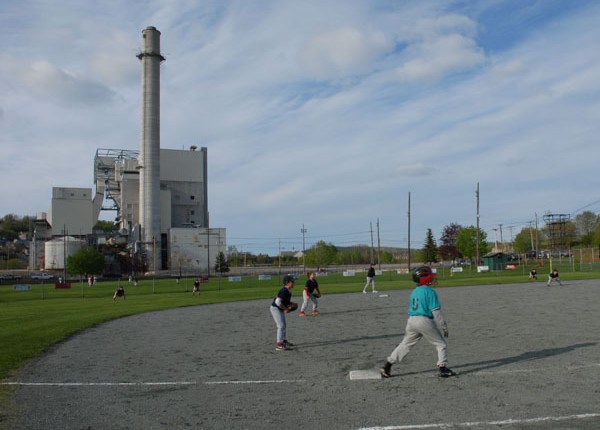
e5a29-dsc_0019My first real job in journalism was in Berlin, New Hampshire. I was working for the weekly newspaper, tasked with covering a community in sharp decline from its former glory. At one time, Berlin was the third-largest city in New Hampshire. Today, it is saddled with aging infrastructure intended for 25,000 residents, with 10,000 residents footing the bills. Even the paper itself was in decline — there was no office, and I spent most of my time working from the local community college.

But hard times bring their own kind of renaissance. Berlin was stripped bare by the changing economics of the paper industry, but the winnowing distilled the city to its core, discarding those lacking a deep connection to the community and leaving residents with a deep sense of themselves. It was a process that made Berlin both weak and strong, an unlikely place to choose to live yet still a community in the richest sense of the word. I would drive north over the notch each day from the Mount Washington Valley, where nearly everyone hails from away, to a place where few chose to move unless out of options. But those who stayed did so with pride.

At the time, Berlin and the rest of the North Country were searching for whatever was going to support them next. The mills were shuttered and something had to take their place, but what? Prisons and biomass electricity were floated as options but lacked the economic steam to restart the engine.
But what about tourism? No individual North Country town had the assets to constitute a tourist haven, a hired consultant told them, but if the region as a whole banded together, it could be a market. The idea was to link the North Country’s three stately hotels — the Mount Washington, the Mountain View Grand and the Balsams Resort — in a campaign that sold the “Grand Hotels, Grand Adventure” alongside the region’s untrodden natural wonders like lakes, mountains, rivers and forests.

Berlin, however, was always skeptical. Tucked along the Androscoggin, it sits in a pocket removed from the namesake hotels. And, more important, as a blue-collar industrial city, Berlin has always looked at the tourism with suspicion. The stink of the former pulp mill was once the smell of good jobs, and any transition to the low-wage service jobs tourism brings would be a hard one. Mill work offered a middle-class living. The promise of a restaurant job or a gig as a whitewater raft guide is hardly analogous.

But in today’s economy, what other options are there? As rural towns decline, many are looking at their last remaining asset: their picturesque surroundings. North Country tourism moved forward, and Berlin grudgingly went along, never full-bore but willing to play the game.

Then the Balsams shuttered, and with that the trifecta that gave the “Grand Hotels, Grand Adventure” plans resonance came to a halt. How tenuous plans for selling yourself as a destination can be.

But as economic changes sweep across New England, tourism is repeatedly raised as the fallback plan. The mills close? Turn to tourism. The furniture factory goes quiet? Tourism. The industrial sector struggles (in Conway Village, for example)? Tourism.

But does tourism have the strength to take up the slack? As the modern economy recedes from rural areas, can visitors from away fill the void? It’s a question a small town on the Maine coast has been wrestling with, and the answers it has come up with look much like ours.

Boothbay is three hours to the east of us, a coastal community watching its working waterfront empty and its population dwindle. The town is hollowing, so what are they considering? Tourism. Specifically, a proposal to build a retail development complex distinct from the village district, installed around a redesigned traffic pattern that includes a roundabout.

Sound familiar?

Tourism North Conway-style is the new black, a solution for rural economic malaise, a unique intertwining that combines natural beauty with shopping centers in hopes of lifting all boats.

But is the economic mix that keeps the Mount Washington Valley afloat a prosperous one, something worthy of exportation? Is our brand of tourism the one to aspire to? And will it even work? Can the pull of shopping repeal stagnation?

Boothbay is already a tourist town, but it is a one-season destination, packed for July and August and otherwise quiet. It’s a far cry from North Conway, where skiing, foliage, mountains and rivers combine to create four seasons of visitors.

In looking at the attempted copycats, the uniqueness of the Mount Washington Valley stands out: Not every tourist destination can claim a year-round status. Our retail district is an important part of the draw, but its strength is that it exists as an accessory, a complement, the place to drop uninterested family members while everyone else goes skiing, paddling or hiking. It is not the focal point to which crowds flock. It is part of a whole package that makes us a destination. In isolation our retail district is but a shopping mall, and tax-free though it is, it would hardly qualify as a unique draw.

The same is true of any individual ski area, any single mountain. But pair each asset with the river, with the leaves ablaze in October, with sap running in springtime, the Scenic Railroad and the shopping, and suddenly a destination emerges. Suddenly North Conway has its the trifecta of grand hotels.

Not everyone has that. Not every place contains the mix that makes a destination. But as rural economies change, more will be looking toward tourism. The Mount Washington Valley model might find itself played on repeat.


This column appeared in the Conway Daily Sun.
CDS Column: Home on the Road

CDS Column: Home on the Road

14066350_1588101947882551_955321454025779419_oWe are all part of a tribe. Family, community, state, country, it all comes out from time to time.

The Olympics, pitched as an instance of the world coming together, is one example. Countries meet on a global playing field, a time-honored tradition in camaraderie. But what is it really? Competition. Nationalism. The chants of “U.S.A.! U.S.A.!” that fill the stadium are a tribal call, a celebration of divisions, not just unity. It is about us and them, and us. Most of all us.

When Ryan Lochte acts like an imbecile it is not an individual insult but a tribal shame: “the ugly American abroad,” an old tribal stereotype. “He gives our entire delegation a bad name.” How true, a slandering of our tribe.

The Olympics are over. The overt national call has come to a close. But our tribalism has not. It never comes to an end, it is baked into the American fabric.

Some versions are ugly, acute reminders of the stereotype Lochte stands accused of reinforcing: the Ugly American. Those live in the political chants of Americans insistent on restricting entrance or accommodation based on religion. “No more Muslims” has somehow become its own tribal call. Same with “no more immigrants.” This in a country founded by immigrants, built on the principles of religious freedom.

The Ugly American indeed. But tribalism is emotional more than it is logical, it doesn’t always make sense.

Not every vision of tribalism is so bleak, however.

This summer I drove across the United States. First one way, from New Hampshire south to North Carolina, then across to Kentucky, Colorado, Utah, California, then the other, from Washington state back to Colorado and across the long green center to the Mid-Atlantic and the North. Back to New Hampshire, from the Sierras to the Whites, from one unending blue to the other.

In the eastern plains of Colorado I pulled off at a rest stop. It was a warm morning, yellow grass swaying in the breeze. I got out to stretch my legs, hit the bathroom and filled my water bottle. I was roughly 30 hours from home, a long stretch of road before me.

Across the way two men stood outside a green Honda Civic. They were scruffy, their clothes dirty. Modern hippies, maybe homeless, likely both. One had dreadlocks. The other held a leash that ran to a small black dog. Someone had written “Live Free or Die” in white paint along the Civic’s trunk. The dreaded man looked at me, nodded his head, smiled, and then pointed to his license plate with both hands like a maitre d’ showing me to my table: New Hampshire. The Granite State. “We are of the same tribe,” his smile said. I smiled back and waved, then steered toward the highway. Indeed.

A thousand miles later it happened again, this time crossing Ohio: A young man in a low-set Acura slid along the highway. He was driving fast, faster than I would have, weaving his way among the traffic. I saw him approaching in my rearview. I held my course to let him pass.

But when his window was adjacent to mine he slowed. When he paused, I looked. He stared back at me, probably in his early 20s, dark hair, a quintessential college kid. He smiled, raised his fist, quickly pumped it twice and then sped up, crossing back into my lane just in front of me. His plate: New Hampshire, the first I’d seen since Colorado.

What happened next is he slowed.

Not fully, but enough that his message was clear. “Follow me,” he seemed to be saying. “You speed up a little, I’ll slow down a little, and we can band together to cross this Buckeye State highway. As Granite Staters.”

As a tribe.

And here’s the thing: I did. I don’t know why. Maybe it was the months among American foreigners, of being surrounded by cars from California and Colorado plates, Kentucky-ites and Utahns.

The poignant reminder painted in green script and shadowed by a fallen Old Man was enough to push my foot on the accelerator. Maybe it was seeing someone call to me in brotherhood despite having no idea of my name. But cruising along I-70 with no reason to speed up beyond the wave of a non-friend I decided to exceed the posted limit a little more.

I lost him somewhere around Columbus where I-77 turns north. He pulled away amid the congestion, and like a cyclist too weak for the peleton I drifted backward. I didn’t find him again. And I was staying on I-70, driving east to see a friend in Philadelphia, my license plates having left out the full story of my destination. But I still smile as I think of him, a lone warrior whose befriending me stood on nothing but my tags. A true tribal spirit.

Maybe it’s only among foreign shores that such tribalism is born. In the West, highway speed limits read 75 mph. With cruise control pegged at 85 I’d find myself weaving past cars, flying faster than the flow of traffic. Weeks later on my return home through New York the posted limit read 50. I again pegged cruise control at 85, but this time I was the sluggard, a slow motion impediment crawling along the pavement. Empire State plates shot past like I was riding a farm tractor.

And for some reason it felt like home.


This column appeared in today’s Conway Daily Sun.

CDS Column: Reality Politics

Screen Shot 2016-08-10 at 9.41.37 AMDonald Trump’s popularity is sagging.

Or that was the news story in New Hampshire last week: Hillary Clinton’s poll numbers climbed to more than a dozen percentage points over the Republican nominee in the Granite State. True, some respondents voiced concerns about whether the former first lady is fit to be president, but their concerns were eclipsed by the same question regarding Trump.

Polls are only a snapshot though, one of those things that flare up suddenly like wildfire, make their rounds and scorch everything in their path before they disappear.

The only poll that really matters is in November. Everything before then is a cupped ear to the whispering mood of public opinion, a national game of telephone guaranteed to amplify distortion by the time it ends.

And that’s in a normal election year. This year is anything but normal. A little over a year ago, Trump’s candidacy appeared an extension of his television career, a shot of reality TV drama dumped into politics. It didn’t register as real, left no hint it might transform the entire presidential debacle into reality TV.

But maybe it should have. Maybe Donald Trump is the candidate we’ve been asking for all along. Other countries elect leaders in a matter of weeks; American presidential elections last years. They unfold in campaign events choreographed for the cameras and polls that track competitors’ progress like runs per inning in a baseball game. Candidates campaign on words like “Hope and Change” and “Make America Great Again” rather than policy positions, and scandals and affairs unfurl like celebrity gossip. Democracy has turned into daytime drama. No wonder Trump does so well.

Clinton, meanwhile, makes something of an easy villain for the television narrative. Or the persecuted heroine. It all depends which side of the aisle you stand on. She has certainly had to bump her way to the top, and such wrestling leaves bruises. The reality of candidate Clinton is likely somewhere in the middle, however, neither nemesis nor innocent. She is a politician, one with hands dirtied by history.

But as a former senator and secretary of state she knows the system and has been an integral part of it. Is that what we need at this moment, one of the cooks long in the kitchen?

No? OK, then consider the alternative.

What a mess we’ve gotten ourselves into. Anything but a normal election year. A frequent complaint of America’s two-party system is that it leaves voters to choose between the lesser of two evils. But not this year. This year, the choice is between the distasteful and the absurd. Would you prefer the consummate politician or the TV host? It brings to mind the famous Winston Churchill quote: “Democracy is the worst form of government, except for all those other forms that have been tried from time to time.”

But Churchill never saw democracy made for television. Celebrity democracy. Production democracy. Campaigns run for the cameras, voters transformed into consumers, candidates as packaged products rather than people. It’s democracy’s latest form, and the worst possible.

It is distasteful, but it’s definitely ours.

It often appears America is prepared to “snap out of it,” ready to let go of its fetish with things flashy and loud in favor of substance, but it never quite happens. Politics is just the latest version.

Remember the days immediately following 9/11? Journalists left behind celebrity-styled reporting to reorient readers and viewers to America’s place in a complex world. And for a brief instant we cared. We spent time listening, learning, treating our news like information rather than entertainment.

It happened again in 2008 after the financial meltdown: As Americans watched their banks fail and their investments disappear they stopped watching financial news modeled on Sportscenter and started looking for stories and sources that actually explained what was happening. Again, for the briefest moment, the character of the conversation changed.

Perhaps we are in another of those moments now. The two major party candidates are both deeply disliked, and yet they rose to the top. Many Americans, including those who took part in the nomination process, are dissatisfied. We watched as one candidate was considered for investigation by the FBI and the other got in a public tussle with the family of a fallen soldier. This does not seem American democracy’s finest hour.

When the dust clears, once either Trump or Clinton is president, will we reflect on this election? Will we look at our political conversation the way we looked at our approach to foreign affairs and finance in those moments after more immediate disasters? Will we have the wisdom to revisit our celebrity fetish, to let go of the flash version of modern democracy in favor of something more concrete, long term?

Or will the cleared dust mark the moment we forget about all this? Will we never ask what went wrong, what led to a race between an obviously unfit candidate and one so divisive?

If our recent past is a guide, then we are in trouble: The lessons of history are able to blind us, but only momentarily. We reverted to national conversations devoid of historical perspective in the post-9/11 days. We returned to the “too big to fail” practices of the pre-meltdown era. Our slow-moving political disaster, one without the same immediacy as those, will likely suffer the same fate. Reinvent ourselves? No, not so long as our elections are entertaining, like game shows with only the slightest twist from “Who Wants To Be A Millionaire.” Or “American Idol.”

Or “The Apprentice.”


This piece appeared in today’s Conway Daily Sun.

CDS Column: Reflections Abroad

CDS Column: Reflections Abroad

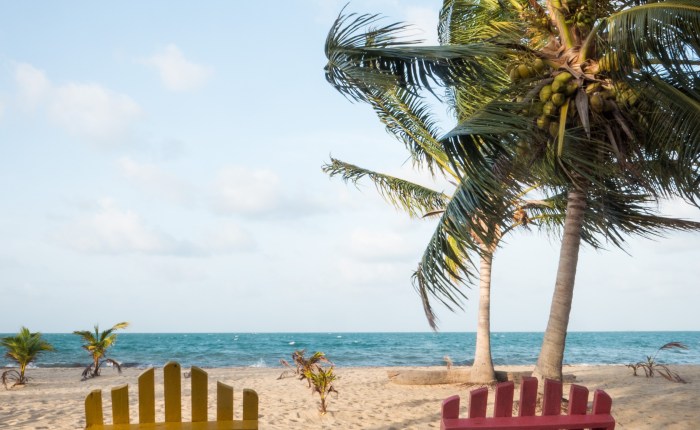
Belize-1050964“Where are you from?” He was wearing a collared shirt, long pants with suspenders and a wide-brimmed woven hat. I sat next to him, sweating through shorts and a tee shirt in the Belizean heat.
“The U.S.,” I said. “New Hampshire.”

“Where is that? Higher than Pennsylvania?”

“Yes, above Pennsylvania. Near Boston.”

“Does it touch Canada?”

“Yes.”

“Huh,” he said. “Is it cold there?”

He spoke with precision, like he was reading off a script. He addressed me directly, never breaking eye contact. His name was Elias. He was a Mennonite, a Christian sect similar to the Amish common to Belize. We were riding south out of Belmopan, the capital city, in a retired school bus with brown vinyl bench seats and windows that only slid halfway down. I was headed to the Caribbean coast. He was going home.

“It is cold,” I said. “It even snows. But not right now, only in winter.”

“I’ve never seen snow,” he said. “I couldn’t handle it.”

He smiled. He was 24, a farmer and one of 10 children. He lived with his family in central Belize, but he’d visited the United States a handful of times and had dual citizenship. His father left their church in Pennsylvania decades ago in a return to his core beliefs. His American community was using tractors and driving cars, Elias said, slipping towards modernity, so his father and a selection of others moved south, way south. They now farm tomatoes and peppers and corn, he said, in a community of 15 families.

“Did you go to Belizean school?” I asked.

“We have our own schools,” Mennonite academies separate from the national system, he said. “But we only study until eighth grade.” After that, Mennonite children become farmers.

“Do you ever feel like you are missing out? Ever think maybe technology and education and everything might be better?”

His answer was unhurried. “No,” he said. “I’d like to know more geography, to understand the layout of things better, but that’s about it. I don’t follow the world, really. And the pieces I hear about don’t make me want to take greater notice.”

“Explain that,” I said.

“You have an election coming up, right?” he said.

“Yes,” I said, suddenly sullen.

“I don’t know much about it,” he said, “but it seems a mess. I don’t think I want a bigger part of that world.”

The bus lurched. I sat quiet. He had a point.

That’s why I love travel: It’s a mirror, a necessary step back for reflection. Only from a distance can you get a full view of yourself.

As a country, it’s no different — without adequate space it can be impossible to formulate an accurate view of your policy, your politics. Only in leaving can you see more clearly.
Another glimpse came from Karina, a Belizean mother of three. Every morning she sat outside the school. Inside, American high school students ran a summer camp for Belizean middle and elementary kids. Karina’s daughter was in the youngest class, made up of kindergarten and first graders. She would bawl inconsolably if Karina wasn’t nearby, so each day Karina sat at the picnic table outside the classroom.

Karina was black. She had grown up in central Belize not far from the school, and for the last two years she’d attended college in America.

“What was it like,” I asked her, “going to the U.S.?”

“It was wonderful,” she said, “but hard.” She wasn’t ready for the racism, she said. As a Belizean she hadn’t developed the thick skin required of a black woman in America. Her culture is multiracial, but it lacks the divisions she encountered in the U.S. Encountering the stinging blows of prejudice as a young adult shocked her. She was unprepared for it. She would cry a lot, she said, and was hurt easily.

“I didn’t expect that,” she said. “I was happy to go to an American university, but it’s really nice to be back.”

These moments give pause. They are brief glimpses into the mirror of ourselves, of the country we have built: A Mennonite man with a middle school education who sees our politics clearly enough to know he wants no part in them. A young mother whose experience with American racism left her in tears. These versions of America grow fuzzy to those of us who live them every day. They seem impossibly entrenched and complex up close. But from abroad they look different. With the benefit of distance they seem both larger, more intertwined in the American fabric, and also smaller, more isolatable, more feasible to face head on.

At home, issues of race and politics seem too overwhelming to be changeable, too thickly American. But from 1,000-mile shores they become remote enough to appear moveable. They seem again to be in our hands, something within American control, within the control of the citizens who make up this country. They are ours to manipulate and eradicate if we chose. Racism is not part and parcel to this nation. The politics of money, fear and limited choice is not an inexorable American parasite that cannot be purged without risking the host. These are momentary glimpses of our country at this moment, they are not what define it.

But to change them, first we have to look in the mirror. First we have to decide if we like what we see.


This piece appeared in the Conway Daily Sun.

CDS Column: The Cost to Learn

CDS Column: The Cost to Learn

IMG_0400The other day I came across a news release from my alma mater the University of Southern Maine: “USM hails turnaround,” was the headline, “Admissions numbers substantially up and budget balanced for first time in years.” Classes are full, and the university is in the black. Officials were upbeat; for the first time since the Great Recession the university is making money.
USM was hit hard back in 2008. There were cuts, layoffs, changes in leadership. Officials threw countless levers in search of something capable of putting things back on track, of making ends meet. Now they finally have good news: “The number of high achieving high school graduates attending USM this fall is soaring. ‘Last year at this time 16 admitted students who were awarded merit scholarships sent us a deposit,’” a school official said. “’This year that number is 216, and we expect the numbers to climb.’” Things are looking up.

I studied at USM a decade ago, graduated in December of 2007 in the calm before the financial firestorm. Those were flush days for the university, before a lot of tough decisions and belt-tightening.

Today in-state USM students pay $253 per undergraduate credit. That’s not much different than when I was there. Out-of-state tuition, meanwhile, costs $665 per credit. One year of classes and fees costs $8,920 per year for in-state students, while out-of-states pay $21,280.

An hour away, meanwhile, at University of New Hampshire, an in-state student pays $600 per credit hour. A year of tuition costs $14,410, plus an additional $1,607 in fees. Over four years those numbers add up, and the $60,000 price tag for UNH doesn’t include food or a place to sleep. College today is full of opportunity, including for students to saddle themselves with significant financial baggage barely into adulthood.

It wasn’t always this way. The prosperity of the American Century wasn’t financed by 18-year-olds; it was fueled by public investment. In the wake of World War Two former soldiers swarmed university campuses backed by G.I. Bill dollars. A generation later their children attended low-cost state universities, another gift of government dollars. These two generations—the Greatest and the Boomers—built success out of this community investment. They prospered, and America prospered. They grew in tandem, gains forged in the fires of collective investment in higher education. We were a nation of government-funded students and state-sponsored graduates, two parallel rails that fostered America’s transition from industrial nation to an economy interlaced with technology. Today forms of commerce unimaginable in the post-World War Two years are commonplace, built by this army of first financial aid recipients. Complex derivative industries now sustain us, and the grandchildren of people born before telephones reached a majority of households are finding jobs as ap developers for smartphone companies. Such is the growth in an educated society.

1140f-highBut those opportunities are becoming harder and harder to afford. Over the past 50 years education has changed. The opportunities have changed. Even as the necessity of a college degree has increased, support for obtaining one has dwindled. Political pressure has forced entities built on public investment to operate more like businesses, to focus on growing income streams rather education opportunities. School budgets once covered by government have been cut while the portion left for students to bear has ballooned. The task of educating, a responsibility once felt by all of us, has been privatized, individualized and handed off to the kids. Education has transformed into something you buy, and it’s no longer affordable.

How did this happen? How did investment in a strong workforce, with the stability and prosperity that it brings, become the responsibility of 19 and 20-year-olds? How did we so erode our public support of higher education that the costs now land on the shoulders of children?

Perhaps it is tied to the modern narrative around education. The story of school was once that of a tide that lifted all boats: No one lost by investing in education. Gains might be unevenly distributed, but society as a whole saw tremendous advancements as a result of rising standards. Better education meant better jobs, more wealth and general upward mobility. The trajectory was one of growth. Investment in education was a building block in creating middle class communities, an investment in a collective future, and a brighter one.

Today, however, that storyline is gone, replaced by a simpler tale. Today we are told education exists for the individual. It is a personal investment with personal rewards: the chance for more money and a better job. From a societal level there is little incentive to see others educated, as only the individual sees the benefits. Taxpayers, meanwhile, bear the expense. Society is saddled with the cost. For individuals college is an investment; for the rest of us it is an expense.

Such a shallow view of our society, history and economy. Education, like economics, is not a zero-sum game; with investment, the pie grows. There is no finite number of slices. Inventions like the internet and the iPhone revolutionize entire sectors, creating new opportunities and derivative markets that spill their way down the economic food chain. Exploding technologies may be built by engineers and computer programmers, but they create opportunities for accountants and janitors, lawyers and food service workers, CEOs and parking lot attendants. Everyone benefits. Education is no simple rising tide; it is a wave, a tsunami, a tremendous force for change.

We knew this, and for years we watched it work. For generations. The result was the American Century, a middle class revolution built on public investment in knowledge, creativity and growth. America led the world, leadership funded by all of us.

We could get back there, but not by ignoring the cost. We must spend wisely and choose which bills to make our own. Education is one that belongs to all of us.


This column appeared in today’s Conway Daily Sun.