In Berlin?! Really?!

I’ve got a great story for next week’s Reporter. Really great. I don’t want to go into it here, but next week’s issue will not be the one to miss. Make sure you don’t.

I have to say, I love my job.

Sorry to all interested parties, but I have no interest in being an editor or a publisher. I want to be out there, where the story is happening, digging things up. That’s what I’m good at, and that’s where I should stay.
Furthermore, there is no Berlin Reporter press—there is Salmon Press, which owns the Reporter and 10 other papers, and they are all printed in Massachusetts. I couldn’t buy the paper because there would be no press for me to print a paper. That business plan just doesn’t work.
Besides, I love my job. Why would I leave? I have a boss who supports me while I do my best to improve the level of discourse in Berlin, plus benefits and vacation. I get to talk with every aspect of the city, and beyond. It’ll be a while before I quit this arrangement.

And no one would be happy with a Monday paper. You would wind up with last week’s city council news, which is often some of the most pertinent information in the paper. Ever notice the Reporter comes out the same day the daily paper reports city council meetings? That is the one time we really cover the same news on the same deadline. That’s key. Our timeliness in this one area is important and not worth forsaking. I understand it’d be nice to start out the week with quality journalism, but it’s not in the cards. I’d hate to be reporting council happenings a week late. I far prefer the model we have now.

But thanks for the constructive criticism. I’m working on improving things even more. I want to get video capability and get important interviews up online. I’d love to see the council meetings broadcast live. I’d like to be Tweeting from every meeting I go to. What I need, though, is for everyone to buy ads in the Reporter so they expand it. It could be more pages, two sections, if it brought in the revenue. I’m doing my part, improving the reporting; now it’s your turn to convince all your friends to buy the paper.

Next week, they’ll want to. Believe me, it’s worth it.
Jobs, But For Who?

Berlin wants jobs. The city is sagging because there are few viable opportunities, and everyone wants to see that change.
The question is, what kind of jobs? Jobs for whom?
If the city puts an emphasis on creating 21st century jobs, then all the residents who got laid off by the mill will be left out. The skills needed for service sector high-tech jobs are different than the skills needed to fell trees or run a boiler. Replacing those jobs with jobs relevant in the post-industrial economy does nothing for the people laid off there. The jobs will go to outsiders and a select few resident, while doing little for the people who need them most.
Think of the federal prison—37 or younger rules out much of Berlin, leaving residents frustrated and angry.
However, if the city concentrates on revitalizing the wood products industry and puts people who were laid off back to work there will be no reason for the youth of Berlin to return. High school students who go away to college don’t want to come back to log the forest; they want to come back to a place with the infrastructure to support their professional aspirations. And new people don’t want to move to the area either, because there aren’t the opportunities they’re looking for.
Right now, Berlin has a great mix of neither: Blue collar workers are out of a job, young people are leaving, and few new people are moving in. The city has to do something; it has to put its energy somewhere.
Can it do both? Maybe. If one or both of the biomass plants are built they will bring back some of those blue collar jobs, and the city could still concentrate on the new economy. That seems like no one’s ideal solution, but for Berlin compromises are more important than reoccurring inaction.
Can candidates for council really afford to be against any part of either version of new jobs for Berlin?
Mr. Grenier looks at the past nostalgically, but he didn’t mention anything about jobs that would bring people in to Berlin. He is looking to help those that are already there.
Mr. Bertrand wants to move the city forward, but at what cost to the people living there (and voting there) now? Is maintaining steadfast opposition to the controversial Laidlaw project really viable, when it could help so many people and there is no foreseeable viable alternative use for the property?

Berlin needs to create a place for people to come, while not abandoning those who are already there. That’s a tough tightrope to balance, which requires a nuanced policy view. Nuance is not the first word that comes to mind when I look at the candidates running in Berlin’s municipal election. Maybe it will become part of the conversation.

Also, I’m glad to see several people who frequent LPJ are running for council. Tim Cayer, Jon Edwards, Ryan Landry and anyone else running for city government, if you would like to write up a short (500 words or less) statement saying why you are running I’d be happy to post it on here. I will be interviewing everyone running in the coming months, but this will provide you with a little more open forum if you would like it. I know Mr. Cayer, Mr. Edwards and Mr. Landry have my contact information, but for anyone else, shoot me an email at erik dot eisele at gmail dot com.

And please, I’ll cut them off at 500 words so don’t go over, and you can only send me one statement. I will not edit them, so check for typos. I look like an idiot when I have them, you don’t want to be mistaken for the press.

Do you miss the mill?

Do you miss the mill? Please, everyone who lived in Berlin when it was there, answer yes or no. I just talked to Paul Grenier, candidate for mayor, and this was his response:

“Nothing positive happened with the closing of the mill. I think it’s a lot worse, look around.”
I didn’t live there then, so I don’t know. I lived near Livermore Falls and Jay during high school, and a girlfriend’s parents lived in Rumford years later, but there is a big difference between being connected to a mill town and living in one.
Mr. Grenier misses the jobs, I’m assuming, and he didn’t mention anything about enjoying the clean air today. That doesn’t match with my sensibilities, but I was never laid off from the mill. I am comfortable telecommuting from my laptop to anywhere in the world. Not everyone can do that. Not everyone shares my perspective, and I fear too many of the people on LPJ share a worldview closely aligned with mine. It’s time to make more room.

So tell me, please, do you miss the mill? Was the smell worth it?

The sad part is the people who lost blue collar mill jobs aren’t the ones cruising the web checking out blogs. They didn’t leave the mill to work on computers; they left to find another working class job to pay the bills. And just because they don’t have time to post 100 comments doesn’t mean their views aren’t valuable.
While my perspective prefers the clean air, my job isn’t to preach my perspective. It is very likely Mr. Grenier isn’t alone in preferring a prosperous, dirty city, where everyone made a good wage and Main Street thrived. To discount that perspective is to do a disservice to the residents of the city, even those who aren’t working class.

Middle class versus working class—the difference is clear in Berlin. There are middle class opportunities, but few working class jobs left. Look at the story I did a few weeks ago about the parts supplier running a business out of his house—how do you take that opportunity if you don’t know computers? How does working class escape the rut in Berlin?
I wonder what infrastructure the city really needs to survive. How can industry survive today in the U.S. in general ? Could it survive in Berlin? Are working class people who aren’t comfortable with computers doomed in the new economy, both locally and nationally? Or is my job going to be shipped to India, and the tradespeople will have the last laugh?

I don’t really have any answers, but I think it’s important to recognize when your worldview is restricting your understanding of the facts. My background is middle class, with a college education and lots of open doors. I value clean air, mountain views, organic food and art galleries. Not everyone does. Some people would prefer 200 jobs to a dozen more restaurants like Libby’s. Who’s right? Who’s wrong? The jobs seem more practical…

So please, in the name of science, tell me if you miss the mill. And maybe list off your education and some socioeconomic background, to see if those are indicative of anything.

I’ll start—

Mill—Don’t miss it (How could I?).
Private boarding school for high school
Two bachelor’s degrees from a state university (I paid for it all, not my parents)
Don’t drink beer, but I do enjoy wine
5 years as a commercial fisherman; hated it because my hands smelled all the time
Favorite sports: rock climbing, ice climbing and skiing (read: rich kid sports; ever looked at the price of ice tools?)

My bias is obvious. Do other people notice theirs?

New Look, Same Story

I did a little work to the site over the weekend, trying to make it look a little more spiffy. I must admit, because of the weather I missed Riverfire. The photo at the top of the page is from the preparations for the event; I’m disappointed I didn’t get to watch those pallets burn.

If anyone has any good photos please send them to me, I’ll put them up and give you credit. I am planning on checking out the lumberjack festival tomorrow, although it is still raining and the forecast doesn’t look good.

I spent a good chunk of today trying to force a coherent story out of all the conversations I’ve been having recently centered on renewable energy. CPD and the PUC and PSNH and Laidlaw all will be in there, and I’m hoping I shoehorn them into one magnificent piece. The subject is fascinating to me, not having the backstory residents lived or the same long-term investment in the community. But I have to say the PUC doesn’t win any open-government awards for how they answered my questions—not because they didn’t answer them, but because how they answered them. Glad they aren’t regulating my electric provider…Oh, wait. DAMN!

So look for that Wednesday. I won’t bore you with it here; it’s best read on newsprint anyway.

Energy, From New Hampshire to Forida

Between today and yesterday I talked to people at the PUC, PSNH, Laidlaw, CPD and more. I made phone calls all the way to Florida, and I’ve been waiting for calls and missing calls from people at almost every agency. I’ve got reports from Massachusetts and New York universities about biomass sitting on my desktop, and I’ve been immersed in them to better understand the issues and factors involved in power.
I was talking to a biomass plant in Florida when PSNH called. I was talking to PSNH when Laidlaw called. I’ve got letters and responses from everyone around the region with an interest in electricity, and I have facts and figures from independent resources on how every aspect of a biomass affects communities and what the costs are.
I was talking to my editor today about electricity in the North Country and how prominent a feature it will be in the region’s future. I wonder if the Reporter should hire an engineer, not a reporter.

But I stumbled on something cool, and I don’t know how much of it will be in the paper. Here it is:

In Florida is one of the few biomass plants bigger than the proposed Laidlaw plant. It is 140 megawatts, and it goes through 2 million tons of fuel each year.
Big, huh?
But here’s the crazy thing: electricity generation is a side business for Florida Crystals. Their main product is sugar.
“We’re able to offer a product no one else can offer with carbon free sugar,” said Gaston Cantens, vice president of corporate relations for Florida Crystals.
Their plant sits in the center of a 150,000 acre sugar plantation, and half their biomass, or 1 million tons, is waste sugar cane fiber.
The rest they get from local municipalities. They burn wood of any kind, including hurricane debris.
The plant has three boilers, and they are working to build a fourth. It is a cogeneration facility; they produce steam to run the sugar mill and the refinery. The excess they use for electricity, and it powers 60,000 homes.
“We’re the largest biomass fuel power plant in North America, as far as we can tell,” Mr. Cantens said.

I looked at their business model and was just blown away. They are pairing two industries, utilizing an existing resource, and diverting 2 million tons of material that otherwise would make it into a landfill. Great stuff!

I’m going to try to pitch this to some national news outlets, see if they’re interested in telling the story more in depth. I thought it was cool.

Mayor and Council, 2010

As of early this afternoon, the following people had signed up to run in the 2009 Berlin municipal election:

Mayor — seat currently held by David Bertrand

David Bertrand
Paul Grenier

Ward 1 — seat currently held by Ryan Landry

Beverly Ingersoll

Ward 2 — seat currently held by Richard Lafleur

Robert Danderson

Ward 3 — seat currently held by Ronald Goudreau

Paul Cusson
Michael Rozek

Ward 4 — seats currently held by Timothy Cayer and David Poulin

Timothy Cayer

Normally I would leave this for an article in the Reporter, but registration closes at 4 p.m. on Monday. The paper doesn’t come out until Wednesday, and by then people won’t be able to sign up. Berlin needs residents to get involved to make substantive change happen. If the community is really invested in creating a new future, there should be five people running for every seat.

If you know someone who cares about Berlin, tell them to run. And if anyone needs help catching up on the last five months of city council affairs, I’m happy to talk about it, just give me a call. In that time I’ve built a solid understanding of how things work in the council, and I don’t think anyone should be intimidated by city government. It is a chance to make a real difference, give it a shot.

Register with the city clerk by 4 p.m. on Monday, October 5. City clerk’s office—first floor of city hall, on the right. Give them a call: 603 752-2340, or check them out here.

Fail Harder

Someone told me the secret to success: fail harder.
I work for the Berlin Reporter, which, as I’ve been told, used to cover bake sales from Errol to Shelburne. It wasn’t particularly interested in getting into the complex subjects facing Berlin. I have not followed the same approach.
I read an article in the Columbia Journalism Review about how newspapers need to stop just covering events and start covering issues. Berlin is lucky to have two papers, because they can each cover what they’re good at. I am trying to be proficient at covering issues, and I leave many of the events to someone else.
But issues are tough. PSNH, Laidlaw, Clean Power Development, CDBG grants, the Northern Loop, wood studies, revolving loan funds, wind farms, overlay zones, TIGER grants, federal prisons, state retirement benefit programs, and section eight housing are each distinct areas of expertise. Some might argue they are more than one person can hope to handle. Not true; that person just has to be willing to fail harder. And I do. I work for unattainable goals, and, while I haven’t achieved them, I’m gaining.

People are always telling me how to do my job. Not people at the paper, but random people who want a story about their business or me to look into their issue. They aren’t giving me tips, mind you, but telling me what I should cover and how to do it. It makes me wonder how people perceive the paper—do people look at it as a tool for the community, or as their personal dagger to wield?
I walk through Berlin more than many residents. One city councilor said I knew more about many of the city’s issues than he does, and he’s lived there almost his entire life. That isn’t true, because my understanding of Berlin is on a short time-line, but I have done my best to steep myself in the city’s issues. Sometimes at city council or other meetings I want to point out the obvious point everyone seems to be ignoring, but I can’t. I’m the fly on the wall with a bullhorn to sound once a week.

Fail harder—what a great idea. I’m proud of what it’s done for my reporting. What would Berlin look like if everyone gave it their all, without a thought of the consequences? Where would that take the city? The city makes tentative steps toward rebirth, weighed down by people dreading change. What if the city made a leap in one direction, any direction, with all the naysayers silent?
It is easy to fail harder alone. I can report as hard as I want, with reckless abandon for TRUTH, and no one holds me back. People have complimented me for what fail harder has done for the Reporter; I wonder what it would do for Berlin.

Definition of Post-Industrial

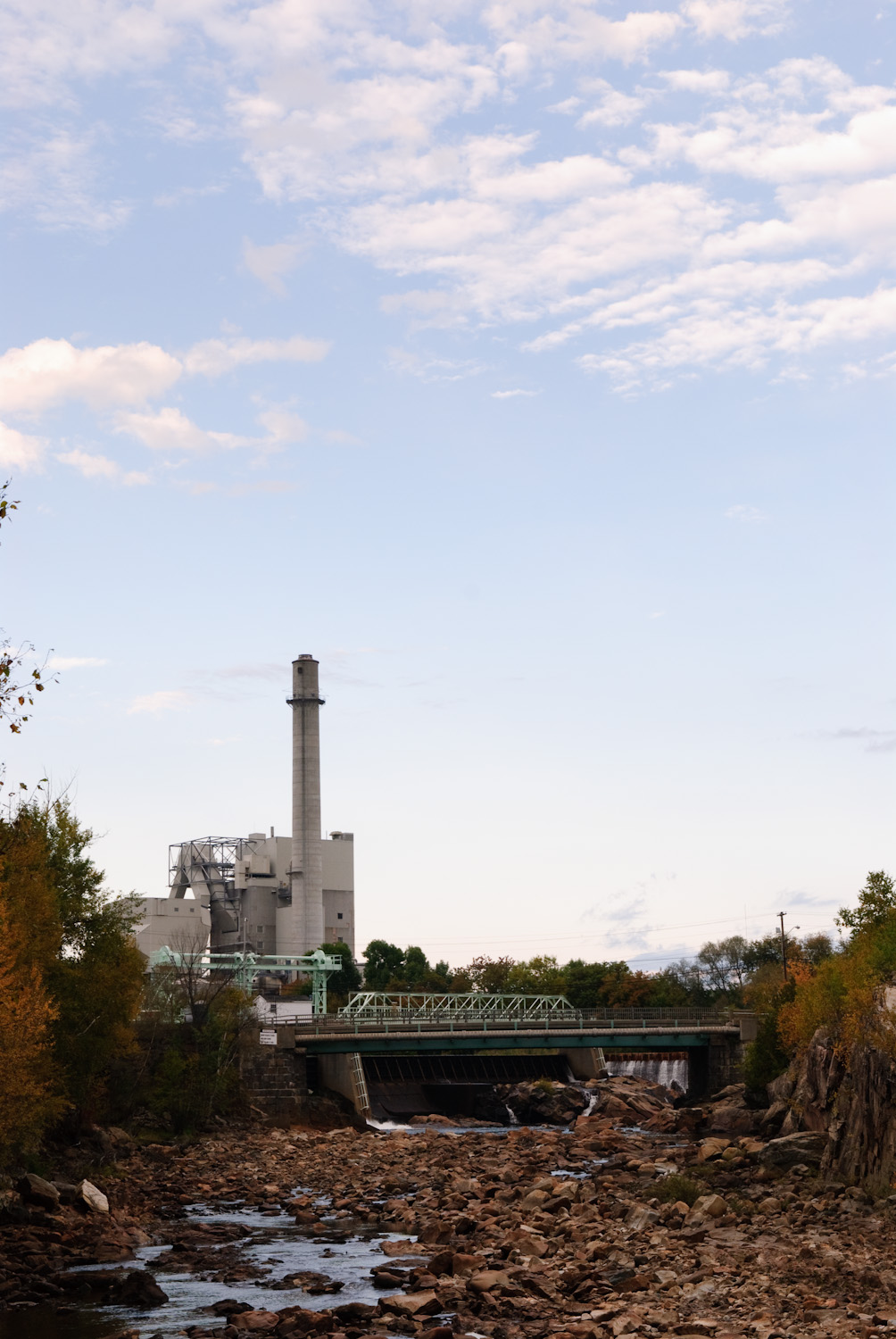
What does it mean to be post-industrial? I was walking around one of the Berlin parks this evening, and I was able to wander through the relics of the bygone era—the remnants of industrialization. It was like walking through Stonehenge, with echos of history that don’t make sense in the modern era. While I enjoy the traces of the past, the city itself is still trying to figure out just how to move forward.

Do people miss the mill and that industrial era? I never saw it, but I’ve heard about the heyday of Berlin. It sounds wonderful, and at the same time terrible. How do people feel about the transition that has occurred over the last half-century? Is it better to live in a city with clean air and empty storefronts, or was it better to itch for the weekend to go to camp but have money in your pocket? I’ve heard a lot of nostalgia for the old days; is it real? Given the choice, would residents go back to that?

I wonder if people see the circumstances Berlin faces as a blessing or a curse. True, there are lots of empty houses that occasionally catch on fire, and there are poor people moving in because of the low rents, but there is also a grand history and an infrastructure the city can now leverage in new ways, ways surrounding communities don’t have. The assets of today are the remnants of yesterday. Which era would you rather be in?

Rehab It, Make It Free and They Will Come

I was reading one of the articles I posted about yesterday, and had an idea that could completely change Berlin.

Offer a free apartment to any four year college graduate under 30 (or 35, or 28) who will settle in Berlin.

Berlin suffers from a brain drain. Too few young, creative people stay or return to Berlin. As in other places, “the best kids go while the ones with the biggest problems stay, and then we have to deal with their kids in the schools in the next generation.” Those that do stay or that come back are expected to shoulder more than their share of the burden within the community. Berlin needs more creative, educated young people to serve as the foundation for the city.
So how do you get them there? Berlin has an overabundance of housing, some of which will be demolished in the next few years using Neighborhood Stabilization Program funds. What about renovating some of those properties, but instead of turning them into low income houses turn them into free apartments for the people the city needs most.
This plan could work. Use NSP money to buy apartment buildings in need of rehabilitation, and then use BIDPA funds to restore them. Or, if you have to, use all BIDPA money so it avoids the rules associated with government money. Then advertise free places to live for driven people with four year degrees around the southern part of the state, Massachusetts and Maine.
New York City, which has astronomical rents, has a similar program for office space. They have few entrepreneurs compared to Silicon Valley or Boston because the brightest minds are often hired by big firms; the barriers new firms face are too high. The city has started to subsidize office space for start-ups in an effort to build the entrepreneurial culture.
Berlin could do the same thing. The city doesn’t have money, but it does have housing. Offer free rent—residents pay utilities—in a city-owned apartment building. The city would own the property, which, if the city grew, would increase in value. The building would become a solid investment. The city would get new blood and new money, and the people there would build ties within the community. Maybe some of them would move out, but many of them would stay. They would start businesses, get married and buy houses of their own. They would become the city’s next generation, mixing with the few entrepreneurs who stayed.
There would be no reason not to offer this to people from Berlin as well as those from away. The city could stop sending its smartest and best educated kids to Manchester and Boston and reap some of the investment it makes in its youth. It would be a cheap incentive to bring some of them back, and at the same time it would clean up more of the blight.

This is an example of the type of non-traditional thinking Berlin should be employing to figure out how it will move into the next century. Would it work? I don’t know. Go ahead and shoot holes in it, but then propose your own idea of how Berlin can reinvent itself.
Need inspiration? Check out this study from the Chronicle of Higher Education. That’s where I got my idea, maybe it’ll help with yours.

PUC, PSNH, CPD, AWOL, IOU

I’ve seen a convergence of random incidents that make me think it’s time to start asking some questions of the Public Utilities Commission and Public Service of New Hampshire.
In a story I wrote last week, Clean Power Development said they are ready to break ground on their project if they can get a purchase power agreement. CPD has a complaint before the PUC that says PSNH’s refuses to discuss buying power from them. PSNH argued CPD is trying to force PSNH to buy CPD’s electricity against their will.
Mayor David Bertrand wrote a letter to the PUC on Monday requesting they address the issue as soon as possible, as the CPD project would be a huge help to the city. And PSNH started following me on Twitter the same day. That’s enough gentle reminders to make me think I really need to get after this issue.

I understand PSNH’s feeling that it shouldn’t be forced to be an unwilling partner, but it seems like a dodge to the real question. Is PSNH required by law to consider all viable proposals to figure out what will result in the lowest electricity cost to rate payers? I think that’s the question I’d like to see answered with a simple yes or no. If CPD is in the best interest of rate payers, PSNH, a regulated utility, should accept their offer. If the CPD offer isn’t in the best interest of rate payers, PSNH should reject their offer. But PSNH can’t make that determination if it is unwilling to hear the offer in the first place, it seems.

I have read the docket, and it seems like CPD is asking one question and PSNH is answering a different one. I’d like to get the answer to the question CPD is asking, as that is the question the city of Berlin is asking. I suppose the PUC will ask it too, but I’m impatient.

So, PSNH, can you refuse to hear an offer? Is that a violation of your responsibility as a regulated utility?

Update: PSNH contacted me through Twitter and said they will address the question.

Update: Martin Murray of PSNH left a comment reiterating PSNH’s position that the law does not not require them to enter contracts with local generators. I wasn’t satisfied with that answer, so I called Mr. Murray to ask if PSNH is allowed to dismiss a proposal without considering it. He said due to the current complaint he was unwilling to comment. I tried several different approaches, including asking how PSNH decides who they enter into contracts with. I thought if I made the question more general, not about CPD, he might be able to answer, but he was still unwilling to comment. He said the issue is before the PUC, and it is for the PUC to address. He said PSNH will issue a response to the PUC docket in about a week.

I’m not satisfied with that response, but that’s what I got. Their response to the PUC hopefully will clear the mystery up. Either way, I intend to keep after it.