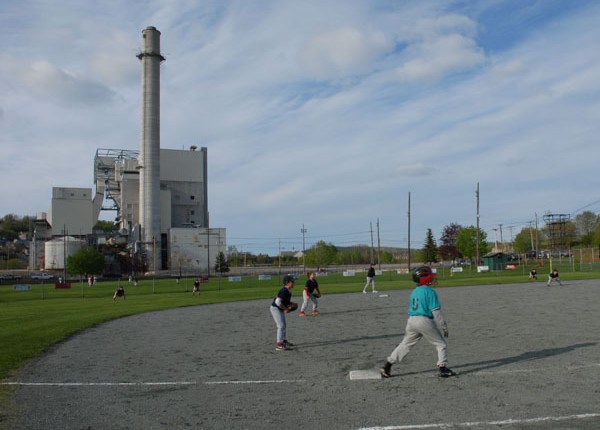
 My first real job in journalism was in Berlin, New Hampshire. I was working for the weekly newspaper, tasked with covering a community in sharp decline from its former glory. At one time, Berlin was the third-largest city in New Hampshire. Today, it is saddled with aging infrastructure intended for 25,000 residents, with 10,000 residents footing the bills. Even the paper itself was in decline — there was no office, and I spent most of my time working from the local community college.
But hard times bring their own kind of renaissance. Berlin was stripped bare by the changing economics of the paper industry, but the winnowing distilled the city to its core, discarding those lacking a deep connection to the community and leaving residents with a deep sense of themselves. It was a process that made Berlin both weak and strong, an unlikely place to choose to live yet still a community in the richest sense of the word. I would drive north over the notch each day from the Mount Washington Valley, where nearly everyone hails from away, to a place where few chose to move unless out of options. But those who stayed did so with pride.
At the time, Berlin and the rest of the North Country were searching for whatever was going to support them next. The mills were shuttered and something had to take their place, but what? Prisons and biomass electricity were floated as options but lacked the economic steam to restart the engine.
But what about tourism? No individual North Country town had the assets to constitute a tourist haven, a hired consultant told them, but if the region as a whole banded together, it could be a market. The idea was to link the North Country’s three stately hotels — the Mount Washington, the Mountain View Grand and the Balsams Resort — in a campaign that sold the “Grand Hotels, Grand Adventure” alongside the region’s untrodden natural wonders like lakes, mountains, rivers and forests.
Berlin, however, was always skeptical. Tucked along the Androscoggin, it sits in a pocket removed from the namesake hotels. And, more important, as a blue-collar industrial city, Berlin has always looked at the tourism with suspicion. The stink of the former pulp mill was once the smell of good jobs, and any transition to the low-wage service jobs tourism brings would be a hard one. Mill work offered a middle-class living. The promise of a restaurant job or a gig as a whitewater raft guide is hardly analogous.
But in today’s economy, what other options are there? As rural towns decline, many are looking at their last remaining asset: their picturesque surroundings. North Country tourism moved forward, and Berlin grudgingly went along, never full-bore but willing to play the game.
Then the Balsams shuttered, and with that the trifecta that gave the “Grand Hotels, Grand Adventure” plans resonance came to a halt. How tenuous plans for selling yourself as a destination can be.
But as economic changes sweep across New England, tourism is repeatedly raised as the fallback plan. The mills close? Turn to tourism. The furniture factory goes quiet? Tourism. The industrial sector struggles (in Conway Village, for example)? Tourism.
But does tourism have the strength to take up the slack? As the modern economy recedes from rural areas, can visitors from away fill the void? It’s a question a small town on the Maine coast has been wrestling with, and the answers it has come up with look much like ours.
Boothbay is three hours to the east of us, a coastal community watching its working waterfront empty and its population dwindle. The town is hollowing, so what are they considering? Tourism. Specifically, a proposal to build a retail development complex distinct from the village district, installed around a redesigned traffic pattern that includes a roundabout.
Sound familiar?
Tourism North Conway-style is the new black, a solution for rural economic malaise, a unique intertwining that combines natural beauty with shopping centers in hopes of lifting all boats.
But is the economic mix that keeps the Mount Washington Valley afloat a prosperous one, something worthy of exportation? Is our brand of tourism the one to aspire to? And will it even work? Can the pull of shopping repeal stagnation?
Boothbay is already a tourist town, but it is a one-season destination, packed for July and August and otherwise quiet. It’s a far cry from North Conway, where skiing, foliage, mountains and rivers combine to create four seasons of visitors.
In looking at the attempted copycats, the uniqueness of the Mount Washington Valley stands out: Not every tourist destination can claim a year-round status. Our retail district is an important part of the draw, but its strength is that it exists as an accessory, a complement, the place to drop uninterested family members while everyone else goes skiing, paddling or hiking. It is not the focal point to which crowds flock. It is part of a whole package that makes us a destination. In isolation our retail district is but a shopping mall, and tax-free though it is, it would hardly qualify as a unique draw.
The same is true of any individual ski area, any single mountain. But pair each asset with the river, with the leaves ablaze in October, with sap running in springtime, the Scenic Railroad and the shopping, and suddenly a destination emerges. Suddenly North Conway has its the trifecta of grand hotels.
Not everyone has that. Not every place contains the mix that makes a destination. But as rural economies change, more will be looking toward tourism. The Mount Washington Valley model might find itself played on repeat.
This column appeared in the Conway Daily Sun.

 Storms roll in each morning just after sunrise. The thunderclouds sweep the ocean and crawl up the beach, prolonging the night and laying soak rain across the sand, palm trees, patios and walkways. But it never lasts, the Caribbean sun quickly burns through and turns the air into steam. Placencia summers are sticky and dense.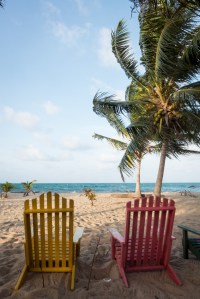

 The other day I came across a news release from my alma mater the University of Southern Maine: “USM hails turnaround,” was the headline, “Admissions numbers substantially up and budget balanced for first time in years.” Classes are full, and the university is in the black. Officials were upbeat; for the first time since the Great Recession the university is making money.
 But those opportunities are becoming harder and harder to afford. Over the past 50 years education has changed. The opportunities have changed. Even as the necessity of a college degree has increased, support for obtaining one has dwindled. Political pressure has forced entities built on public investment to operate more like businesses, to focus on growing income streams rather education opportunities. School budgets once covered by government have been cut while the portion left for students to bear has ballooned. The task of educating, a responsibility once felt by all of us, has been privatized, individualized and handed off to the kids. Education has transformed into something you buy, and it’s no longer affordable.
 How long does it take to turn a ship? How long does it take to change course, to do something different, to avoid the metaphorical icebergs?

 I love free pens.
 What does “disposable” mean? Where does “disposable” go? These are questions we don’t really wrestle with. There is not time to wrestle with them. They are big and unwieldy and quite frankly depressing. They seem too big to tackle, a societal issue that will never get solved.
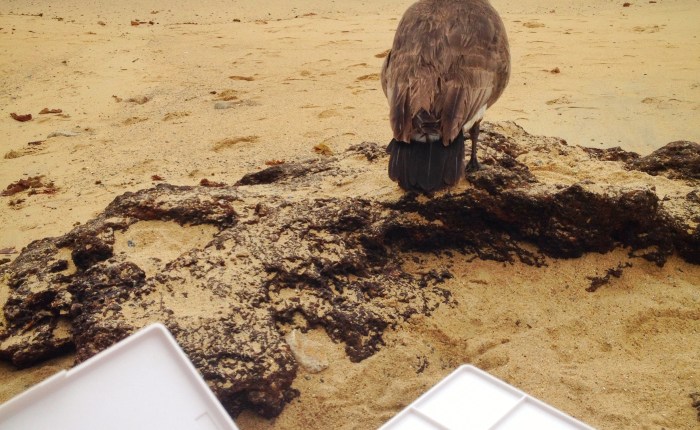
 Sometimes the economy and the environment are at odds.
 The ceilings hung squat and low, traced by fluorescent lights dotted among recessed tiles. The hallway was dingy, scraped paint along bare walls and floors that wouldn’t shine no matter the scrubbing applied. Worn signs hung on the bathroom doors, faded now after too many handprints, only half the words now visible. Someone redrew the head on the men’s bathroom symbol, but they’d drawn it square. Inside, a black Magic Markered smiley face stared out.
 Heroin. I’ve wanted to write about it for a while, about addiction and its affect on our state, our communities, but what do you say? It’s a drug, cheap, powerful and terrible. It destroys lives, families, futures. Column finished.
 I wonder if people are worried.
 It’s that time of year again: New Year’s. A time to reflect on the past year, review what we’ve done and haven’t done, and ponder the next 365 days. A time for self-examination and resolutions. Sometimes, it seems to sneak up so fast.
 ErikEisele.com