It has come to an end. After almost two years of buildup: the election, the point on which it all hinges. Dragons will either be slain or Armageddon will soon commence.
Which, of course, depends on your political bent, whether Hillary is your Antichrist or Donald. But either way there will be an offended swath, American outrage that hasn’t occurred since… last election.
Remember in 2008 when Obama became president and the TEA Party stormed the streets in protest? We still see the racially-tinged aftermath of Taxed Enough Already in the selection of Donald Trump. Obama marked the Socialist takeover, the “they’ll come for your guns” moment, another pivotal dragons and danger moment.
And yet today America stands, gun in hand. Rome has not fallen. There have been incremental ticks, changes to health care policy, the recognition of same sex marriage, withdrawals from Iraq and Afghanistan, but much from before remains. Guantanamo is still open. America still kills from the sky with unmanned aircraft piloted from the Heartland. Abortion is still legal and under stress. A black man may occupy the White House, but beyond condolences he’s been unable to offer anything to curb the mass incarcerations of innocents or shootings by police. America is thick with its own history, and the wave of his hand proven insufficient to part the Red Sea.
Foreign-born Muslim Socialist or not, presidential powers are limited. Armageddon will have to wait.
The same can be said of Maine and the 2010 sweep that brought the 39 percent to power. Despite his best threats, Gov. LePage proved unable to eradicate functional government. His insistence on undermining the bureaucracy rather than reforming its aims was caustic but not calamitous, and lumbering beast though it is, the government proved agile enough to stay steps ahead of the governor.
Mainers still pay taxes and state agencies continue to offer services. LePage did his damage, but much of it was superficial. The occasional racist comment proved the governor an unsavory mascot, but his real goal—to free the state of the tyrannies of government—stands uncompleted.
Another disaster dodged. Armageddon again averted.
But was Armageddon really the risk? That is language of elections today, both from conservative corners and progressive politicians. But in American democracy nothing burns overnight. Things don’t happens fast. Neither man nor movement has the sway they claim. Our institutions are great pyramids standing on bases that stretch for miles. One man or woman at the top has not the strength to move it. Even armies of protesters lack the might to push them over, be they the TEA Party or Occupy Wall Street.
A state is so much more than its government. A country is so much livelier than its laws, its politicians. These are small choices, momentary blips, water and sand only have the power to eat away the stone that forms our foundations. One day, through the slow erosion of time, shifts may come, but there is no earthquake on the horizon. Shout as they might, this country can endure.
And regardless of its smaller swings, America lumbers in the direction of its founding, the words it was born with: “We hold these truths to be self-evident, that all men are created equal…”
America is a country forged out of words and ideas, not the other way around. It was plucked from thin air by idealists on land made clear by genocide. We live a nation rife with contradiction. Questions of diversity and wealth and what it means to be free run in our blood. They are our history, our legacy, our burden. And they are bound to resurface at times. At times like these. Indeed, they might never go away.
Sometimes this argument we have with ourselves is raucous, ugly even. But it is our argument, one we must embrace to push forward those American words.
But for all the fighting the sky will not fall. This argument, this ungracious snarl, is the messiness of democracy. There will be no dragons gone after Nov. 8, and Armageddon will still have to wait.
This column appeared in the Portland Phoenix.
 When it comes to voting for federal office in New Hampshire this cycle we don’t have a lot of choices to be excited about; both the Republican and Democratic tickets are bleak. At the top is Donald Trump, clearly unfit to lead, or Hillary Clinton, the consummate politician. One step below is the U.S. Senate where Gov. Maggie Hassan is hoping to unseat Sen. Kelly Ayotte, two candidates more astute at political maneuvering than practicing leadership or instituting policy. Two strikes for the federal ballot.
 Maine is a modern political allegory. In a lot of ways it can serve as a stand-in for the entire United States—liberal coast hemming a vast but sparsely populated conservative heartland, with bustle and trade, vibrancy and a smattering of diversity along the shore but both tempo and complexion changing once you leave the ocean. Isolated pockets clustered around centers of higher education (rather than midwestern cities) retain the progressive flavor of coastal life, but otherwise inland culture is very different, as is the economic outlook.
 “Locker room talk” is a catchy phrase and now the talk of the nation. Never have the tiled quarters of towels, benches and shower stalls garnered such attention. It is, however, a presidential year, so no wonder.
 It was a Thursday, normally a workday but we were tucked in the downstairs of the Portland Museum of Art, around 100 of us taking pause to listen to Maine, live.
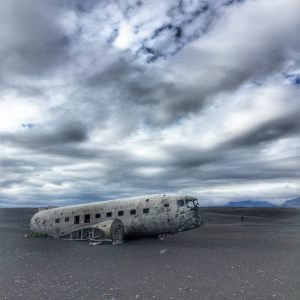 In Iceland it’s easy to rent a camper van.
 But no one minds, and no one complains. The police — there are few in Iceland — aren’t about to break up the party. No one is asked to move along. It’s just not a problem, something part of the culture.
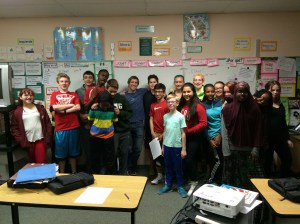 The other day I came across a news release from my alma mater the University of Southern Maine: “USM hails turnaround,” was the headline, “Admissions numbers substantially up and budget balanced for first time in years.” Classes are full, and the university is in the black. Officials were upbeat; for the first time since the Great Recession the university is making money.
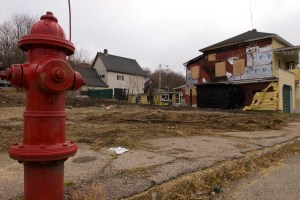 But those opportunities are becoming harder and harder to afford. Over the past 50 years education has changed. The opportunities have changed. Even as the necessity of a college degree has increased, support for obtaining one has dwindled. Political pressure has forced entities built on public investment to operate more like businesses, to focus on growing income streams rather education opportunities. School budgets once covered by government have been cut while the portion left for students to bear has ballooned. The task of educating, a responsibility once felt by all of us, has been privatized, individualized and handed off to the kids. Education has transformed into something you buy, and it’s no longer affordable.
 It’s happened: Antarctica has hit 400.
 It can be tough
 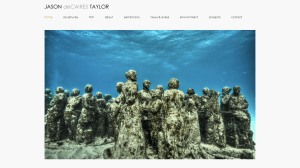 Then there is the work of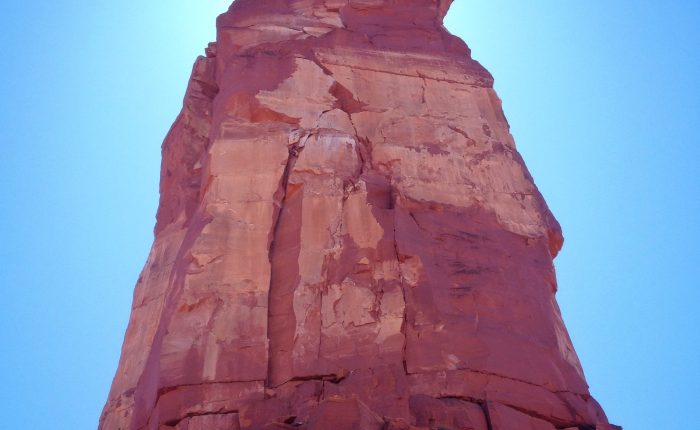

 A few weeks earlier I made it to one of the desert towers Brian and I talked about. The North Face of Castleton is a beautiful 5.11- up steep orange rock. My friend Jim just happened to be in Moab at the same time as me, and it was his birthday. He put a post on FB asking if anyone wanted to climb the next day. “Seriously?!” I said. “You’re in Moab?? Let’s climb Castleton!”
 Jimmy followed, pushing his way up the final exposed crux with a grunt, and we scampered up two more pitches, both excellent.
 ErikEisele.com