The Road, and Everything Else

The Road, and Everything Else

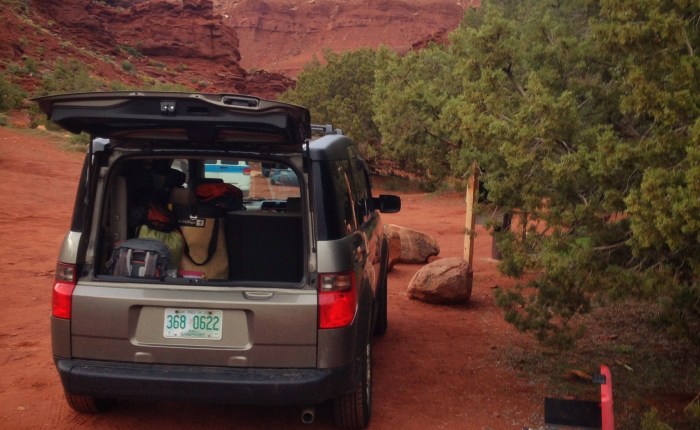
IMG_7411.JPGThere’s something about the road.

It doesn’t matter how many times people write about it, how many times people say it, the truth of it always resonates: There is something about the road. Maybe it’s the unsteadiness of it, the unpredictability. It cracks people open, leaves them vulnerable, open to spark and tangents. It pulls us in unforeseen directions, leaves us with fresh perceptions. There is something beautiful about it. Something primal.

I was outside just after dusk last night. 100 steps from the house was silent, dark. Then a flash of green, and another. Slowly they multiplied, a sea of beacons blinking around me: fireflies. The first of the season? I couldn’t tell. I hadn’t noticed them before last night, but was that because they weren’t there, or because I’d been distracted? I don’t know. But seeing them was like magic.

How much to we forget to see? How often do we look at the world as mundane because we have grown accustomed? And once we’ve stopped seeing, how do was see again?

That is the gift of the road. It brings us back to our senses, to our sense of wonder. The things that we grow accustomed to at home become new again in our absence. The fireflies regain their spark.

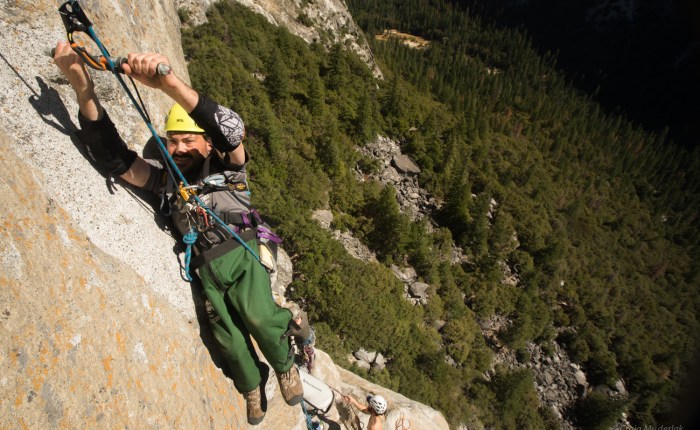
I hit the road in a few days. A week of freediving in the Florida Keys, then out to California for some friends, diving and climbing, then up the Pacific Coast to surf, climb and explore the Pacific Northwest. From there I catch a flight to Belize where I’m working with high school students on a service-learning project for three weeks, then diving for a week. Then it’s back to the PNW, and who knows, maybe more climbing, maybe Canada, maybe drive east.

But as much power as the road has for revealing the richness of our existence, I’m still caught among a mixture or emotions. It’s strange to be preparing to leave again. Today marks two weeks since I got home, barely time to settle after two months of climbing, diving, surfing and friends, adventures that began on one coast and ended on the other. It’s been two weeks of family, friends, oceans, rivers and lakes, cliffs and mountains, coffees and laughter. There are so many things that make life rich, and adventure is but one of them.

Adventure, however, is the one I know well. My heart can throw itself into lost wandering at a moment’s notice, barely a change of clothes in hand. When I was 15 I started carrying a toothbrush, a towel and a fresh pair of underwear with me everywhere I went. I wanted to be ready to wander, always. It’s a habit I’ve only built on over the last two decades.
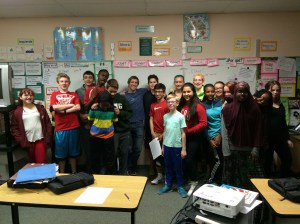
IMG_0400But there is another version of adventure, a kind that doesn’t require plane tickets and mountains; an emotional kind, a personal kind. It is standing in front of a roomful of people and speaking honestly about something that scares you. It is taking the stage to sing, talking to a friend and admitting you were wrong. Saying “I don’t know” in a roomful of colleagues. It is revealing your heart, your beautiful raw self, with openness and vulnerability, being your true you in a crowd. Those are a different kind of adventure, the kind that build build bonds not just to ourselves or to one another, but to society, to community. They are nature, but not as we normally seek it. They are us in our natural state, us as us.

Those, I find, are rarer on the road. They may be there with one person, or with a few, but to throw ourselves into the depths of our community and be our richest, rawest selves, we need society. We need a critical mass of humanity. We need room to be among the members of our tribe.

That is not the adventure I’m known for. That is the adventure of musicians, artists, dancers, not those we typically call “adventurers.” But it is in the same spirit, lives within the same reckless heart, that someone takes to the stage for the first time to act in a play. To climb a mountain is no more daunting. This is the full spectrum of “adventure.”

My life of late has been full of the mountain kind. It has been full of rope and remote places, plane tickets and passports, oceans and overhangs. Some call it “Living the dream,” but lost along the Pacific Coast Highway is only one kind of adventure, and many versions call. The Dream includes every version of risk.

The Road. That is one thing, and I will soon be back on it. It is a course I can easily take—my bags are still always packed. But the other version of recklessness—the vulnerable human kind—calls too. And to access it takes more than plane tickets, more than wandering. It takes people. It takes community. It takes a crowded room. It takes a willingness to cut through the mundane, to reveal things normally kept hidden. It takes a bold heart, one poised for emotional destruction, not just physical.

And just like wandering the remote enclaves of nature, there is tremendous beauty hidden on these adventures, moments full of richness and light. But they are seen together, shared, not lived alone.

There is something alluring about that. As alluring as the road.
Plastics, the Environment and the Economy

Plastics, the Environment and the Economy

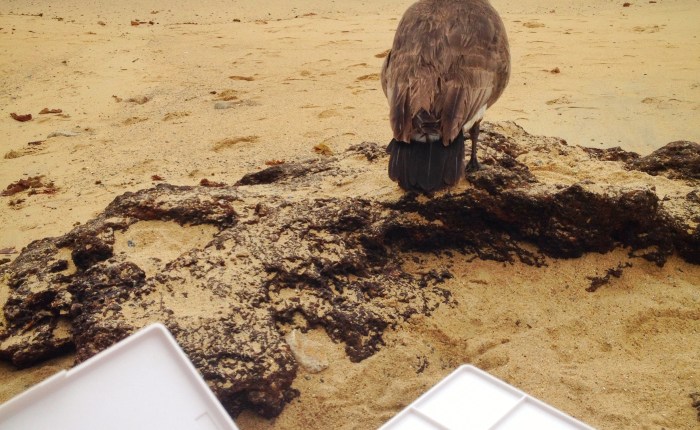
IMG_5458Sometimes the economy and the environment are at odds.
In recent weeks I’ve been reading a lot about plastic, and plastics in the ocean in particular.

It started in April with a stop at the Smithsonian Museum of Natural History. Wandering the exhibits I came across a pair of displays in the Sant Ocean Hall that caught my attention: two piles of trash. One was pulled from the stomach of a seabird, the other from the stomach of a whale. In each pile were hundreds of scraps—pieces of bags, bottle caps and boat parts—almost all of them plastic. Both animals died as a result of their ingestion choices. Plastics look bright and shiny, similar enough to edible tidbits these creatures have eaten for generations to be deadly. So they gobble it up. The result is a belly full of trash.

That was the first thing that got me thinking about plastic. Then I stumbled upon a “say no to straws” campaign highlighting the amount of plastic used each day for the completely arbitrary task of getting our drinks out of our glasses and into our mouths. It seemed absurd: like there isn’t another way to drink a drink? Is that really what we are doing, filling our oceans with garbage in exchange for saving us the trouble of lifting our glasses?

After a bit more research and a few conversations with friends I learned about this initiative:


Apparently the answer is yes, that is exactly what we are doing. Plastic is everywhere. EVERYWHERE. In the ocean, ground up into little bits so small we can’t even see them, rolling among the waves.

That is plastic in the environment.

Then there is plastic in the economy. This morning a news piece from Marketplace.org called “The Next Global Glut: Plastics” popped up on my news feed. The gist is this: with crude oil prices at record lows production of oil-derived goods like plastic are going to increase.

Several new petrochemical plants are being developed, especially around Houston and Louisiana. Vafiadis said the high output from the natural gas industry in the U.S. makes it financially feasible for companies to spend billions of dollars in new plants. 

“There’s enough natural resources available to make the majority of the projects that are being considered today viable,” Vafiadis said. 

As new plants come online, global plastic output will swell. IHS expects that more than 24 million metric tons of new production capacity of polyethylene alone will be added to the market by 2020. About a third of that new capacity will come from the U.S. and will come online within the next few years.

Not mentioned in the story is with increased production comes increased disposal. The giant pile of trash already swirling in ocean will grow.

The environment and the economy—when it comes to plastics there seem to be two distinct conversations: one about growth, the other about impact. Watching these conversations unfold in tandem and without intersection is like watching someone with multiple personality disorder argue with themselves. It’s two halves of the brain unable to connect directly. There are questions of demand, but also of impact. Where is that, the complete conversation, supposed to live?

Failing and Making It Worth It

Failing and Making It Worth It

IMG_7931.JPGI fail a lot.

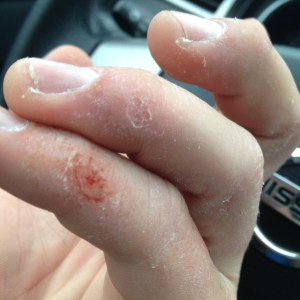
Yesterday, for example, I climbed Heather, 12b trad. Or more accurately I fell off Heather. A lot. After the initial crack things get thin, the protection gets small, and I started flying. I jammed so hard I took chunks out of my pinky and ring finger, left blood in the crack. I eventually pulled through the first crux on gear after repeated whippers on a slotted microstopper. The jams were so painful they left my knuckles aching. Onto the second crux, a series of sport climbing-esque slaps up an overhanging wall above a fixed pin—I backed up the pin with another microstopper, but on my first whip the rock around it blew. The stopper and quickdraw scurried down the rope to my hanging waste. The pin held, so I yarded back up and placed something else nearby. I took a few more whips and then lowered.

It wasn’t that I didn’t have the finish in me. It was that I was finished. I’d hung enough, my head was spent. I was just tired of being scared. I wanted to stand on flat ground. I was over it. I’d failed.

FullSizeRender-1That was yesterday. Two days before I lowered off Confederacy of Dunces, a crimpy “sport climb” that requires as much gear as quickdraws. Earlier in the day I’d fallen off Promise Land, a route I’ve climbed a bunch before.

Before that it was Astroman, the classic Yosemite 11c. I’ve been up there four times with two different partners, and everytime I’ve retreated. Even the Steck Salathe, a long Yosemite 10b, I had to hang on this trip.

Coyne Crack. Sanctuary. Mean Streak. Fat Lady. Flesh for Lulu. Tight Rope. The Prow. Women in Love. White Eye. The last pitch of The Underground. There are more routes out there I’ve fallen on or backed off of than routes I’ve sent. A lot more.

I fail a lot. A lot a lot.

The last few years this has been particularly acute—my drive to push has ebbed and surged in waves. One day I’ll be fixated on a route, and the next I won’t care about climbing at all. Until I’m standing at the base, until the route is towering overhead, I have ZERO gauge on where my head will be.

Yosemite, for example, three weeks ago: I was feeling lukewarm about the huge projects I’d set out for myself, Astroman and a one-day ascent of the Nose. But then we came through the tunnel and I saw the towering bulk of El Cap. We pulled over, parked with the rest of the tourists, and snapped a few photos. I could feel the excitement rising from somewhere deep inside me. Suddenly I was jumping up and down, eyes wide, my hands on my partner Andre’s shoulders. “Let’s do this!” I shouted, energized, alive. “LET’S CLIMB THAT BEAST!”

We didn’t. We failed. We tried Astroman three times but never reached the top. Even climbing the Sentinel was a close one. We never even got on the Nose.

I remember as a beginning climber backing off everything. I could practically downclimb as well as I could ascend; almost every route wound up including a retreat. The first time I tried the Whitney-Gilman Ridge I backed off three pitches up; I had no idea where to go, and I was too afraid to get stranded. I didn’t have the confidence in myself, the sense of adventure required, to continue. It was the same feeling that came flooding back yesterday.

I also remember when I stopped failing, stopped always backing off stuff and started getting to the top. It felt like a victory, a gaining momentum, like I’d crested some hill and the battle that had ragged for years was finally turning in my favor. Call it confidence, call it whatever, but there was a tipping point and it allowed me to start sending. The foundation was built and it was now time to climb.

There is a power in possibility, power in believing in yourself, believing you are successful, can succeed, power in believing the next hold WILL show up, the next piece of gear WILL be bomber. There is Truth in that. And yes, you might get stranded, there may not be any gear, but most times it will work out. Climbing has the power to get you killed, but when you climb with openness and possibility, when you ask the question “How do I use the holds before me?” rather than “When will the holds get good?” the best of us shows. We meet the challenge with our all. And suddenly you find yourself at the top.

But that doesn’t happen every day. Not in climbing, or elsewhere.

I fail a lot. And not just in climbing. I tried writing a book once, a guidebook to Western Maine rock. I never got past collecting topos and building a website. My “career” is a handful of fits and starts, nothing to write home about, a small town writing gig that keeps going with some adventure on the side. And I was married once. That didn’t work out either. Life has a way of handing us failure, adversity, reminders we are imperfect, routes we can’t seem to get to the top of. Our best efforts of the moment aren’t enough to crest the hill. The summit might just be out of reach. Life has a way of reminding us of that.

I failed yesterday. A lot. It came at the end of a week marked by failure, and a trip marked by failure. At the end of a few years marked by failure.

And in the midst of those lessons on failure the failures can compound. They can transform from a single moment to a storyline, from one climb to climbing, from event or sequence of events to a life narrative.

Blah.

But each of those moments are single moments, blips on the screen, instantaneous and individually inconsequential. “Failures” in name only.

As I bailed off Heather yesterday my friend Pat walked past on his way to Airation, a Cathedral finger crack. I’d seen him working the route a year ago, but he’d fallen at the crux.

“I’m getting back on it,” he said. “I’ve still got to send it.”

Not a failure, an ongoing challenge.

Life does a lot of smacking around. It is about mistakes and missteps, confusion and corrections. Climbing is a stupid, pointless way to spend the weekend. And I love it. It has a tendency to mimic the rest of existence, remind us of the challenges we face every day.

Today my fingers hurt. And my abs. I’m thinking a bike ride, or a trail run, fits more than climbing; I’m thinking I need a mental break from falling, fear, and visions of failure.

But yesterday as I walked down the descent trail after retrieving my gear I turned to Nick, my climbing partner. “Thanks man,” I said, “today couldn’t have been more fun.”

He smiled. “Yeah,” he said, “that was awesome.”

Failure can still be worth it.

And I’ll be back. I’ll be up there again, fingers jammed to the bleeding-point, gear smaller than I want disappearing below me. No matter how many tries it takes me it won’t truly be a failure, just an ongoing challenge, just one more route I have yet to send. And there are lots of those. I’ll never send them all.


Tweeting Shrimp

Tweeting Shrimp

IMG_7918-1Last week I wrote a post about chasing snapping shrimp down the Pacific Coast and sent it off into the internet-sphere. The whole piece/story/adventure revolved around a Radiolab podcast on the little crustaceans with the fire of the sun in their palm, so after I wrote it I shot a copy Radiolab’s way just for fun.

AND THEN THEY SHARED IT!!

I love Radiolab. In a world where most science reporting is more about the controversy and who said what about something than on the basic facts and merits of the matter Radiolab brings a sense of wonder to the genre. They tell their stories with nuance and complexity, allowing the pieces of this world that are amazing to stand on their own. (If you want one of the best examples, check out their story The Rhino Hunter, one of the most stunning pieces on the complexity of modern conservation I’ve ever heard.) I wait each week for the next episode to download; their success at telling longform stories in the Twitter Age is remarkable.

So it was nice to see their name tagged next to mine. YEAH!

Enoch Glidden, and the Question “How Can I?”

Enoch Glidden, and the Question “How Can I?”
DSC01212-2 1
Glidden on Washington Column.

What does it take to climb a 3,000-foot cliff?

For Enoch Glidden, a 37-year-old wheelchair-bound climber born with spina bifida, it might sound like a complex challenge built around planning, hundreds of feet of rope, specially designed climbing equipment and more.

But ask him what it takes, and he doesn’t give a complex answer. The Western Maine native keeps it simple: Climbing a 3,000-foot cliff requires friends.

“Nobody does anything without help, disabled or not,” he said.

Next fall Glidden is headed to Yosemite Valley, Calif., the mecca of American rock climbing, with plans to climb El Capitan, the massive granite touchstone for rock climbers worldwide. He’s been there once, last year, and despite his inability to move his legs, he climbed 600 feet up a towering granite rock face.

“It’s possible,” he said. It just comes down to a question he’s asked himself over and over: “How can I?”

That is the theme of the slide show Glidden will be giving Saturday night at International Mountain Equipment in North Conway. “Go Beyond the Fence” discusses his trip last fall and is a step on the road to his next challenge, El Capitan.

“That question has come up my whole life,” Glidden said. “How can I?” He got his first wheelchair when he was 4. Paralyzed from the waist down, he refuses to let that hold him back: He skis (both downhill and cross-country), competes in wheelchair races, plays basketball and is close to getting his pilot’s license. When he sees a challenge he runs at it, and four years ago the new challenge he discovered was climbing.

“It’s just kind of the ultimate challenge,” he said. “It’s all me to get up there.”

He started in New York with Paradox Sports, a Colorado-based nonprofit dedicated to adaptive sports. That led him to ice climbing closer to home — he’s attended Paradox Ice events in North Conway the past three years.

In Yosemite last year, he and a team climbed up Washington Column, a granite tower a few miles north of El Capitan.

But as he said, these kinds of climbs don’t happen alone.

“Pretty much everywhere I go, someone volunteers,” Glidden said. Last fall they had a team of four the night before the planned ascent. By the next morning, their team was up to double digits. People just seem to want to be involved, Glidden said. “I did one presentation, and a whole bunch of people volunteered.”

The group hiked to the base of Washington Column, carrying Glidden over broken rock and talus. They climbed 500 feet up, spent the night, then climbed another 100 feet the next day.

“Two climbers go ahead and set the rope,” Glidden said, “and then I do pull-ups on the rope.”

He has a special rope-climbing device rigged with a mini pull-up bar, he said, which he uses to climb the rope.

“The hardest part is living on the wall,” he said. He can’t stand up, so he can’t move around easily. That makes routine tasks like dressing and going to the bathroom difficult. “You can train for pull-ups. You can’t train for the portaledge,” the fabric platform he uses for resting and sleeping, he said.

But he learned a lot on that trip, worked out many of the kinks. Now “I’m pretty much dialed in,” he said. For his trip this year he won’t be scouring around Yosemite for partners. “This time I’m bringing people with me.”

The climb will take five days and nights, and involve sleeping on the side of the cliff. Glidden will again ascend a rope strung up by partners, doing thousands upon thousands of pull-ups over the course of the ascent. This will be by far the biggest climbing challenge he’s attempted.

But in some ways the vertical world is easier than some of the challenges that come before. First, he has to get to the wall. It’s a steep walk over rough terrain to get to the base of Zodiac, his planned route up El Capitan’s right flank.

That’s where the friends come in: helping get him to the climb, not just up it, and then also off the top of El Capitan and down. He’s got 14 people planning to join for some part of the mission, but it’s still up to him to do all those pull-ups. There will be a crew shooting video, plus Glidden blogging, and Paradox Sports and the Spina Bifida Foundation of Greater New England will be broadcasting the climb as well.

But all that is in October. For now, Glidden is still training, still getting ready for the challenge ahead. He’s been taking lessons from Sean O’Neill of Brownfield, Maine, who pioneered many climbing techniques for paraplegics. O’Neill climbed El Capitan by the same route in 2006, also doing thousands of pull-ups.

“He basically taught me everything,” Glidden said.

And along with training, he’s pulling together the funds to get himself out there. He just finished his degree in computer information systems, and he’s planning to intern for the summer in Palo Alto, Calif.

“The day that ends I’m going to Yosemite to go climbing,” he said.

But Saturday night at IME, 2733 White Mountain Highway, North Conway, the Mount Washington Valley will get a taste of his ascent, with video shot from his trip last fall. And Glidden wille discussing that all-important question, “How can I?”

The event will be held upstairs at IME on Main Street in North Conway Village. Doors open at 6:30 p.m. with free beer courtesy of Tuckerman’s Brewery. The film portion will begin at 7 p.m. There is a suggested donation of $10.

This story appeared in today’s Conway Daily Sun.

10,000 Seafloor Clicks

10,000 Seafloor Clicks

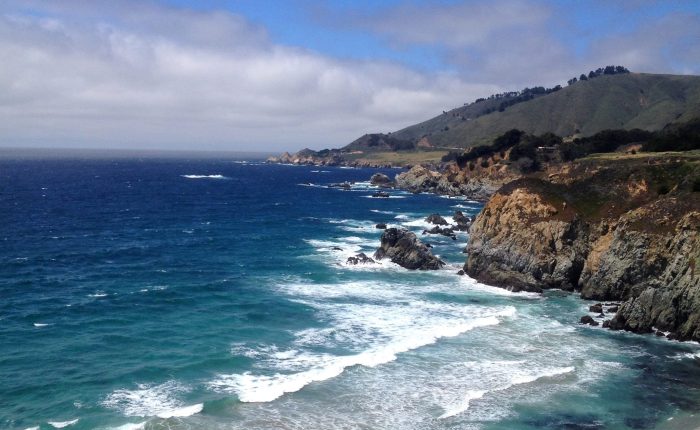
13235224_1490935110932569_1854608173923259447_oIt’s a long drive from Monterey Bay to San Diego, punctuated by towering seacliffs and emptiness. It’s the kind of drive were you find yourself pulling over every five minutes, where the landscape looks sculpted by god. Big Sur. Kerouac’s coast. Every photo looks magnificent, but none are able to capture the spirit of the place.
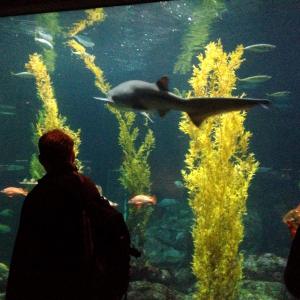
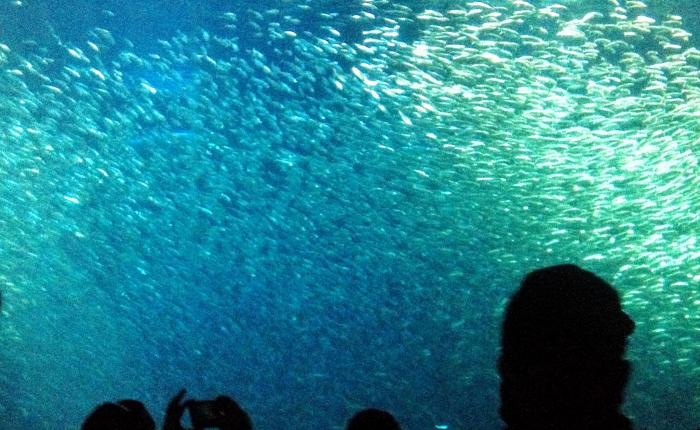
I spent the morning at the Monterey Bay Aquarium, where you can pet a stingray, watch bluefin tuna and hammerhead sharks grow frantic around shimmering clouds of sardines, see hoards of jellyfish from inches away and marvel at octopus species so different one looks like graffiti and another like camouflage. It took hours to wander through the exhibits, past giant bass and sharks and sea anemones.

One small crustacean I barely took notice of was a shrimp. He was a few inches long, with a pair of lobster-like claws, one substantially bigger than the other. His name? The snapping shrimp. I definitely saw one stowed underwater and behind glass, but I barely took notice. It was just another weird little ocean creature, nothing as majestic as the large pelagic predators or as striking as the brightly colored fish. It was just a shrimp.

13235634_1490935080932572_338291320125641097_oThen I started driving. I skirted my way out of Monterey, past Carmel and onto the Pacific Coast Highway. Hours clocked past. The landscape grew into lofty hills above an azure sea. First cell phone coverage faded, then the radio stations. “Next gas 62 miles,” the sign said.
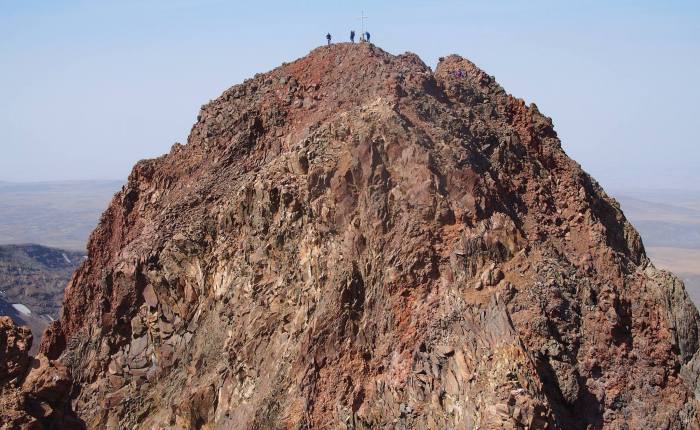
But I come prepared for such terrain: I plugged my iPhone into the auxiliary jack and scrolled through my podcasts. Suddenly one of my favorites caught my eye—Radiolab.

The episode was called “Bigger than Bacon,” and it was about this strange sound emanating out of the ocean: a crackling, like the popping of bubblewrap. What was the culprit? Snapping shrimp!

But more amazing is the power of that sound, as well as the phenomena that accompany it. The snapping is masked by water, muffled, but in reality each snap is roughly 220 decibels, or about as loud as a jet engine. The claw closes at 60 miles an hour, but it occurs in a space so small something amazing happens: at the base of the ocean where no air sits, the snapping shrimp’s claw closes so quickly it forces away all the water, literally vaporizing it, creating a vacuum, an air bubble. Suddenly a void exists where previously there was none, a brief spot of emptiness created by a couple-inch-long organism.

And when the water rushes to fill that space it does it with a vengeance. Molecules slam into one another at such a pace that the space that was once a bubble heats up to 5,000 degrees, the temperature of the surface of the sun. On the seafloor. In the claws of a shrimp.

Seriously. This is no joke. This is real. Scientists even captured it on video:


But here’s the best part: as I listened I drove. And I drove. I drove past the pristine shores of central California, past Santa Barbara and Ventura and the megapolis of Los Angeles, to San Diego, to friends and surf and southern California beaches. I spent a week there, surfing, eating tacos and diving; swimming through Pacific waters in a mask, fins and snorkel, chasing sea lions and Garibaldi fish and leopard sharks.

And the whole time I heard snapping. Every time my ears broke the surface I heard it. I’d never noticed it before, never paid enough attention, but now whenever my head went underwater it was an orchestra. The shrimp were everywhere. I could hear the snapping of their claws at the surface, and when I dove it only got louder. I never saw them, but I could picture the little crustaceans scampering across the seafloor, smashing their claws together like Marvel Comic heroes generating plasma-like heat rays in their palms. The floor of the ocean was on fire, but only the shrimp could see it. And me.

(The full Radiolab is definitely worth a listen. Maybe on a drive?)

https://www.wnyc.org/widgets/ondemand_player/radiolab/#file=%2Faudio%2Fxspf%2F603688%2F

Saving Caucasian Snow

Saving Caucasian Snow
11935159_10206619945471708_9033694213573887170_o
Part of our team on the north summit of Aragats. Tim Terpstra photo

Last September I took a flight from Boston to Yerevan, the capital of Armenia, a country I had barely heard of and knew even less about. Tucked in between Turkey, Iran and a handful of former Soviet republics, it is an arid plain with a history of invasion and cross-invasion.

It is also home to the Lesser Caucus Mountains, part of the mountain range that divides Europe from Asia. I was there on an American Alpine Club climber exchange, teamed up with Americans, Armenians and Iranians climbing our way across Armenia and Georgia, everything from single-pitch sport and trad routes to alpine snow and ice up 5,000 meter peaks. It was a tremendous three weeks, one full of new friends and meaningful connections.

One of the mountains we climbed along the way was Mount Aragats, the tallest peak in Armenia. (Historically Mount Ararat was the tallest peak in Armenia, but it’s now part of Turkey, and the border is closed. This is a painful fact for Armenians.) Aragats has four distinct summits, the north being the tallest at 13,420 feet. Climbing it means clambering over loose shale and boulders to windswept ridges. Most of the mountain feels unstable, like stacked blocks barely held together. There was one small patch of snow tucked beneath the southern and western summits, but otherwise it was dusty, dry and hot.

Historically, however, the snows of Aragats have held through the summers. They have kept creeks flowing in hotter months. Prior to escalating global temperatures, Aragatan snowfields would last through the year and provide a stable source of water through dry times.

Today, however, high temperatures melt things quickly, leaving the valleys flooded in the spring and parched by fall.

This short documentary by Armenian filmmaker Vardan Hovhannisyan lays out what is happening, and what local scientists are trying to do about it:


Yep. Thermal blankets. Several of us noticed them on our descent—white mounds squirreled away beneath the south summit. We didn’t realize what they were, that they were an attempt to save Aragats’ last few patches of snow. I remember discussing them when we got back to camp, but no one could tell exactly what they were. Now we know.

Blankets. Is that the solution to global warming? For now, the answer in Armenia seems to be yes. But it’s a lot of pressure for a few swath of fabric. What if the blankets insulate too well? Or not well enough? How many do they need to makes sure there is enough water? Do they have to cover the mountain? What happens if things don’t last through the summer?

These are complex questions, ones previously left to nature to ponder. But lately her answers have left Armenians parched. Now it’s up to Armenian scientists to see if they can do better.

When we were there in September our team didn’t know the difference. We didn’t realize we were walking over fields usually covered with snow. We scrambled the bare rocks unaware they normally would be entombed by snow.

To us Armenia was just dry. Now we know why.

CDS column: Water, and the Power to Destroy

CDS column: Water, and the Power to Destroy

13246360_1490935164265897_2513155182757045179_oWater. In Fryeburg, Maine, it’s a big deal: 603,000 gallons a day, a multinational company, a legal battle, a state Supreme Court ruling. Water is a very big deal.
I remember when the Fryeburg Water Co. agreement with Nestle/Poland Spring first made headlines. It was the first time I’d seen liberals act like scared conservatives.

As a reporter you get used to hearing Republican fears — who is going to take their guns, their jobs, their money. It’s part of the modern conservative message: We have something to lose. We need to protect it.

Among liberals, however, the same fear-based rhetoric doesn’t sell. Issues like abortion and gay rights are pitched without resorting to demagoguery. Government, for Democrats, isn’t something to cower from; it’s something that can be controlled.

Republicans, meanwhile, want to starve the beast, kill it if they can.

But I remember that first meeting after the Nestle deal, the activist stances, the sharp words of trepidation that spilled out. I remember the petition campaigns, the heated elections of the Fryeburg Water District, neighbors shouting at neighbors, outside entities called in for logistical and activist support. Replace the word “government” with “corporation” and suddenly liberals become as fearful as conservatives.

But fear provokes knee-jerk reactions, and knee-jerk overreactions, regardless of party. Republicans fear for their guns to the point that they stymie common-sense gun regulations aimed at reducing school shootings and other tragedies. It’s foolish, but it’s impossible to reason with fear.

The same irrationality has been on display locally. But this time it’s a different crowd, a liberal crowd, raising the alarm: Corporations are evil! Our water is not for sale!

But corporations, just like governments, are not evil. These are not autonomous entities, Frankensteinian monsters wielding supreme power. They are run by people. They are governed by laws. They can be tamed.

But not through fear. The fear response Fryeburg Water activists employed was akin to blindfolded swings at a pinata — a lot of fury, but little meaningful contact. Water activists threw everything they had at the Nestle deal, took it to the highest court in Maine, but it is moving forward nonetheless. The fearful blows failed to land.

And why should they? The deal is legal, fitting neatly within the framework set up by the state of Maine. There was an administrative review, then a legal review. Beyond vocal objections, there was nothing to derail the project.

But here’s the thing: the Fryeburg Water activists had a point, and it was a good one. There are tremendous questions about resource extraction. It’s conversation not limited to water: When a resource buried beneath the earth is turned into a salable commodity, who should benefit? Whether water, oil or ore, what is owned by the individual, what is owned collectively, and what is free for the taking? Who owns what? What is the citizenry entitled to when extraction occurs? Should anyone be able to bottle a resource, cart away all they can and pocket the income? Or is something owed for this action?

This is not a new question, but it was also not the one Fryeburg Water activists were asking. Like gun activists thwarting the latest background check legislation, they were shouting in an all-or-nothing fight to stop the deal. They were not calmly looking to put in reasonable safeguards. And in all the shouting, they yelled themselves hoarse.

They had a point; they just failed to aim where it matters.

And where does it matter? In the Legislature, not the courts.

Water is a precious resource. It is a Maine resource, a Mainer’s resource, one currently open to extraction. To change that will require changing the law, which requires working within the bogeyman entity liberals are comfortable with: government.

Activists need to put down the picket signs and trade them for cell phones. They need to push lawmakers to create of a resource fund built on extraction revenues, something similar to Alaska’s Permanent Fund, which is funded through oil sales.

A small tax on water extraction — a half-cent per gallon, or even a quarter-cent — accrues quickly at 603,000 gallons a day. And it would serve as a bulwark against the risk that large scale extraction might someday deplete Fryeburg’s aquifer.

That is the middle road, threading the needle between government and corporations. And it works: In Alaska every resident gets a check, a payout every year, funded by the extraction industry. In 2015, that check was for $2,072 for every resident. The payout is a dividend — the fund itself has grown to more than $53 billion since it launched in 1977.

That money came from oil, not water, and required a change in the state constitution. But extraction is extraction, and bottled water sells at prices similar to gasoline.

Maine doesn’t have oil. Maine has water. It’s a resource, understandably, in which Mainers have a tremendous stake. Currently, the legal and legislative recognition of that stake is minimal, and nothing in the past few years has been done to change that. Activists opposed to Nestle went to battle with empty hands. Instead of looking to arm themselves, they wandered into the fields to get slaughtered. The Maine Supreme Court decision dispatched the last of their hopes.

But Mainers have power. It sits in the tremendous value of bottled water. Residents sit on a commodity, a valuable one. Shouting in the face of its being packaged into profits isn’t going to change things, but taxes do change things. It would be the middle way, accepting that businesses have a right to do business rather than an all out victory against an “evil” corporation. But it would create real value for Mainers rather than just noise.

And should the battle rise again, it would give activists an actual weapon. “The power to tax,” after all, “involves the power to destroy,” U.S. Supreme Court Chief Justice John Marshall said nearly 200 years ago.


This column was featured in the Conway Daily Sun newspaper.

Stories, All

Stories, All

The PointIn families there are always stories. Some become legend, told and retold until every cousin knows them by heart. Others become myth so intertwined with hyperbole they only shadow the truth. And many become lost altogether, victims of time.
But some are held close, private, only whispered until poised to disappear. Their details seem so outlandish they hint of fiction, unlikely tales spun under the veil of the past. But they’re not.

Louise Royall died on a Monday. It was the first of June. She was 89, a mother and grandmother. She had lived in East Boothbay for five-and-a-half decades, died in the house where she raised two sons, the house where countless friends and relatives convened for birthdays, holidays and celebratory dinners. She volunteered her time and donated to charities, hosted card games and observed weddings, births and graduations. She was the matriarch of a sprawling family, the last monarch on a street literally named for her clan: Royall Road.

But that is one story, and there is always another.

In July 1956 Louise Royall was none of these things—mother, matriarch, monarch. She wasn’t even Louise Royall: her name was Mrs. Louise Townsend Booth. From Long Island, N.Y., she lived in Paoli, Penn., with her husband Samuel Babcock Booth Jr., an engineer. The couple was newly married, wed the November before. Louise was 31, and she was eight-months pregnant.

It’s a story told in news clippings, yellowed and torn, stored in a photo album from her youth.

Her children and relatives knew snippets, but nothing complete. There was no full account of what happened on July 7, 1956.

But the clippings’ headlines are stark:

“Man dies, wife hurt in Long Island plane crash.”

“Son is born to plane widow.”

“Gives birth to son, learns Dad’s dead.”

And the newspaper accounts themselves are grim: “The baby was born just a day after Samuel Booth, 28, plunged to his death in his light cabin plane in the water off Sea Cliff, Long Island. Knocked unconscious in the crash, Booth drowned while rescuers pulled Mrs. Booth from the plane.”

“Heroic action by a quick-thinking young lifeguard who picked up a shovel, swam to the wreckage, and beat a hole through the roof of the cabin saved the life of the woman,” another news story says. “The 22-year-old lifeguard, with the help of others who had arrived, dragged the woman from the submerged cabin by her hair.”

But even stories told in black and white can be part myth.

“I’m not a lifeguard,” said Donald Mortimer, 81, the man who 59 years ago pulled then-Louise Booth from the cockpit. “That’s why I grabbed a boat.”

Mortimer lives in Mattituck, N.Y., just 65 miles from Sea Cliff, where Samuel Booth crashed. He, like Louise, has lived a lifetime since that day. “I tried to run it through my own mind,” he said. “I had a few blank spots.” But the story is still there.

“I heard the airplane overhead, and it was sputtering,” he said. Mortimer’s father ran a beachfront swimming pool in Sea Crest. The single-engine Piper Cub Booth had rented for the day from a local radio announcer was running out of gas. The Booths, on Long Island visiting Louise’s mother in nearby Plandome Manor, were onboard.

Mortimer watched the plane fall. It buzzed the beach then went out to sea, where it nosedived, “maybe 1,000 feet from shore,” Mortimer said. “I said, ‘Call the Sea Cliff Fire Department!’ I ran down to the beach, and for some reason I grabbed a shovel. I have no idea why.”

The news reports say Mortimer swam to the plane, but he wasn’t that strong a swimmer. He grabbed a nearby lifeguard boat, threw in the shovel, and rowed. When he got to the plane he climbed aboard and started bashing at the metal topwing with the shovel. “We broke the roof, and a little dog jumped out,” he said.

The terrier is mentioned in several of the news accounts. Mortimer said the dog swam ashore as they worked to get Louise and Sam out.

The newspapers said Samuel Booth drowned as Mortimer worked to extricate Louise. Mortimer said others came to help, and once the hole was open it didn’t take long to get both of them out and to shore. Rescuers looked at Louise in her pregnant state, he said, and assumed she’d swallowed water. So they gave her abdominal thrusts. His guess was that’s what pushed her into labor.

27 hours later in Glen Cove Community Hospital, Samuel Babcock Booth III was born. He weighed 6-pounds 11-ounces, and he had suffered irreparable brain damage. He would survive to his teenage years, but Sam Booth III would not reach adulthood.

The newspaper reports say Louise was not told Sam Booth Jr. was dead until after she had given birth. She “cradled her newborn son in her arms today as she wept for her husband,” one story reported.

Louise had saved them all. She didn’t talk about the accident, didn’t share much of her story, but she had lived it. The faded clippings were her reminders, a story she kept for herself.

And Mortimer too was her reminder: every year for the next 59 years he would get a Christmas card. He would look to the mail each December, he said, and in return he would send a card to her.

Among the news clippings are several about Mortimer: stories about commendations he received for his actions, reports calling him a hero. But he is put off by such talk.

“It was all instinctive,” Mortimer said. No one told him to go out and be a hero. It’s like if you see someone stumble and fall on the street, he said: you go out and help them back up.

“As far as I was concerned it was nothing,” he said, “It’s a thing you do.”

But to Louise’s sprawling family, to those who mourned her passing on June 1, the story of Louise seemly begins with the crash: it was in the wake of the Booth’s death that Louise moved to Maine. She came to start over, to let go of the tears and find something new, and in a sense Mortimer’s shovel lit the way: without it Louise would have drowned too. She would never have met her second husband, Robert Royall, the man who would father her two children, the man who introduced her into the clan that would eventually swarm around her. She would not have moved to Royall Road, where she lived and held court in her kitchen for more than 50 years. She would not have become all that she was—mother, grandmother, matriarch, friend and host. That vision of the future clung to the lifeboat as Mortimer paddled. It stood in silence as he breached the metal hull.

Or at least that’s one way to tell the story.

The Smoke and the Fire

The Smoke and the Fire

e597d-dsc_0047Heroin. I’ve wanted to write about it for a while, about addiction and its affect on our state, our communities, but what do you say? It’s a drug, cheap, powerful and terrible. It destroys lives, families, futures. Column finished.
But it’s not that simple. Heroin is a symptom, the smoke that evidences fire. The actual disaster, however, runs deeper.
I’ve written several stories on opiate addiction, interviewed local officials, pulled court records, police logs, etc. A few years ago it was pills, but now it’s the street stuff. The tools themselves change, but the underlying story remains — people caught chasing the sweet release of poppies.
Among the conversations I had while writing those stories was one with a treatment specialist. Back in the 1960s and 1970s, he told me, during the Vietnam War, thousands of soldiers became heroin addicts. It was in easy supply in Southeast Asia, and in the chaos of war GIs turned to drugs to cope. There were fears at the time that returning troops would flood the streets of America as addicts, still searching for a fix.
But they didn’t. The flood never came. The soldiers returned home and settled back into their lives, rejoined their families and got jobs. They put the needles down and stepped back into the world.
That was 40 years ago, a very different world. Today the drugs are cheaper and more powerful, and many get hooked at the hospital, not at war. But the addictions remain, and this time they hold. They do not let go when people get home.
So what is different? What made it possible for veterans to let go of something that today swallows so many?
Community. Family. Opportunity. Connection. Those were the things that soldiers came home to, the treatment specialist told me, and they are missing now. The world is different. Decades ago returning veterans plugged back into communities, family units and an economy that was anticipating them, hungry for their participation. They came back to something, became part of something. They turned to heroin and other drugs to cope with a war, when they were lost and alone and disconnected, but upon reentry they found themselves surrounded by all the things that make life rich. In that environment, the needles lost their appeal.
When I look around today, that explanation makes sense. The land of the lost has migrated. Today we call it home.
What are the middle class opportunities today, the jobs that take those millions of Americans from struggling to standing on their own two feet? The mills are gone. So are the furniture making and logging jobs. Elsewhere it’s the auto industry that has evaporated, and the steel industry. And fishing. And manufacturing. Those places that four decades ago offered a stable middle class life to millions willing to work hard are shrinking or gone. They’ve been replaced by Walmart, by openings at hotels and restaurants, by service industry employment that makes ends meet only when you have two or three jobs.
Those are the opportunities now open to the same people who were once the backbone of America’s manufacturing might — the hardworking high school graduates, the people with “some college” or even degrees. No longer building, they instead serve, and they struggle to survive.
Families, meanwhile, have also splintered. The social fabric is now torn, and where parents and siblings might at one time have had the resources to catch a loved one slipping through the cracks, today everyone sits close to the edge. Parents whose retirement evaporated in the 2008 housing crash are in no position to buoy up their grown children in moments of crisis. It takes two incomes to build a life today, but families are split by more divorces than ever. Everyone is caught alone in their own race against insolvency; there is no time to look over your shoulder to check on someone else.
This stark landscape is now the foundation of entire communities — people struggling and alone, disconnected, unable to make ends meet, unable to look out for one another. The economic and family demographic transformation of 40 years, has wreaked havoc on the larger social structure that once made neighbor accountable to neighbor. More and more we are alone.
The Granite State in particular, with “Live Free Or Die” emblazoned on our license plates, takes pride in its independent streak. But in this instance our independence exacerbates our isolation — fierce libertarianism and community make confused bedfellows.
This is the land we live in. It may not be your reality, but it is the reality of many of our neighbors. They struggle to survive, to make ends meet, often alone or in relationships caught under massive strain, few family or community supports available as buffers. They are never far from the cracks, their options few and dwindling in a world with seemingly less and less space for them. A health problem, car issue or home repair can easily push them over the edge.
So, like the soldiers, they turn to drugs.
Like the soldiers, they turn to something that lets them escape reality, frees them for a moment from unsustainable lives. Like the soldiers, they turn to something to forget today, what they saw and lived, the sadness and disconnection, if only for a moment.
The soldiers, however, eventually got to come home. Our neighbors are not so lucky. Heroin is the smoke, but the fire is in our homes. In our families, our communities, our economy. Put out the flames, and the smoke will dissipate.
Our neighbors, then, will come home too.

This story appeared in the Conway Daily Sun in January 2016.